


Only One Piece of Dog Car Gear Actually Saves Their Life
Nine things worth putting in the car before a road trip, ranked by what happens if you skip them. Eight are comfort. One is the difference between a bad day and a funeral, and it's the one almost nobody buys.

Affiliate disclosure. This article contains affiliate links. We may earn a small commission if you buy through a link, at no extra cost to you. How we handle recommendations.

Every dog road-trip list on the internet is organized the same way: nice things, in a pleasant order, at similar price points. Bowls next to wipes next to goggles, as though a $10 pack of wipes and the thing keeping your dog from becoming a projectile at 40 mph belong in the same conversation.
They don’t. So this list is ordered by consequence.
Item one is the only thing here that changes what happens to your dog in a crash, and it is the item most people either skip or, worse, believe they’ve already covered. Items two through nine make the trip better. Buy them. But buy them second.
A crash-tested harness (the only one that counts)
This is the whole reason to read this list.
The Center for Pet Safety is the independent nonprofit that actually crash-tests pet restraints, using instrumented dummies and the same kind of protocol used for child seats. The results have been, historically, grim. Most “safety” harnesses and nearly every seat-belt tether sold as a restraint have never been tested to any standard at all, because none is legally required. The word “safety” on the packaging is marketing, not a claim anyone verified.
As of this writing, the Sleepypod Clickit Sport and Clickit Terrain are the harnesses that carry CPS crash-test certification for dogs up to 110 pounds, earning a 5-star rating for keeping the dog restrained with minimal risk to the human passengers around them. That last part gets forgotten: an unrestrained 60-pound dog in a 35 mph collision doesn’t just get hurt, he arrives in the front seat with enormous force.
Sleepypod Clickit Sport Plus — around $100, direct from Sleepypod.
Is it four times the price of the tether below? Yes. It is also the only item on this list with a test result behind it, and it is the only one that matters in the four seconds you’ll never see coming.
A seat-belt tether, understood correctly
Here is the honest pitch for a cheap tether, and it is not the pitch on the box.
A tether like this is containment, not crash protection. It stops your dog from climbing into the footwell, leaning on your gearshift, or leaping out of an opened door at a gas station, and those are real, common, non-trivial dangers. That’s worth eleven dollars.
What it will not do is hold a dog in a collision. Never clip a tether to a collar, ever, under any circumstances, because the force goes straight into your dog’s neck. If a tether is what you can afford right now, run it to a well-fitted harness’s back attachment and treat it as what it is: a leash for the car. Then start saving for item one.
A back-seat hammock
This one is a comfort item that quietly does safety work. Slung between the front and back headrests, it turns the rear footwell into a wall, which means a dog who slides during a hard brake slides into fabric instead of down onto the floor. It also means a dog who is comfortable in the back seat has less reason to try to get into the front.
The waterproof layer is the reason it survives a real trip. Mud, lake water, a wet dog after a rest stop, a car-sick puppy on day two. It washes. Your upholstery does not.
Get the non-slip version and actually attach the buckles under the seat. A hammock that slides around is a hammock your dog will abandon.
Collapsible bento-style travel bowls
The point of a bento setup, as opposed to two cheap folding silicone bowls, is that the food travels in the container. You pre-portion the trip’s meals, you’re not hauling a fifteen-pound bag of kibble into a hotel room at 11pm, and you’re not eyeballing portions out of a Ziploc on the tailgate.
That last part matters more than it sounds. Travel is exactly when dogs get overfed, because everything is improvised and everyone feels guilty. Portioned containers are a diet that enforces itself.
It’s the priciest thing here that isn’t safety gear, and it earns it by being the item you use three times a day for the entire trip.
A squeeze-to-fill water bottle
One hand, one motion: squeeze, dog drinks from the flip-out trough, release, the unused water drains back into the bottle. No puddle, no waste, no bowl to carry.
It is the difference between offering water at every stop and offering it when it occurs to you, and on a hot day that gap is how dogs end up in trouble. Buy the biggest one you’ll tolerate carrying, freeze it half full the night before a summer drive, and top it with water in the morning so it stays cold to lunch.
A hands-free leash
If you are traveling with more than one dog, or with a dog and a coffee and a phone and a hotel key card, this stops being a runner’s accessory and starts being basic logistics.
The waist-belt style beats the bungee style for this use, and here’s the tradeoff nobody mentions on the product page: bungee leashes absorb shock, which is comfortable, but they also reward pulling, because the dog gets a little forward give every time he leans into it. A fixed-length hands-free belt gives him nothing to pull against. Comfort at the cost of training, or training at the cost of a little jolt. At a rest stop with two dogs, take the training.
Wipes
The cheapest item here and, per dollar, probably the most used. Muddy paws before the car. Road-salt paws before the car. Whatever it was that he rolled in behind the visitor center, before the car.
Get the unscented version if your dog has sensitive skin, and keep them in the door pocket, not the trunk. A wipe you have to unpack the trunk to reach is a wipe you will not use.
Paw wax
Originally made for sled dogs, which tells you the range it’s built for. It’s a barrier wax you rub into the pads before you go out: hot pavement and grit in summer, salt and ice in winter, sharp rock on a trail.
The real argument for it is that most dogs refuse boots. If yours will tolerate booties, boots are better protection, full stop. For every other dog, and there are a lot of them, wax is the version of paw protection that actually gets used, which makes it better than the theoretically superior product sitting unused in the closet.
Apply it before the walk, not after the limping.
Dog goggles
The last spot on the list, and I’ll be straight: this is the most optional thing here for most dogs.
Where they genuinely earn a place is sand, wind, high-altitude glare, and dogs with existing eye conditions or light-colored eyes who spend real hours outdoors. UV protection for a dog on a beach for three days is not a gimmick.
Where they do not earn a place is the fantasy that inspires most goggle purchases: your dog hanging his face out of a moving car window. Goggles do not make that safe. Debris at 50 mph does not care that the eyes are covered, and an unrestrained dog with his head out a window is one hard brake away from disaster.
Introduce them at home, in short sessions, with treats, weeks before you need them. A dog who has never worn goggles will not accept them for the first time on a windy beach.
What’s new since this was written
The safety picture has gotten clearer, and less comfortable.
The Center for Pet Safety’s certification list remains strikingly short, and that is the story. Certification is voluntary, no federal standard requires pet restraints to be crash-tested, and manufacturers can print “crash tested” on a box without publishing what test, at what speed, with what dummy, or whether it passed. When a product line loses certification or is discontinued, CPS notes it, and the certified list is worth checking directly before you buy rather than trusting a roundup, including this one.
The practical version: check the current CPS certified list the week you’re buying. It takes two minutes, and it is the only part of this article that could actually change your outcome.
The order matters
If you have a hundred dollars, buy the harness. If you have a hundred and fifty, buy the harness and the wipes and the water bottle. Everything else on this list makes the trip nicer, and nicer is a good thing worth paying for.
Just not first.
References
- Center for Pet Safety. “CPS Certified Products.” centerforpetsafety.org
- Center for Pet Safety. “Harness Crash Test Study results.” centerforpetsafety.org
- American Veterinary Medical Association. “Traveling with your pet FAQ.” avma.org
- American Kennel Club Canine Health Foundation. “Heat safety and paw protection for active dogs.” akcchf.org
Marcus Webb writes about the gear, gadgets, and everyday choices that make life with a pet easier. His coverage runs from product picks to training and the causes worth paying attention to, always with an eye on what actually earns a place in your home.
Meet our experts ↗Keep reading
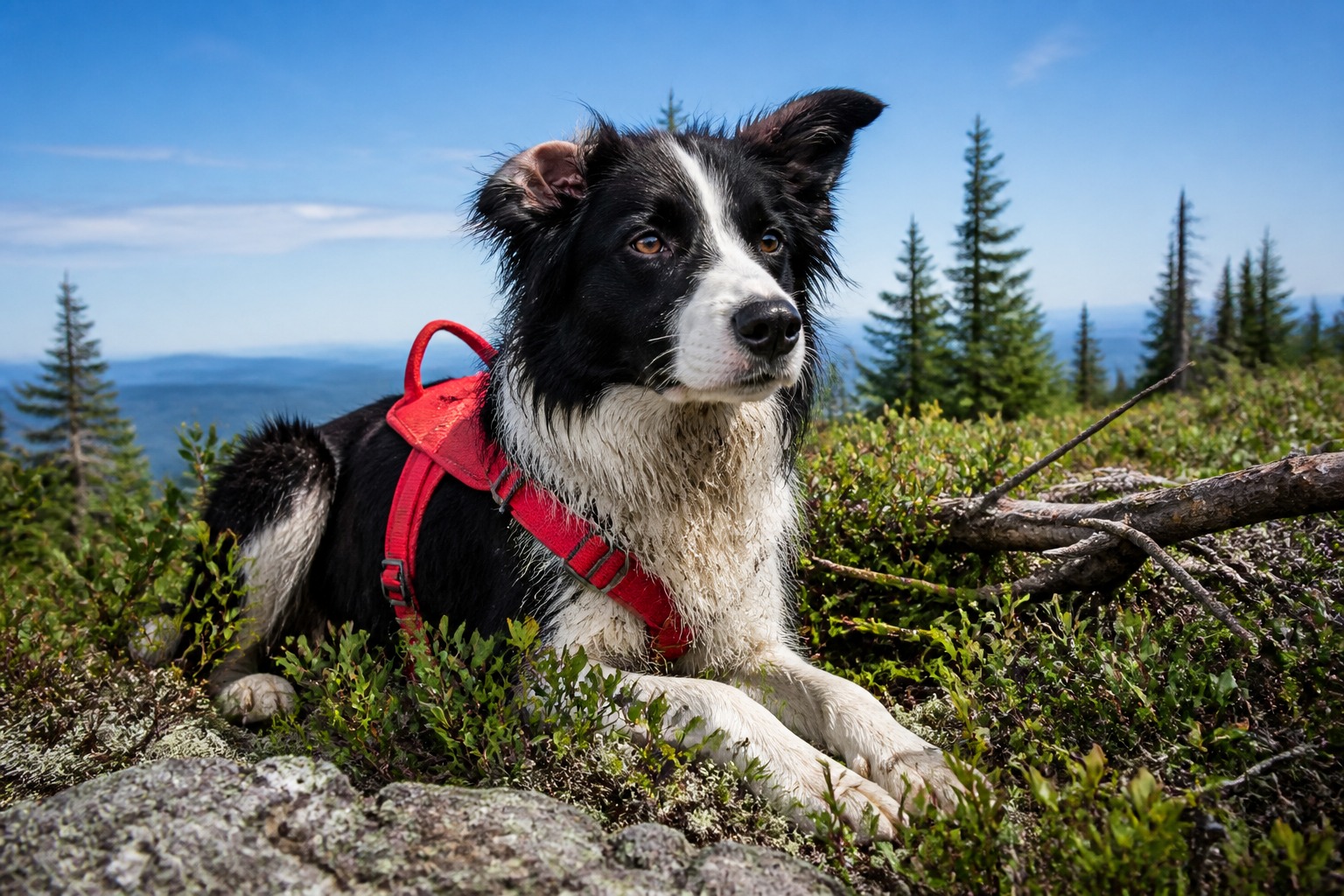 Product PicksThe Hiking Harness Buyer's Guide: Fit First, Then the 9 We'd PackLeila Torres · 16 min
 Product PicksLet Your Dog Carry Their Own Poop BagsSasha Ford · 4 min
 LivingThe Flight Is the Easy Part of Flying With Your DogDr. Ravi Mehta · 6 min
 Product PicksSenior Dogs Don't Have a Pity Problem. They Have a Visibility Problem.Nina Vasquez · 7 min
 Product PicksYour Hand Is the Worst Place for a Leash. 7 Hands-Free Picks for Active Dogs.Marcus Webb · 6 min
 LivingThe Rescue-Chihuahua Coincidence That Built a Cult Leash BrandMarcus Webb · 5 min