


The Right Travel Crate Depends on the Trip: 8 Picks, Sorted by How You Travel
A crash-tested kennel is essential in a car and absurd in a backpack. Here are eight travel dog crates organized by trip type, flying, road-tripping, backpacking, or settling in, with pros, cons, and real-shopper notes.

Affiliate disclosure. This article contains affiliate links. We may earn a small commission if you buy through a link, at no extra cost to you. How we handle recommendations.
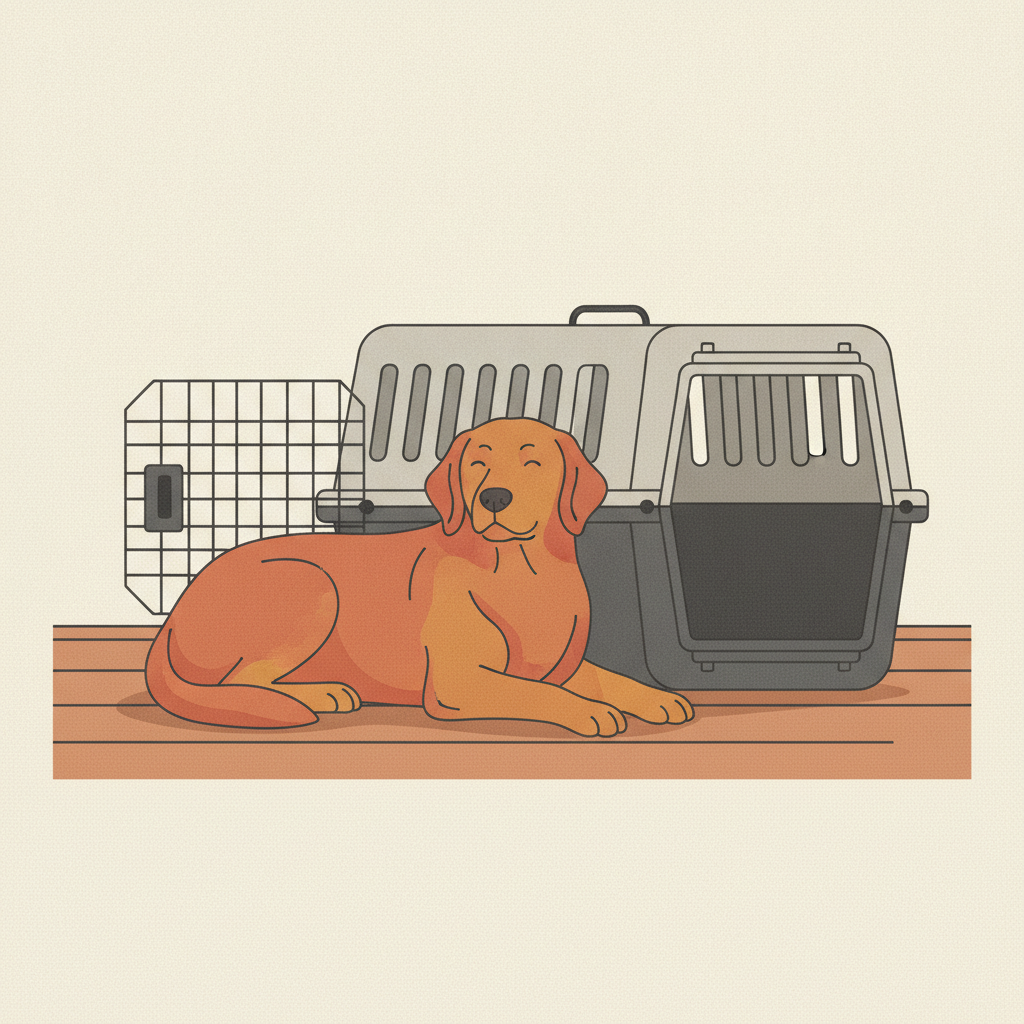
Every “best travel crate” list makes the same mistake: it ranks crates against each other as if they’re competing for one title. They aren’t. A crash-tested kennel that could survive a highway collision is exactly the wrong thing to strap to your back on a hiking trail, and a featherweight soft crate that rolls into a backpack is exactly the wrong thing to trust on the interstate. There is no single best travel crate. There’s a best crate for your trip, and once you know the trip, the choice gets easy.
So this guide is sorted by how you actually travel. Find your scenario, and the right crate is sitting right there. First, the two rules that apply no matter what.
Size it for lying down, not standing. Your dog needs room to lie down and turn around comfortably; most travel crates aren’t built for full standing. If you’re flying in-cabin, the crate also has to fit under the seat, so measure to your airline’s spec before buying anything.
Be honest about your dog’s habits. A determined chewer or escape artist will defeat any soft crate, sometimes mid-trip. If that’s your dog, skip straight to the hard-sided options regardless of how cute the fabric ones look.
If you’re road-tripping (safety is the whole game)
In a car, the crate’s job is to keep your dog from becoming a projectile in a crash. This is the one scenario where you genuinely should not cheap out.
Gunner G1 Kennel
From a safety standpoint, nothing else is close. The G1 is a 5-star, crash-tested crate certified by the Center for Pet Safety, an independent nonprofit that runs the only widely recognized crash protocol for pet travel gear (a meaningful distinction, since “crash-tested” is otherwise an unregulated marketing claim). Built from double-walled, heavy-duty plastic, it’s the bank vault of dog crates: it has tie-down pins so it actually anchors to your vehicle, a key lock, a recessed floor for accidents, and it even helps regulate temperature.
Pros: CPS-certified crash protection; tie-down pins; two top handles; key lock; recessed floor; nine colors. Cons: Expensive; heavy. The verdict: Owners consistently call the price worth it. “They are a lot of money when you look at typical crates, but for what you get, it’s totally worth it,” one writes. Check the Gunner G1 on Amazon.
“If you take one thing from any crate guide, make it this: in a car, an unsecured crate is barely safer than a loose dog,” says Dr. Priya Nair. “A crash-tested, anchored kennel is the only setup I’d call genuinely protective at highway speed. Everything else is comfort, not crash safety.”
Amazon Basics 2-Door Top-Load Hard-Sided Carrier
If your small dog likes a dark, den-like hideaway and you want a more affordable enclosed option, this top-load hard carrier is a strong value. The top door lets you lower a reluctant dog in rather than coaxing them through a front gate.
Pros: Fully enclosed hard shell; ventilated wire door and plastic panels; tamper-proof dual-squeeze front latch; top hinge door; easy to clean. Cons: Small dogs only; some find the top door flimsy. The verdict: Praised as “extremely easy to get animals into, just lower them in from the top.” See it on Amazon.
If you’re flying (airline rules and a stylish in-cabin pick)
For in-cabin flying, the crate has to fit under the seat and read as a carrier, not a kennel.
The most stylish in-cabin carrier: Roverlund Out-of-Office Pet Carrier Pro
For flying with a small dog, this is the carrier of choice: it looks like a sporty squared-off duffel with shrouded-but-ventilated mesh sides, with heavy-duty rope handles and a cross-body strap that detaches into a short lead.
Pros: Airline-compliant; tear-resistant fabric and mesh; luggage sleeve; built-in leash clip; removable sherpa bed; top and front zip doors; storage compartments; strap converts to a leash. Cons: Only for pets up to 25 pounds. The verdict: I’ve used this one personally. When my Jack Russell/Chihuahua mix was a puppy, I bought it for his first beach trip and used it both to contain him in the car and as his bed at night; he happily curled up in the plush sherpa pad both times. To this day, when he spots it in the basement, he runs over and hops in, ready for the next adventure.
If you’re backpacking or going ultralight (pack it small)
Weight and packed size are everything here, so soft-sided and collapsible win.
EHEYCIGA Collapsible Dog Crate 36”
An Amazon’s Choice soft-sided crate with four locking, roll-up zipper doors, a sturdy-yet-light frame, and a compact build that carries by a top handle or rolls into a backpack. The waterproof fabric means accidents won’t leak through (the mesh windows will, obviously).
Pros: Front, side, and top zip doors; locking zippers; memory-foam pad; built-in safety leash; waterproof. Cons: Not for heavy chewers or sharp-nailed dogs, which can puncture the fabric. The verdict: Reviewers call it sturdy and easy to fold, with a travel bag for storage; one liked it enough to buy a second. Find it on Amazon.
Amazon Basics 2-Door Soft-Sided Folding Crate
For dogs who want airflow and a den feel, this uses solid fabric panels with dark mesh windows, breathable but keeping out the bugs, dirt, and debris that drift into a wire crate. Roll up the front and fold back the top for a dog who likes to come and go.
Pros: Front and top double-zip doors; fabric-and-mesh den feel; lightweight PVC frame; collapsible. Cons: Not for chewers or escape artists. The verdict: Owners say it makes their dogs feel “cozy and safe,” and it collapses easily for storage. See it on Amazon.
If you’re settling in somewhere (a sturdy home base)
For longer stays, a hotel, a rental, a relative’s house, you want something that sets up as a stable den and, ideally, carries your gear too.
MidWest iCrate (single or double door)
The classic black wire crate countless vets and rescues recommend. It’s affordable, sturdy, easy to clean, and folds flat to stow. The double-door version is the one to get for travel, since two doors with double slide-bolt latches let it adapt to whatever room you land in (cabin, tent, hotel corner), and the side door can be left ajar so your dog moves freely between den and room while settling in.
Pros: Well-ventilated wire; double-latch doors; rounded interior corners; leak-proof pan; folds flat. Cons: Some report the exterior edges aren’t perfectly smooth. The verdict: “Thick and durable construction for an economical price,” one reviewer notes, with praise for the secure-but-easy latches. Find the MidWest iCrate on Amazon.
EliteField 3-Door Collapsible Soft-Sided Crate
The pick that earns its spot by replacing a second bag. It’s a lightweight, collapsible soft crate with two genuinely deep built-in pouches (a few inches each, not token zip pockets) that hold food, treats, toys, and gear, plus a fleece bed and a carrying case.
Pros: Top, front, and side zip-mesh doors; zipper locks; well-ventilated; steel-tube frame; fleece bed; carry case; two deep storage pouches. Cons: Not for chewers. The verdict: “Purchased this for holiday traveling for my Golden Retriever so we wouldn’t have to lug a big wire crate. Such a great purchase,” one owner writes. See it on Amazon.
The one-question shortcut
If you’re still unsure, answer this: what’s the single highest-risk part of your trip? If it’s the drive, buy for crash safety (Gunner). If it’s the flight, buy for airline compliance (Roverlund). If it’s the weight on your back, buy for packability (EHEYCIGA). If it’s a long stay, buy for a stable den with storage (MidWest or EliteField). Buy for the riskiest leg, and the rest of the trip takes care of itself.
References
- Center for Pet Safety. “Crate Crashworthiness Study” and certification standards. centerforpetsafety.org.
- American Veterinary Medical Association. “Traveling With Your Pet.” avma.org.
- U.S. Department of Transportation. “Traveling by Air With Service Animals and Pets,” airline in-cabin pet guidance.
Common questions
What's the safest travel dog crate for a car?
For crash protection specifically, look for a crate that's been crash-tested and certified by the Center for Pet Safety, like the Gunner G1. An unsecured crate (or a loose dog) becomes a projectile in a collision, so a CPS-certified, properly tied-down hard kennel is the gold standard for road travel. Soft crates are not crash protection.
What size travel crate does my dog need?
Your dog should be able to lie down comfortably and turn around. Many travel crates aren't built for full standing, so prioritize a comfortable lying-down fit. If you're flying in-cabin, the crate also has to fit under the seat in front of you, so check your airline's exact dimensions first.
Soft-sided or hard-sided?
Match it to the trip. Soft-sided crates are light, packable, and great for hotels, backpacking, and calm dogs. Hard-sided crates are more durable and secure, better for car crashes, airline cargo, chewers, and escape artists. The wrong choice for your dog's habits is the most common mistake.
How much should I spend?
Travel crates run from about $30 for a basic soft crate to over $600 for a crash-tested hard kennel. Spend the most on safety when it's a car or cargo situation, and less when the crate's main job is being a cozy, familiar bed in a hotel room.
Nina Vasquez writes about life at home with pets and the relationships at the heart of it. Her work covers day-to-day living, people-and-pet stories, and the products that fit into a real household, with a warm, grounded take on everyday pet ownership.
Meet our experts ↗Keep reading
 Product PicksThe Subway Banned Loose Dogs. One Backpack Is the Loophole That Actually Works.Marcus Webb · 4 min
 Product PicksWinter Dog Gear, Ranked by the Danger It Prevents: 20 Picks for the ColdTom Hadley · 11 min
 Product PicksA Pool Float Is a Safety Decision, Not a Photo Op: 10 Picks by Swimming TypeJordan Ellis · 6 min
 Product PicksSenior Dogs Don't Have a Pity Problem. They Have a Visibility Problem.Nina Vasquez · 7 min
 LivingThe Flight Is the Easy Part of Flying With Your DogDr. Ravi Mehta · 6 min
 Product PicksBefore You Buy a Dog Backpack Carrier: The Weight Math and 9 Packs Worth ItDr. Nina Kohl · 8 min