


A Pool Float Is a Safety Decision, Not a Photo Op: 10 Picks by Swimming Type
The right dog float depends on whether your dog is a confident swimmer, a dry-by-choice lounger, or a weak swimmer who needs real support. A safety-first guide with 10 picks.
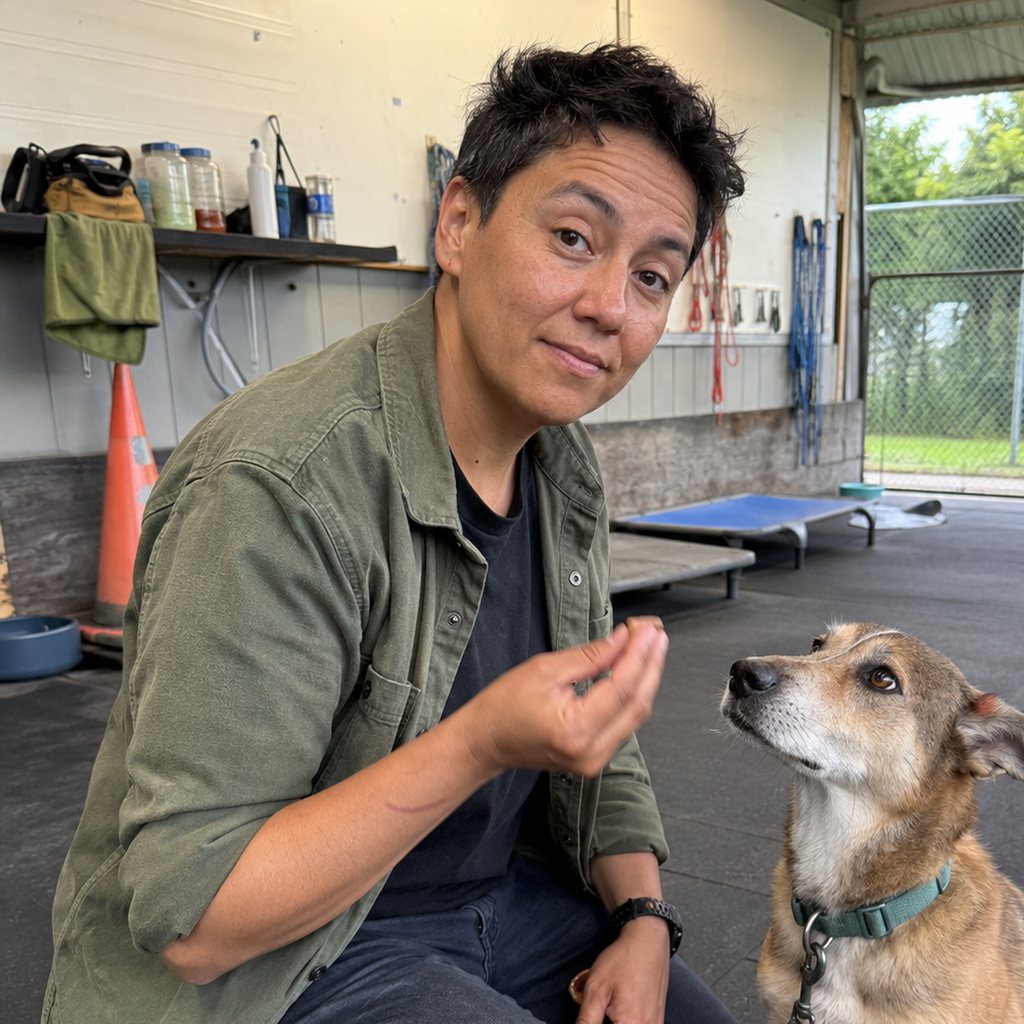
My two dogs taught me that a pool float is not a cute accessory. It is a piece of safety gear, and the right one depends entirely on the dog. Harper, my Lab mix, is hopelessly obsessed with water and would launch off a float to swim laps. Moose, my toothless Dachshund, treats a sprinkle of rain like acid and wants to attend the pool party while touching exactly zero water. Buy Harper Moose’s dry-lounging float and she is bored and overboard in a minute. Buy Moose Harper’s open swim-platform and he is miserable and soaked. Same pool, opposite needs.
So before the cute prints, sort your dog into one of three groups, because that is what actually determines which float keeps them happy and safe.
The safety rules that come before any float
A float is never a life jacket and never a substitute for you. Two things are true of every product below.
First, supervision is non-negotiable. Dogs can slip off a float, panic, or tire faster than you expect, and a float that flips can trap a dog underneath. Stay within arm’s reach, especially the first few times.
Second, some dogs should not be relying on a float to stay up at all. Flat-faced breeds like Bulldogs, Pugs, and Frenchies are dense and short-muzzled, which makes them poor swimmers who tire and inhale water easily. Deep-chested, top-heavy breeds and many seniors also struggle. For these dogs, a properly fitted canine life jacket, not a lounging float, is the real safety tool, and a float is only for staying dry and supervised at the shallow edge.
Know the signs of a dog in trouble in water: a vertical, paddling-but-sinking posture, head tipping back to keep the nose up, wide eyes, or sudden quiet exhaustion. If you see them, get your dog out immediately.
Group 1: The confident swimmer who wants a launch pad
These dogs want to be in the water and use a float as a rest stop and a diving board. Look for stability, a non-slip surface, and easy self-reentry.
Submersible Plank Float is the smartest pick for a swimmer. It is built in two parts, a submersible hammock plus a non-slip ramp, so a dog can climb out of the water and back in on their own, which builds confidence and prevents the scrambling that tips lesser floats. It is seriously durable and rated to 200 pounds, so even big swimmers are covered.
Lazy Dog Loungers Water Raft suits big confident dogs, with a high-buoyancy foam core (no inflation, no puncture worry) stable enough that dogs up to 110 pounds in the large size can climb on and off by themselves. Foam over inflatable is the right call for a dog with claws and enthusiasm.
FunBoy Dog Boat Float is the luxury option for a swimmer who likes a basecamp: puncture-resistant, rated to 70 pounds, with a reinforced compartment for toys and treats. It feels less like a pool toy and more like a small yacht, and it holds up to repeated reboarding.
Group 2: The dry-by-choice lounger
These dogs want in on the party without getting wet, which is its own legitimate preference. Look for a high, dry, enclosed center and stability over splash features.
Leaps & Bounds Flamingo Float is my dry-dog winner. It holds up to 50 pounds, and crucially the center is vinyl-covered, so a water-cautious dog can curl up on a dry surface and actually relax instead of perching nervously. This is the kind that finally worked for Moose.
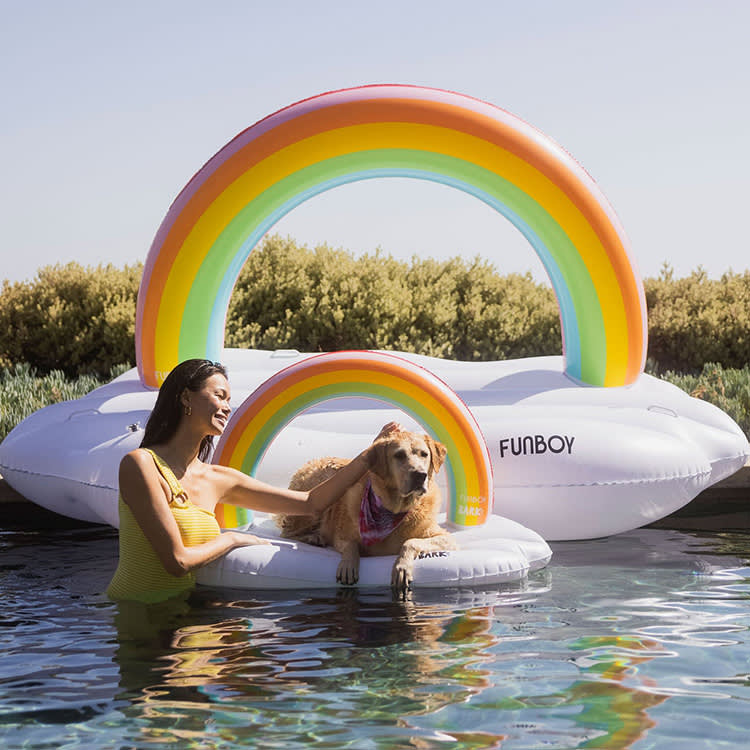
FunBoy Rainbow Cloud Float is long enough for a dog to fully lie down on a raised, dry surface, and there is a matching human-sized version if you want the twinning photo. The raised cloud edges help a timid dog feel contained rather than exposed.
Leaps & Bounds Pineapple Float is the same reliable 50-pound, puncture-resistant PVC platform in a fruitier shape, a solid, affordable dry-lounger for small and medium dogs.
Frontgate Vinyl-Coated Pool Float is the quiet-luxury dry option, available in three sizes with a textured, stain- and fade-resistant surface and a quality warranty that helps justify the splurge. (Availability comes and goes, so check stock.)
Group 3: The cool-off dog who wants to be partly in the water
Some dogs want the temperature relief of water without committing to a swim. Look for built-in side openings that let water in while keeping the dog supported.
BigMouth Donut Float has cleverly placed side holes that let water in to cool the dog while keeping them afloat, ideal for a dog who wants to dip without paddling. And it looks like a donut, which is its own reward.
BigMouth Fire Hydrant Float brings the same cooling side-hole design in a small-breed size, with 52 inches of room for a stretch. A fitting throne for the hydrant enthusiast in your life.
Plaid Folding Float rounds out the group for the country-club type: suitable for dogs under 65 pounds and, best of all, foldable, which makes it the one to throw in the car for lake trips and hotel pools.
A note on which group most dogs are really in
Be honest about your dog before you buy for the dog you wish you had. A lot of owners buy an open swim platform for a dog who is actually a nervous, dry-by-choice lounger, then wonder why it goes unused. Watch how your dog behaves at the water’s edge for ten minutes. The dog tells you the group; the group tells you the float.
Pool-day care beyond the float
Two quick habits protect your dog all season. Do not let them drink pool water; chlorine and chemicals can upset the stomach, so keep fresh water poolside and offer it often. And after any water day, dry the ears thoroughly, since trapped moisture is a leading cause of ear infections, especially in floppy-eared breeds. Rinse off chlorine or salt before it dries on the coat and skin.
FAQs
Is a float safe for a dog who can’t swim well?
A lounging float is for staying dry and supervised, not for keeping a weak swimmer afloat in deep water. For flat-faced breeds, deep-chested dogs, and many seniors, the safety tool is a properly fitted canine life jacket, and the float is only for the shallow edge under close watch. Never use a lounging float as the thing keeping a poor swimmer up.
Do I really need to supervise the whole time?
Yes. Dogs slip off, panic, or tire faster than people expect, and a flipped float can trap a dog beneath it. Stay within arm’s reach, especially during the first few sessions while your dog learns the float.
Inflatable or foam?
Foam floats resist punctures from claws and tend to be more stable for climbing on and off, which makes them the safer choice for big or enthusiastic dogs. Inflatables are lighter, cheaper, and pack down for travel, which suits calmer or smaller dogs and trips. Match it to your dog’s size and energy.
How do I get my water-shy dog to use a float?
Start dry and out of the pool: let them climb on a stable, dry-centered float on the lawn with treats, then move it to the steps in shallow water before anything deeper. A vinyl-centered lounger in the dry-by-choice group, introduced slowly, is far more likely to win over a cautious dog than an open platform.
References
- American Kennel Club, “Dog Water Safety: Tips for Swimming With Your Dog.” https://www.akc.org/expert-advice/health/dog-water-safety/
- American Veterinary Medical Association, “Hot weather safety for pets.” https://www.avma.org/resources-tools/pet-owners/petcare/hot-weather-safety-pets
- VCA Animal Hospitals, “Ear Infections (Otitis Externa) in Dogs.” https://vcahospitals.com/know-your-pet/ear-infections-otitis-externa-in-dogs
Jordan Ellis is a certified professional dog trainer with a decade of experience working with rescue organisations and private clients. They specialise in anxiety, reactivity, and positive reinforcement methods, and review all training and behaviour content at The Pet Times.
Meet our experts ↗Keep reading
 LivingThe Flight Is the Easy Part of Flying With Your DogDr. Ravi Mehta · 6 min
 Product PicksMatch the Carrier to the Trip: A Buyer's Map for Small-Dog TravelJames Okafor · 8 min
 Product PicksThe Hiking Harness Buyer's Guide: Fit First, Then the 9 We'd PackLeila Torres · 16 min
 Product PicksWinter Dog Gear, Ranked by the Danger It Prevents: 20 Picks for the ColdTom Hadley · 11 min
 Product PicksBuild Your Dog's Pool-Day Kit in the Right Order: Safety First, Toys LastDr. Mara Chen · 7 min
 Product PicksThe Subway Banned Loose Dogs. One Backpack Is the Loophole That Actually Works.Marcus Webb · 4 min