


Before You Buy a Dog Backpack Carrier: The Weight Math and 9 Packs Worth It
A dog backpack is the easy part. Getting the load math right, and knowing which dogs should never ride in one, is what keeps your pup safe. Here's the rule, plus nine carriers we tested for dogs of every size.

Affiliate disclosure. This article contains affiliate links. We may earn a small commission if you buy through a link, at no extra cost to you. How we handle recommendations.
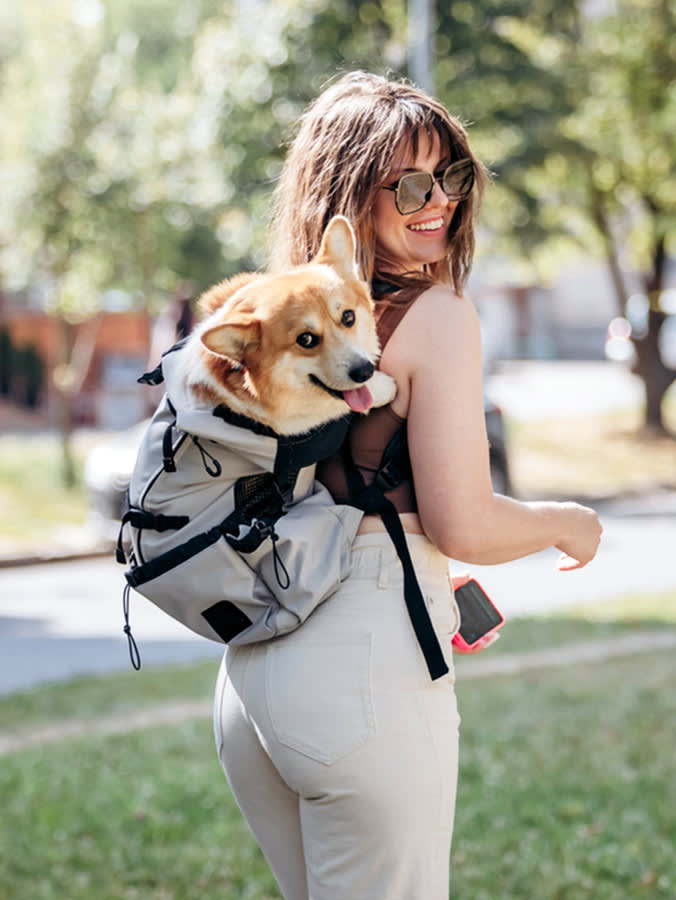
A dog backpack looks like a simple purchase, and the carrier itself is the easy part. The part that actually protects your dog comes before you add anything to cart: the weight math, and an honest look at whether your dog should be in a pack at all. Get those wrong and the cutest carrier on the market becomes a vet bill. Get them right and a backpack opens up trails, cities, and “she ran out of steam at the summit” rescues that wheels simply cannot reach.
So we are going to do this in the right order. First the rule. Then who should sit it out. Then nine carriers we would actually buy, for dogs from toy to large.
The weight rule (there are two of them)
People conflate two completely different limits, so let’s separate them.
If your dog carries the pack: the often-quoted “25 percent of body weight” is a ceiling for an exceptionally fit, conditioned working dog, not a target. For a well-conditioned trail dog with real mileage, 15 to 18 percent is the sane maximum. For a novice or a sensitive dog, keep it at 10 percent or less. Build up gradually, the way you would your own pack weight.
If you carry your dog: the limit is your back, not the dog’s. An 80-pound dog plus a five-pound carrier is a genuine load, and “rated for 80 pounds” describes the pack’s stitching, not your spine. Be honest about what you can hike with for an hour.
Who should skip the backpack entirely
This is the step roundups never include, and it is the most important one. A backpack is not right for every dog. Talk to your vet first if your dog is any of these:
- Prone to hip dysplasia or has back or joint issues. Added load and a confined posture can aggravate existing skeletal problems. Large and giant breeds carry higher baseline risk.
- A growing giant-breed puppy. Rapid-growth skeletons (hip dysplasia, osteochondrosis, panosteitis) should not be loaded or held in a fixed position. Wait until they are done developing.
- Brachycephalic (flat-faced). Bulldogs, Pugs, Frenchies and the like overheat fast and breathe with less reserve. An enclosed pack on a warm day is a real heatstroke risk.
- Managing a heart or respiratory condition. Any extra exertion or restriction deserves a vet’s sign-off first.
When you are unsure, your veterinarian can set a weight limit specific to your dog’s size, structure, and health. That five-minute conversation is the cheapest safety feature you can buy.
How to read a carrier spec
- Size for “sit upright comfortably.” Quality packs publish real measurements and weight capacities. Buy to your dog’s body, not your hopes.
- Safety hardware: locking zippers (or no zippers if your dog chomps them), thick buckles, good ventilation for enclosed packs, and a padded neck hole.
- An internal leash tethers your dog to the pack. On a big dog it will not hold much weight, but clipping to the collar makes them feel contained and less likely to leap.
- Front vs. back: back packs suit all sizes and ride more comfortably for you; front packs work for small, anxious dogs who want to see you.
A quick note: our editors and their pets chose these. Everything was in stock at publish time, but carriers sell out. If you buy through our links, we may earn a commission.
The nine picks
They run from the heaviest hauls down to the lightest around-town packs, because the weight math above decides more than any feature list: find your dog’s weight, then start reading.
- Best backpacking: K9 Sport Sack Kolossus Backpacking Pack
- Most comfortable (long-bodied dogs): Little Chonk The Maxine One Medium Dog Carrier
- Best for large dogs: K9 Sport Sack Knavigate Backpack-Style Carrier
- Most durable: Ruffwear Hitch Hiker Dog Backpack Carrier
- Best for small dogs: K9 Sport Sack Plus 2
- Best front carrier: Pawaboo Pet Dog Front Carrier
- Best hiking: Kurgo G-Train Dog Carrier Backpack
- Best budget: Texsens Innovative Traveler Bubble Backpack
- Best splurge / city: Maxbone Go Everywhere Backpack
We trimmed one pick from last year’s ten: a boxy “most stylish” city pack whose job, a chic carrier for around-town errands, is covered better and at a similar size by the splurge pick below.
Best backpacking
The K9 Sport Sack Kolossus Backpacking Pack is built for the big kids, with a high capacity and a supportive metal-rod frame. Remember the second weight rule here: 80 pounds of dog is a lot on your back. Weight capacity: 80 pounds.
Reviewers call it sturdy and well-built, even fitting multiple small dogs. Rating: 4/5.
Pros: tear- and water-resistant ripstop; padded back; padded waist strap with poop-bag dispenser; metal rod frame; ventilated zip-mesh sides; detachable gear pack. Cons: heavy with a large dog inside. Wrong for: anyone not confident hauling a 40-plus-pound dog over distance.
Most comfortable (long-bodied dogs)
Long dogs are hard to fit, which is why Little Chonk’s The Maxine One Medium Dog Carrier caters to Corgis (and works for Cocker Spaniels, Beagles, Shiba Inus, Mini Schnauzers, and small terriers). The adjustable pack suits low, long torsos and lets them ride upright. Weight capacity: 50 pounds.
One reviewer said it is “perfect for going on bike rides.” Rating: 4/5.
Pros: sleek design; dual-autolock zipper; easy in and out; reinforced padded neck collar with reflective accents; tear-resistant ripstop; tail port. Cons: returns can be a hassle. Wrong for: dogs who panic when enclosed (though reviewers say it calms many nervous riders).
Best for large dogs
The K9 Sport Sack Knavigate Backpack-Style Carrier scales the piggyback design up for bigger dogs, with a paneled back and thick padded straps to keep you comfortable. Weight capacity: 50 pounds.
One shopper called it “one of the best items I ever bought.” Rating: 5/5.
Pros: tear-resistant polyester; front leg openings; padded back; chest and waist straps; full-size water-bottle holders. Cons: some report thread/durability issues. Wrong for: dogs over 50 pounds, or wearers who cannot comfortably haul that much.
Most durable
If hiking is the whole point, the Ruffwear Hitch Hiker Dog Backpack Carrier is the cult favorite, with an integrated harness, breathable build, and ripstop that shrugs off branch scratches. Weight capacity: 40 pounds.
One reviewer noted it “was clearly built with durability in mind.” Rating: 4/5.
Pros: durable ripstop; integrated harness; easy in and out; ventilated mesh; reflective seams; multiple adjustment straps; padded back; storage waist belt and chest strap. Cons: colors run off; straps can be fiddly to adjust. Wrong for: dogs over 40 pounds.
Best for small dogs
The K9 Sport Sack Plus 2 is a versatile trail-and-anywhere pack with charming front leg holes so your pup rides piggyback. Weight capacity: 35 pounds.
Reviewers like clipping the dog in to prevent escapes. Rating: 4/5.
Pros: built for small-to-medium dogs; padded back; front leg openings; custom Velcro-patch spot; full-size water-bottle holders; removable storage pack. Cons: runs long for some torsos; material less rugged than premium packs. Wrong for: very tall wearers who need a shorter pack.
Best front carrier
The Pawaboo Pet Dog Front Carrier straps your dog to your chest with all four paws out, sweet and supportive for town walks or short trails. Weight capacity: 6 to 30 pounds by size.
Reviewers call it well-made with easy zippers. Rating: 4/5.
Pros: lightweight dual-wear design; adjustable Velcro waist; comfortable elastic neck strap; breathable mesh; built-in tail hole; self-locking zippers; affordable. Cons: runs large; exposed legs can snag on rough trails. Wrong for: long or brushy hikes where dangling limbs are a hazard.
Best hiking
The Kurgo G-Train Dog Carrier Backpack earns its spot with a sturdy build that is comfortable for dog and human alike, and a clever dual-purpose design: flip it onto its back and it becomes a traditional carrier. The shape lets your dog sit rather than be held upright. Weight capacity: 25 pounds.
Shoppers say it feels safe and secure and is ideal for 20-pound dogs. Rating: 4/5.
Pros: smooth high-quality zippers; roll-top peekaboo panel; easy in and out; paneled padded back; middle and back storage compartments. Cons: some find it bulky when packed with extra gear. Wrong for: dogs over ~20 pounds, who will be cramped.
Best budget
The Texsens Innovative Traveler Bubble Backpack wins on price and a roomy design for small breeds. It is not built for mountains, more of a stroll-around-town pack. Weight capacity: 18 pounds.
Reviewers note it runs big and the hard bottom keeps dogs supported. Rating: 5/5.
Pros: very affordable; breathable mesh; roll-top peekaboo panel; two side storage zips; padded straps and chest buckle. Cons: not the most durable. Wrong for: dogs over 15 to 18 pounds, and serious hikes.

Best splurge / city
The Maxbone Go Everywhere Backpack is a city-chic carrier that looks like a trendy neoprene fashion backpack, with a peekaboo window passersby will swoon over. Weight capacity: 17 pounds.
One reviewer called it “absolutely life-changing.” Comes in black and mauve. Rating: 5/5.
Pros: sleek design; front zip storage; removable sherpa-lined interior; interior leash; ventilated mesh sides and front panel; padded straps with chest buckle. Cons: expensive; small dogs only. Wrong for: trail use or anything over ~17 pounds.
References
- DOGPAK. “Dog Backpack Safety Tips.” https://dogpak.com/blogs/articles/dog-backpack-safety-tips
- American Kennel Club. “Hiking With Your Dog: Safety and Conditioning.” https://www.akc.org/expert-advice/sports/hiking-with-dogs/
- Cornell University Riney Canine Health Center. “Hip Dysplasia.” https://www.vet.cornell.edu/departments-centers-and-institutes/riney-canine-health-center/canine-health-information/hip-dysplasia
Common questions
How much weight can a dog safely carry, and how heavy a dog can I carry?
Two different limits. If your dog carries a loaded pack themselves, cap it at 10 percent of their body weight for a novice, up to 15 to 18 percent for a conditioned trail dog, and 25 percent only for an exceptionally fit working dog. If you are carrying your dog in a backpack carrier, the limit is your back, not theirs, an 80-pound dog plus the pack is a serious load, so match the carrier's rating to your own lifting comfort.
Which dogs should not ride in a backpack carrier?
Dogs with hip dysplasia, back or joint problems, heart conditions, or brachycephalic (flat-faced) breeds prone to overheating and breathing trouble are poor candidates, as is a growing giant-breed puppy whose skeleton is still developing. When in doubt, get your vet to clear your specific dog before you commit to a carrier.
Front carrier or back carrier?
Back carriers are more comfortable for the wearer and work for dogs of all sizes. A front carrier suits a small dog (under about 20 pounds), especially one who gets anxious riding behind you where they cannot see you.
Dr. Kohl is a board-certified veterinary dentist with a particular interest in preventive oral care. She reviews all dental health content at The Pet Times and contributes practical guides on home dental routines, professional cleaning, and oral disease prevention.
Meet our experts ↗Keep reading
 Product PicksPet Clothes That Earn Their Keep: A Buyer's Guide to Coats, Rain Gear, and FunSara Lim · 6 min
 Product PicksThe Tick Tool in My Pack Isn't for Removing Ticks. It's for Removing Them RightMarcus Webb · 5 min
 Product PicksA $168 Pet Bag Won't Get You Past the Gate. A Tape Measure Will.Sara Lim · 6 min
 Product PicksThe Subway Banned Loose Dogs. One Backpack Is the Loophole That Actually Works.Marcus Webb · 4 min
 LivingThe Flight Is the Easy Part of Flying With Your DogDr. Ravi Mehta · 6 min
 Product PicksThe Right Travel Crate Depends on the Trip: 8 Picks, Sorted by How You TravelNina Vasquez · 12 min