


The Tick Tool in My Pack Isn't for Removing Ticks. It's for Removing Them Right
Any tweezers can pull a tick off your dog. The thing that actually protects them is the technique, and the clock. Here is what a four-dollar hook taught me about both.

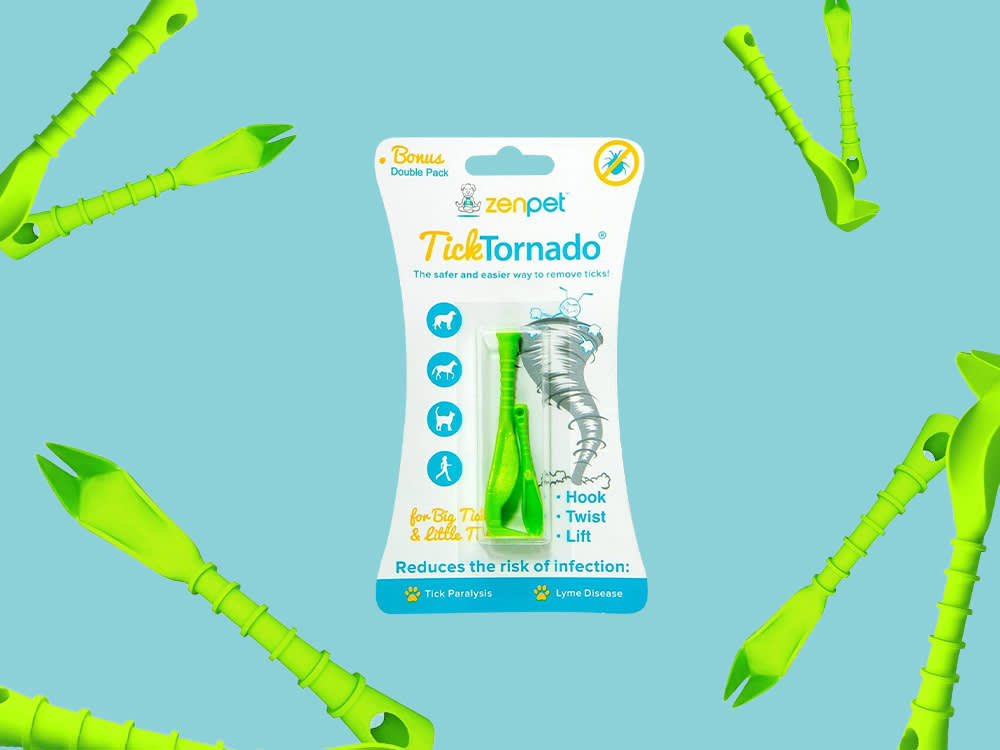
Here is the part nobody tells you about ticks until you are living it: removing one is easy, and removing one correctly is a different skill entirely. The gap between those two things is where dogs get sick. I learned this the hard way after a single spring hike turned my apartment into a tick colony, and the lesson stuck harder than the bugs did.
A few weeks ago my girlfriend and I took our two dogs, Moose and Harper, on a walk to reacquaint them with nature after an endless New York winter. I will be honest about the scale of the adventure: it was a clearly marked path in New Jersey next to some tall grass. But it might as well have been a bottomless pit of every tick in the tri-state area, because for the next week and a half we kept finding the tiny bloodsucking monsters all over the place. We did a tick check after the walk, then in the car, then again in the lobby. Did not matter. Because our dogs are on tick preventatives, most of the ticks just used them as a free commute into the apartment and dropped off onto the couch. Only one actually latched, onto Moose’s ear, where it met the business end of a little green hook.
That hook is the point of this story, but not for the reason you would expect.
The mistake that turns a bite into a disease
The instinct, when you find a tick, is to grab it by the fat body and pull, or worse, to dig at it. Both are exactly wrong, and understanding why reframes the whole job.
When you squeeze a tick’s engorged body, you can force its stomach contents, saliva, and any pathogens it carries back down into the wound. You are essentially pressing the syringe. And when you yank or twist, you can snap the mouthparts off and leave them embedded in your dog’s skin, where they cause irritation and a lingering risk of infection. The Centers for Disease Control’s guidance for removing a tick from a person applies just as cleanly to a dog: grasp the tick as close to the skin as possible, and pull upward with steady, even pressure. Do not twist, do not jerk, do not crush the body.
That is the entire reason a dedicated hook tool beats the tweezers in your bathroom drawer. A removal hook (mine is a four-dollar plastic doodad that came in a two-pack) slides under the tick at skin level, and the package instruction is honest about the motion: hook, twist, and lift. It catches the tick at the head, not the body, so you are never compressing the part you most need to leave alone. It lifts the whole animal out intact, mouthparts and all, which is the thing that protects your dog.
The other quiet advantage I did not anticipate: Moose tolerates the hook far better than he ever tolerated tweezers pinching near his skin. A calmer dog means a cleaner, safer removal, which loops right back to the point. The tool is good because it makes the correct technique the easy one.
You are also racing a clock
Doing the removal right is half the job. Doing it soon is the other half, and this is the data that changed how fast I move.
Pathogens are not transmitted the instant a tick bites. For Lyme disease, the bacterium generally needs the tick to stay attached for a stretch of time before it can pass into the host, with commonly cited windows of 24 to 48 hours and the CDC noting that prompt removal greatly reduces the risk. That is genuinely reassuring, and it is the best argument there is for the obsessive post-hike tick check: a tick you find and remove tonight is far less dangerous than the same tick still feeding tomorrow.
But “wait and it’s probably fine” is the wrong read. Research has complicated the tidy 48-hour rule. Some studies have found a small fraction of nymphal ticks can transmit Lyme bacteria in under 24 hours, and a partially fed tick (one that started feeding on something else and reattached) can transmit far faster, with one study finding the large majority did so within 24 hours. The honest takeaway is not a comfortable threshold to lean on. It is this: the clock starts at attachment, the risk climbs the longer you wait, and the only move you fully control is removing the tick the moment you find it. Speed is protection.
After the tick is out
Removal is not quite the end. A few steps finish the job and start the watch.
Once the tick is out, clean the bite area and your hands with soap and water or rubbing alcohol. Do not crush the tick with your fingers. The CDC’s disposal options are simple: drop it in a sealed container or a bit of rubbing alcohol, wrap it tightly in tape, or flush it. A note specific to dogs: a removal hook will not kill the tick, so dispose of it deliberately. If your dog is on a modern oral preventive like a chewable isoxazoline, a tick that bites will usually die after latching, but that is a backstop, not a substitute. Proper removal still matters, because a dead tick left half-embedded can still cause irritation and transfer.
Then keep an eye on the bite site and your dog over the following weeks for redness, swelling, limping, lethargy, or loss of appetite, and call your vet if anything looks off. Tick-borne illness in dogs can take days to weeks to show up.
Our family is taking a break from nature while we recover from what we are calling Tickapalooza. When we head back out, we will go armed not with a fancier gadget, but with the two things that actually matter: the right motion, and the urgency to do it now. The little green hook just happens to make both of those easy, and that is the best four dollars I have spent on my dogs.
References
- Centers for Disease Control and Prevention. “What to Do After a Tick Bite.” CDC.
- Centers for Disease Control and Prevention. “How Lyme Disease Spreads.” CDC.
- Cook, M.J. “Lyme borreliosis: a review of data on transmission time after tick attachment.” International Journal of General Medicine (2015). Available via PMC.
Marcus Webb writes about the gear, gadgets, and everyday choices that make life with a pet easier. His coverage runs from product picks to training and the causes worth paying attention to, always with an eye on what actually earns a place in your home.
Meet our experts ↗Keep reading
 Product PicksWinter Dog Gear, Ranked by the Danger It Prevents: 20 Picks for the ColdTom Hadley · 11 min
 Product PicksThe $599 Dog Crate Isn't for Your Dog. It's for the Four Things Wire Crates Get Wrong.Marcus Webb · 5 min
 Product PicksA Dog Carrier Tote Is a Safety Product in Disguise. Buy the Specs FirstLeila Torres · 6 min
 Product PicksBefore You Buy a Dog Backpack Carrier: The Weight Math and 9 Packs Worth ItDr. Nina Kohl · 8 min
 Product PicksHow to Choose a Cat Backpack (Plus 6 We'd Actually Carry)Leila Torres · 5 min
 Product PicksThe Pet Travel Gear Worth Buying, Sorted by How You Actually TravelJames Okafor · 6 min