


Why the Dog-Autism Bond Runs Deeper Than 'Pets Are Nice'
Dogs and autistic people share a way of moving through the world, sensory, non-verbal, direct. That overlap, not generic pet cuteness, is what makes the bond so powerful.

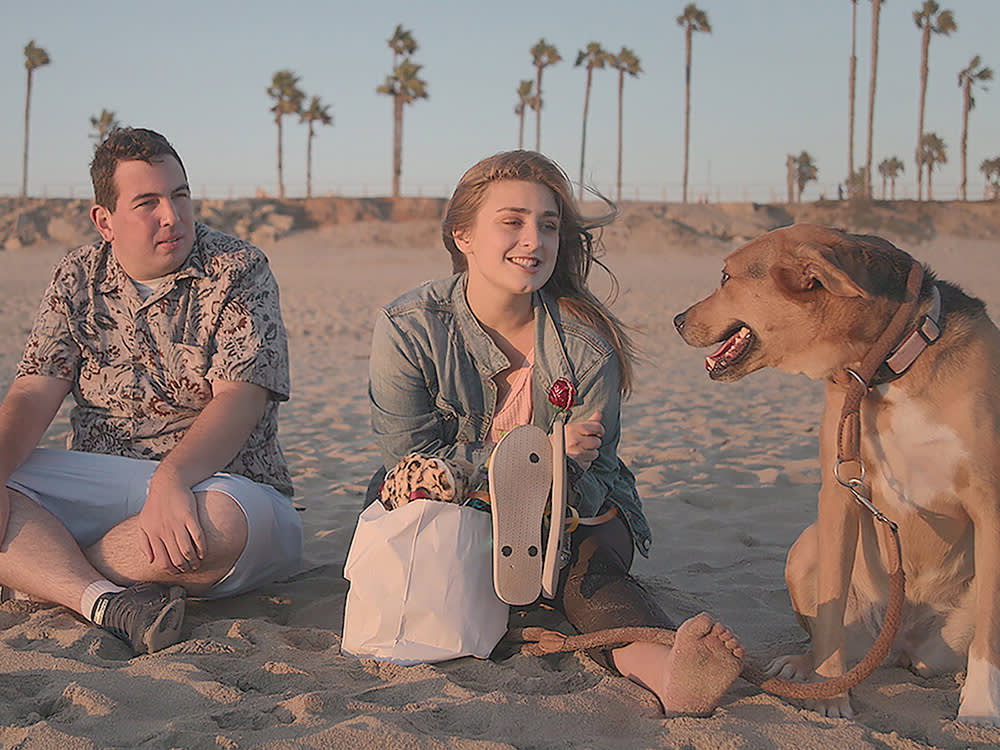
It is easy, and a little lazy, to say that dogs are good for autistic people because dogs are good for everyone. That is true, but it misses what is actually remarkable here. The connection between dogs and people on the autism spectrum is not generic pet warmth scaled up. It rests on a genuine overlap in how the two minds work, and once you see that overlap, the bond stops looking like a nice side benefit and starts looking almost like a match by design.
Netflix’s Love on the Spectrum gave a lot of viewers their first real window into this. The show is full of dog people: participants whose constant companions are not props but partners. What the series captures intuitively, the ease an autistic person can feel with a dog that does not always extend to other humans, has a real explanation underneath. This article is about that explanation, and about what it means practically, including the difference between a beloved pet and a trained autism service dog.
The overlap: two minds that lead with the senses
Start with how each side processes the world. A common way to describe autistic cognition is that it is sensory and feeling-led rather than language-led. Where neurotypical thinking often runs through the brain’s verbal, executive machinery first, autistic experience frequently leads with raw sensory and emotional information, the input arriving before, and sometimes louder than, words.
Now consider a dog. A dog’s entire experience of the world is sensory and non-verbal. Dogs read body language, tone, scent, and emotional atmosphere with startling precision. They notice the storm before the thunder, the seizure before it surfaces, the blood-sugar crash, the shift in your mood the moment you walk in. They do all of it without a single word.
That is the crux: a dog meets an autistic person on the channel the person is already tuned to. There is no demand to translate feeling into the right phrase, no social script to perform, no penalty for processing the world through sensation. The dog is fluent in exactly the language that human conversation so often is not.
“When I explain this to families, I tell them the dog isn’t asking the autistic person to communicate the neurotypical way,” says Dr. Amara Solis. “Dogs work in feeling and sensation, and for a lot of my autistic clients, that’s home turf. The dog isn’t tolerating a different way of relating to the world; it’s the dog’s native way too.”
The autistic author and scientist Temple Grandin has written extensively about this very overlap, describing how she thinks in vivid, specific pictures rather than words and arguing that animals, also non-verbal and detail-driven, are visual thinkers in a parallel way. Her work helped popularize the idea that the gap between animal cognition and autistic cognition is narrower than most people assume, an idea that has only grown more influential as research has caught up.
The relief of being accepted without conditions
Beyond the cognitive match, there is the emotional one, and it may matter even more. So much of social life for an autistic person involves managing other people’s reactions: masking, decoding, bracing for judgment. A dog removes all of that. A dog does not need you to make eye contact, hold a conversation, or “pull yourself together.” It does not correct you. It simply accepts you and offers steady, uncomplicated companionship.
That non-judgment has concrete developmental upside, especially for autistic kids. A dog is a patient audience that never interrupts or evaluates. Children who talk to their dogs can practice speech and build confidence without fear of being corrected, and a reliable canine companion can be the secure base a child returns to after a social interaction goes wrong. The dog is both the practice partner and the safe harbor.
It works for adults too. The unconditional acceptance an autistic person may struggle to find in human spaces is exactly what a dog offers by default, and that reliability can lower the daily baseline of stress that makes everything else harder.
Pet, ESA, or service dog? The distinction that matters
Here is the practical piece most “get a dog” articles skip entirely, and it is important because the three are legally and functionally different.
- A pet provides companionship, routine, and the relationship described above. No special training or designation; the benefits are real but informal.
- An emotional support animal (ESA) is a pet formally recognized as providing comfort that helps with a diagnosed condition. An ESA needs no task training and does not have general public-access rights, though some housing protections can apply.
- An autism service dog is individually trained to perform specific tasks that mitigate the person’s disability, and that training is what grants public-access rights under the Americans with Disabilities Act.
Autism service dogs can be trained to do remarkable, concrete things: interrupting self-stimulating or self-harming behaviors, applying deep-pressure therapy to calm sensory or anxiety overload, guiding a person away from an overwhelming environment, and, for children prone to bolting, tethering safely to prevent them from running into danger. If you are considering a dog specifically for these functions, that is a different decision than adopting a family pet, and it is worth talking through with a reputable service-dog organization and your care team.
For many families, a well-matched pet is exactly right. For some, a trained service dog is life-changing. Knowing which you are looking for saves heartache later.
What the research is beginning to confirm
What autistic people and their families have long sensed is increasingly supported by data. Studies on companion animals point to reduced loneliness, lower stress, and broad mental-health benefits, and research specifically on autistic children and dogs has reported improvements in social interaction and reductions in family stress and anxiety after a dog joins the household. The shared activity a dog demands, walks, play, routine, layers physical-health benefits on top of the emotional ones.
The science is still developing, and a dog is not a treatment or a substitute for support and services. But the direction of the evidence lines up with the lived experience: for many people on the spectrum, the right dog is not just a comfort. It is a companion who speaks their language.
References
- Grandin T & Johnson C, Animals in Translation (visual and sensory-based cognition in animals and autistic people)
- Carlisle GK, “The Social Skills and Attachment to Dogs of Children with Autism Spectrum Disorder,” Journal of Autism and Developmental Disorders
- Wright HF et al., “Acquiring a Pet Dog Significantly Reduces Stress of Primary Carers for Children with Autism Spectrum Disorder,” Journal of Autism and Developmental Disorders
- Americans with Disabilities Act, U.S. Department of Justice, “Service Animals” guidance
- Assistance Dogs International, standards for service dogs (autism assistance dog tasks and training)
Leila Torres leads our Living coverage, from home life and travel to the products and rescue stories that come with sharing a life with animals. She edits and writes across the section, with a soft spot for pieces about the bond between people and their pets.
Meet our experts ↗Keep reading
 TrainingYour Dog Is Fluent in Play. You're the One Who Can't Read the RoomDr. Nina Kohl · 5 min
 LivingSofía Valdés's Corgi Pees on Her Pillow Out of Spite. She Wrote a Love Song About Her Anyway.Sara Lim · 6 min
 LivingThe 'Love Hormone' Loop With Your Dog Is Real. The Famous Part Keeps Falling Apart.Dr. Mara Chen · 9 min
 LivingFive Minutes of Dog Video, Measurably Less Stress. But Not the Videos You're Thinking Of.Nina Vasquez · 4 min
 LivingA Border Collie Broke Tegan Quin's Independence. Then It Wrote Her Album.Leila Torres · 6 min
 LivingThe #1 Thing People Love Doing With Their Dogs Isn't the WalkMarcus Webb · 5 min