


A Border Collie Broke Tegan Quin's Independence. Then It Wrote Her Album.
Tegan Quin didn't want a dog. She got a herding puppy, went to couples counseling over it, and came out with the most vulnerable record Tegan and Sara have made.
The convenient version of this story is that a musician got a dog and the dog made her happy and the happiness made its way onto a record. That is not what happened to Tegan Quin.
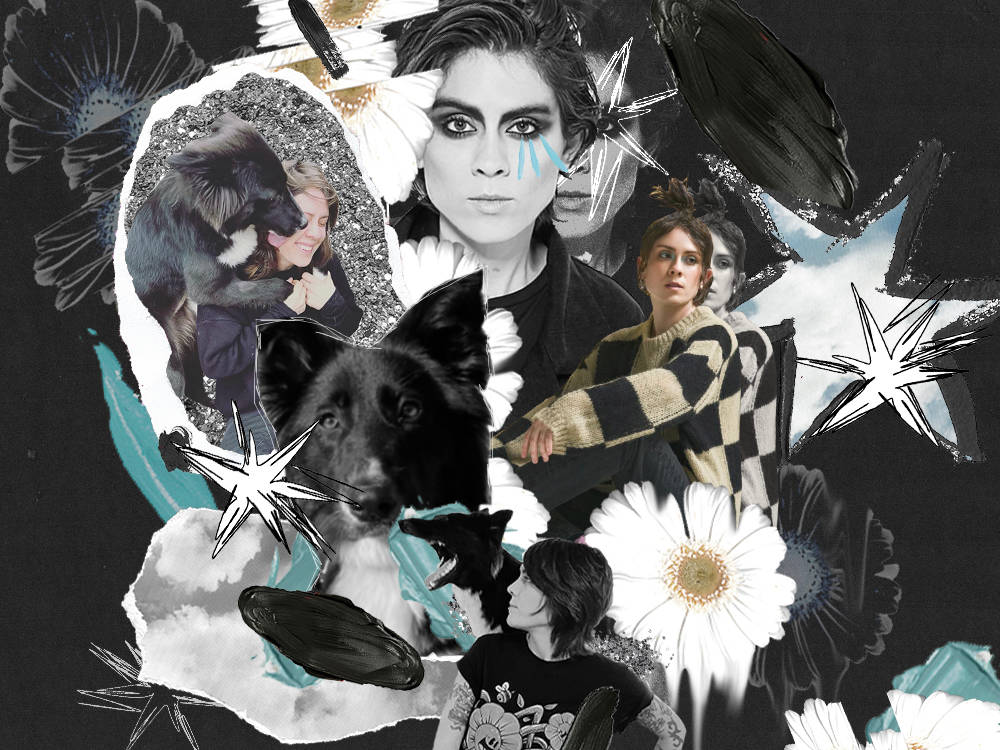
What happened is that the older half of Tegan and Sara (by eight minutes) adopted a Border Collie and German Shepherd mix named Georgia, discovered that her entire sense of autonomy had been quietly repossessed, ended up in counseling with her partner about it, and only then found the material for the most emotionally exposed songwriting of her career. Crybaby, the duo’s tenth album, arrived in October 2022 and got read as a pandemic record. It is also, partly, a dog record, and the dog is the reason it goes as deep as it does.
She did not want the dog
Quin has been unusually blunt about this. She describes herself as a free spirit, someone who felt real guilt about her touring schedule and did not want to hand her partner the daily reality of a puppy. Her partner wanted the dog badly. They got the dog.
Then came the part nobody posts about. Neither of them would complain. Quin would not complain because she did not want her partner to feel guilty for pushing. Her partner would not complain because she did not want to hand Quin the satisfaction of having been right. Two people, one small herding dog, and a household running on politeness and suppressed panic.
They went to counseling. Quin’s account of it is very funny and very familiar: within half an hour, nobody was talking about the dog anymore. They were talking about a couple who avoids conflict with each other, which is a thing you can go years without noticing until an animal walks into your house and reorganizes your entire life. The dog was not the problem. The dog was the audit.
The dog she got was not an easy dog
She would tell you this herself, loudly. Georgia is a working breed on both sides, and Quin has described her as running at a permanent 12 out of 10, always herding, always requesting a job. People warned them. Border Collies are demanding animals and a genuinely questionable choice for a first-time dog owner, and Quin has since become the friend who calls you when you announce you are getting a puppy and gently suggests that you consider an adult dog instead.
So they built a life around the work. Structured walks where roughly half is sniffing and the other half is a tight heel. Training that taxes her brain rather than just her legs, like being asked to hold position on a bench while her humans walk away. A dozen toys learned by name, hidden around the house, retrieved on request and then put away. Swimming lessons, because they live on the ocean. Retrieval, ball games, off-leash time daily.
The reward is a dog who is, in Quin’s words, maybe manically happy. The cost is that if nobody gives her a task, she will stand there and stare at her humans, waiting to be told what to do.
What the dog did to the songs
Georgia physically inserted herself into the record. Quin writes in a backyard office, and Georgia came to work with her three days a week during the writing of Crybaby. Guitar, it turns out, distressed her. She would come running over, put her paws in Quin’s lap, and look deeply concerned, which Quin attributes to the narrow gap between singing and crying, as far as a dog is concerned. Georgia is audible on the demos. She once tried to go through a window at a passing bird.
The deeper intrusion was editorial, and it came from her twin. Sara’s half of the record had gone somewhere very heavy, into her own life and the enormous questions attached to it, and she looked at Tegan’s songs and told her, essentially, that the melodies were fine but she was not digging. Write about the dog, she said. You talk about her constantly, and about what she has done to your relationship and your life.
She was right. One of those songs, “I Didn’t Know What I Was Missing,” did not make the album. Quin has described it as being about the loss of independence, about wanting something, getting it, and then sitting with the question of whether you actually wanted it. That is the Crybaby thesis in one line, and it came out of a puppy.
The part about unconditional love, which is not sentimental
Quin and her sister do a great deal of work for the LGBTQ+ community, and when asked why an animal matters while doing that kind of work, she does not give the greeting-card answer. She reaches for a book, Helen Humphreys’s And a Dog Called Fig, about a writer’s life with dogs and the strange intimacy of that companionship when your job is isolation.
Her own version is blunter. However consumed she might like to be by her own problems, a dog who needs a walk simply does not permit it. There is no time. That is not a metaphor for healing. It is a leash and a door and a schedule, and it turns out that is what the healing actually looked like.
What happened next
Crybaby came out in October 2022 and toured through 2023. High School, the coming-of-age series Quin and her sister developed with Clea DuVall from their memoir, ran for one season on Amazon’s Freevee; despite a second season being written, the show was cancelled in May 2024, and Freevee itself has since been folded into Amazon’s other services. The twins’ book about twins, the science-y one Quin mentioned owing a publisher, remains part of a long list of projects.
The dog project, though, is the one that stuck. Quin has said the experience of living with Georgia has been a well of inspiration and that she has more work in the pipeline about what dog ownership did to her life. Which is a strange sentence to write about a woman who, four years ago, told her partner that getting a puppy was the dumbest thing they had ever done, and who now says she would not give her up for anything.
Leila Torres leads our Living coverage, from home life and travel to the products and rescue stories that come with sharing a life with animals. She edits and writes across the section, with a soft spot for pieces about the bond between people and their pets.
Meet our experts ↗Keep reading
 LivingThe 'Best Family Dog Breed' Is a Myth. Here's What Actually Predicts a Great OneClaire Sutton · 6 min
 LivingThe Best Companion Dog Breeds, Matched to How You Actually LiveNina Vasquez · 10 min
 Training'Gentle Parenting' Your Dog Isn't Permissive. That's the Part People Get Wrong.Dr. Nina Kohl · 9 min
 TrainingBaby-Talking Your Dog Isn't Silly. It's Science.Marcus Webb · 5 min
 LivingYour Dog Isn't Getting Sweeter in Winter. They're Getting Cold.Dr. Lena Park · 7 min
 LivingA Comment on Instagram Got a Two-Legged Street Dog a Mercedes WheelchairJames Okafor · 5 min