


Your Dog Isn't Getting Sweeter in Winter. They're Getting Cold.
Most seasonal snuggling is a heat transaction, plus a schedule change on your end. But one kind of winter clinginess is pain, and it's the one people find most flattering.

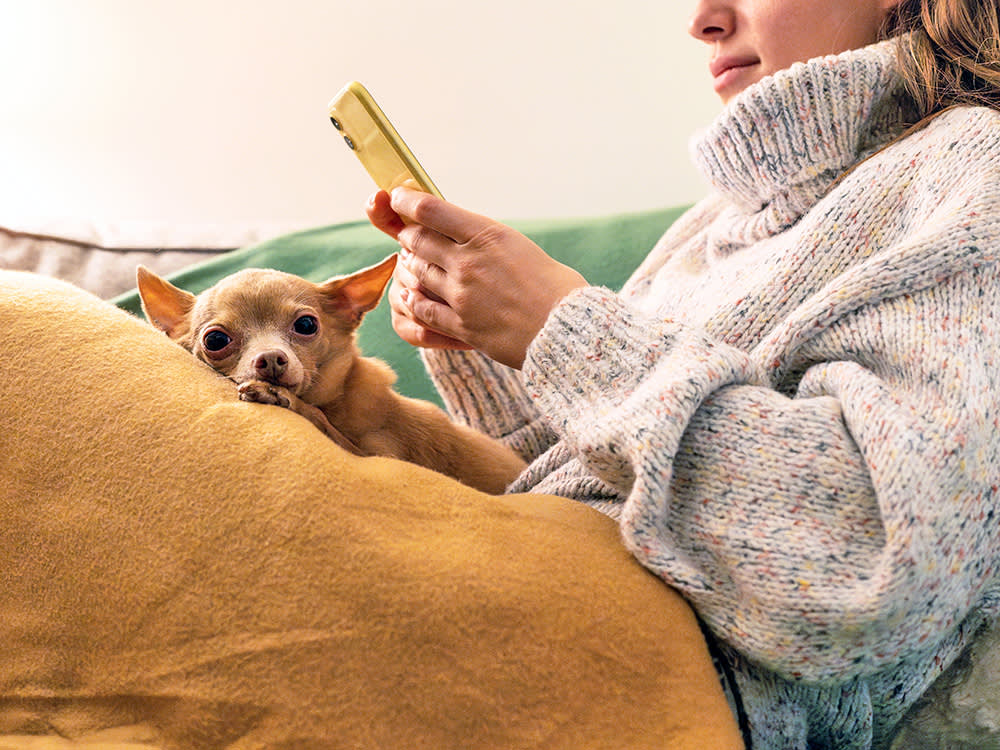
There’s a version of this story everybody likes: the days get short, the house gets cozy, and your dog, moved by the season, decides to love you more.
Here’s the less romantic version, which is also the true one. Your dog is running a small, warm, energetically expensive body, the ambient temperature dropped, and you are the warmest object in the room.
That doesn’t make the cuddle fake. It makes it a transaction, and understanding the terms is what lets you spot the one winter cuddle that is actually a symptom.
The heat math
Dogs are wired to seek warmth when it’s cold. It’s basic survival behavior, and it never left them, no matter how many memory-foam beds they own. Pressing against a warm body conserves heat and lowers the energy your dog has to burn to stay at temperature. Cheaper than shivering, and much more pleasant.
Some dogs feel the drop long before others:
- Small dogs. More surface area relative to their volume, so they shed heat faster. A Chihuahua is losing heat all day.
- Short-coated and single-coated dogs. Less insulation, straightforwardly.
- Lean dogs. Little body fat, little buffer. This is why sighthounds are famously the world’s most committed blanket thieves.
- Puppies. Poor thermoregulation, high heat loss.
- Seniors. Thinner coats, sometimes weaker circulation, less muscle mass. They notice the cold and they keep noticing it.
And on the other end: a Husky, a Malamute, or a thick-coated shepherd may want less contact in winter, not more. If your northern-breed dog goes and lies on the coldest tile in the house in January, they’re not sulking. They’re comfortable.
Warmth-seeking is one of the oldest behaviors an animal has, and it looks exactly like affection. You can enjoy the snuggle and still notice that your dog stopped needing it the day the heat came back on.
The other half: you changed, not the dog
Here’s the part the affection story leaves out. In winter, we become dramatically more available.
More evenings on the couch. Fewer outings. Longer stretches of the household stationary in one warm room. Your dog’s opportunity to cuddle roughly doubles, and their behavior tracks the opportunity. Some of what feels like a change in your dog is a change in your calendar.
Winter also reshapes the house in ways dogs notice more than we do. Holiday guests. A tree indoors. Furniture moved. Fireworks at New Year’s. For a dog who finds any of that stressful, seeking you out is a comfort behavior, and it has nothing to do with the temperature. If your dog gets clingy in late December but not in a cold, quiet February, look at your social calendar rather than the thermostat.
Short days matter too. Less daylight means less activity and, for some dogs, lower mood and more sleeping. That can read as clinginess.
The cuddle that’s a symptom
This is the one to watch for, and it’s insidious precisely because it feels good.
An older dog who suddenly wants to be pressed against a warm body all winter may be seeking heat as pain relief. Cold, stiff joints are uncomfortable, and dogs with arthritis often gravitate to soft bedding, sunny patches, radiators, and you.
Be honest about the evidence here, because it’s more mixed than the internet suggests. In people, the link between cold, damp weather and joint pain is reported constantly and supported inconsistently. In dogs, the small number of studies that have looked found only very slight effects, like a modest dip in activity on colder, darker days, without clear changes in pain scores. So “cold weather makes arthritis worse” is a reasonable working theory, not a proven mechanism.
What is not in doubt is that arthritis is common, underdiagnosed, and treatable, and that a dog who is suddenly stiff, slow to rise, reluctant on stairs, or newly obsessed with warm surfaces deserves an exam. Winter doesn’t cause the arthritis. It just makes it visible.
Take the same seriousness to any of these appearing alongside new clinginess:
- Limping or stiffness, especially in the first few minutes after a nap
- Weight gain, hair thinning, or a dull coat
- Appetite change
- Much more sleeping, or lethargy
- Heat-seeking that looks compulsive, like a dog trying to get under a radiator
Weight gain plus cold intolerance plus lethargy is a classic hypothyroid picture, and it is very easy to write off as “he’s just cozy in winter.” A blood test settles it.
Keep them warm without being the radiator
Your body heat is a nice bonus. It shouldn’t be their heating system.
- Heated or insulated beds for seniors, thin-coated, and small dogs. Raise the bed off cold floors, or put it on a rug.
- Coats and sweaters for small, lean, and short-haired dogs on walks. Not a fashion statement, a functional layer. Double-coated breeds generally don’t need one and can overheat in one.
- Watch the paws. Ice-melt salt burns and dries pads, and the licking that follows can mean ingesting chemicals. Wipe paws after walks, or use boots if your dog tolerates them.
- Replace the outdoor time. Less walking means more indoor work: short training sessions, food puzzles, scent games, a five-minute find-it around the living room. A dog who is bored in February will find their own project.
- Give them a choice. Put a warm bed and a cooler spot in the same room and let them pick. Their choice tells you more than your thermostat does.
Ask before you snuggle
One more thing, because winter is when people get handsy with dogs who didn’t ask.
Try the consent test: pet your dog for three seconds, then stop and take your hands away. A dog who wants more will lean in, paw at you, or reposition. A dog who moves away, freezes, turns their head, licks their lips, or shows the whites of their eyes has answered you, and the answer is no.
That matters most for the dogs who genuinely don’t want to cuddle, cold or not. A German Shepherd may spend all winter beside you and never on you. That’s not distance, it’s their preference, and respecting it is what keeps them beside you at all.
What newer research adds
Two useful updates.
First, the cold-and-joints link is worth holding loosely. Recent reviews in human osteoarthritis find the weather effect inconsistent at best, and the small canine work points the same direction. Don’t dismiss your dog’s stiffness because it’s January and everyone’s stiff in January. Get the joints looked at, because effective arthritis care, weight control, joint-supporting medication, physical therapy, and controlled exercise, works far better than a warm blanket.
Second, veterinary medicine has gotten much more insistent that owners are the ones who catch chronic pain, because dogs mask it in the exam room. The signals are small and behavioral: a change in how they settle, where they sleep, how eager they are to get up. A dog who has become a devoted winter cuddler for the first time in eight years has changed their behavior. That’s worth a conversation, even if the answer turns out to be that they’re just cold.
References
- Cornell University College of Veterinary Medicine, Riney Canine Health Center. “Osteoarthritis.” https://www.vet.cornell.edu/departments-centers-and-institutes/riney-canine-health-center/canine-health-topics
- American Animal Hospital Association. “2022 AAHA Pain Management Guidelines for Dogs and Cats.” https://www.aaha.org/resources/2022-aaha-pain-management-guidelines-for-dogs-and-cats/
- Bhatia, Deepak, et al. “Associations Between Weather Conditions and Osteoarthritis Pain: A Systematic Review and Meta-Analysis.” Seminars in Arthritis and Rheumatism, 2023. https://pmc.ncbi.nlm.nih.gov/articles/PMC10120534/
- Merck Veterinary Manual. “Hypothyroidism in Dogs.” https://www.merckvetmanual.com/endocrine-system/the-thyroid-gland/hypothyroidism-in-animals
- American Veterinary Medical Association. “Cold Weather Pet Safety.” https://www.avma.org/resources-tools/pet-owners/petcare/cold-weather-animal-safety
Common questions
Which dogs get cold fastest?
Small dogs, thin or short-coated dogs, lean dogs with little body fat, puppies, and seniors. Thick double-coated northern breeds are on the other end and often want less contact, not more.
When is winter clinginess a red flag?
When it arrives with limping, stiffness, weight gain, appetite changes, or a dog who suddenly sleeps far more. Those pair with pain and with thyroid disease, and a dog seeking warmth can be a dog seeking relief.
Dr. Park is a board-certified emergency and critical care specialist. She reviews our health and safety content for clinical accuracy and contributes guides on recognising urgent conditions. Her focus is helping owners act quickly and correctly when it matters most.
Meet our experts ↗Keep reading
 LivingWalking Dogs for a Living Is a Real Business. The Boring Parts Are What Make It WorkJames Okafor · 7 min
 LivingYour Dog Won't Break the Bank With One Big Bill. It's the Slow Drip That Gets YouMarcus Webb · 8 min
 LivingThe West Village Dog Isn't a Breed. It's a Budget.Nina Vasquez · 6 min
 LivingADHD Doesn't Make You a Bad Dog Parent. Your Reminder App Does.Leila Torres · 8 min
 LivingStop Dog-Proofing Your Home. One Designer Did the Opposite.Sasha Ford · 7 min
 LivingYou Have 900 Photos of Your Dog Asleep. Here's What That's About.Tom Hadley · 5 min