


The #1 Thing People Love Doing With Their Dogs Isn't the Walk
A survey of 1,900 dog owners asked what they most enjoy doing with their pup. The runaway winner wasn't hiking, fetch, or even the daily walk. It was the couch.

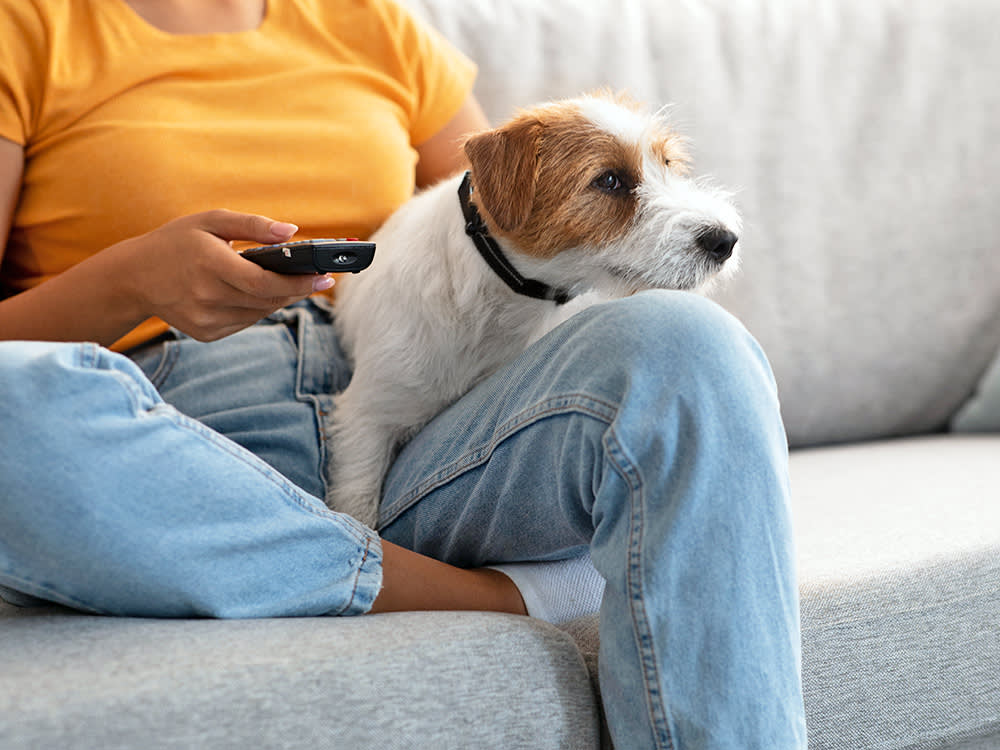
If you had to guess the activity dog owners most love sharing with their pets, you might reach for something wholesome and active: a hike, a game of fetch, the evening walk around the block. You would be wrong. When Talker Research put the question to 1,900 dog owners, the answer that beat everything else was gloriously lazy. People most love watching TV with their dogs.
Sixty-nine percent of respondents named it their favorite thing to do together, and it is not hard to see why. Binge-watching leaves your hands completely free for belly rubs and ear scratches, and your dog gets what most dogs want above all: their person, staying still, within nuzzling distance, for hours. It is a rare arrangement that suits both parties perfectly.
Where everything else landed
The rest of the ranking reads like a gentle roast of how we actually spend time with our dogs. Exercising came in second at 64 percent — the one clearly good-for-everyone option on the list. After that, the energy drops off fast: napping together took 58 percent, eating meals at the same time 55 percent, and getting ready in the morning a surprising 33 percent. Traveling with a dog appealed to 29 percent. Dead last, at a mere 8 percent, was taking the dog to brunch, which suggests most owners have quietly concluded that a patio mimosa is not worth the logistics.
One generation broke from the pack. Gen-Z respondents were the only group that did not crown TV their top activity. Instead, 63 percent named mealtime their favorite — sitting down to eat in sync with their dog, a more deliberate ritual than passive co-viewing.
What people would give up for their dogs
The survey also poked at a stranger question: what would you sacrifice to buy your dog more time? Offered three extra years of their pet’s life, different generations bargained away different things. Gen-Z was most willing to surrender their favorite foods. Millennials and Gen-Xers said they would give up coffee forever. And 42 percent of baby boomers said they would rather have every show and movie spoiled for them for good.
The most eyebrow-raising finding cut across every age group: roughly one in seven owners said they would break up with a partner or spouse if it meant extending their pet’s life. Make of that what you will about the state of modern romance.
The affection stats, at least, were less alarming and more adorable. Sixty-four percent of owners tell their dog “I love you” every single day. Fifty-five percent share their bed with their pup, and 53 percent have outfitted their homes with more than one dog bed and a pile of toys. About 92 percent report snuggling and kissing their dog, and the average owner does so roughly six times a day — which, conveniently, is easy to rack up during a long night of TV.
But is the dog actually watching?
Here is the wrinkle in this cozy picture: it is far from clear that dogs enjoy television the way we do. Dogs can recognize images on a screen, but a dog who sits transfixed through an entire episode is genuinely rare. Screens do not reliably hold a dog’s attention or entertain them the way they occupy a person, so a lot of “watching TV together” is really a dog happily napping next to a glowing box while their favorite human finally sits still.
That said, some dogs clearly do tune in, and what grabs them depends a lot on who they are. Breed and instinct matter: a herding dog might lock onto animals darting across the frame, while a terrier bred to hunt vermin perks up at a squeak or a scurry. A 2024 survey found that roughly 90 percent of owners believe animals onscreen grab their dog most, with moving balls and vehicles also drawing a look.
What newer research adds
Since this survey made the rounds, scientists have taken a closer look at the dogs on the other end of the remote — and found that a dog’s TV habits say something about their personality. In a 2025 study published in Scientific Reports, researchers built a “dog TV viewing” scale from the reports of hundreds of owners and analyzed the habits of 453 dogs.
The patterns were telling. Dogs their owners described as excitable were more likely to track objects across the screen as if they were real, chasing the action. Dogs described as fearful or anxious reacted more to sounds — a car engine, a doorbell — than to what was on screen. Across the board, animals onscreen drew the biggest response, with about 45 percent of dogs always reacting to barks and howls, and the average dog clocked just over 14 minutes of viewing.
The researchers suggested those temperament differences could even help shape training for dogs who bark at or lunge at the TV. So the next time your dog ignores your show completely or loses their mind over a doorbell in a commercial, that is not random. It is a small, honest readout of who they are.
References
- Talker Research / OnePoll survey of 1,900 U.S. dog owners on shared activities and pet-related sacrifices, 2025.
- Bognár, Z., et al. (2025). Characterizing TV viewing habits in companion dogs. Scientific Reports. https://pmc.ncbi.nlm.nih.gov/articles/PMC12271434/
- 2024 owner survey on canine on-screen content preferences (animal content, ball sports, vehicles).
Marcus Webb writes about the gear, gadgets, and everyday choices that make life with a pet easier. His coverage runs from product picks to training and the causes worth paying attention to, always with an eye on what actually earns a place in your home.
Meet our experts ↗Keep reading
 LivingThe Dog Who Calms Olympians Needed Help Himself. How Beacon Pulled ThroughDr. Mara Chen · 4 min
 LivingYour Dog Won't Break the Bank With One Big Bill. It's the Slow Drip That Gets YouMarcus Webb · 8 min
 LivingWalking Dogs for a Living Is a Real Business. The Boring Parts Are What Make It WorkJames Okafor · 7 min
 LivingYour Dog Is the Cheapest Anti-Anxiety Tool You Own. Most People Waste It.Dr. Nina Kohl · 5 min
 LivingThe Best Dog Breeds for Kids, and Why Breed Matters Less Than You ThinkDr. Nina Kohl · 11 min
 Living'Certified' Pet Sitter Means Almost Nothing. Here's What Actually Vets OneSara Lim · 6 min