


The Best Dog Breeds for Kids, and Why Breed Matters Less Than You Think
Breed is a starting filter for a family dog, not a guarantee. A veterinarian explains which 11 breeds tend to do well with children, the temperament traits that actually predict a good family dog, and why a well-socialized individual beats a 'kid-friendly' label every time.

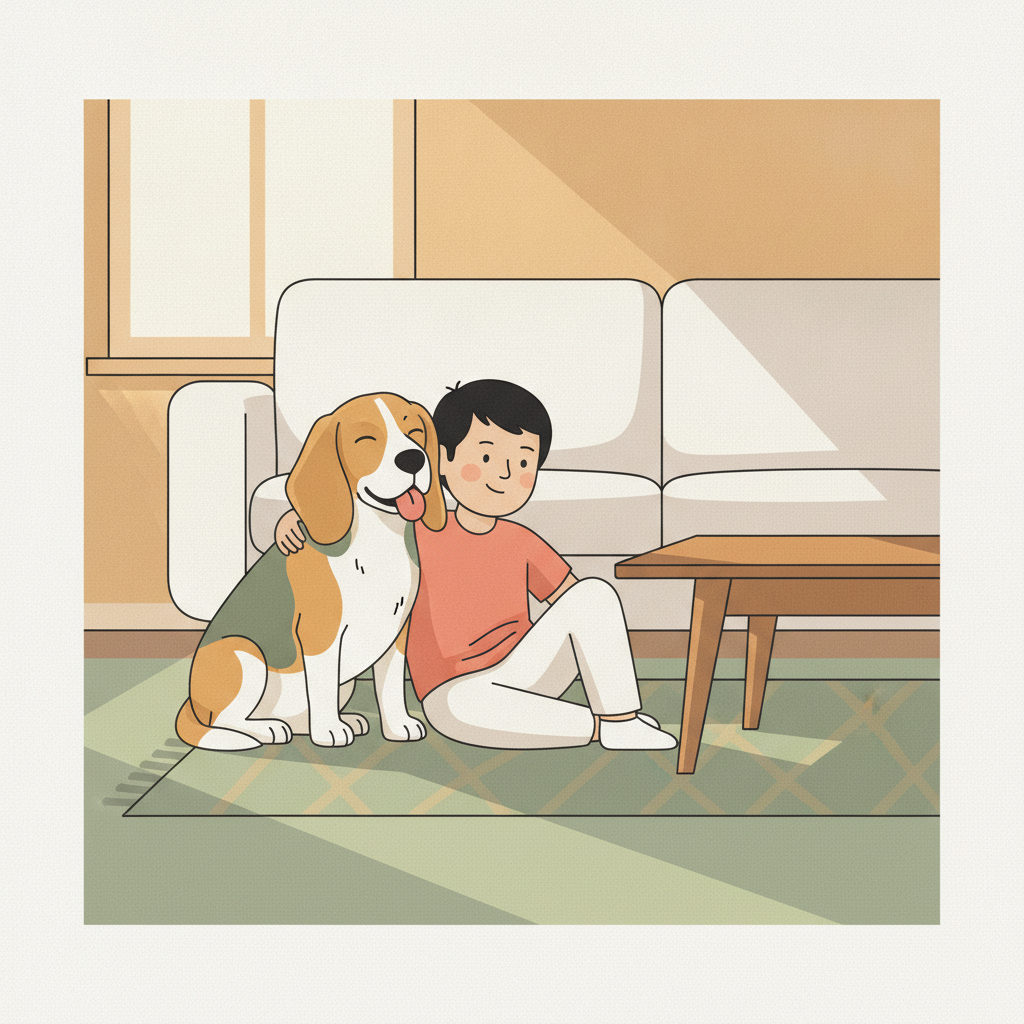
Raising kids alongside dogs is a rewarding experience for everyone involved. Dogs teach children empathy and responsibility, and over time, with trust, a lifelong bond can take root between a young child and a dog. When my own children were small, family dog walks were a big adventure.
Now that they are teenagers, walking the dogs is still something they actually like to do. And while some of my texts get radio silence, a photo of the dogs being goofballs at home always earns a reply and keeps us connected.
Breed is a filter, not a promise
Here is the thing most “best breeds for kids” lists bury: breed predicts tendencies, not the dog you actually bring home. My first dog, Grendel, was a large American Pit Bull Terrier-Rottweiler cross, a combination plenty of lists would warn families away from. She was so patient when my small children climbed all over her brindle back that she earned the nickname “the canine nanny.” Meanwhile, I have met nervous, snappy dogs from every “kid-friendly” breed on this page. The breed got me in the right ballpark; her individual temperament and early socialization made her the dog she was.
So read the list below as a starting filter that stacks the odds in your favor, not a guarantee. The traits that actually make a dog good with children cut across breed lines: a calm rather than anxious baseline, a high tolerance for being handled (a small child will, at some point, grab an ear, a paw, or a tail), and an even temper that doesn’t escalate to a bite or a snap even when provoked. A good family dog also shrugs off the noise and chaos kids generate and doesn’t try to herd them as they tear around the house.
Temperament is the whole ballgame: you are looking for a dog that stays level when a toddler grabs an ear, and whose first instinct is to walk away rather than retaliate. Those are temperament traits. You can find them in a so-called kid-friendly breed and miss them entirely in the same breed next door, which is why how a dog was raised matters as much as what it is.
After Grendel passed, we rescued two mixed-breed puppies and had to teach my four-year-old daughter not to squeeze them too hard, the other half of the equation that no breed choice fixes: the kids need training as much as the dog does.
11 dog breeds that tend to do well with kids
When choosing a family dog, start with your lifestyle. Dogs motivate us to get outside, but if your family prefers a long stroll through a museum to a long walk in the rain, sporting and hunting breeds will not be a great fit, since they need a lot of exercise regardless of the weather.
The list below runs roughly from the dogs that demand the most action down to the ones happiest snoozing through a movie: match the top of the list to a hiking family and the bottom to a homebody one. If you live in an apartment, you may want a breed that thrives in smaller spaces. Many of the breeds below are not only good with kids but also good for first-time pet parents. Note that a few of these are brachycephalic (flat-faced) breeds, which need special consideration around exercise and medical care. If you adopt one of these breeds, always factor in their specific needs and talk to your vet. Please also consider rescuing any of these breeds rather than buying from a breeder. Shelters are overcrowded, and purebred rescues exist for exactly this reason.
Boxer
The Boxer is a large, muscular, short-haired dog originally bred to hunt larger game. “They’re energetic and playful, and at home they’re loyal and affectionate,” Dr. Kohl says. “Boxers tend to enjoy playing with the kids in the house and to tolerate a child’s antics without getting upset, which makes them a strong family pet.” The flip side of that exuberance is size and bounce: a young Boxer can bowl over a toddler without meaning any harm, so early training to settle is worth the effort.
Labrador Retriever
There are plenty of reasons Labs are such popular family dogs. They are energetic, playful, and great with both adults and children. Their retriever instincts might prompt them to swipe a kid’s toy now and then, but they genuinely love playing with children. As Dr. Kohl puts it, “A Lab has the frame to absorb a preschooler treating it like a jungle gym, plus a quick brain that takes readily to training, provided the groundwork gets laid in that first year.” The one caution: that energy needs a real outlet, so a Lab is a better fit for an active family than a sedentary one.
Golden Retriever
Goldens, another large breed, embody the image of the classic family dog. They are gentle, calm, and friendly toward everyone, strangers included. Like Labs, they will steal kids’ toys, but their playful nature more than makes up for it. They are intelligent and deeply eager to please, which is exactly why they rank among the easiest breeds to train, a real advantage for a busy household. Like the Lab, a Golden needs daily exercise and regular brushing for that heavy coat.
Shetland Sheepdog
The Shetland Sheepdog, or Sheltie, is a herding breed with beautiful long, straight hair resembling a miniature Collie. Known for their intelligence and loyalty, they are gentle, quiet, and love to please. Their size and personality make them a suitable family dog, with one herding-breed quirk to manage: they may treat small children like sheep and try to herd them, nipping at heels to move them along. “Working breeds like the Sheltie need a lot of daily mental and physical exercise, and if you can’t provide that, a different breed is the kinder choice,” Dr. Kohl says.
Poodle
First, a quick Poodle tutorial: the terms toy, mini, and standard refer to size, with personality shifting accordingly. Toy Poodles stand about 10 inches at the shoulder, energetic but gentle and quiet, which suits them to children. Miniature Poodles measure 10 to 15 inches and are active, intelligent, and very responsive to training. Standard Poodles stand 15 inches or more. “Standards were bred to retrieve from water, so they’re athletic but also intelligent and calm, which makes them genuinely well suited to a home with kids,” Dr. Kohl says. All three sizes are low-shedding, a plus for some allergy households, but that curly coat is non-negotiable grooming every four to six weeks for life.
Beagle
Beagles are intelligent, small- to medium-sized dogs bred to hunt rabbits. As hounds, they can be vocal and will bay to let you know when they want something or when someone is at the door, which is worth weighing if you have close neighbors or a baby who naps. But they are sturdy, generally trainable, and, when well-socialized, their natural affection and playfulness make them a good fit for children. Their nose, like the Lab’s energy, needs an outlet: plenty of sniff walks and a secure yard, since a Beagle on a scent does not hear “come.”
Shih Tzu
The Shih Tzu (sheed zoo) is a sturdy toy breed that originated in China, characterized by its smushy-faced (brachycephalic) look and its social, affectionate personality. “A Shih Tzu splits its day between games and naps on someone’s knee, and that rhythm happens to match a family’s rhythm perfectly,” Dr. Kohl says. As a flat-faced breed, they are heat-sensitive (the same caution applies to the Bulldogs at the end of this list) and need that long coat groomed regularly, but their sturdiness for a small dog is a real plus around children.
Bichon Frisé
The Bichon Frisé (bee-shawn free-zay) is another great breed for families wanting a small dog. White and fluffy, with cheerful, affectionate personalities, they are ideally suited to family life. Intelligent and eager to make everyone happy, they are typically easy to train. The Bichon Frisé earns bonus points as a less-allergenic breed, though its wooly coat needs grooming every four to six weeks.
Cavalier King Charles Spaniel
The Cavalier King Charles Spaniel was bred as a lap dog and prefers snuggling above all else. It enjoys play and walks, but it truly excels at cuddles. For children who are nervous around larger or more boisterous dogs that might knock them over, a Cavalier is a gentle choice. “This is a breed that wants a lap more than a job, and that soft, patient disposition is exactly what a hesitant kid needs,” Dr. Kohl says. Worth knowing before you commit: the breed has well-documented heart (mitral valve) and neurological predispositions, so buy only from a health-testing source or rescue, and keep up with regular vet care.
Bulldog breeds
The three Bulldogs, French, English, and American, sit at different points on the energy dial but share an easy, people-oriented steadiness. Frenchies supply the comedy; English Bulldogs are the mellowest of the trio. “The American line still carries its old hunting-and-guarding job in its head, so expect more muscle and more independence. Start the socialization young, though, and they settle into family life just fine,” Dr. Kohl says. One important caveat for the French and English varieties: both are brachycephalic (flat-faced) and prone to breathing trouble and heat intolerance, so they need careful management in warm weather and a budget for higher vet costs.
Purebreds aside, what about a mixed breed?
One breed deliberately not on this list is “purebred.” Some of the best family dogs are mixed-breed shelter dogs, and an adult mix has a giant advantage over any puppy: the temperament you see is largely the temperament you get. A calm, kid-tolerant three-year-old at the shelter is a more reliable bet for a family than a breed label on an eight-week-old puppy whose personality is still forming. Shelters and breed-specific rescues are overcrowded, so consider adopting before you buy, and ask the staff specifically for a dog that has been around children.
The bottom line
Choosing a family dog is a big decision that calls for research and an honest look at your lifestyle and living situation. Size, intelligence, temperament, energy level, budget, life span, and predisposition to genetic conditions are all worth weighing. Whatever breed you land on, welcoming a dog into your family means a guarantee of unconditional love and lifelong lessons.
FAQs
What is the calmest family dog?
There is no single answer, but the Cavalier King Charles Spaniel and several giant breeds, including the English Mastiff, are reliably mellow. For researching temperament before you commit, the American Kennel Club’s Breed Temperament and Trait Guide is a useful starting point, with the same caveat that runs through this whole piece: it describes tendencies, not the individual dog.
What is the safest family dog?
The safest dog is a well-socialized one, full stop. Grendel weighed more than 100 pounds, looked intimidating, and terrified my husband’s family long before our son was born. I invested in pre-baby dog training, complete with recordings of crying babies, and after an adjustment period that I will admit had me worried, she became the consummate gentle giant. The lesson is exactly why naming a single “safest breed” is a mistake: variation among individuals dwarfs the differences between breeds. What reliably keeps kids safe is the human side of the equation. Supervise closely, especially with very young children, and once a child is old enough, enforce ground rules: no chasing the dog, no taking toys or food away, and never following a dog into a crate or other safe space or trying to drag them out of it. A dog that can always retreat from a child is a dog far less likely to ever feel cornered into snapping.
What are some other breeds that might be good family dogs?
Plenty of families love the quiet energy and lovable clumsiness of the giant “nanny dog” breeds, the Newfoundland, Great Dane, English Mastiff, and St. Bernard. As Dr. Kohl says, “A Mastiff is basically furniture, active in the yard, then flopped on the floor letting the kids climb on it.” Their sheer size means they can knock over a small child by accident, so supervision and training still apply. And it is worth saying plainly that bully breeds, like my Grendel, belong in this conversation too: an American Pit Bull Terrier raised with care is typically patient and tolerant with children and makes an excellent companion. As with every dog on this page, how it was raised matters more than the label it carries.
References
- “Dog Bite Prevention.” American Veterinary Medical Association. https://www.avma.org/resources-tools/pet-owners/dog-bite-prevention
- “Pets and Children.” American Academy of Pediatrics, HealthyChildren.org. https://www.healthychildren.org/English/family-life/family-dynamics/Pages/Pets-and-Children.aspx
- “Position Statement on Puppy Socialization.” American Veterinary Society of Animal Behavior (AVSAB). https://avsab.org/wp-content/uploads/2018/03/Puppy_Socialization_Position_Statement_Download_-_10-3-14.pdf
- “AKC Dog Breeds.” American Kennel Club. https://www.akc.org/dog-breeds/
Dr. Kohl is a board-certified veterinary dentist with a particular interest in preventive oral care. She reviews all dental health content at The Pet Times and contributes practical guides on home dental routines, professional cleaning, and oral disease prevention.
Meet our experts ↗Keep reading
 LivingOnly 15% of Dogs on Earth Are Purebred. This Book Draws the Other 85%.Sara Lim · 5 min
 LivingHis Dog Walks Into the Office at 5 P.M. and Ends the WorkdayJames Okafor · 6 min
 Living'Pup Pop' Is a Real Genre. These 7 Music Videos Prove the Dog Is the Best PerformerJordan Ellis · 6 min
 LivingStop Dog-Proofing Your Home. One Designer Did the Opposite.Sasha Ford · 7 min
 LivingThe #1 Thing People Love Doing With Their Dogs Isn't the WalkMarcus Webb · 5 min
 LivingWalking Dogs for a Living Is a Real Business. The Boring Parts Are What Make It WorkJames Okafor · 7 min