


Only 15% of Dogs on Earth Are Purebred. This Book Draws the Other 85%.
Lili Chin's 'Dogs of the World' illustrates 600-plus breeds in her signature minimalist style, and quietly makes the case that the village dogs and mutts we rarely picture are most of the dogs alive.

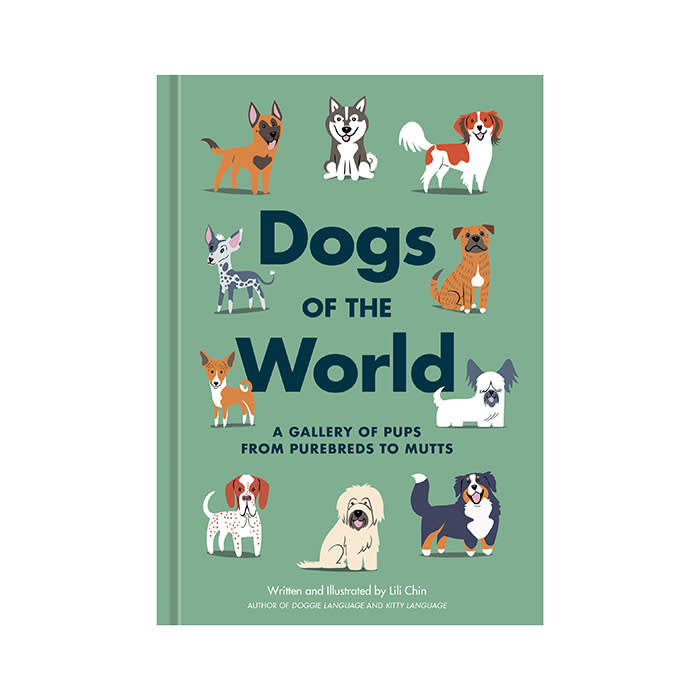
Ask most people to picture the world’s dogs and they will conjure a lineup of show-ring purebreds: the groomed Poodle, the noble Shepherd, the postcard Golden. Here is the fact that quietly upends that image, and that sits at the heart of illustrator Lili Chin’s book Dogs of the World: only about 15 percent of dogs on the planet are purebred. The other 85 percent, the mutts, the crosses, the free-ranging village dogs, are the actual global dog population. They just rarely get their portrait drawn.
Chin drew them anyway. More than 600 of them.
What the book actually is
Dogs of the World: A Gallery of Pups from Purebreds to Mutts arrived in April 2025, and it is exactly what the title promises and a bit more. Rendered in Chin’s clean, minimalist, instantly recognizable style, it catalogs over 600 breeds and types, each paired with a mini history. Beyond the individual portraits, the book digs into where breeds come from, how genetics and personality intersect, and the roles dogs have played in human life across centuries.
Crucially, it does not stop at the recognized purebreds. Chin gives real space to mutts, mixes, crosses, and the landrace and village dogs that evolved within specific regions rather than being designed by any kennel club. For readers used to breed books that treat those dogs as afterthoughts, seeing them drawn with the same care as the Westminster set is the whole point.
From a hobby to a global project
The book did not start as a book. About a decade ago, Chin began drawing dog breeds from around the world purely for fun, in the minimalist look she had developed. She eventually gathered roughly 300 of those “for-fun” drawings onto a series of posters, and those posters found her an international audience of dog lovers thrilled to finally see their rare local breeds represented. That response became the seed of Dogs of the World.
It follows two of her earlier illustrated titles, Doggie Language and Kitty Language, and by her own account she has personally met only about 100 of the breeds she drew, though she would happily meet as many of the rest as she can.
The choices behind the pictures
Part of what makes the book charming is a set of deliberate artistic decisions. Chin has explained that she was not aiming for photographic accuracy so much as a recognizable, appealing overall impression of each breed, studying many photos of each to capture its most common look. She has also noted how attuned she became to the variation within a single breed, having drawn so many Boston Terriers, the breed of her own late dog Boogie, that she is convinced no two of them look exactly alike.
There is a reason most of the dogs sport casual, low-maintenance haircuts rather than elaborate show clips. When Chin started the project years ago, much of her paid work involved drawing stressed, anxious dogs for canine behavior consultants. This was her antidote: she wanted every dog here to look happy, cheerful, and relaxed, with short enough coats that you can actually see their eyes and their smiles, the opposite of the serious, supermodel-mode grooming that dominates a lot of breed media.
Where it turns serious
For all its cheerfulness, the book does not flinch from the harder history behind dog breeding. Chin has described going down long research rabbit holes and confronting genuinely bleak material: generations of street mutts rounded up and euthanized simply for being judged worth less than pedigreed pets, and the inherited diseases that decades of inbreeding have locked into certain lines. She has spoken about the challenge of balancing fun, cute art with that heavier welfare information, and landed on the hope that a warm, giftable book is a good vehicle for getting important truths across to people who would never pick up a lecture.
That tension gives the book an unexpected argument. Chin has suggested that people lean on breed as an explanation for their individual dog’s behavior more than it deserves, because so much of what we treat as fixed, breed traits, historic jobs, ideal temperaments, even a breed’s supposed nationality, was constructed and decided by humans and has shifted over time. The friendly drawings are making a not-so-simple case: our categories for dogs are looser and more human-made than we like to admit.
Why it lands
Dogs of the World works because it celebrates the dogs that breed encyclopedias forget. The countless free-ranging street dogs and regional village dogs whose histories almost never make it onto a page finally share space with the pedigreed favorites. For a book that looks, at a glance, like a cute coffee-table gift, it does something quietly radical: it draws the dogs most of us have never learned to picture, and reminds us they are the majority.
References
Sara Lim leads our Product Picks coverage, testing and comparing the things pets and their owners actually use. From everyday essentials to home-and-style finds, she focuses on honest, useful recommendations rather than hype.
Meet our experts ↗Keep reading
 LivingHe's Dressed Beyoncé and Michelle Obama. His Irish Terrier Won't Wear a Thing.Nina Vasquez · 5 min
 LivingThe West Village Dog Isn't a Breed. It's a Budget.Nina Vasquez · 6 min
 LivingCelebrate the Holidays With Your Dog Without Landing in the ERNina Vasquez · 5 min
 LivingYou Have 900 Photos of Your Dog Asleep. Here's What That's About.Tom Hadley · 5 min
 LivingPhotograph Your Dog Like a Portrait, Not a Snapshot: Lessons From Winnie AuJordan Ellis · 9 min
 Living"My Last Dog Syndrome": Why Your New Dog Keeps Losing to a GhostDr. Nina Kohl · 7 min