


Photograph Your Dog Like a Portrait, Not a Snapshot: Lessons From Winnie Au
Winnie Au shot her book 'Cone of Shame' by treating dogs as seriously as human portrait subjects. Here's the story behind the book, the rescue who inspired it, and Au's working playbook for taking better photos of your own pet.
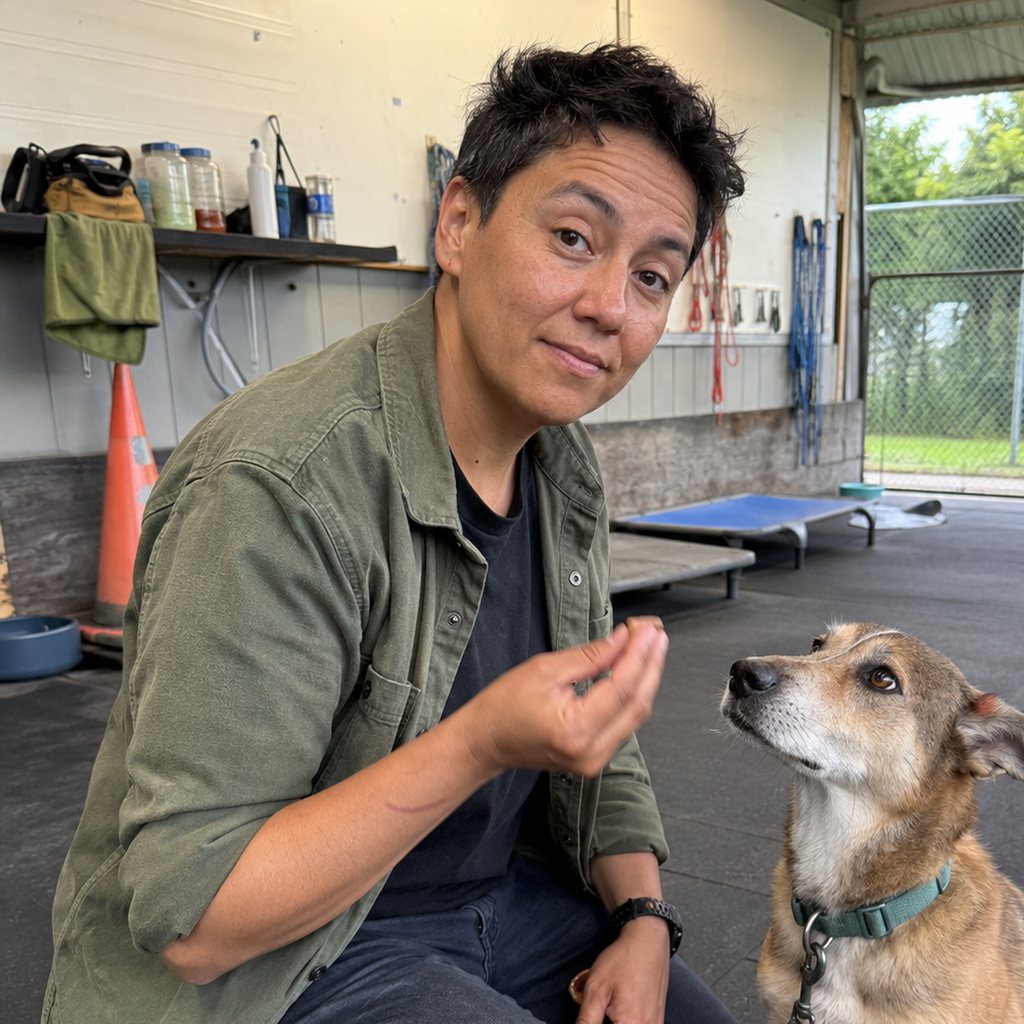
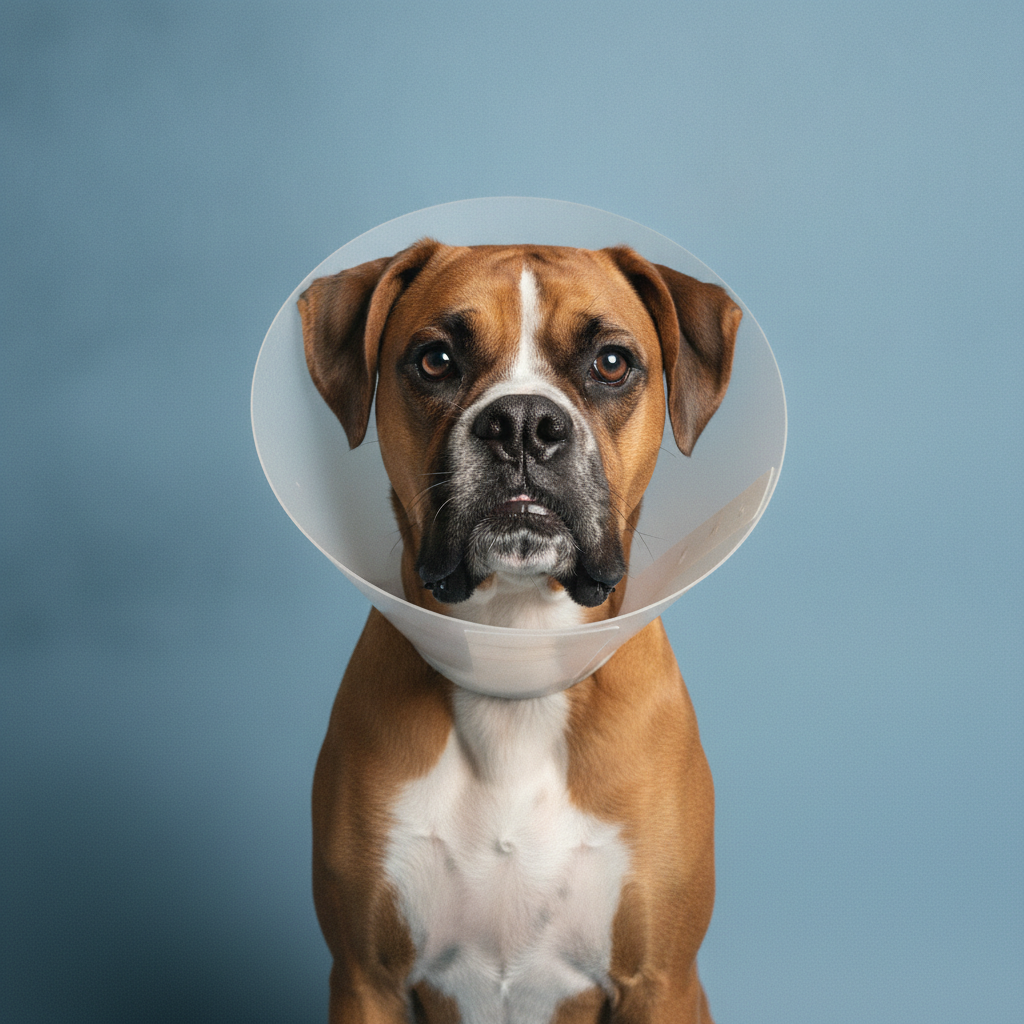
The reason your phone is full of blurry, forgettable dog photos is not your dog. It is that you are taking snapshots, and photographer Winnie Au takes portraits. That distinction, treating a dog with the same intention you would bring to a human subject, is the whole thesis of her book Cone of Shame, and it is also the most useful thing a pet parent can borrow from a professional. So we are going to do this in reverse: the story of the book first, because it is genuinely moving, and then Au’s actual working method, which you can use this afternoon.
The dog behind the book
Au had photographed for major magazines and brands when she snapped a portrait of a neighbor’s dog in her apartment building, beautifully lit by a window against artfully worn wallpaper. It was, she says, a painterly portrait of a very sweet dog, an image that was more than a snapshot, and it crystallized what became her signature: capturing dogs as equal to humans. A lifelong dog lover raised in Illinois near farm country, where a stray once simply appeared at the family’s house in the woods, Au has been drawn ever since to the relationship between people and animals and how completely they captivate us.
In 2012, she and her then-boyfriend, now husband, rescued a Corgi named Tartine, who died in early 2014 after being diagnosed with throat cancer just a year and a half into her life with them. Cone of Shame, a chic, witty, and soulful collection of dogs in elaborate Elizabethan collars, is dedicated to her. Tartine’s illness was the first truly hard thing Au and her husband went through together, chemotherapy and dog-hospital visits and all, and the series became a way to turn that grief into something useful. A portion of the book’s sales goes to Animal Haven’s Recovery Road Fund, which helps cover medical care for rescue animals. Among the 60 dogs in the book is Tartine’s “sister,” a rescued Basset Hound named Clementine, in a cone of her own.
The cones are art, not medicine
The collars in the book are not real medical cones. They were built from scratch for the project by Marie-Yan Morvan, a set and prop designer with a costume background whom Au met on a shoot. Working from a massive mood board of ideas for both cones and dogs, the two troubleshot constantly, and some concepts simply lost to physics. One cone Au badly wanted, with a cappuccino-foam or meringue texture, was attempted in spray foam and came out too heavy. They deliberately avoided edible materials, which would only distract the dogs. The point of the elaborate design was to reclaim the “cone of shame,” to shoot dogs as sculptures and works of art carrying joy and dignity, rather than as pitiable patients.
Casting for character
The 60 dogs were photographed over a year and sourced every way Au could think of: her own network of friends and family, street casting (handing flyers to people whose dogs looked interesting), and social media. She also used an animal agency for specific, hard-to-find looks, like a Komondor, a corded breed so unusual that few people keep them, because she wanted real diversity among her subjects. One casting rule was non-negotiable and doubles as advice for you: the dog had to know how to sit and stay. That was the baseline. Everything else was directing.
Some subjects stuck with her. Beau, a senior Siberian Husky and therapy dog around 15 years old, whom Au had photographed early in her career when he was young, was “a saint,” and reuniting with him was deeply touching. Patch, a high-energy but well-trained Dalmatian shot in a spotted cone against a spotted backdrop, gave off matching energy with his owner; watching a dog and person who work that well together, Au says, is like watching two people dance. Calvin the Komondor took two baths to prep and had to have his cords tied into a dozen little pigtails so he would not soil them, an unforgettable amount of maintenance for one shoot. And Jolie, a statuesque Poodle, tips away from the camera in her portrait so you cannot fully see her face, which Au loves for its tension and abstraction, proof that a great animal portrait is not just a “cute” photo.
Winnie Au’s playbook for your own dog
This is the part to keep. Au’s professional tips translate directly to a phone and a backyard.
- Get down to their eye level. We photograph people eye to eye, and that is where connection lives. Squat, kneel, or lie on the ground. Shooting down at a dog from standing height is the single most common reason amateur pet photos feel like snapshots.
- Train the basics first, then reward sparingly. A dog that reliably sits and stays is 90 percent of the battle. Treats help if your dog is food-motivated, but do not overdo it, both because it distracts and because you do not want to upset their stomach. Au goes through about three string cheeses per shoot with her own dog, tiny bits at a time, and notes the best-behaved dogs she has ever shot used no treats at all.
- Make a weird noise to get the look. Au makes a high-pitched, almost dolphin-like sound that dogs are not expecting, which snaps their attention to her and the lens. Squeaky toys and whistles work too, but hold them at the camera, not off to the side, or the dog looks the wrong way, and know that any attention trick wears off fast, so be quick on the shutter.
- Shoot in soft, natural light. Skip the flash, which most dogs dislike. Outdoors in open shade, under a tree, or in a park gives you the best odds. Indoors, position your dog near a big window for soft side light.
- Work with the dog’s mood, not against it. Wait until they are relaxed, curled on the couch or in their favorite bed, then approach slowly and quietly. Forcing a pose rarely works; capturing a real moment almost always does.
The ethic underneath the method
There is a line Au holds that is worth adopting along with the techniques: never make a dog do something it does not want to do for the sake of a photo. For the book, every dog had to be genuinely comfortable in a cone; owners who were unsure got one shipped ahead to practice with, and if it caused anxiety, Au simply cut the shot. Even her own Clementine, a former puppy-mill mom with real trauma, got a gentle first session at home and a second shoot arranged around a dog friend so she would stay relaxed. The comfort of the animal came before the image, every time.
That is the quiet center of Cone of Shame, and of good pet photography generally. Treat the dog as a subject worthy of patience and dignity, and the portrait, the one that is more than a snapshot, tends to take care of itself.
References
- Au, Winnie. Cone of Shame. Union Square & Co., 2024. https://bookshop.org/p/books/cone-of-shame-winnie-au/e8683422e52776de
- Animal Haven. “Recovery Road Fund.” https://animalhaven.org/about/what-we-do/recovery-road
Jordan Ellis is a certified professional dog trainer with a decade of experience working with rescue organisations and private clients. They specialise in anxiety, reactivity, and positive reinforcement methods, and review all training and behaviour content at The Pet Times.
Meet our experts ↗Keep reading
 LivingYou Have 900 Photos of Your Dog Asleep. Here's What That's About.Tom Hadley · 5 min
 Living43% Would Rather Watch a Movie With Their Dog. The Reason Isn't Love.Sara Lim · 5 min
 LivingIt Was Never Really About Pets vs. KidsSasha Ford · 10 min
 LivingYour Dog Isn't Getting Sweeter in Winter. They're Getting Cold.Dr. Lena Park · 7 min
 LivingAt Cold Picnic, the Dogs Aren't a Side Story. They're the Whole PhilosophySara Lim · 6 min
 LivingThe West Village Dog Isn't a Breed. It's a Budget.Nina Vasquez · 6 min