


Your Dog Is Not a Carbon Monoxide Detector. Don't Treat Them Like One.
The belief that dogs can smell a carbon monoxide leak is a myth that gets people hurt. Dogs can't smell it, but they can be poisoned by it first, and reading that difference correctly could save your whole household.

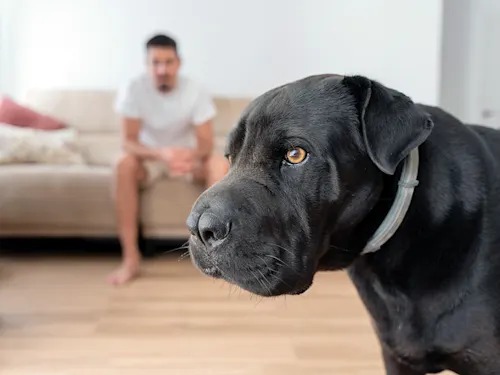
There’s a comforting story people tell about dogs: that their incredible noses will sound the alarm if carbon monoxide starts leaking into the house. It’s a nice thought. It’s also completely false, and believing it can get a family killed. A dog cannot smell carbon monoxide. What a dog can do is get poisoned by it before you feel a thing, and if you’ve been counting on your dog as a warning system, you’ll misread that poisoning as reassurance right up until it’s an emergency.
So let’s replace the myth with something that actually protects you. Understanding why dogs can’t smell this gas, and what they really do when it’s present, turns a dangerous piece of folk wisdom into a set of habits that keep your whole household safe.
What carbon monoxide is, and why it’s so sneaky
Carbon monoxide is produced whenever fuel burns incompletely. Common household sources include:
- Gas furnaces
- Portable generators
- Grills used indoors (never a good idea)
- Cars left running in a garage
- Wood stoves
- Gas water heaters
- Fireplaces
The thing that makes it so lethal is that it gives you nothing to notice. It’s colorless, odorless, and tasteless. You don’t cough on it or smell smoke. By the time it announces itself, it’s through symptoms, meaning you’re already being poisoned. That’s why detectors exist, and why they aren’t optional.
Why the “dogs can smell it” myth won’t die
Dogs have an astonishing sense of smell, with up to 300 million olfactory receptors against a human’s roughly six million, plus a far larger share of the brain devoted to scent. They can sniff out explosives, certain cancers, and low blood sugar. So it feels intuitive that they’d catch a gas leak too.
But smell requires something to smell. Carbon monoxide has no odor molecules at all, so there is nothing for even the world’s best nose to detect. The myth survives because of a coincidence that looks like cause and effect: when carbon monoxide fills a room, dogs often start acting strangely before the humans do. People see the dog react and assume the dog smelled the gas. The dog didn’t smell anything. The dog was being poisoned faster than you were.
What’s really happening: dogs are the canary, not the alarm
Here’s the mechanism, because it matters. Carbon monoxide binds to hemoglobin, the oxygen-carrying molecule in red blood cells, and it binds far more tightly than oxygen does. Once it’s latched on, it blocks oxygen from reaching the tissues that need it. The first organs to suffer are the brain and the heart. Even low-level exposure over time causes serious harm, and high-level exposure can be fatal to pets and people alike.
Dogs hit this wall sooner than we do for physical reasons: smaller bodies, faster metabolisms, faster breathing, and a habit of staying low to the ground, where the gas can pool. So while you still feel okay, your dog may already be showing signs. That’s not a superpower. It’s vulnerability, and it’s exactly why a dog makes a terrible substitute for a detector.
The framing I want people to drop is ‘my dog will warn me.’ Your dog isn’t your alarm, your dog is the household member most likely to be hurt first. If two pets suddenly act sick at the same time and nobody can explain why, don’t wait to see if you feel it too. Get everyone out and make the call.
Know the signs, because you’re the detector now
Since your dog can’t smell it and you can’t either, recognizing the effects is your backup. Small dogs, senior dogs, and puppies tend to show them first.
Physical symptoms of carbon monoxide poisoning in dogs include vomiting, drooling, weakness, difficulty breathing, lethargy, pale or bright-red gums, collapse, and seizures. Untreated, it can be fatal.
Behavioral changes often show up even earlier, and they’re easy to dismiss. Watch for a dog who is suddenly pacing or restless, anxious or agitated, whining for no clear reason, refusing to eat, or trying to leave the house or hide. On their own these signs mean many things. But when they come on suddenly, and especially when more than one pet is affected at once, treat it as a red flag and check for carbon monoxide.
The habits that actually keep everyone safe
Every step that protects your dog protects you too.
- Install carbon monoxide detectors on every level of your home, with one near each sleeping area. This is the single most important thing on the list, because the detector does the job the myth wrongly assigns to your dog.
- Replace detector batteries regularly, and replace the units on the manufacturer’s schedule, usually every five to ten years.
- Never run a car in an enclosed garage.
- Never use grills, camp stoves, or generators indoors.
- Have your heating system, fireplaces, and chimneys inspected every year.
- Never ignore a carbon monoxide alarm, even if your dog seems perfectly fine.
If you ever suspect exposure:
- Get everyone, people and pets, outside into fresh air immediately.
- Call your gas company or emergency services.
- Have your dog seen by a vet even if the symptoms look mild. Dogs often need oxygen therapy, and outcomes are much better when treatment starts early.
What’s new since this was written
The public-safety guidance has kept tightening around one point: detectors, not instincts, are the only reliable defense. Fire-safety and veterinary organizations now consistently stress that no animal, dog or otherwise, can sense carbon monoxide, and that homes with fuel-burning appliances need working CO alarms on every floor. If your household has leaned on the “the dog will know” idea, the current advice is unambiguous, replace that assumption with hardware.
There’s also growing attention to seasonal risk. The dangerous stretches are cold snaps, when furnaces and space heaters run hardest, and power outages, when people bring generators or grills too close to living spaces. Vets report clusters of pet poisonings during exactly those windows, so the practical update is to test your detectors before winter and after any outage, and to keep generators well away from doors, windows, and attached garages.
Bottom line
Dogs cannot smell carbon monoxide, full stop. The reason they seem to “detect” it is that their smaller, faster-metabolizing bodies get poisoned before yours do, which makes them an early casualty, not an early-warning system. Learn the signs, physical ones like vomiting, weakness, and pale or bright-red gums, and behavioral ones like sudden agitation, hiding, or refusing food, and take them seriously when they appear abruptly or across multiple pets. Then do the thing that actually works: put real carbon monoxide detectors on every level of your home and never ask your dog to do a machine’s job.
References
- U.S. Consumer Product Safety Commission. “Carbon Monoxide Information Center.” https://www.cpsc.gov/Safety-Education/Safety-Education-Centers/Carbon-Monoxide-Information-Center
- Centers for Disease Control and Prevention. “Carbon Monoxide Poisoning.” https://www.cdc.gov/carbon-monoxide/about/
- Merck Veterinary Manual. “Carbon Monoxide Poisoning in Animals.” https://www.merckvetmanual.com/toxicology/carbon-monoxide-poisoning/carbon-monoxide-poisoning-in-animals
- UC Davis School of Veterinary Medicine. “Dog Survives Carbon Monoxide Poisoning from House Fire.” https://www.vetmed.ucdavis.edu/news/dog-survives-carbon-monoxide-poisoning-house-fire
This article covers an emergency-safety topic. If you suspect carbon monoxide in your home, get everyone outside and call emergency services immediately, and have affected pets evaluated by a veterinarian even if signs seem mild.
Common questions
What are the signs of carbon monoxide poisoning in dogs?
Early signs include vomiting, drooling, weakness, lethargy, difficulty breathing, and pale or unusually bright-red gums, progressing to collapse or seizures. Behavioral changes like sudden agitation, pacing, hiding, or refusing food often come first, before obvious physical symptoms.
Why do dogs get carbon monoxide poisoning before humans?
Dogs have smaller bodies, faster metabolisms, and faster breathing rates, and they often spend time closer to the floor where the gas can concentrate. That combination means a dog can be affected while the people in the house still feel fine.
What should I do if I suspect carbon monoxide in my home?
Get everyone, including pets, outside into fresh air immediately, then call your gas company or emergency services. Have your dog seen by a vet even if signs seem mild, since carbon monoxide poisoning can be serious and dogs often benefit from oxygen therapy.
Not a substitute for your vet. Our guidance is educational. For urgent symptoms, contact a vet or emergency clinic right away. Editorial standards
Dr. Nair is a veterinarian focused on diet and feeding. She covers everyday nutrition, treats, and the many "can they eat this?" questions owners ask, grounding each answer in what is actually safe and sensible for dogs and cats.
Meet our experts ↗Keep reading
 Health & WellnessThe Underwear Isn't the Joke. The Surgery Is.Dr. Lena Park · 7 min
 Health & WellnessTwo Ounces of Gorilla Glue Can Put Your Dog in SurgeryDr. Ravi Mehta · 5 min
 Health & WellnessYour Dog Ate Something Scary? 15 Times You Can Probably Stay HomeDr. Mara Chen · 7 min
 Health & WellnessThe Summer Hazards That Actually Land Dogs at the Vet: 10 to WatchDr. Ravi Mehta · 10 min
 Health & WellnessEvery Second You Spend on Snakebite First Aid Is a Second Your Dog Is DyingDr. Ravi Mehta · 8 min
 Health & WellnessThe Prettiest Plant at the Water's Edge Can Kill a Dog in HoursDr. Mara Chen · 6 min