


Your Dog Ate Something Scary? 15 Times You Can Probably Stay Home
An ER vet's field guide to the 'poisons' that sound terrifying but usually aren't, from birth control to poinsettias. Plus the three questions that actually decide whether to call, and the one real danger hiding in plain sight: the packaging.

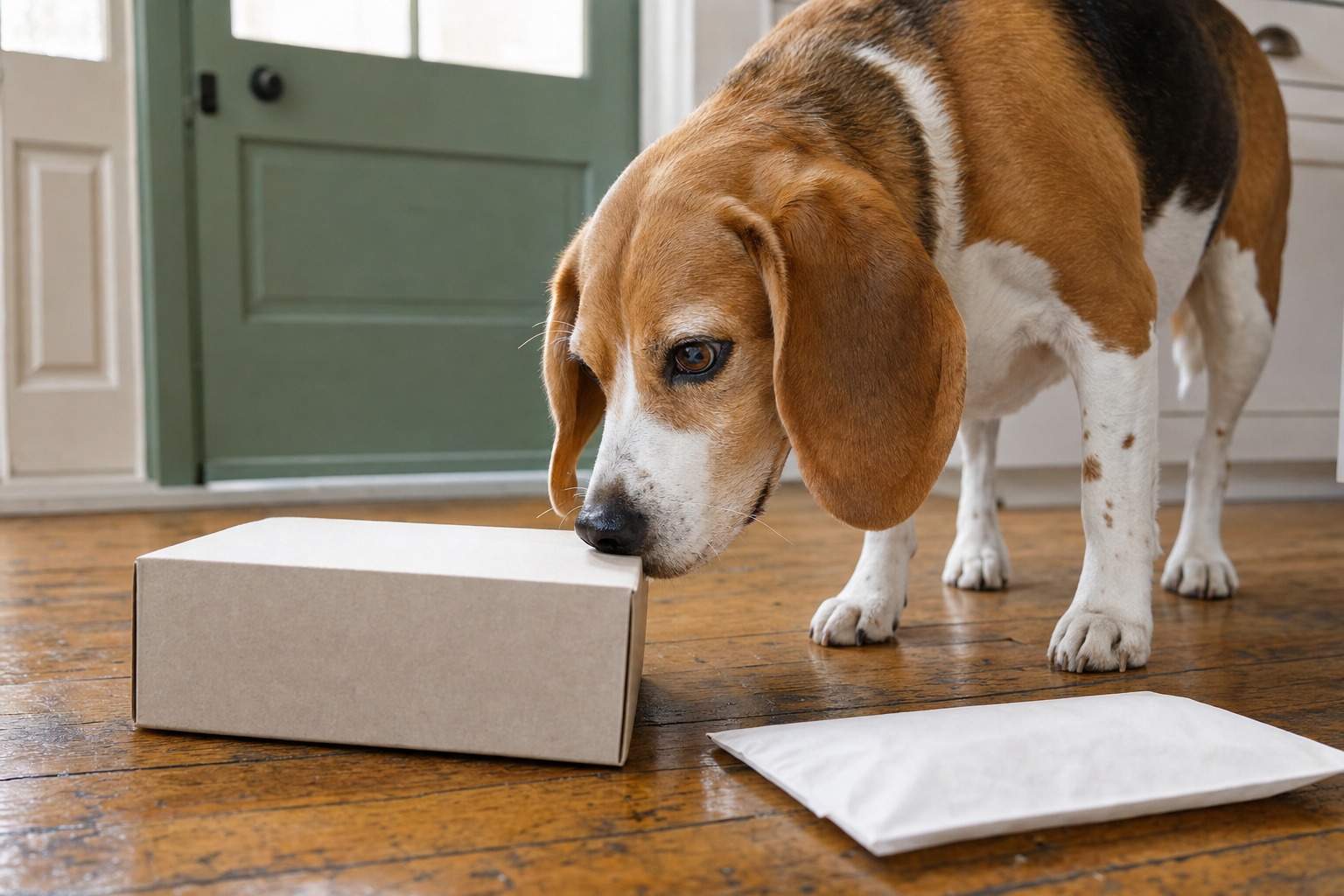
The ASPCA Animal Poison Control Center fielded more than 451,000 calls about toxic exposures in 2024, and a large share of them were false alarms: panicked owners certain their dog had eaten something deadly, when the substance itself was nearly harmless. I see the same pattern on every ER shift. The call opens with “My dog ate…” and lands on two questions, “Is this harmful?” and “Do I need to come in?” More often than not, the honest answer is no on both counts.
So before we get to the list, here is the decision tool I wish every owner had at 2 a.m.
The Three Questions That Actually Decide
When your dog eats something questionable, you are really weighing three things:
- Is the substance itself toxic at the amount eaten? For most items below, the answer is no, the dose required is far higher than a dog could realistically swallow.
- Did they eat the packaging? This is the question people forget, and it is the one that most often sends a dog to surgery. More on this below.
- Are there warning signs right now? Vomiting, diarrhea, a painful belly, lethargy, or loss of appetite change the math regardless of what was eaten.
Keep the ASPCA Animal Poison Control hotline, (888) 426-4435, and your local emergency clinic’s number somewhere you can find them fast. With that framework in mind, here are the so-called toxins I get asked about most.
15 “Toxins” That Usually Are Not
Rather than ranking these, I’ve grouped them the way your dog actually finds them: room by room. We’ll start in the bathroom (the highest-traffic scene of the crime on my shifts), pass through the kitchen, head out to the garage and yard, and finish with the rest of the house.
Start in the bathroom. Between the counter, the trash, and the bowl itself, this one room generates more panicked calls than any other.
1. Chemically treated toilet water
Drop-in tablets are corrosive in concentrated form, but once diluted in the bowl they are only mild GI irritants. A few sips are no concern. If your dog drains the whole bowl, dilute it further by offering their normal water or a fluid like chicken broth.
2. Triple antibiotic (Neosporin) and steroid creams (Cortizone)
Poorly absorbed orally, so mild signs at most. Vomiting and diarrhea may occur, and steroids can bring increased thirst, urination, appetite, and panting, all short-lived. The real risk is obstruction if the tube or cap gets swallowed.
3. Birth control
A pill pack holds 21 tablets of estrogen and/or progesterone plus possibly seven placebos. The hormone pills carry low estrogen (under 0.04 mg each), and some contain iron. Toxic effects require more than 1 mg/kg of estrogen or 20 mg/kg of iron, levels rarely reached: a 25-pound dog would need to eat roughly 300 pills. A NuvaRing holds 11.7 mg of progesterone and 2.7 mg of estrogen, and a dog ingesting one rarely hits the toxic threshold.
4. Human thyroid supplements
Dogs tolerate overdoses well thanks to poor intestinal absorption and different metabolism. Severe signs are not expected below 1 mg/kg. Higher doses can cause GI upset, hyperactivity, high blood pressure, lethargy, fast heart rate, and rapid breathing. If you see those, call your vet.
5. Antacids (Tums)
Calcium carbonate, magnesium hydroxide, and aluminum hydroxide are harmless to dogs. The main concern is vomiting, diarrhea, and constipation. One exception: make sure the antacid contains no salicylates. If it does, call your vet or an emergency clinic right away.
6. H2 blockers (Pepcid)
Famotidine (Pepcid), ranitidine, cimetidine, and nizatidine are relatively benign. More than 10 times the therapeutic dose typically causes only mild GI upset.
Next, the kitchen and pantry. The food is sealed; the packaging, it turns out, is the interesting part.
7. Oxygen absorbers
Common in dry packaged foods, these contain iron powder, sodium chloride, and carbon. By the time a dog eats one, the iron has usually converted to ferric oxide, which is to say, rust. They should be fine.
8. Silica gel packets
Tucked into vitamins and new clothing to fight moisture, these get chewed and swallowed constantly. Silica gel is chemically and biologically inert, so the worst likely outcome is mild GI upset. The real concern is a whole packet causing an intestinal obstruction, especially in a small dog.
Then the garage and yard, where the labels are scariest and the actual doses usually aren’t.
9. Fire logs
Typically sawdust, wood chips, peanut shells, petroleum wax, ammonium chloride, and sometimes a flame-coloring metal like copper. Systemic toxicity is not expected, but GI upset and obstruction risk are both possible.
10. Fertilizers with nitrogen, phosphorus, and potassium (N-P-K)
Usually just GI irritants. The caveat: check for added iron, insecticides, or pesticides, which raise the danger. Iron above 5 percent can cause more significant effects. Organic fertilizers, bone meal, and blood meal are especially tempting to dogs, and the worries there are added insecticides, mold or rancidity (which can cause bacterial gastroenteritis or severe tremors from tremorgenic mycotoxins), and impaction from a large ingestion.
11. Lawn herbicides
Generally no severe systemic symptoms in dogs or cats. Mild GI upset is possible while the application is fresh, and less likely once it has dried.
And finally, the rest of the house, the pest control and the party supplies.
12. Glue traps
Most contain only benign attractants like pheromones and are considered nontoxic, though confirm nothing like rat bait was added. If ingested, the main risk is obstruction. To get glue off skin, skip solvents and work it out with vegetable oil, mineral oil, or peanut butter, then bathe with dish soap.
13. Ant and roach traps
Several active ingredients, but at concentrations too low to cause significant clinical effects. Expect mild GI upset at most.
14. Glow sticks and jewelry
The dibutyl phthalate inside tastes vile. A dog who bites one may drool, get hyperactive, or shake their head. Offer a tasty treat to wash away the taste and wipe any liquid from their fur, which may mean stepping into a dark room to spot it.
15. Poinsettia plants
Ingestion causes only mild GI upset. The deadly-poinsettia myth traces to a 1900s rumor about an army officer’s child dying after eating a single leaf. Later studies found a toxic dose for a 50-pound child would exceed 600 leaves.
The Pattern You Should Have Noticed
Look back at that list and the same villain keeps reappearing: not the substance, the packaging. The biggest danger in most of these “dietary indiscretions” is the silica packet, the tube, the cap, or the trap causing an intestinal obstruction. Small dogs are at greater risk than large ones simply because their intestines are narrower. A silica packet can pass through a Labrador far more easily than a Chihuahua. Warning signs of a developing obstruction include vomiting, diarrhea, a painful belly, lethargy, and loss of appetite. Any of those means veterinary care immediately, no matter how harmless the contents were.
That is also why the genuinely dangerous swallows often hide in plain sight. The ASPCA notes that over-the-counter human medications, including ibuprofen, acetaminophen, cold and flu pills, and supplements, are consistently the single most common category of pet poisoning calls. So the same instinct that makes you panic over a chewed glue trap should make you act fast over a spilled bottle of pain reliever, which is the reverse of most people’s gut reaction.
Please Do Not Make Your Dog Vomit at Home
I never recommend it, for four reasons:
- You might misjudge the ingredients and bring back up something that is actually hazardous to vomit.
- There is a real risk of aspiration pneumonia if it is done wrong.
- An object can lodge in the esophagus on the way up, creating a brand-new emergency.
- At the clinic we induce vomiting with a simple, small injection, far gentler than forcing foul-tasting hydrogen peroxide down your dog’s throat.
The Bottom Line
This is guidance, not a substitute for a phone call. Any time your dog eats something questionable, run the three questions, then call your veterinarian or the ASPCA poison hotline. And remember, anything is dangerous in the right quantity, even water.
References
Not a substitute for your vet. Our guidance is educational. For urgent symptoms, contact a vet or emergency clinic right away. Editorial standards
Dr. Chen is a small-animal veterinarian who leads health and safety coverage at The Pet Times. She writes and reviews the bulk of our illness, condition, and safety content, translating clinical guidance into clear, practical advice owners can act on at home.
Meet our experts ↗Keep reading
 Health & WellnessYour Dog Scavenges on Walks. That Napkin Could Be Cocaine.Dr. Lena Park · 5 min
 Health & WellnessYour Dog Ate Chocolate. The Word 'Toxic' Won't Tell You What to Do. The Math Will.Dr. Ravi Mehta · 8 min
 Health & WellnessOne Raw Fish Can Kill a Dog in Two Weeks. Most Owners Have Never Heard of It.Dr. Ravi Mehta · 6 min
 Health & WellnessDogs Barely Sweat to Cool Down. That's Why Heat Sneaks Up on Them.Dr. Mara Chen · 8 min
 Health & WellnessTylenol Is the 'Gentle' Painkiller That Quietly Wrecks a Dog's LiverDr. Amara Solis · 8 min
 Health & WellnessYour Dog's Swimming Ability Won't Save Them From ThisDr. Amara Solis · 4 min