


Dogs Barely Sweat to Cool Down. That's Why Heat Sneaks Up on Them.
The old line that dogs sweat through their paws is mostly wrong, and the truth is the reason heatstroke is so dangerous. Dogs' sweat is built for scent, not cooling, so panting does almost all the work. Here's how they really regulate heat, and how to help.

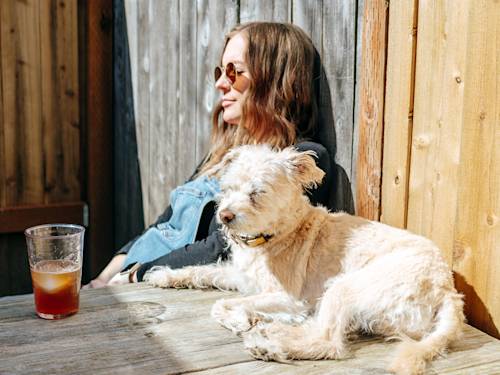
Almost everyone “knows” that dogs sweat through their paw pads. It’s one of those pet facts that gets repeated so confidently it feels settled. It’s also mostly wrong, and the real story is worth getting straight, because the reason dogs are so bad at sweating is exactly the reason heatstroke can kill them before you realize anything’s wrong.
Here’s the reframe. Dogs are covered in sweat glands, far more than “just the paws.” But the overwhelming majority of that sweating has nothing to do with staying cool. It’s for scent. Dogs essentially outsourced their cooling to a different system entirely, panting, and that system has hard limits. Once you understand that a dog’s body barely uses sweat to lose heat, the summer safety rules stop sounding like nagging and start sounding like physics.
Dogs are coated in sweat glands, just not the cooling kind
Dogs, like humans, have two types of sweat glands, and the mix is where the myth falls apart.
- Merocrine (eccrine) glands are the cooling kind, the ones that blanket human skin and actually help regulate our temperature. In dogs, these exist in only two places: the nasal planum (the hairless part of the nose) and the foot pads.
- Apocrine glands are the scent kind, similar to the ones in human armpits. In dogs, these cover all the hairy parts of the body.
So when a dog “sweats” over most of their body, they’re releasing a scent-carrying fluid, not coolant. Those secretions signal information to other dogs through pheromones we mostly can’t detect. It’s tempting to picture your dog’s whole coat as one giant armpit, but the point isn’t odor for odor’s sake, it’s communication. Dogs experience the world through smell, so it fits that they’d be wrapped in scent glands.
Why sweating can’t cool a dog the way it cools you
Even the cooling-type glands dogs do have, on the nose and paws, don’t move the needle much, and there’s a good reason. Cooling by sweat depends on evaporation from the skin’s surface. That works beautifully for a relatively bare-skinned human. It works terribly under a dog’s coat, which traps the moisture and blocks the evaporation that would carry heat away.
That coat isn’t a flaw, by the way. It buffers a dog against both heat and cold, which is one reason shaving a dog for summer often backfires. But the trade-off is that skin-surface cooling is essentially off the table. The nose and paw pads are simply too small a surface to shed meaningful body heat, even when a hot dog does sweat a little from them.
So dogs took a different evolutionary route, the same one birds use: evaporative cooling from the respiratory system. That’s panting. A panting dog dramatically increases airflow through the mouth and dilates the blood vessels in the tongue to maximize the surface area for heat to escape. Panting is doing the job you’d assume sweating does. And that’s the vulnerability, because panting has a ceiling.
Once you accept that a dog can’t sweat its way out of overheating, the danger clicks into focus. Panting is their whole cooling system, and it’s not powerful. On a hot, humid day, or in a stuffy car, a dog can generate heat faster than panting can clear it, and there’s no backup. That’s why heatstroke moves fast and why prevention isn’t optional.
A quick note on sweaty paws and ‘excessive’ sweating
A couple of related things confuse people. First, dogs do get sweaty paw pads sometimes, just not for cooling. Young puppies (roughly one to three months) may sweat spontaneously from their pads, which tends to fade with age. Adrenaline from stress or fear can produce sweaty pads too, so a nervous dog at the vet may leave damp prints on the exam table. Nausea may also play a role, though that’s less well documented.
Second, some dogs sweat more than usual for medical reasons. Dogs with skin allergies can develop excessive sweating, a condition called hyperhidrosis, that leaves damp spots or a greasier-looking coat. Treating the underlying allergy usually brings it under control and helps prevent secondary skin infections. And while altered sweating is documented in diabetic humans, it hasn’t been clearly reported in dogs, though a diabetic dog sweating while asleep could be reacting to low blood sugar and adrenaline, which is worth a vet’s attention.
When cooling fails: recognizing overheating
Dogs overheat from hot environments, overexertion, or both, and it can escalate into heatstroke, which is a genuine emergency. Conditions that raise the risk include hot weather, being confined in a small space like a parked car, high humidity (which cripples evaporative cooling), and poor ventilation.
Some dogs are built to overheat more easily. Higher-risk groups include brachycephalic (flat-faced) breeds, whose airways make panting less efficient, dark-coated dogs, and dogs with dehydration, obesity, heart disease, laryngeal paralysis, a collapsing trachea, or a history of seizures.
Signs an overheating dog is in trouble include heavy or loud panting, continued panting even after resting, excessive drooling, lethargy or weakness, and water-seeking behavior. As it worsens, you may see vomiting, diarrhea, bruising or spontaneous bleeding, and seizures. If you can, take their temperature: normal is about 101 to 102.5°F (38.3 to 39.2°C), and anything over 104°F (40°C) needs immediate veterinary attention.
How to cool an overheated dog, the right way
Being proactive beats reacting. Avoid strenuous activity and long walks during the hottest parts of the day, and build your dog’s fitness up gradually as the weather warms. One of the most common heatstroke scenarios is the first warm day of spring, when a dog who spent winter as a couch potato is suddenly taken on a long run their body isn’t conditioned for.
If your dog shows signs of overheating, act, but act correctly:
- Get them out of the heat, into shade or air conditioning.
- Offer water.
- Mist them with cool or room-temperature water, never ice-cold.
- Point a fan at them to boost evaporation.
Do not use ice packs or an ice bath. That sharp a temperature drop can constrict blood vessels, trap heat in the core, and actually make things worse or cause further injury. Cool gradually, and get to a vet as soon as possible, because dogs with heat injury can develop serious complications and may even swing into hypothermia after cooling. Err on the side of frequent breaks, shade, and hydration, and remember that dogs won’t self-regulate, they’ll keep playing past their limit, so that judgment is yours.
What’s new since this was written
Veterinary research has recently sharpened the picture of just how dangerous canine heat illness is. Large studies of UK veterinary records have found that exertional heatstroke, heat triggered by exercise rather than a hot car, is now a leading way dogs overheat, and that it can strike on days people don’t consider dangerously hot. The practical update: don’t wait for a heat wave to be cautious. A warm, humid day plus a hard run is enough, especially for at-risk dogs.
The same body of research has reinforced two prevention points worth repeating. Flat-faced breeds face substantially higher heatstroke risk because their airways limit the panting that dogs depend on, so these dogs need extra care and shorter, cooler outings. And the “cool first, transport second” approach, actively cooling a dog with water before and during the trip to the vet rather than rushing them in hot, is increasingly emphasized as a way to improve outcomes. Cool, but with cool or tepid water, not ice.
Bottom line
The tidy fact that “dogs sweat through their paws” gets the biology backward. Dogs are covered in sweat glands, but almost all of them are for scent, not cooling, and their few cooling glands sit on surfaces too small to matter. With skin-surface sweating effectively off the table, panting is a dog’s entire cooling system, and it’s easily overwhelmed by heat, humidity, exertion, or a stuffy car. That’s why heatstroke is fast and deadly, and why prevention, shade, water, gradual conditioning, and never leaving a dog in a hot space, is the real safeguard. If your dog does overheat, cool them with cool (not icy) water and a fan and get to a vet right away.
References
- Hall, Emily J., et al. “Incidence and Risk Factors for Heat-Related Illness (Heatstroke) in UK Dogs Under Primary Veterinary Care in 2016.” Scientific Reports. https://www.nature.com/articles/s41598-020-66015-8
- Hall, Emily J., et al. “Dogs Don’t Die Just in Hot Cars: Exertional Heat-Related Illness (Heatstroke) Is a Greater Threat to UK Dogs.” Animals. https://www.mdpi.com/2076-2615/10/8/1324
- Merck Veterinary Manual. “Heat Stroke and Hyperthermia in Animals.” https://www.merckvetmanual.com/emergency-medicine-and-critical-care/heat-stroke-and-hyperthermia
- American Veterinary Medical Association. “Warm Weather Pet Safety.” https://www.avma.org/resources-tools/pet-owners/emergencycare/warm-weather-pet-safety
This article covers a pet-safety and emergency topic. Heatstroke is life-threatening; if you suspect your dog is overheating, begin cooling them immediately and contact your veterinarian or an emergency animal hospital right away.
Common questions
Why can't dogs cool down by sweating like people?
A dog's thick coat blocks evaporation from the skin, so sweating over the body wouldn't cool them the way it cools a person. Their cooling sweat glands are limited to tiny areas (nose and paws), so dogs rely on panting to move heat out through the respiratory system instead.
What's a normal temperature for a dog, and when is it dangerous?
A dog's normal body temperature runs about 101 to 102.5°F (38.3 to 39.2°C). A temperature over 104°F (40°C) is concerning and should be reported to a vet immediately, as it signals possible heatstroke.
How do I cool down an overheated dog safely?
Move them out of the heat into shade or air conditioning, offer water, mist them with cool or room-temperature (not ice-cold) water, and use a fan. Do not use ice packs or ice baths, which can backfire. Then get to a vet as soon as possible.
Not a substitute for your vet. Our guidance is educational. For urgent symptoms, contact a vet or emergency clinic right away. Editorial standards
Dr. Chen is a small-animal veterinarian who leads health and safety coverage at The Pet Times. She writes and reviews the bulk of our illness, condition, and safety content, translating clinical guidance into clear, practical advice owners can act on at home.
Meet our experts ↗Keep reading
 Health & WellnessThe Winter Sidewalk Danger No One Warns You About Until It's Too LateDr. Ravi Mehta · 6 min
 Health & WellnessHydrogen Peroxide for Dogs: The First-Aid Staple That's Being RetiredDr. Ravi Mehta · 7 min
 Health & WellnessThe Sweetener That Kills Dogs Often Isn't Labeled "Xylitol"Dr. Ravi Mehta · 8 min
 Health & WellnessThe Most Dangerous Vomit Is the One That Never Comes UpDr. Mara Chen · 8 min
 Health & WellnessThere's No Cute Buzz for Dogs. Alcohol Goes Straight to Poisoning.Dr. Amara Solis · 6 min
 Health & WellnessYour Dog Broke Out in Hives. The Bumps Aren't the Scary PartDr. Ravi Mehta · 6 min