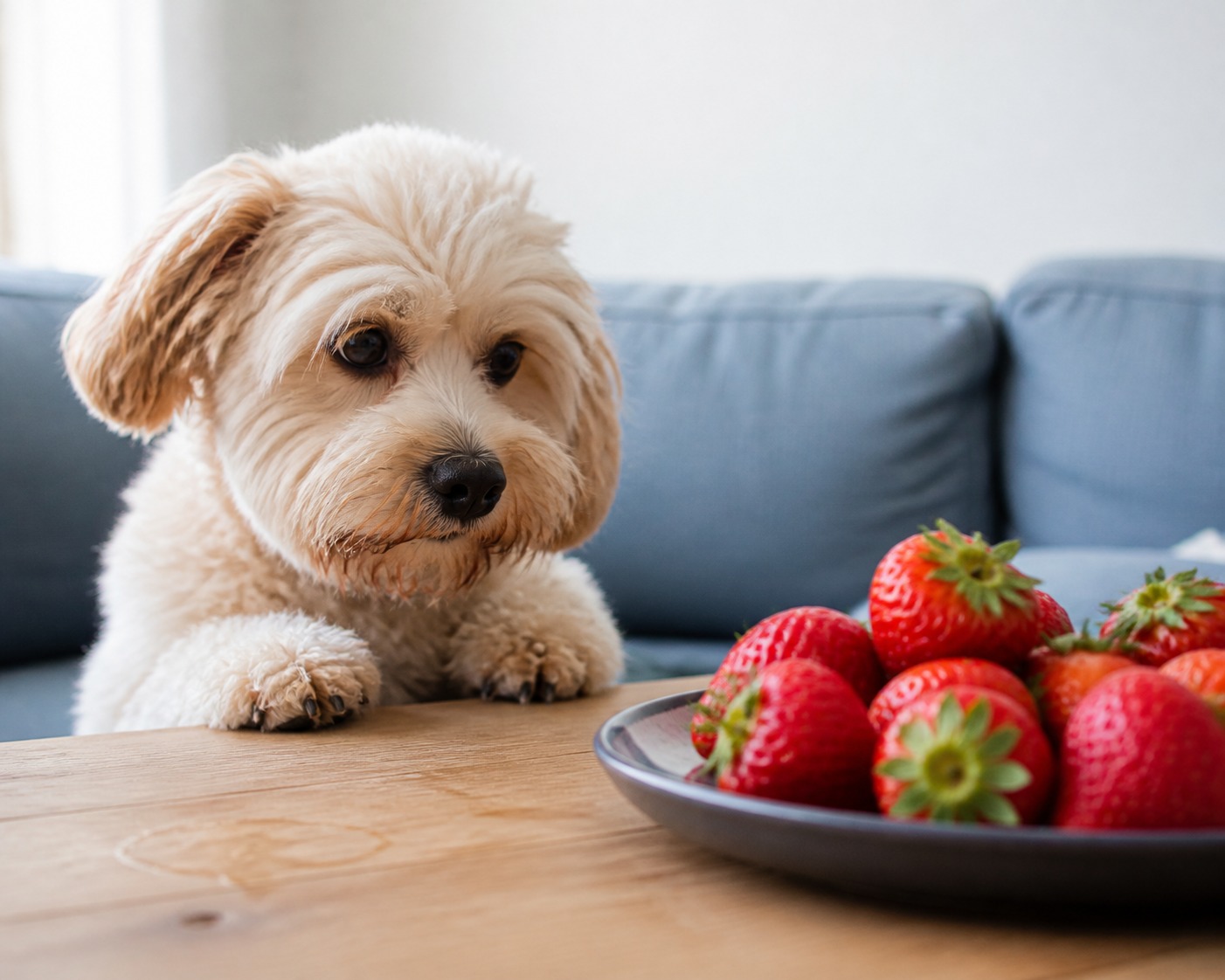

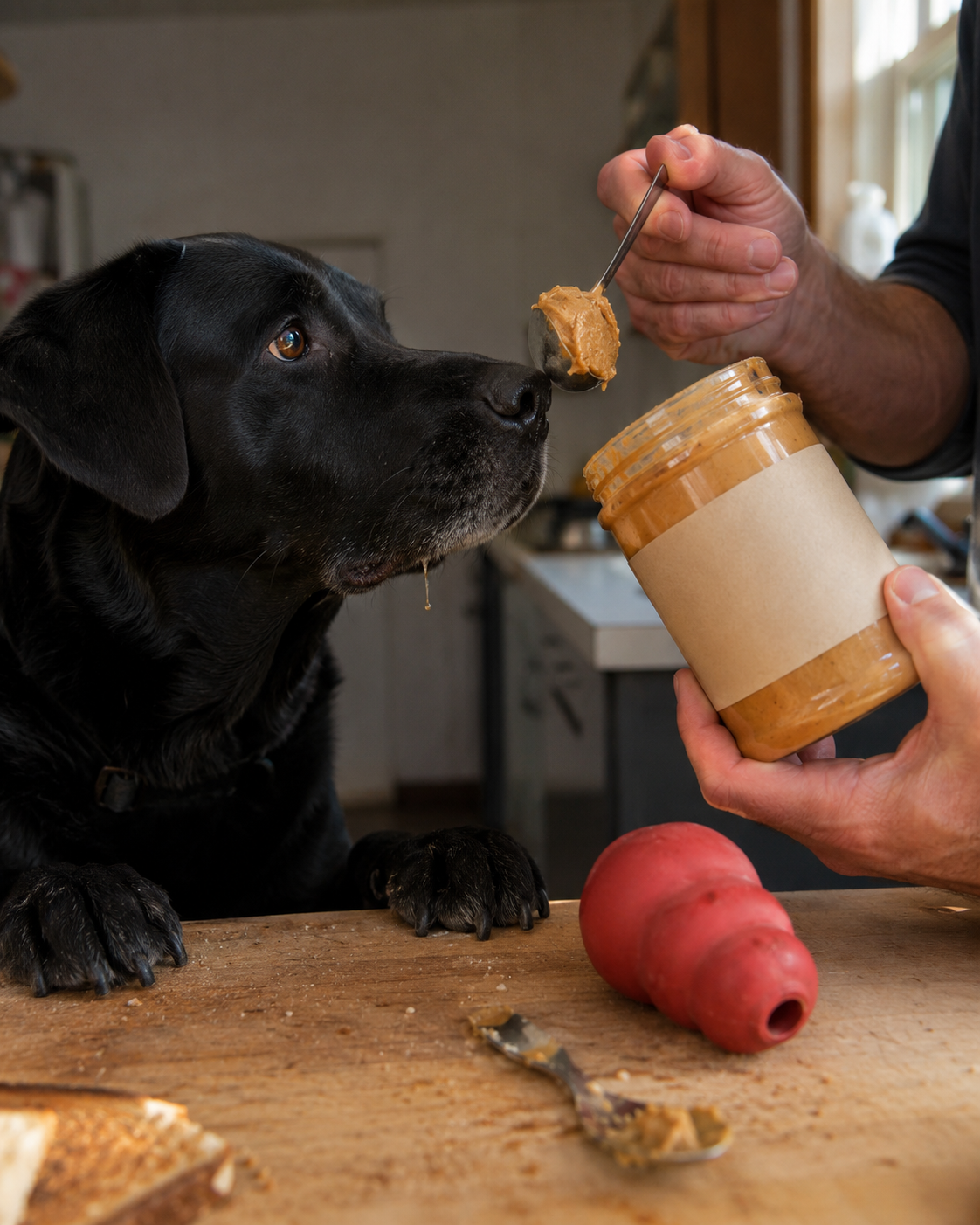
No food does more unpaid labor in a dog household than peanut butter. It hides the pill. It fills the Kong that buys you a quiet departure. It smears on the wall to make bath time survivable and turns a spoon into a leash-training jackpot. Dogs would nominate it for sainthood, and honestly, it mostly deserves the job.
Which is exactly why the fine print matters. Peanut butter’s two real risks, one rare and lethal, one common and slow, both hide in plain sight: on the ingredient label and in the calorie math. Handle those two things and you can keep the bribe economy running for years.
The label check that’s actually life-or-death
Most peanut butter is safe for dogs. A small number of brands, mostly specialty and “sugar-free” products, are sweetened with xylitol, and xylitol is seriously toxic to dogs. Even small amounts can cause a life-threatening crash in blood sugar, called hypoglycemia, or liver failure. This isn’t a “monitor your dog” ingredient; it’s an emergency.
The label check has gotten trickier, because xylitol doesn’t always appear under its own name. It can be listed as birch sugar, wood sugar, or birch bark extract, and it can hide inside the vague term “sugar alcohol.” The FDA’s guidance flags “sugar free” and “natural sweetener” claims as the cue to slow down and read the fine print. Make the check a habit every time you buy a new jar, because formulations change.
Past xylitol, the label still has advice to give. Big mainstream brands are safe but carry added sugar and preservatives dogs don’t need. The best jar for a dog reads like a one-word recipe: peanuts. Or you can grind your own at home and control the entire ingredient list.
The calorie math nobody does
Peanut butter runs 80 to 100 calories per tablespoon. That’s rounding error for you and a meaningful chunk of a dog’s day, especially a small dog’s. Treats of every kind should stay under 10 percent of daily calories, and peanut butter can burn through that allowance in one generous Kong.
The workable numbers: smaller dogs can have half a tablespoon to one tablespoon a day, larger dogs one to two tablespoons, and only if peanut butter is the treat that day rather than one of several.
“Peanut butter earns its keep in a dog’s life, but I ask people to treat it like a currency, not a food group,” says Dr. Amara Solis. “Set the day’s allowance, spend it on the Kong or the pill or the nail trim, and when it’s spent, it’s spent. The dogs I worry about are the ones collecting peanut butter three different ways before dinner.”
Some dogs shouldn’t be in the peanut butter economy at all. Its high fat content makes it wrong for dogs with pancreatitis, and the calorie density works against dogs with obesity, diabetes, or sensitive stomachs. When introducing it for the first time, start with a small amount and watch for any reaction or upset stomach before making it a regular.
Why it works so well (and how to use it)
Fun fact that surprises most people: peanuts aren’t nuts. They’re legumes, cousins of soybeans and lentils, though nutritionally they behave like tree nuts, rich in healthy unsaturated fats and fiber. For dogs, quality peanut butter delivers real nutrition alongside the bribe value:
- About 8 grams of protein per two-tablespoon serving
- Vitamin E and cholesterol-regulating monounsaturated fats
- Vitamins H and K, which support a shiny coat
- Iron and calcium for strong bones
- Zero cholesterol, and roasted peanuts carry 22 percent more antioxidants than raw
Both smooth and crunchy are safe; smooth spreads and licks more easily, but dogs have preferences just like kindergartners. And puppies can join in with small amounts too.
Then there’s the job list, where peanut butter is arguably the most versatile behavioral tool in the kitchen:
-
Alone-time enrichment. A frozen peanut-butter-stuffed Kong or a loaded lick mat gives a dog a long, absorbing project, which can ease separation anxiety and cut down on boredom behaviors like barking and destructive chewing.
-
Medication delivery. A pill wrapped in peanut butter disappears without negotiation. High-value flavor beats canine suspicion almost every time.
-
Training rewards. For leash work, a peanut-butter-coated spoon lets you reward on the move with a few licks.
-
Grooming distraction. A smear on the wall or floor during nail trims or baths converts a wrestling match into a snack break.
What newer research adds
The xylitol story has kept evolving in ways every peanut butter household should know. First, the naming problem got worse before it got better: as consumer awareness of “xylitol” grew, some products began listing it as birch sugar, and the FDA and veterinary poison centers have specifically warned that this rebrand has confused pet owners who knew to avoid xylitol but not its aliases. Veterinary groups, backed by the ASPCA, have pushed for clearer labeling requirements on xylitol-containing products precisely because of pet poisonings.
Second, the exposure landscape has expanded beyond peanut butter. Xylitol now appears in a wide range of household products, from gums and mints to some baked goods and supplements, and poison-control centers report it among the fastest-growing toxin calls for dogs. The peanut butter jar is where most dog owners first learn the word, but the label-reading habit it teaches is worth applying to anything sweet in a dog’s reach. When in doubt: one-ingredient peanut butter, and the rest of the sweet stuff stays on high shelves.