


Rice Isn't a Superfood for Dogs. It's Something More Useful.
Plain rice won't transform your dog's health, and it was never meant to. Its real value is as a vet's tool: white rice to settle a sick gut, brown rice for fiber, and a clear line between the two.

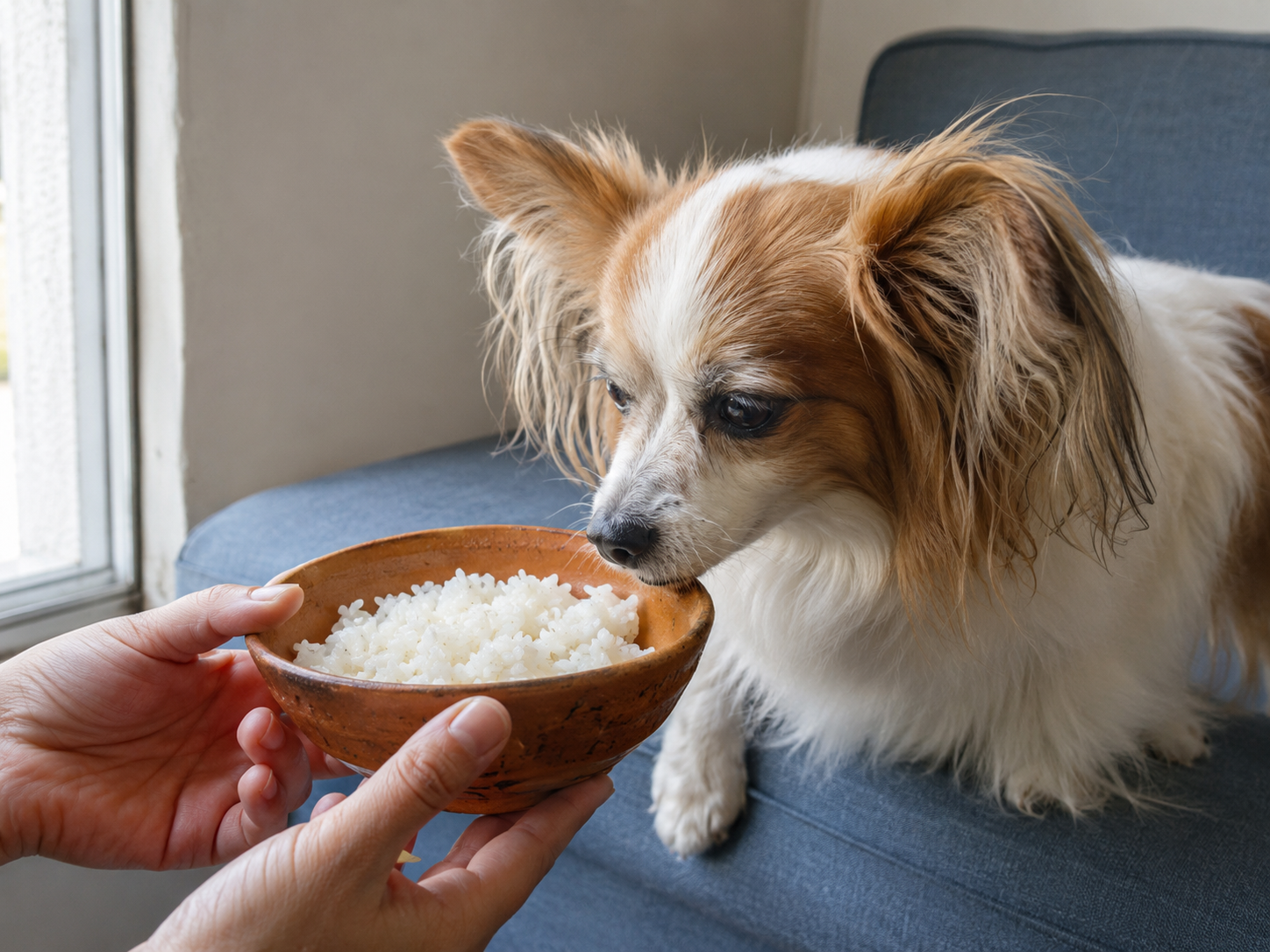
Rice sits in a strange spot in dog nutrition. It gets talked about like a health food and feared like a mystery ingredient, and it is really neither. Plain rice will not make your dog’s coat shine or fix their digestion long term, because that was never its job. Its actual value is narrower and more practical: it is one of the most reliable tools a vet reaches for when a dog’s stomach goes sideways, and it is a solid, digestible carbohydrate the rest of the time. Once you stop expecting magic from it, rice becomes genuinely useful.
What rice is
Rice is a cereal grain from a grass called Oryza sativa. A harvested kernel has an outer hull and fibrous bran layers underneath. Remove just the hull and you get brown rice. Mill it further to strip away the bran and you get white rice. That single processing difference is the whole story of rice for dogs, because it determines fiber content, and fiber is what makes one type right for a sick dog and the other right for a healthy one.
There are countless varieties: long-grain types like jasmine and basmati, medium-grain like Valencia, and short-grain like sushi rice. They differ a little in taste and nutrient profile, but the good news for dog owners is that all of them are safe in moderation. Basmati, a long-grain white rice, is no different in safety than any other.
The real reason vets keep rice on hand
Rice earns its place in a dog’s life mostly during illness. When the intestines are inflamed, whether from an infection, garbage-eating, pancreatitis, or another irritant, the gut needs a break. That means temporarily feeding something low in fiber, low in fat, and built on simple carbohydrates that are easy to break down. White rice fits that bill exactly, which is why the classic bland diet is white rice with a lean protein.
There is more to it than “easy to digest,” though. Rice contains pectin, which helps absorb excess water in the intestines and firm up loose stool, and it can improve the absorption of water and electrolytes. That is why rice-based approaches show up even in human diarrhea treatment. It is not curing anything; it is buying the gut easier working conditions while the real problem resolves.
The mistake I see is people treating the rice-and-chicken bowl like the cure, when it’s really just a soft place for the gut to land. It doesn’t fix the reason your dog got sick. If a dog isn’t clearly better in a day or two on a bland diet, that’s my cue to look for what’s actually going on, not to keep spooning out more rice.
White versus brown, and when each wins
This is the one distinction worth remembering. White rice is milled to remove the bran, so it is very low in fiber and extremely easy to digest. That is a feature, not a flaw, when a dog is sick and needs the gentlest possible food.
Brown rice keeps its bran layers, which is where most of the fiber and extra nutrients live. Fiber feeds the good bacteria in the gut, bulks up stool, helps prevent constipation, and helps a dog feel full. For a healthy dog who could use more fiber, brown rice is the better pick. For a dog with diarrhea who needs the opposite, white rice is.
Rice also brings a couple of general perks either way. It is a carbohydrate that supplies quick energy, and it is low in fat, which matters for dogs who need a low-fat diet because of conditions like pancreatitis, as long as they still get enough calories from elsewhere.
The risks, kept in proportion
There are very few real risks to feeding dogs rice, which is part of why it is so widely used, but a few are worth knowing.
Allergies are uncommon. Rice is not a common canine allergen; the frequent offenders are beef, dairy, chicken, egg, wheat, soy, and corn. A rice allergy is possible but unusual, and signs of any food reaction include itchy skin, hives, facial swelling, vomiting, diarrhea, or trouble breathing, which warrant a break and a call to your vet.
Uncooked rice is the real hazard, not cooked. Cooked rice is easy to digest, but raw rice kernels are not, and a dog who gets into a large amount of uncooked rice can develop food bloat. Uncooked rice draws in water and can form a sticky, slow-moving mass in the stomach. Most cases respond to medical treatment like IV fluids and motility drugs, but severe cases can need surgery. Keep the bag of dry rice out of reach.
Arsenic gets raised often and deserves a calm, accurate answer. Rice accumulates more arsenic than most grains, and brown rice tends to have higher levels because arsenic concentrates in the bran. There are no studies confirming this causes elevated arsenic in dogs, and no reported cases of arsenic toxicity in dogs from eating rice. Brown rice is considered safe in moderation, and arsenic is not regarded as a practical concern for dogs at typical amounts. It is a reason to keep rice as one part of a varied diet, not a reason to fear it.
One reassuring aside: domestic dogs actually evolved extra genes for digesting starches like rice compared with wolves, so the marketing that insists your thoroughly domesticated dog needs a wolf’s diet does not match the biology.
Everyday rice versus emergency rice
Rice can absolutely be part of a long-term diet, and it commonly is, as an ingredient in complete and balanced commercial foods. The key is that the overall diet meets AAFCO standards for your dog’s life stage. A homemade bland mix of white rice and lean protein is a different animal: it is fine for short-term use during illness, but it is not complete and balanced and will cause deficiencies if fed as a dog’s only food long term. If your dog has a condition that needs a special long-term diet, your vet can guide you to one that is actually balanced.
What’s new since this was written
The arsenic-in-rice conversation has stayed active, so it is worth an honest update. In 2025, an independent report drew wide attention after finding measurable levels of arsenic and cadmium in a range of store-bought rice products, and the FDA has continued its work on inorganic arsenic, including a longstanding action level for arsenic in infant rice cereal. The FDA has not set a limit for the plain rice families buy to cook at home.
For dogs, the practical picture has not changed. There are still no documented cases of dogs being harmed by arsenic from eating rice, and rice remains safe in moderation. The sensible response to the newer data is the same advice good nutrition always gives: variety. Rice is a fine part of a rotated, balanced diet, and it does not need to be the only grain your dog ever sees.
References
- U.S. Food and Drug Administration: Arsenic in Rice and Rice Products Risk Assessment
- U.S. Food and Drug Administration: “Complete and Balanced” Pet Food
- Gunatilake, S. et al. “Impact of rice-based oral rehydration solution on stool output and duration of diarrhoea.” (meta-analysis of clinical trials)
- Axelsson, E. et al. “The genomic signature of dog domestication reveals adaptation to a starch-rich diet.” Nature, 2013.
- Tufts University Cummings Veterinary Medical Center, Petfoodology: Carbohydrates and Pet Food
This article discusses feeding during illness. A bland diet manages symptoms, not causes. If your dog’s vomiting or diarrhea is severe, bloody, or lasts more than a day or two, contact your veterinarian.
Common questions
White rice or brown rice for a dog?
It depends on the goal. White rice is low in fiber and very easy to digest, which makes it the choice for a sick stomach. Brown rice keeps its bran layers, so it has more fiber and nutrients and suits a healthy dog who could use the extra fiber.
How much rice for a dog with diarrhea?
For a bland diet, a common approach is roughly equal parts cooked white rice and a lean protein like plain boiled chicken, fed in small portions, with no oil, butter, or salt. Ask your vet how much and how long, since the bland diet treats symptoms, not the underlying cause.
Can rice be part of a dog's everyday diet?
Yes, as an ingredient in a complete and balanced food. A homemade rice-and-chicken mix is fine short term but is not balanced for long-term feeding on its own, because it lacks many essential nutrients.
Not a substitute for your vet. Our guidance is educational. For urgent symptoms, contact a vet or emergency clinic right away. Editorial standards
Dr. Kohl is a board-certified veterinary dentist with a particular interest in preventive oral care. She reviews all dental health content at The Pet Times and contributes practical guides on home dental routines, professional cleaning, and oral disease prevention.
Meet our experts ↗Keep reading
 Health & WellnessDon't Fast a Dog With Diarrhea. The Advice Flipped, and Here's What to Feed Instead.Dr. Lena Park · 7 min
 Health & WellnessThe Grain-Free Heart Disease Scare, and What the Headlines Got WrongDr. Amara Solis · 9 min
 Food'Sensitive Stomach' Isn't a Diagnosis. That's Why Switching Food First Usually Fails.Dr. Priya Nair · 8 min
 Health & WellnessYour Dog Pukes Every Morning? It's Probably the Clock, Not a Disease.Dr. Lena Park · 6 min
 Health & WellnessThere's a Number for 'Drinking Too Much.' Most Dog Owners Don't Know It.Dr. Lena Park · 8 min
 Health & WellnessYour Dizzy Dog Won't Eat. That's the Real Emergency With Vestibular Disease.Dr. Lena Park · 8 min