


Don't Fast a Dog With Diarrhea. The Advice Flipped, and Here's What to Feed Instead.
For years the go-to move was to withhold food. The evidence turned that on its head: feeding early actually helps a dog's gut heal faster. Here's the bland-diet playbook that works, where pumpkin fits, and the symptoms that mean skip all this and call the vet.

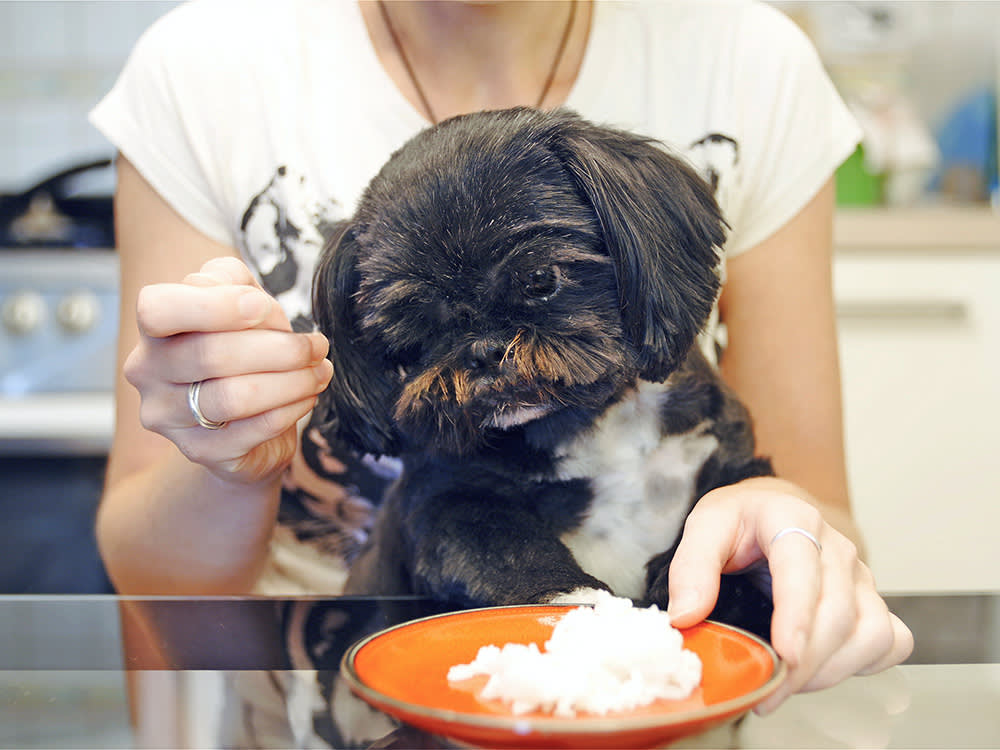
When your dog suddenly needs the yard every hour, you get a lot of standing-around time to wonder things. Which foods are gentle enough right now? Does pumpkin actually help, and at what dose? Is the can of pie filling in the pantry close enough? And, staring at the evidence, how is a dog this size physically producing this volume? Here’s the part that has actually changed, and the reason a lot of older advice you’ll find online is now wrong.
The instinct, and the old veterinary standard, was to withhold food and let the gut “rest.” That has fallen out of favor, and for a good reason rooted in how the intestine heals. Some diarrhea comes from damage to the cells lining the gut, called enterocytes. These cells manage the body’s water and electrolyte balance by pulling water back out of digested food as it moves through. When a virus or toxin damages them, they stop reabsorbing water the way they should, and that water leaves as diarrhea. Enterocytes get most of their fuel from the food passing over them. Starve the gut, and you starve the very cells that need to repair. Keep feeding, and they heal faster. So the modern move for most uncomplicated diarrhea isn’t fasting. It’s feeding, carefully.
When to feed, and the one exception
It’s tempting to overthink the timing. Some owners want to feed more, reasoning that nothing’s staying in long enough to absorb. Others want to feed nothing, hoping to shut off the tap. The useful answer depends on the rest of the picture.
A dog who has diarrhea but otherwise feels fine, bright, eating, playful, can usually stay on their normal feeding schedule. A dog who is also vomiting and feeling rotten is a different story: those dogs often need more than a diet tweak, like anti-nausea medication and fluids, before they’re even in a state to eat again. Dogs who may have swallowed a foreign object or gotten into something toxic may need to briefly hold off food and get seen. So the short version: feel-fine dog, keep feeding a bland diet; sick-and-vomiting dog, that’s a vet call, not a home project.
The message I most want to update in people’s heads is the fasting one. Owners still tell me they held food for two days because that’s what they were taught, and meanwhile the gut lining was trying to rebuild itself with nothing to work with. If your dog is bright and just having loose stool, feed a gentle diet. If your dog is flat, vomiting, or there’s blood, that’s when you stop guessing and call us.
The bland diet, ingredient by ingredient
Most uncomplicated episodes resolve on their own within a few days, which is exactly why it’s hard to prove any one home strategy is best. But a bland, easily digestible diet reliably helps a dog feel better and firm up faster. Here’s what goes in one, and why.
Lean, fully cooked meat. The classic choice is skinless, boneless chicken breast, poached and pulled into shreds, which most dogs treat like a jackpot. Lean ground beef, chicken, or turkey stands in fine, as long as you buy the leanest grind on the shelf, ideally around 98 percent lean. Fat is what you want to minimize: a fatty meal can set off or aggravate pancreatitis and drag the diarrhea out longer. Whatever you use, cook it through completely, since raw or pink meat can hand your dog a second, bacterial problem on top of the first.
Cottage cheese. A handy stand-in for the meat when a dog reacts to the usual lean proteins, or when there’s simply no meat in the house. Reach for the 2 percent kind, which slips in a touch of fat without overloading an already sensitive stomach.
White rice. As a gentle, quickly digested carbohydrate, plain white rice is the usual partner for the lean protein. Just remember the pairing is a short-term fix, not a complete diet: lean it on for a few recovery days, then ease your dog back onto their normal balanced food inside a week or so.
A bland veterinary diet. Several manufacturers make gut-friendly formulas designed for exactly this situation, and because most are complete enough for long-term feeding, a prescription may be required. The canned versions earn their keep during a bout of diarrhea, since the high water content helps top up the fluids your dog is losing.
Plenty of water. Keep a full bowl available around the clock. A dog running loose stools will often drink more on their own to offset what they’re losing, but if yours tends to under-drink, stirring a little water into the bland food is an easy way to sneak more in. Since most dogs are delighted by the novelty of “special” food, they’ll happily hoover up whatever you mix into it.
Where pumpkin and fiber fit
Pumpkin is the internet’s favorite diarrhea fix, and it’s not wrong so much as oversold. Extra fiber gives the colon’s beneficial microbes something to work with and can help bulk loose stool back up, and it’s been shown to speed the recovery of large-bowel diarrhea specifically. Plain canned pumpkin (again, not the spiced pie filling) is mostly water and light on calories, though its fiber content is only middling. Kept to sensible portions, roughly a teaspoon or two for a small-to-medium dog, a tablespoon or two for a large one, it sits comfortably in the “worth a try, unlikely to hurt” category.
For a real fiber hit, psyllium husk, the active ingredient in most drugstore fiber supplements, packs far more into a smaller dose. It’s also easy to overshoot, and piling on too much can back a dog up, make them gassy, or loop right back around to loose stool. Add it only once your vet has weighed in and the kind of diarrhea you’re dealing with is clear.
When to stop home-treating and see the vet
A stint of soft stool is rarely an emergency on its own, provided there’s no blood in it and your dog is otherwise their usual self; the typical mild case clears within a day or two. What tells you the problem has outgrown home care is the company the diarrhea keeps. Treat these as reasons to call rather than to cook:
- Any blood in the stool, or stool that’s black and tar-like
- Vomiting that comes along with the diarrhea
- Stool that stays watery and frequent, or that keeps going past three or four days
- A dog who turns down food
- Low energy, weakness, or a generally “off,” miserable demeanor
- Belly pain, or repeated straining to defecate
Any of these, or a real worry that your dog ate a toxin or a foreign object, means see a vet promptly.
What’s new since this was written
Two things have shifted in how vets handle dog diarrhea, and both are worth knowing. The first is the fasting reversal above: early feeding is now favored over withholding food for simple cases. The second is about medication. Metronidazole, an antibiotic that was once handed out almost reflexively for diarrhea, is no longer recommended for most cases. Studies found it barely shortens recovery, and overusing antibiotics fuels resistance and can disrupt the gut’s own healthy bacteria. Instead, your vet is more likely to reach for a probiotic to help rebuild that good bacterial population and support the gut. And even when a vet can’t tell you exactly why your dog has diarrhea, the visit still earns its keep: it confirms your dog isn’t slipping behind on hydration and points you to the right next step.
References
- Fritsch, Dale A., et al. “A prospective multicenter study of the efficacy of a fiber-supplemented dietary intervention in dogs with chronic large bowel diarrhea.” BMC Veterinary Research, vol. 18, no. 1, 2022. https://doi.org/10.1186/s12917-022-03302-8
- Lappin, Michael R., et al. “Efficacy of feeding a diet containing a high concentration of mixed fiber sources for management of acute large bowel diarrhea in dogs in shelters.” Journal of Veterinary Internal Medicine, vol. 36, no. 2, 2022, pp. 488–492. https://doi.org/10.1111/jvim.16360
- Kiela, Pawel R., and Fayez K. Ghishan. “Physiology of intestinal absorption and secretion.” Best Practice & Research Clinical Gastroenterology, vol. 30, no. 2, 2016, pp. 145–159. https://doi.org/10.1016/j.bpg.2016.02.007
- Langlois, Daniel K., et al. “Metronidazole and enrofloxacin for acute diarrhea in dogs and the effect on the fecal microbiome.” Journal of Veterinary Internal Medicine (on antibiotic stewardship in canine diarrhea). https://doi.org/10.1111/jvim.15756
Common questions
Is pumpkin good for a dog with diarrhea?
It can help mild cases and rarely hurts in small amounts, a teaspoon or two for a small-to-medium dog, a tablespoon or two for a large dog, of plain canned pumpkin, never pie filling. The added fiber can feed good gut bacteria and firm up stool, but canned pumpkin is only a moderate fiber source. Psyllium husk is more concentrated, but too much fiber can cause constipation or more diarrhea, so use it only on your vet's advice.
When should diarrhea send me to the vet?
Reach out if you spot blood or a black, tar-like color in the stool; if vomiting joins the diarrhea; if your dog stops eating, goes flat and weak, or seems to be in belly pain or straining; or if the diarrhea stays watery and frequent or runs past three or four days. Call, too, whenever you think a toxin or a swallowed object might be involved.
Not a substitute for your vet. Our guidance is educational. For urgent symptoms, contact a vet or emergency clinic right away. Editorial standards
Dr. Park is a board-certified emergency and critical care specialist. She reviews our health and safety content for clinical accuracy and contributes guides on recognising urgent conditions. Her focus is helping owners act quickly and correctly when it matters most.
Meet our experts ↗Keep reading
 FoodRice Isn't a Superfood for Dogs. It's Something More Useful.Dr. Nina Kohl · 8 min
 Health & WellnessYour Dizzy Dog Won't Eat. That's the Real Emergency With Vestibular Disease.Dr. Lena Park · 8 min
 Health & WellnessMucus in Your Dog's Poop Is Not the Problem. Its Company Is.Dr. Amara Solis · 8 min
 Health & WellnessYour Dog Pukes Every Morning? It's Probably the Clock, Not a Disease.Dr. Lena Park · 6 min
 Health & WellnessYour Dog Has Diarrhea. Step Away From the Medicine Cabinet.Dr. Lena Park · 5 min
 Food'Sensitive Stomach' Isn't a Diagnosis. That's Why Switching Food First Usually Fails.Dr. Priya Nair · 8 min