


Your Dog Has Diarrhea. Step Away From the Medicine Cabinet.
Most of what people reach for to stop dog diarrhea either doesn't help or can hurt. Here's what actually works, what's risky, and the research that quietly changed the advice.

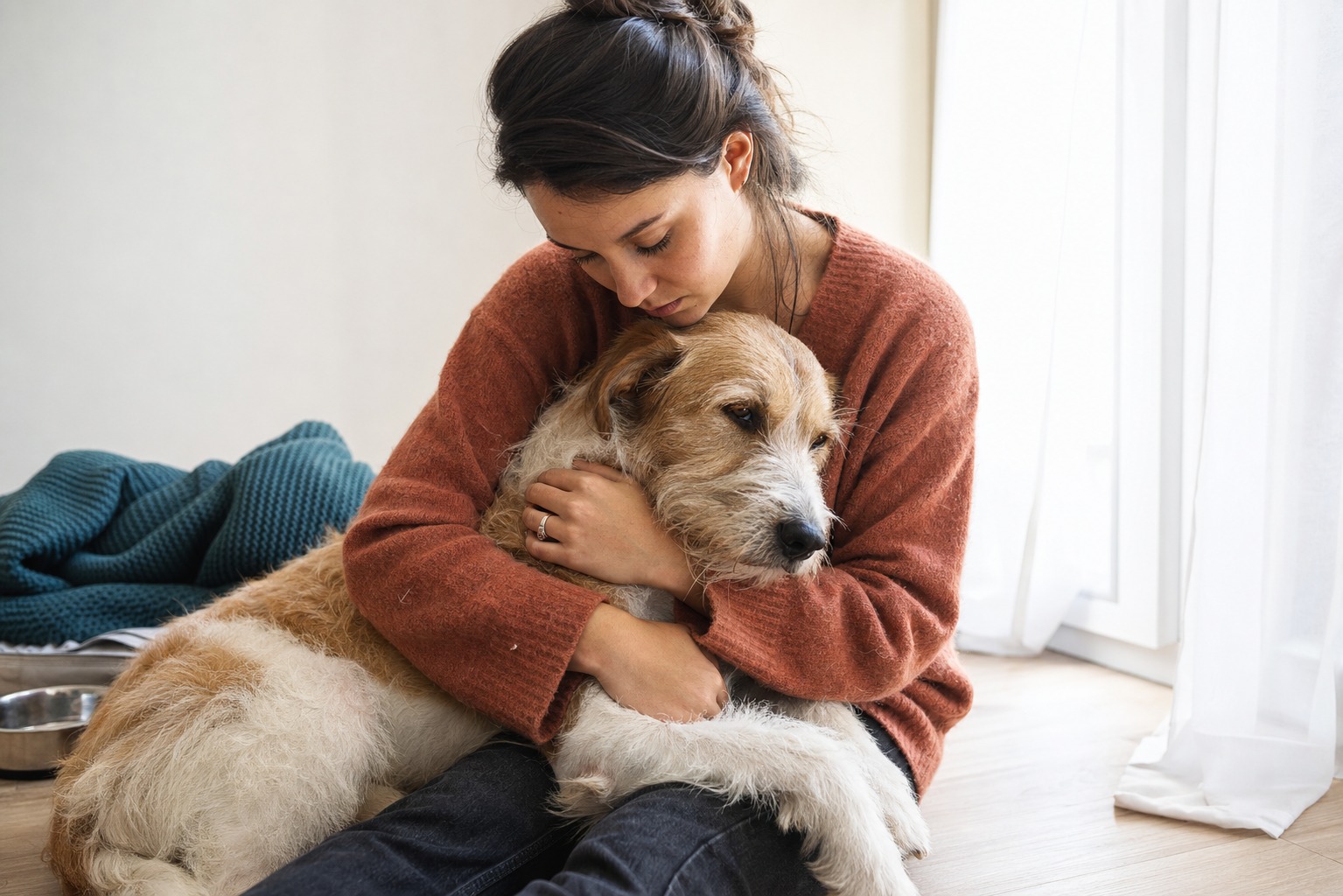
When a dog’s stool goes soft, most owners do the same thing: open the medicine cabinet and look for something to make it stop. It is a reasonable instinct and, most of the time, the wrong first move. The honest truth about dog diarrhea is that the majority of cases resolve on their own or with quiet, boring support, and a lot of the products people reach for either do nothing or actively cause harm.
So before we talk about what to give, let’s talk about why “give something” is usually not the answer.
Most diarrhea is self-limiting
Soft stool sends an enormous number of dogs through clinic doors every year, but common is not the same as dangerous. It usually traces back to something ordinary: a diet change, dietary indiscretion (the polite term for eating garbage, or your fries), or stress. Less often it signals intestinal parasites, pancreatitis, food intolerance, or liver or kidney disease. The everyday causes are typically self-limiting, meaning the body sorts them out without a prescription.
That is why the real danger from most diarrhea is not the diarrhea itself but the water it drains. A day or two of soft stool is uncomfortable. Several days of untreated diarrhea leads to cramping, dehydration, gut inflammation, blood in the stool, and appetite loss. The goal of home care, then, is not to plug the problem. It is to support your dog while their gut recovers and to recognize when it has stopped being minor.
What actually helps at home
The unglamorous trio does most of the work: rest, a temporary bland diet, and a probiotic.
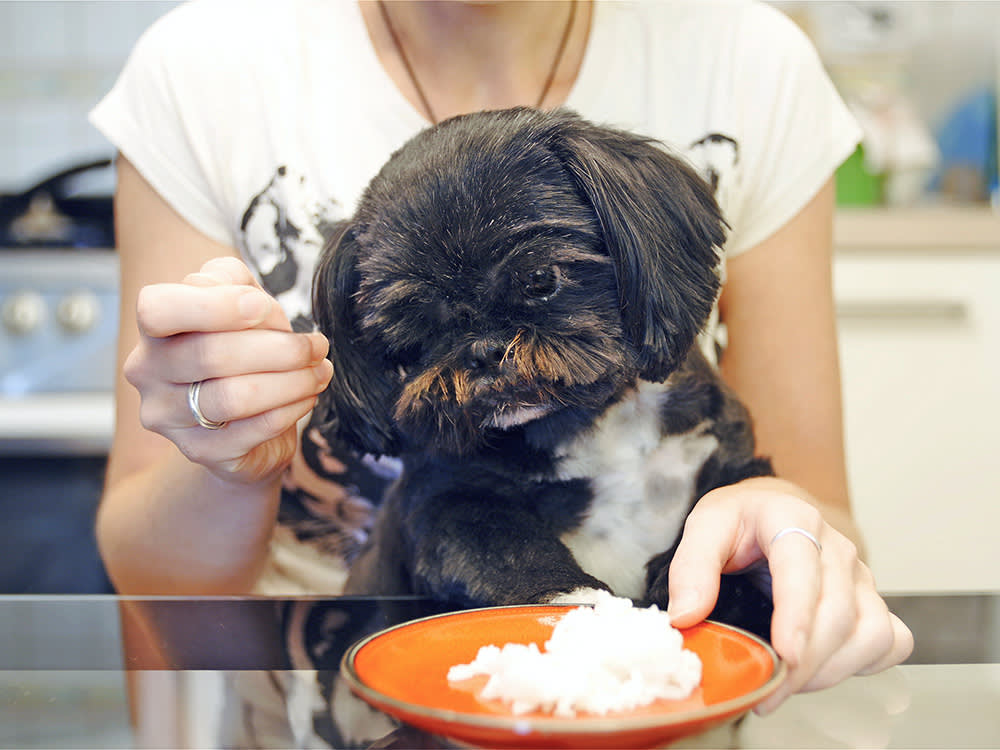
A bland diet gives the gut easy fuel while it heals. Boiled skinless chicken breast (no bones, no dark meat) with plain white rice is the classic; lean ground turkey or beef works if chicken doesn’t agree with your dog, and a little plain pumpkin or plain potato adds stool-firming fiber. This kind of diet is not nutritionally complete, so it is a few-days fix, not a new menu.
Probiotics are the one “give something” that has real support behind it. They help rebalance the gut microbiome, and canine-specific probiotic supplements have been shown to shorten how long it takes a dog to get back to normal stool. Many mild cases clear up on nothing more than a bland diet plus a probiotic.
And here is the update to old advice worth internalizing: do not fast your dog. Withholding food, and sometimes water, used to be standard. Newer thinking flipped it, because feeding sooner helps intestinal cells repair and recover faster. Your dog’s gut does not need a break from food; it needs gentle food and a rest from stress and activity while it mends.
The over-the-counter stuff, and why to be careful
This is where good intentions go sideways. Never give human medications without checking with your vet first, because several of them are risky for dogs and some are outright dangerous.
Loperamide, the active drug in Imodium, is sometimes recommended by vets for a few days in cases with no suspected bacterial cause, but it is not safe for every dog. Herding breeds like Collies and Australian Shepherds carry a known sensitivity to this class of drug and can have serious reactions. It also should not be used in very young or senior dogs, or dogs with heart, kidney, or liver disease, and the dose is weight-dependent, so this is a call-your-vet situation, not a guess-from-the-box one.
Bismuth subsalicylate, the pink stuff known as Pepto-Bismol, is occasionally used in dogs but is toxic to cats and can be inappropriate depending on the underlying cause. Kaolin-pectin products work by binding toxins and reducing inflammation in the gut, but they can also soak up other medications your dog is taking, which is one more reason to clear anything over-the-counter with your vet first.
People assume the safest move is to give something, and the medicine cabinet feels reassuring. But with diarrhea, the safest first move is usually food, a probiotic, and a close eye. The drugs come with strings attached, and a lot of them don’t even shorten the illness.
Two prescription-side notes. Antibiotics used to be handed out reflexively for diarrhea and are now falling out of favor, because the evidence that they speed healing is thin and because overusing them drives antibiotic resistance. And dewormers matter more than people expect: a fecal exam is one of the most useful tests for a dog with diarrhea, because parasites like hookworms, roundworms, coccidia, tapeworms, and whipworms won’t resolve until the actual bugs are treated, and monthly preventatives don’t cover all of them.
When to stop waiting and call
The “wait and see” approach has limits. Get your dog seen if the diarrhea lasts more than two days, or if you notice loss of appetite, vomiting, low energy, or blood or mucus in the stool. At the clinic, treatment may include fluids under the skin or through an IV to fight dehydration, plus targeted medications once the cause is clearer. If your dog seems genuinely unwell, do not keep waiting it out or reaching for the cabinet.
What newer research adds
There is a specific study that reshaped how a lot of vets think about treating simple diarrhea. In a randomized, placebo-controlled trial of dogs with acute diarrhea, one group got a probiotic, one got the antibiotic metronidazole, and one got a placebo. The dogs on the probiotic firmed up fastest, at about 3.5 days on average, but here is the striking part: metronidazole (about 4.6 days) was not meaningfully better than the placebo (about 4.8 days). In other words, the antibiotic that was reached for automatically for decades did not clearly beat doing nothing.
On top of that, research suggests metronidazole can disrupt a dog’s gut microbiome in unhelpful, longer-lasting ways. Put together, the current direction of travel is clear: for routine, uncomplicated diarrhea, time plus supportive care plus a probiotic is the smart default, and antibiotics are reserved for the specific cases that genuinely need them. Which is a long way of saying the medicine cabinet was never the hero of this story.
References
- Shmalberg J, et al. “A Randomized Double Blinded Placebo-Controlled Clinical Trial of a Probiotic or Metronidazole for Acute Canine Diarrhea.” Frontiers in Veterinary Science, 2019. https://www.frontiersin.org/journals/veterinary-science/articles/10.3389/fvets.2019.00163/full
- dvm360. “Acute canine diarrhea: is it time to rethink our treatment approach?” https://www.dvm360.com/view/acute-canine-diarrhea-is-it-time-to-rethink-our-treatment-approach-
- American Animal Hospital Association. “Antimicrobial Stewardship Guidelines.” https://www.aaha.org/resources/2024-aaha-antimicrobial-stewardship-guidelines/
- VCA Animal Hospitals. “Diarrhea in Dogs.” https://vcahospitals.com/know-your-pet/diarrhea-in-dogs
Common questions
Is pumpkin good for a dog with diarrhea?
Plain canned pumpkin (not pie filling) can help mild, uncomplicated diarrhea because its fiber helps firm stool and feeds good gut bacteria. A rough guide is one to three teaspoons a day for small to medium dogs and three to five tablespoons for dogs over 50 pounds.
When does dog diarrhea need a vet?
Call if diarrhea lasts more than two days, or if you see vomiting, loss of appetite, low energy, or blood or mucus in the stool. Dehydration is the real risk, and those signs mean it's time to stop waiting.
Not a substitute for your vet. Our guidance is educational. For urgent symptoms, contact a vet or emergency clinic right away. Editorial standards
Dr. Park is a board-certified emergency and critical care specialist. She reviews our health and safety content for clinical accuracy and contributes guides on recognising urgent conditions. Her focus is helping owners act quickly and correctly when it matters most.
Meet our experts ↗Keep reading
 Food'Sensitive Stomach' Isn't a Diagnosis. That's Why Switching Food First Usually Fails.Dr. Priya Nair · 8 min
 Health & WellnessMucus in Your Dog's Poop Is Not the Problem. Its Company Is.Dr. Amara Solis · 8 min
 Health & WellnessThere's a Number for 'Drinking Too Much.' Most Dog Owners Don't Know It.Dr. Lena Park · 8 min
 Health & WellnessThe Grain-Free Heart Disease Scare, and What the Headlines Got WrongDr. Amara Solis · 9 min
 Health & WellnessYour Dog Pukes Every Morning? It's Probably the Clock, Not a Disease.Dr. Lena Park · 6 min
 Health & WellnessDon't Fast a Dog With Diarrhea. The Advice Flipped, and Here's What to Feed Instead.Dr. Lena Park · 7 min