


The Dog Park Sells Socialization. It Often Delivers the Opposite.
That open-gate free-for-all can quietly teach your dog to be reactive, anxious, or sick. A trainer-backed look at the real risks, and calmer ways to meet the same needs.

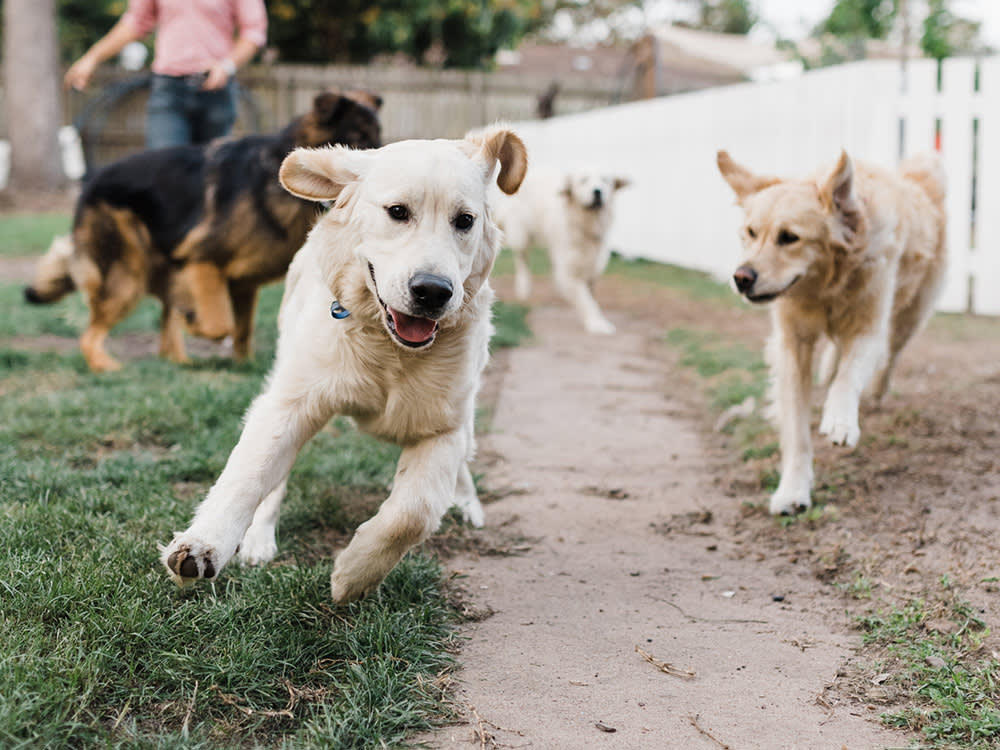
The dog park makes a simple promise: bring your dog here and they’ll get exercise and friends. It’s an appealing pitch, and for some dogs it’s even true. But for a lot of dogs, the open-gate free-for-all delivers the opposite of what it advertises. Instead of a well-socialized, tired-out companion, you can end up with a dog who’s more anxious, more reactive, and occasionally sick. The gap between the promise and the reality is worth understanding before you push through that gate again.
The core issue is that a public dog park throws together strangers, canine and human, with no vetting, no shared rules, and no off-switch. Watch a busy one for five minutes and you’ll usually spot the same problems on repeat: dogs with no boundaries, dogs cranked up past the point of good judgment, and dogs bullying others while their owners chat, oblivious. None of that is socialization. It’s just proximity.
The behavioral bill comes due later
Plenty of the damage a dog park does doesn’t show up until you’re back home. Different dogs have wildly different play styles, and that’s completely normal, some like it rough and tumbling, others prefer gentle and slow. Cram a bunch of mismatched styles into one fenced space and you get misunderstandings that curdle into conflict. For an anxious dog especially, the chaos of unfamiliar people and animals sprinting around can tip into fear, and a single bad encounter can leave a dog wary of every dog they meet afterward.
Then there’s the copying problem. Dogs learn fast from one another, and not just the good stuff. A lot of the barking, fence-fighting, and digging owners complain about got picked up at the park. Even a “great” visit can backfire: a dog who has a blast greeting every single dog may decide that’s the rule everywhere, and start lunging and pulling on leash toward every dog on the sidewalk. The excited dog who loses their mind with joy at the park entrance is often the same dog developing leash reactivity a month later.
People read that frantic, whining excitement at the gate as pure happiness, and sometimes it’s closer to a dog who’s completely over threshold. An over-aroused dog isn’t in a state to make good social choices, and that’s exactly when a scuffle starts. I’d rather see a dog a little bored and calm than thrilled and out of control.
The health risks are real, too
Say your dog is a genuine social butterfly, unbothered by any of the above. There’s still the matter of what the other dogs are carrying. Not every dog at the park is vaccinated or healthy, and communicable diseases move dog to dog with ease, kennel cough, parvovirus, and giardia among them. Essentially anything that passes from one dog to another can change hands in that space, and vaccination lowers the odds without erasing them. You have no way of knowing the medical history of the dog your pup just traded sniffs with.
Better ways to meet the same needs
None of this means you should wrap your dog in bubble wrap and keep them home; isolation creates its own set of problems. It means being more intentional about how your dog gets exercise and social contact. A few alternatives cover most of what the dog park claims to offer, with far less downside.
Set up playdates with dogs you actually know, whose temperament and health you can vouch for and whose play style suits your dog’s. Enroll in a positive-reinforcement training or group class, which delivers structured socialization and better manners at the same time. Check whether a local pet store or daycare offers a supervised indoor play area, a lower-risk stand-in for the open park. And if your dog truly loves wide-open romping, an app like Sniffspot lets you rent private, fenced land by the hour, essentially a short-term-rental version of a dog park, so the only dogs present are yours.
There’s also a growing middle path: private, vetted parks. Take DOG PPL, billed as the first members-only canine social club in Los Angeles. Members have to show vaccine records and proof of spay or neuter for dogs over eight months, staff “rufferees” watch how newcomers play with the group, and the club coaches owners through any issues that come up. It’s the dog park experience with the guardrails the public version lacks.
When in doubt, trust your gut
The through-line for all of it is simple: your dog’s safety outranks a free hour of exercise. If you don’t know whether the dogs your pup is about to meet are safe, the risk usually isn’t worth it. A calm walk with one steady, easygoing dog builds more real social skill than an hour of pinballing through a crowd, and it does so without the vet bill or the reactive habits. The best socialization isn’t the most socialization. It’s the right kind, in doses your dog can actually handle.
References
- American Veterinary Medical Association. “Canine Infectious Respiratory Disease (Kennel Cough).” https://www.avma.org/resources-tools/pet-owners/petcare/canine-infectious-respiratory-disease-complex-kennel-cough
- American Veterinary Medical Association. “Canine Parvovirus.” https://www.avma.org/resources-tools/pet-owners/petcare/canine-parvovirus
- Companion Animal Parasite Council. “Giardia.” https://capcvet.org/guidelines/giardia/
Common questions
My dog gets so excited at the park. Isn't that happiness?
Not always. That whining, wiggling, tear-into-the-gate energy often reads as over-arousal rather than joy, and over-aroused dogs are the ones most likely to trigger a scuffle.
What diseases can dogs catch at a dog park?
Communicable illnesses spread dog to dog, including kennel cough, parvovirus, and giardia. Even fully vaccinated dogs carry some risk, since not every dog at the park is healthy or vaccinated.
Dr. Kohl is a board-certified veterinary dentist with a particular interest in preventive oral care. She reviews all dental health content at The Pet Times and contributes practical guides on home dental routines, professional cleaning, and oral disease prevention.
Meet our experts ↗Keep reading
 TrainingYour Dog Isn't Being Possessive Over That Toy. They're Doing Math.Dr. Amara Solis · 8 min
 TrainingYou're Not Breaking Up a Fight. You're Interrupting a Conversation.Dr. Nina Kohl · 9 min
 TrainingThe Dog That Bites Your Kid Isn't the One on the SidewalkDr. Mara Chen · 8 min
 TrainingYour Dog Hates These 8 Smells. Some of Them Can Actually Hurt Them.Dr. Amara Solis · 7 min
 TrainingYour Dog's Joy Sends 86,000 People to the ER Every YearDr. Nina Kohl · 8 min
 LivingA Wolfdog Is Not a Fluffier Husky. Nobody Can Tell You What You Actually Own.Dr. Ravi Mehta · 8 min