


The Dog That Bites Your Kid Isn't the One on the Sidewalk
A viral tweet started a war between dog people and parents over a toddler running at a stranger's dog. Both sides missed it. Roughly 90 percent of dogs who bite children are dogs the child already knows, and half of them live in the house.

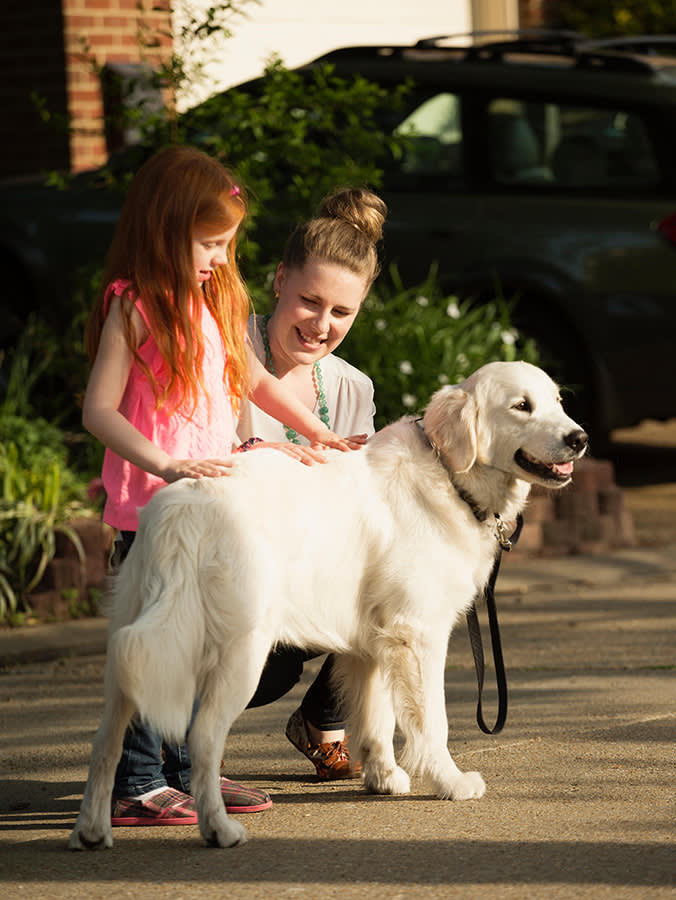
Late in 2023, a woman posted on X about a small child who had sprinted at her dog in public. She had stepped in front of the dog and suggested, mildly, that we don’t run up to dogs we don’t know. The child’s parent pointed out that the girl was three. The dog’s owner suggested that a three-year-old without reliable recall might want a leash of her own.
The post collected 23 million views and thousands of replies, and the replies were exactly what you would expect. One camp declared that people matter infinitely more than animals, and a few suggested the dog should be euthanized for the crime of existing near a toddler. (The dog, it emerged, was a service animal.) The other camp told the parent to watch her own child.
Everyone had a marvellous time. And the entire argument was aimed at the wrong dog.
Here is what the injury data actually says
An estimated 4.5 million dog bites happen in the United States every year, and around 334,000 people end up in emergency rooms because of one.
More than half of all bite victims are children, most of them under ten. In young children, the face is the most common place they get bitten, in one analysis just over half of injuries. Children five and under are at particular risk of a facial bite, and they are more likely than older children to need hospitalization.
Now the number that reframes the entire viral tweet.
In pediatric bite cases, the dog is nearly always one the child already knows. One analysis found the dog was known to the child about 90 percent of the time. Roughly half were the family’s own dog. The rest belonged to a neighbor, a friend, or a relative.
Most bites to young children happen during ordinary daily activities, in familiar places, with familiar animals.
So the stranger’s dog on the sidewalk, the one the internet spent a week screaming about, is statistically close to the safest dog in the child’s life. The one lying on the rug at home is the one that bites.
Nobody brings their child to me because of the dog outside the coffee shop. They come in after the family dog, the one who has been gentle for six years, finally said something loudly enough to be heard. And when we go back through it, he had been saying it quietly for weeks.
Why the familiar dog is the dangerous one
It is not a paradox once you look at it. It is exposure and complacency, multiplied.
Time. A child spends thousands of hours with the family dog and eleven seconds with the one on the sidewalk. Risk accumulates where the hours are.
Supervision collapses. Nobody hovers over an interaction they have seen ten thousand times. The stranger’s dog gets full adult attention. The family dog gets none, because he’s Rufus.
The dog cannot leave. A dog on the street can move away. A dog in a small living room with a toddler is out of exits, and a dog with no exit escalates.
Boundaries erode. The things you would never let a child do to a strange dog, hug it, lie on it, climb it, kiss its face, take its bone, wake it up, are exactly the things children do to their own dog constantly, and get photographed doing.
The warnings get punished. A family dog who growls at a child is very often shouted at. Do that enough and you have taught him not to growl. You have not taught him to be comfortable. You have removed the last warning before the bite.
What both sides got right
None of this means the sidewalk argument was wrong. It means it was small.
Parents: do not let your child approach a strange dog. Not the one behind a fence, not the one tied outside a shop, and not even the one they have met before. Never assume a dog is friendly on the basis of a previous encounter. Dogs have bad days. Dogs get sore. Dogs feel unwell and would like to be left alone, and unlike your child, they cannot say so in a sentence. So the child asks, every single time, and waits for an answer.
Handlers: this is on you too. A great many dogs are frightened of children, and a handler is not a bystander to what happens next. If your dog is up for meeting a child, you are the one who explains how. If your dog is not, say so out loud, immediately, and do not feel you owe anybody an apology for it. Step in, greet the child, ask them to wait, and give them a clear yes or a clear no. “No” is a complete answer.
And before a dog is meeting children at all, it needs the basics: reliable recall and simple cues like sit. Ideally it was socialized around children when it was young. That is frequently not possible with an adopted dog, and that is precisely the dog whose handler should be most willing to decline.
The mechanics of a safe introduction
Here is the thing adults consistently fail to notice: a small child is often at eye level with a dog. That creates two problems at once. It puts the child’s face directly in bite range, which is why facial bites dominate the injury data. And it produces sustained eye-to-eye contact, which a great many dogs read as a threat rather than an invitation.
Children also move wrong. They are fast, erratic, and unpredictable in a way adults are not, and that movement pattern reads as alarming to a dog who has no context for it. Worse, a dog who is not being remotely aggressive can still injure a child simply by playing at his own size, with no understanding that this small human breaks more easily than the last one he wrestled.
So during any introduction, the adults’ job is to watch the dog, not the child. If the dog is jumping or lunging, even in what looks like delight, the interaction is over.
Then take it slowly. If the dog’s body is loose and relaxed, let him close the distance and do the sniffing.
And do not have the child stick out a hand. This is the single most widely taught piece of dog advice and it is unnecessary at best. A dog’s nose is extraordinary, capable of detecting a vanishingly small trace of scent in an enormous volume of air. He can smell your child perfectly well from where he is standing. Pushing a small hand toward his face adds a risk and buys nothing.
Wait until he has settled, then let the child brush a hand gently along his shoulder or his side. Never the head, never the ears, never the tail, and never leaning over the top of him. Let the dog demonstrate how he would like to be touched, and follow his lead.
The rules that matter more, because they’re for home
Everything above is about the ten seconds on a sidewalk. Here is the part that maps onto where children actually get hurt.
Never leave a young child and a dog alone together. Not for a minute, not to answer the door, not because the dog is old and gentle. “They’ve always been fine” is the sentence people say in the ER.
Ban the classics. No hugging. No lying on the dog. No riding, climbing, or using him as a pillow. No face-to-face kissing, which is exactly how facial bites happen. It looks adorable in photographs and it is the single riskiest thing a small child routinely does to a dog.
Protect the dog’s stuff and the dog’s rest. Food, bones, and toys are not to be taken. A sleeping dog is not to be woken by a child, ever.
Give the dog an exit that is genuinely off-limits. A crate or a room where no child follows him, ever, under any circumstances. A dog who can leave rarely needs to escalate.
Teach your child to read a “no.” Stiff body, closed mouth, hard stare, turning away, showing the whites of the eyes, licking lips, yawning when not tired. These mean stop.
Never punish a growl. It is the most valuable thing your dog will ever say to you.
What the research adds
The strongest recent theme in the pediatric bite literature is the gap between where the risk is and where the fear is.
Prevention campaigns and public conversation both center on the stranger’s dog, while the injuries pile up around the family dog, during routine activity, in the home. Reviews of pediatric dog bites keep concluding the same thing: prevention has to focus on education and on supervision of children with familiar animals, including the family pet.
Which is why the viral tweet, for all the heat it generated, was a fight over a rounding error. Yes, teach your child not to run at strange dogs. It is good manners and it is a real, if small, risk.
Then go home and look at what your child is allowed to do to the dog on your own living room floor.
References
- Centers for Disease Control and Prevention. “Preventing Dog Bites.” CDC Injury Center.
- Chen, H.H., Neumeier, A.T., Davies, B.W., Durairaj, V.D. “Analysis of Pediatric Facial Dog Bites.” Craniomaxillofacial Trauma & Reconstruction, vol. 6, no. 4, 2013, pp. 225–232.
- Golinko, M.S., Arslanian, B., Williams, J.K. “Characteristics of 1616 Consecutive Dog Bite Injuries at a Single Institution.” Clinical Pediatrics, vol. 56, no. 4, 2017, pp. 316–325.
- “Pediatric dog bite injuries in the USA: a systematic review.” World Journal of Pediatric Surgery, 2022.
- American Veterinary Medical Association. “Dog Bite Prevention.” AVMA.
- American Veterinary Society of Animal Behavior. “Position Statement on Punishment.” AVSAB.
Dr. Chen is a small-animal veterinarian who leads health and safety coverage at The Pet Times. She writes and reviews the bulk of our illness, condition, and safety content, translating clinical guidance into clear, practical advice owners can act on at home.
Meet our experts ↗Keep reading
 TrainingYour Dog Isn't Being Possessive Over That Toy. They're Doing Math.Dr. Amara Solis · 8 min
 TrainingYou're Not Reading Your Dog. You're Reading the Room Behind Him.Dr. Ravi Mehta · 7 min
 TrainingIt's Not Why Your Dog Licks Your Legs. It's How Long.Dr. Mara Chen · 7 min
 LivingTwo Years, Two Best in Show Winners, Two Sets of Cut-Off Ears. That's Not a Coincidence.Dr. Ravi Mehta · 11 min
 TrainingYour Dog Isn't Kissing Your Feet. They're Reading Them.Dr. Ravi Mehta · 6 min
 Health & WellnessYour Dog Licking Your Feet Is Harmless. The Cream on Your Skin Isn't.Dr. Ravi Mehta · 6 min