


You're Not Reading Your Dog. You're Reading the Room Behind Him.
When researchers tested how well people spot aggression in dogs, dog owners did no better than non-owners, and everyone did worst on exactly the emotion that matters most. Newer work found the reason, and it's not that we misread dogs. It's that we barely look at them.

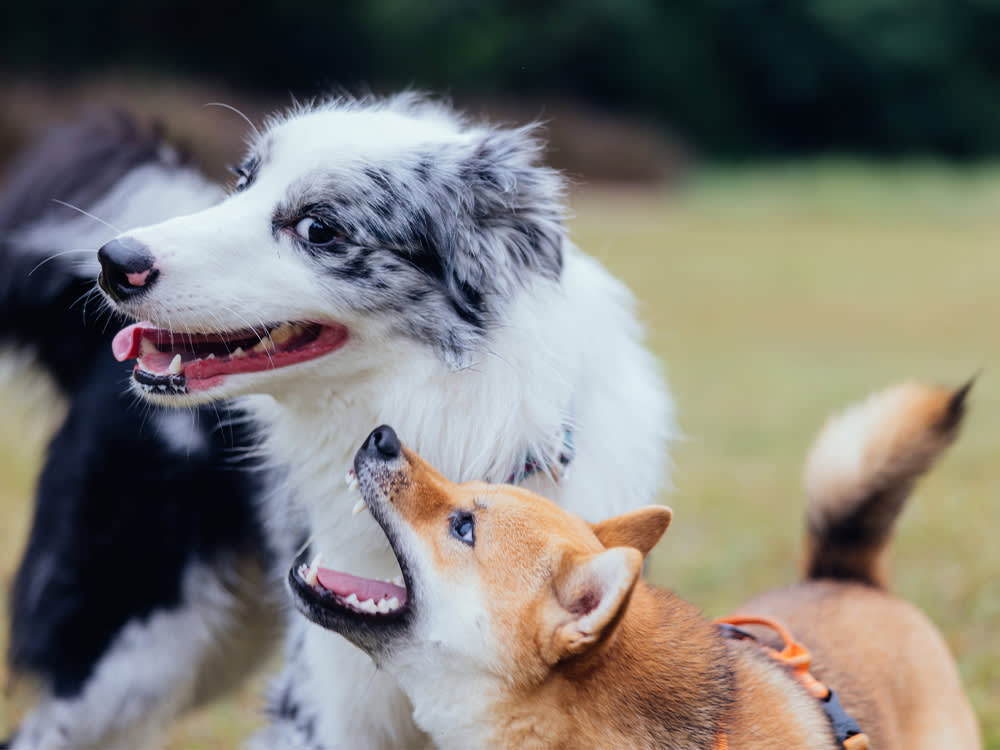
You would probably say you know your dog. You can spot the difference between the bark that means the mail came and the bark that means a squirrel is being insolent. You would pick him out of a lineup of forty identical brown mutts.
Now here is the finding that should bother you. When researchers tested whether people could correctly identify aggression in dogs, dog owners performed no better than people who had never owned one. Not slightly better. Not better on the subtle cases. No better.
And the thing everyone was worst at was aggression specifically, which is the one emotion where getting it wrong has teeth in it.
The study, and what it actually measured
A team led by the DogStudies group at the Max Planck Institute of Geoanthropology showed 92 participants 27 short video clips of non-verbal interactions. Each clip was a pair: two human children, two dogs, or two macaques.
The participants were split. One group was asked to classify each interaction as playful, neutral, or aggressive. The other was asked to predict what would happen next.
Accuracy across the videos ran somewhere between 50 and 80 percent depending on the species and the task, which sounds respectable until you look at where the failures clustered. The researchers had gone in expecting people to be best at spotting aggression, on the reasonable theory that missing an aggressive signal is the kind of mistake evolution punishes hardest.
The opposite happened. Aggression was the category people were worst at, in dogs and, remarkably, in other humans.
There is a genuine nuance the headlines flattened. Participants were considerably better at predicting the outcome of an interaction than at labelling the emotion in it, and the researchers argue that prediction is the more useful skill anyway. Knowing what is about to happen matters more, in survival terms, than being able to give it the correct name.
But that nuance does not rescue the finding. On dogs, on aggression, at the moment where a wrong call is the difference between a nice afternoon and stitches, we are not good, and owning a dog does not help.
The likely reason, and it is a little insulting
The first explanation researchers reached for was bias, and it is a compelling one. We like dogs. We approach every dog assuming it is a good dog, because in our experience dogs are good and we ourselves are nice, and that expectation quietly overwrites the evidence in front of us.
That is not a bad theory. But a more recent study points somewhere more specific and, honestly, more damning.
Researchers at Arizona State filmed dogs reacting to things, then showed people the footage in two versions: one with the surrounding context visible, and one with the dog isolated so that only the animal was in frame. People rated the dog’s emotion almost entirely on the context. Same dog, same body language, different background, different verdict.
When the context was stripped away and there was nothing to look at but the dog, people’s readings fell apart.
Which reframes everything. It is not that we look at a dog and misinterpret him. It is that we do not really look at the dog at all. We look at the situation, decide what a dog in that situation ought to be feeling, and then attribute that feeling to him. The animal himself is barely consulted.
People will tell me their dog was fine right up until he bit, and they’re usually being completely honest. They weren’t watching the dog. They were watching the picnic. The dog had been saying something for ten minutes and nobody was in the audience.
There was a further wrinkle in the same work. Participants who had been primed to expect something positive tended to rate the dogs as sadder, and those primed negatively rated them happier. Whatever process we are running, it is not simple, and it is not reliable.
Where we are actually competent
It is worth being fair about the good news, because there is some.
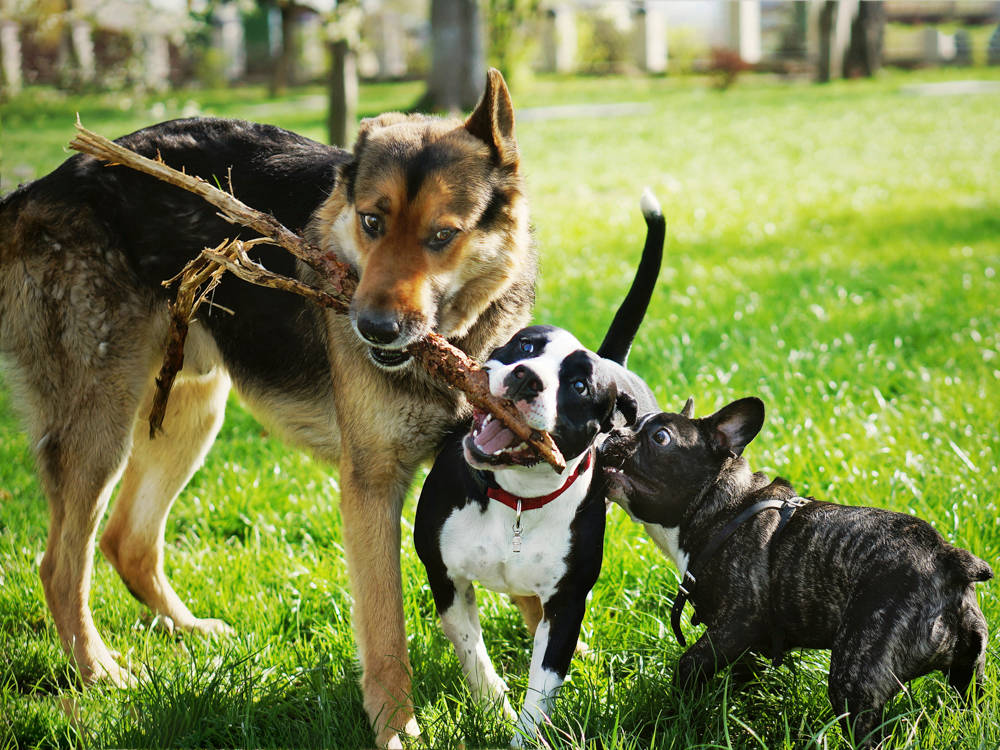
We are reasonably decent at reading obviously playful dogs. When two dogs are romping at the park and it is genuinely a romp, most people call it correctly, and can generally tell a play-fight from the real thing. That is a real skill and it is not nothing.
And we are excellent at extreme aggression. A dog who is snarling, hard-eyed, and lunging is read correctly by essentially everyone. As the researchers put it, severe aggression is legible across species. It is the subtle stuff where we fall apart.
That is precisely the problem. Dogs almost never open with severe aggression. They open with the subtle stuff, and the subtle stuff is what we cannot see.
What to look at instead
If the failure mode is reading the room instead of the animal, the fix is mechanical: look at the animal, and know what you are looking for. This is a short list and it is worth memorizing.
Play that is really play tends to include self-handicapping and reciprocity. Dogs playing take turns being on top. They roll over and let themselves be caught. They open their mouths wide but land their teeth softly, and they pause. A dog who is genuinely playing is giving the other dog chances.
Play that has stopped being play loses those things. The pauses disappear. The roles stop swapping, so one dog is always chasing and one is always fleeing. The body goes stiff instead of loose and bouncy. The mouth closes.
The pre-aggression signals are quiet and easy to talk yourself out of. A hard stare that does not break. A body that has gone still, especially a sudden stillness in a dog who was moving. Weight shifted forward. A closed mouth on a dog who was panting a second ago. Whale eye, the white crescent showing when a dog looks sideways without turning his head. A slow, high, stiff tail wag, which is not the same signal as a loose one and is routinely misread as friendliness.
A growl is information, not an offence. The instinct to punish growling is one of the most dangerous common training errors there is. A dog who has been punished for growling learns to skip the growl. He does not learn to stop being uncomfortable, he learns to stop announcing it, and you have just deleted the warning label from the bottle.
The practical stake
The reason this matters is not academic. It is the stranger’s dog on the sidewalk, the dog at the park, the dog in a friend’s kitchen while a toddler wobbles toward him.
If our aggression-reading is poor, and if owning a dog confers no advantage, then confidence in that setting is not earned. The person who says “he’s fine, he loves kids” is running the exact algorithm the research describes: reading the situation, assuming the best, and not really looking at the dog.
Look at the dog. Ask before you approach one. Let him come to you rather than reaching into his space. And when your own dog goes still and quiet at a party, take that as seriously as you would take a snarl, because the snarl is what comes next if nobody notices the first thing.
What newer research adds
The 2025 context study is the meaningful update, and it changes what you should practice.
If the problem were misinterpretation, the fix would be education: learn the signals, get better. But if the problem is that we substitute the situation for the animal, then learning more signals does not help unless you also change where your eyes go. The skill to train is not vocabulary. It is attention.
There is a slightly odd exercise that follows directly from the finding, and it works. Watch dogs with the sound off and the story deliberately ignored. Not “that dog is happy because it’s a birthday party,” but “that dog’s mouth just closed, his weight moved forward, and his tail went stiff.” Describe the body, not the scene. It is boring, it feels pedantic, and it is the entire difference between the people who see a bite coming and the people who tell the emergency room it happened out of nowhere.
Bites very rarely come out of nowhere. They come out of a conversation nobody was watching.
References
- Epperlein, T., Kovacs, G., Oña, L.S., Amici, F., Bräuer, J. “Context and prediction matter for the interpretation of social interactions across species.” PLOS ONE, vol. 17, no. 12, 2022, e0277783.
- Molinaro, H.G., Wynne, C.D.L. “Barking up the wrong tree: Human perceptions of dog emotions are influenced by extraneous factors.” Anthrozoös, 2025.
- American Veterinary Society of Animal Behavior. “Position Statement on Punishment.” AVSAB.
- Bekoff, M. “Play signals as punctuation: the structure of social play in canids.” Behaviour, vol. 132, 1995, pp. 419–429.
- American Veterinary Medical Association. “Dog Bite Prevention.” AVMA Public Resources.
Dr. Mehta is a board-certified veterinary nutritionist who evaluates pet food formulations, ingredient quality, and the science behind dietary trends. He writes and reviews all nutrition content at The Pet Times, including our food rankings and feeding guides.
Meet our experts ↗Keep reading
 TrainingYour Dog Rolling in Poop Isn't Camouflage. That Theory Barely Holds Up.Dr. Nina Kohl · 7 min
 TrainingThe Most Dangerous Dog Isn't a Breed. It's the One Nobody's Reading.Dr. Mara Chen · 7 min
 TrainingYour Dog Hates These 8 Smells. Some of Them Can Actually Hurt Them.Dr. Amara Solis · 7 min
 TrainingYou're Not Breaking Up a Fight. You're Interrupting a Conversation.Dr. Nina Kohl · 9 min
 TrainingYour Dog Isn't Being Possessive Over That Toy. They're Doing Math.Dr. Amara Solis · 8 min
 TrainingYour Dog Isn't Kissing Your Feet. They're Reading Them.Dr. Ravi Mehta · 6 min