


A Wolfdog Is Not a Fluffier Husky. Nobody Can Tell You What You Actually Own.
The real problem with wolfdogs isn't temperament. It's that there's no reliable way to know how much wolf is in there, no approved rabies vaccine, and a legal system that can't process the animal in your yard.

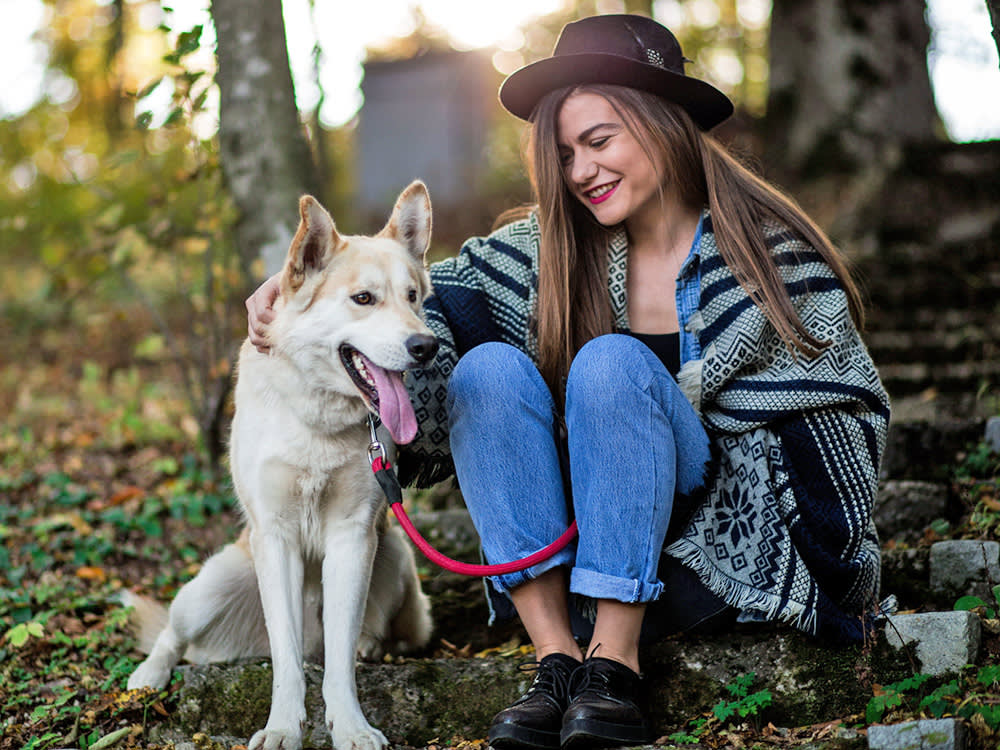
Most dog lovers know the broad strokes: today’s domestic dogs descend from wolves. Fewer people know that the two still mix, and that the result is quietly one of the hardest animals in America to legally own, vaccinate, board, or rehome.
The usual case against wolfdogs is about temperament, and it is a real case. But it is not the strongest one, and leading with it lets people talk themselves into an exception. My guy is sweet. My guy is fine. He might be.
The genuinely damning problem is different, and no amount of good behavior solves it: nobody can tell you, with confidence, what is actually in your animal. Not you, not the breeder, not your vet, not the county. And everything downstream, the vaccine, the law, the insurance, the bite protocol, depends on an answer that does not exist.
Start with what a wolfdog is
All three animals sit inside Canidae. The domestic dog is the subspecies Canis familiaris. Wolves span several species and subspecies of their own, the gray wolf (Canis lupus) and the eastern wolf (Canis lycaon) among them. Cross the two and the result gets written out as Canis lupus x Canis lupus familiaris.
A wolfdog is what you get when a domestic dog breeds with one of four wolf subspecies (gray, eastern, red, Ethiopian), and the gray cross is far and away the most common. In the wild, this is rare. Nearly every wolfdog alive today was bred on purpose, in captivity, for the exotic-pet trade, and most are not even first-generation crosses. They are wolfdog bred to wolfdog. Which is why Wolfdog Awareness defines the term as broadly as it does: any canine carrying some wolf content alongside some dog content.
The three animals, side by side
Wolves share a recognizable build: a narrow chest, a sloping forehead, a head longer than a domestic dog’s, short furry rounded ears, long feet and toes, and long legs whose wrists turn slightly outward.
Behaviorally, they are intensely social with each other. They live in packs with clear hierarchies and communicate through a rich system of facial expressions, tail positions, scent marking, and vocalization. What they are not is social with us. Wild wolves generally avoid people, and attacks are genuinely rare: researchers documented 26 fatal wolf attacks on humans worldwide between 2002 and 2020, and 14 of those involved rabies.
Dogs vary wildly by breed and are usually smaller than wolves, though not always. A gray wolf typically stands 26 to 32 inches and can reach 150 pounds; a Great Dane can hit 32 inches and 175 pounds. Behavior varies just as much, but the through-line is orientation toward people. Domestic dogs bond hard with us and track our behavior closely, which is unsurprising for what is widely considered the oldest domesticated animal on earth.
Wolfdogs land somewhere in between, and where exactly is the whole question.
The classification system that cannot classify
Wolfdogs are sorted into low, mid, and high content:
- Low content: generally under 50 percent wolf, usually showing few wolf-like characteristics
- Mid content: roughly 50 to 74 percent wolf, often displaying more wolf traits than dog traits
- High content: up to 99 percent wolf, and functionally very close to a pure wolf
Here is the catch, and it is enormous. There is no reliable way to determine an individual wolfdog’s true wolf content. No breed registry exists. The genetic testing that does exist is confined mostly to wildlife-management and law-enforcement labs, and it is not fully accurate even there.
So content gets assigned by phenotyping: an expert looks at the animal and makes a judgment call from its physical and behavioral traits. Large pointed ears and sharply defined markings generally signal low or mid content; high-content animals tend to lack both. That is the science. It is an educated guess.
A buyer is told the animal is ‘low content’ and takes that as a measurement. It is an opinion, offered by the person selling the animal, about a number that cannot be checked. I would not accept that standard of evidence for anything else in medicine, and I do not accept it here.
Typical adult weight runs 70 to 100 pounds, with a lifespan of 12 to 15 years, much like a domestic dog. That is a very long time to be uncertain.
What higher wolf content actually changes
Because of the genetic variation between individuals, an individual wolfdog’s temperament is hard to predict. But there are traits that recur, and they scale with wolf content. The more wolf in the animal, the warier it tends to be around people, the higher its energy and prey drive, the more fiercely it guards territory, the more it destroys, and the less it needs us at all.
Practically, that shows up as:
- Curiosity that costs you furniture. Wolves explore their territory relentlessly, and wolfdogs may inherit that drive. In a house, exploration looks like biting and clawing through your couch.
- A drive to roam. Wolves defend a territory rather than settling on a spot. A wolfdog may treat your fence as an obstacle rather than a boundary.
- Predatory instinct. Wolves prey on smaller animals. A wolfdog can inherit that, which makes them a genuine danger to other pets, and potentially to small children, in a household.
Skip the careful socialization and you get an unpredictable animal. And training does not work on them the way it works on a dog, because the thing that makes a dog trainable, that deep orientation toward human direction, is precisely what has been diluted out.
The rabies problem is the one that should stop you
This is the part that turns a difficult pet into an unmanageable one, and almost nobody hears it before they buy.
The USDA has never approved any rabies vaccine as proven effective in wolf hybrids. The vaccines licensed for domestic dogs have not gone through the trials required to license them for a hybrid animal. You can have your wolfdog vaccinated, and a vet may do it off-label, but that shot does not carry the legal weight a dog’s shot does.
Now run the scenario. Your wolfdog nips the delivery driver, or scuffles with a neighbor’s dog, and rabies exposure is alleged. Because there is no approved vaccine for the animal, public health law may not treat your animal as vaccinated, no matter what your vet did. What follows is the unvaccinated-animal protocol: extended quarantine, or worse.
“People hear ‘no approved vaccine’ and think it is a paperwork issue,” Dr. Mehta says. “It is not. It is the reason a single bite can end with the animal being taken and killed, in a situation where a Labrador would have gone home the same afternoon.”
The Shih Tzu thing, explained properly
You will see a claim, repeated constantly, that Spitz-type breeds are the closest to wolves genetically, and that the list runs Husky, Malamute, Samoyed, and, bizarrely, Shih Tzu.
This traces back to real genetic work identifying a cluster of “ancient” breeds that sit closest to wolves on the canine family tree. But “genetically basal” is not “wolf-like.” It means those breeds branched early and have been less scrambled by the intensive breeding of the last two centuries. It says nothing about behavior, and it certainly does not mean your Shih Tzu is a wolf in a hair bow. Later research has also cast doubt on how solid several of those placements are.
Meanwhile, some breeds really are wolf crosses by design. The Saarloos Wolfdog was created in the Netherlands by putting German Shepherds together with European wolves, and the United Kennel Club recognized it in 2006. The Czechoslovakian Wolfdog (Czechoslovakian Vlciak) began as a German Shepherd bred to a Carpathian gray wolf, and the American Kennel Club recognizes it today. Both are stabilized breeds with generations of deliberate selection behind them, which makes them an entirely different proposition from a backyard wolfdog of unknown content.
Do they make good pets?
The consensus, from sanctuaries and veterinary organizations alike, is no.
Containing one properly means fencing around eight feet high, with guards dug in along the base to stop them from tunneling out. Their suspicion of anyone unfamiliar makes a boarding kennel or a pet sitter difficult to impossible to arrange. And the roaming drive means an ordinary suburban fence is a suggestion.
Many owners work this out too late and surrender the animal to a wolfdog sanctuary. Those sanctuaries are, right now, badly squeezed on capacity and resources. The surrender option people are quietly counting on is closing.
What’s new since this was written
The legal map has kept moving, and the direction is toward restriction.
As of 2026, roughly a dozen states ban private wolfdog ownership outright, and about a dozen more allow it only with a state-issued permit. The rest permit ownership but frequently attach conditions, most commonly specific caging and containment requirements. Critically, the state answer is often not the operative one: counties and municipalities regularly ban wolfdogs in states where they are technically legal, and the local ordinance is the one that shows up at your door. If you are anywhere near this decision, call your county animal control before you call a breeder.
The rabies situation has not changed, and there is no sign it will. No USDA-approved vaccine exists for wolf hybrids, which means the single most dangerous thing about owning one is still the thing that happens after something goes wrong.
References
- Linnell, J. D. C., et al. Wolf Attacks on Humans: An Update for the Period 2002–2020. NINA Report 1944, Norwegian Institute for Nature Research, 2021. https://www.wwf.de/fileadmin/fm-wwf/Publikationen-PDF/Deutschland/Report-Wolf-attacks-2002-2020.pdf
- Davis, K., et al. “Why the Rabies Vaccine Should Be Approved for Wolfdogs.” Rutgers University, 2014. https://rucore.libraries.rutgers.edu/rutgers-lib/47946/
- Animal Legal & Historical Center, Michigan State University. “Exotic Pets: Ownership and Breeding of Wolves and Wolf-Dog Hybrids.” https://www.animallaw.info/statute/ar-exotic-pets-subchapter-4-ownership-and-breeding-wolves-and-wolf-dog-hybrids
- California Veterinary Medical Association. “CVMA Policy on Wolf Hybrids.” https://cvma.net/about-us/policies/cvma-policies-on-wildlife/cvma-policy-on-wolf-hybrids/
- Udell, M. A. R., & Wynne, C. D. L. “A Review of Domestic Dogs’ (Canis familiaris) Human-like Behaviors.” Journal of the Experimental Analysis of Behavior, vol. 89, no. 2, 2008, pp. 247–261. https://doi.org/10.1901/jeab.2008.89-247
- Parker, H. G., et al. “Genetic Structure of the Purebred Domestic Dog.” Science, vol. 304, no. 5674, 2004, pp. 1160–1164. https://doi.org/10.1126/science.1097406
- Yamnuska Wolfdog Sanctuary. “Learn About Wolfdogs.” https://www.yamnuskawolfdogsanctuary.com/wolfdogs
- Wolfdog Awareness. “Wolfdog Basics.” https://www.wolfdogawareness.com/wolfdog-basics
- Wolf Haven International. “Pack Structure.” https://wolfhaven.org/education/wolves/pack-structure/
- National Center for Biotechnology Information. “Taxonomy Browser: Canis lupus x Canis lupus familiaris.” https://www.ncbi.nlm.nih.gov/Taxonomy/Browser/wwwtax.cgi?mode=Info&id=990119
Common questions
Can a DNA test tell me how much wolf my dog has?
Not reliably. There is no breed registry for wolfdogs, and the genetic testing that exists is largely restricted to wildlife management and law enforcement, and is not fully accurate even in their hands. In practice, wolf content is estimated by phenotyping, meaning an expert's judgment call based on physical and behavioral traits.
Can a wolfdog get a rabies shot?
It can be given one, but the USDA has never approved any rabies vaccine as proven effective in wolf hybrids. Legally, that means a vaccinated wolfdog may still be treated as unvaccinated after a bite, which can trigger quarantine or euthanasia protocols that a domestic dog would avoid.
Are wolfdogs legal to own?
It depends entirely on where you live, and the state answer is not the final answer. Roughly a dozen states ban private wolfdog ownership outright, another group requires a state permit, and many that allow it impose caging requirements. Counties and cities frequently ban them even where the state does not.
Do wolfdogs make good pets?
The general consensus among sanctuaries and veterinary organizations is no. They typically require eight-foot fencing with dig guards, tend to be wary of strangers (which makes boarding or pet-sitting very difficult), and are not trainable in the way domestic dogs are. Many owners realize this late and surrender the animal to a sanctuary system that is already out of room.
Dr. Mehta is a board-certified veterinary nutritionist who evaluates pet food formulations, ingredient quality, and the science behind dietary trends. He writes and reviews all nutrition content at The Pet Times, including our food rankings and feeding guides.
Meet our experts ↗Keep reading
 LivingBefore You Bring Your Dog to the Cookout, Answer 8 Honest QuestionsTom Hadley · 9 min
 LivingDon't Teach Your Dog to Swim. Teach Them to Get Out.Dr. Priya Nair · 8 min
 TrainingBefore You Cut a Hole in Your House, Answer This: What Else Can Fit Through It?Marcus Webb · 8 min
 Health & WellnessDog Saliva Doesn't Heal Wounds. It Delivers Bacteria.Dr. Priya Nair · 8 min
 LivingTwo Years, Two Best in Show Winners, Two Sets of Cut-Off Ears. That's Not a Coincidence.Dr. Ravi Mehta · 11 min
 TrainingStop Steering. The Walk Is the One Thing Your Dog Should Get to Decide.Dr. Lena Park · 7 min