


Your Dog's Breed Is a Remix. The Family Tree Explains the Quirks and the Risks.
Scientists mapped how hundreds of dog breeds are related, and the branches reveal more than trivia. They show why a Pug's DNA hides in tiny dogs, why herding is ancient, and where inherited diseases travel next.

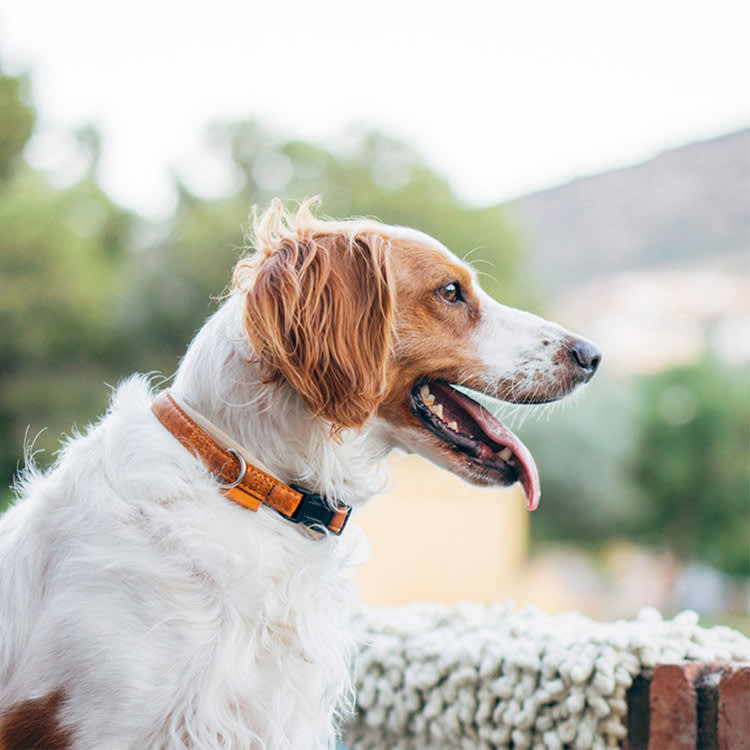
Line up a Chihuahua and a Great Dane and it’s genuinely hard to believe they’re the same species. They are, all of them, from teacup Poodles to Mastiffs, members of Canis lupus familiaris. So how did one animal fan out into hundreds of shapes, and how closely are those shapes actually related? A team of geneticists set out to answer that, and the map they built turns out to be far more useful than a party fact. It quietly explains some of your dog’s oddest habits, and it can even hint at which diseases to watch for.
The through-line worth holding onto is this: a breed is a recent, human-designed remix of a very old animal. Understanding the remix, the branches, the borrowings, the dead ends, tells you something real about the dog asleep on your couch.
What the researchers actually did
Geneticists Heidi Parker and Elaine Ostrander, working with colleagues at the National Human Genome Research Institute, weren’t chasing the origins of dogs in general; they were after the origins of the breeds. Their goal was to build a family tree and, along the way, to understand why some breeds are so much more prone than others to particular diseases.
To do it, they compared the DNA of more than 1,300 dogs spanning 161 breeds, roughly half of all the breeds known to exist, examining differences at 150,000 points across each dog’s genome. Out of that came a sprawling chart, still a work in progress, since there are hundreds of breeds yet to add, that sorts almost all of them into 23 groupings called clades. Dogs land near one another on the tree both because they share DNA and because they share traits. Scent hounds like Beagles and Salukis cluster in one branch; powerfully built breeds like Boxers and Bulldogs, even Boston Terriers, sit in another.
The branches tell stories
Some of the most interesting findings aren’t about who’s related to whom, but about when and where traits were engineered.
Take herding. The genetic data pushed its origins back thousands of years and, more surprisingly, showed that herding dogs didn’t descend from a single ancestor. Different herding breeds use markedly different strategies to move a flock, and the tree suggests those breeds were developed independently, in several places and eras, rather than radiating from one founder. Contrast that with gun dogs, the Pointers and Spaniels, which cluster tightly together with little genetic variation and trace back to a much more specific origin in Victorian England.
Then there’s the Pug, which turns out to be a kind of genetic Swiss Army knife. Breeders reached for it as far back as the 1500s to make other breeds smaller, and as a result Pug DNA is threaded through the genomes of many other toy and small dogs today. Your tiny dog may be carrying a little bit of Pug whether the name is on the papers or not.
Why this is more than trivia
The practical payoff is in health. Dogs suffer many of the same diseases we do, epilepsy, diabetes, kidney disease, cancer, but unlike in people, the risk is distributed in a strikingly predictable, breed-by-breed way. That predictability is a gift to researchers, because you can watch a disease-causing gene travel along the branches of the tree and anticipate which breeds it’s likely to surface in next.
The family tree is especially handy for mixed-breed dogs. Knowing which breeds, and which clades, are in the mix can point to inherited conditions worth screening for. A classic example is collie eye anomaly, an inherited eye condition. It shows up, as you’d expect, in Collie-type herding dogs, but it also appears in Nova Scotia Duck Tolling Retrievers, a Canadian sporting breed. The tree explains the surprise: those Tollers almost certainly carry Collie or Shetland Sheepdog ancestry that passed the gene along.
For a mixed-breed dog, the family tree is basically a cheat sheet for what to watch. If I know a dog’s ancestry runs through a clade with a known heart or eye or clotting problem, I can screen for it early instead of waiting to be surprised. Genetics isn’t destiny, but it tells you where to point the flashlight.
As one evolutionary biologist not involved in the study observed, the very mixing that created new breeds also scattered specific stretches of the genome, and the disease mutations riding along in them, across breeds that otherwise look nothing alike.
What newer research adds
The breed tree keeps growing, and the science around dog origins has moved fast since this map was first drawn.
The biggest headlines have been about timing and place. Analyses of ancient DNA now push the earliest solid genetic evidence of domestic dogs back to roughly 16,000 to 14,000 years ago, far older than the previous genetic record of around 11,000 years, with some of the oldest samples turning up in Europe and Türkiye. Studies of ancient wolves also suggest dogs are more closely related to ancient wolves from Asia than from Europe, pointing to domestication somewhere in the East, and there’s growing evidence that dogs carry a “dual ancestry” from more than one wolf population. A separate 2025 analysis of hundreds of canid skulls spanning tens of thousands of years found that the distinctive dog-shaped skull first appeared around 11,000 years ago.
One more finding is worth flagging for anyone who reads a lot into breed labels. A large 2022 study concluded that breed explains under a tenth of the variation in how dogs behave. In other words, the family tree is powerful for tracing physical traits and disease risk, but it’s a weak predictor of personality. Your dog’s temperament is mostly your dog’s, not the branch it sits on.
References
- Parker et al., “Genomic Analyses Reveal the Influence of Geographic Origin, Migration, and Hybridization on Modern Dog Breed Development,” Cell Reports, 2017
- University of Oxford, Oldest genetic evidence for domestic dogs identified in Europe and Türkiye (2026)
- Morrill et al., “Ancestry-inclusive dog genomics challenges popular breed stereotypes,” Science, 2022
Not a substitute for your vet. Our guidance is educational. For urgent symptoms, contact a vet or emergency clinic right away. Editorial standards
Dr. Mehta is a board-certified veterinary nutritionist who evaluates pet food formulations, ingredient quality, and the science behind dietary trends. He writes and reviews all nutrition content at The Pet Times, including our food rankings and feeding guides.
Meet our experts ↗Keep reading
 TrainingYour Dog's Sleeping Position Is Mostly a Thermostat. One Pattern Isn't.Dr. Nina Kohl · 6 min
 TrainingLetting Your Dog Sleep in Your Bed Isn't Spoiling Them. The Science Sides With You.Dr. Lena Park · 7 min
 TrainingYour Dog Isn't Peeing on His Friend. He's Peeing on the Message Underneath Him.Dr. Amara Solis · 8 min
 Health & WellnessA Longer Walk Won't Fix This. 7 Signs Your Dog Is Under-Exercised.Dr. Amara Solis · 9 min
 Health & WellnessYour Dog's Tongue Is a Dashboard. Most Owners Never Learn to Read ItDr. Amara Solis · 6 min
 TrainingYour Dog Puts Up With Being Picked Up. That's Not the Same as Loving ItDr. Lena Park · 7 min