


Your Dog's Tongue Is a Dashboard. Most Owners Never Learn to Read It
From the color that flags a medical emergency to the blep that means pure contentment, your dog's tongue quietly reports on their health and mood all day long.

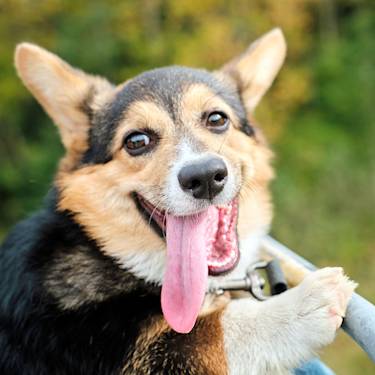
Last December, a dog named Ozzy made headlines for a very specific reason: his tongue. Ozzy, a four-year-old Mastiff mix from Oklahoma, set the Guinness World Record for the longest tongue on a living dog, an almost cartoonish 7.83 inches, comfortably beating the previous record of 5.64 inches. His owner told Guinness that Ozzy has stuck his tongue out since the day he was born, and that there is nothing medically wrong with him. It is just, in her words, “abnormally, awkwardly long.”
Ozzy is an extreme, but he makes a point that applies to every dog: the tongue is one of the most expressive, hardworking, and diagnostically useful parts of a dog’s body, and most owners barely give it a glance. Whether your dog has a record-setting flag or the tiniest “blep,” that tongue is quietly reporting on how they feel and how they are doing. Think of it as a dashboard. Once you know how to read it, you catch things you would otherwise miss, sometimes including a medical emergency.
Start with color: the dashboard’s warning lights
The single most useful thing the tongue tells you is spelled out in its color. A healthy dog’s tongue is normally pink and moist. Some breeds are exceptions by nature; Chow Chows and Chow mixes, for instance, have blue or black tongues, and that is perfectly normal for them.
What you are watching for is a sudden change, because that is where the warning lights are:
- Pale or white can indicate shock or anemia.
- Purple or blue may mean the blood is not getting enough oxygen, which is an emergency.
- Bright red can point to fever, overheating, or infection.
- Yellowish can be a sign of liver or kidney trouble.
If your dog’s tongue changes color suddenly, that is a genuine reason to call your veterinarian rather than wait and see. Learning your dog’s normal shade now makes an abnormal one obvious later.
The tongue is the most visible mucous membrane on your dog, which makes it a wonderful early-warning system if you know your dog’s baseline. A tongue that suddenly goes blue, gray, brick-red, or pale is not a wait-and-see situation. Those colors track with oxygen, circulation, and organ function, so a real color change is a reason to be seen, not to Google it and hope.
What the tongue actually does all day
Beyond its color, the tongue is a remarkably busy organ. Here are its main jobs.
Cooling off. This is the tongue’s headline role. Dogs cannot sweat through their skin the way we do, so they rely on panting to shed heat. As a dog pants, moisture evaporates off the tongue and cools the body, much the way sweating cools ours. Panting from excitement or stress happens too, but temperature control is the primary driver.
Grooming. Cats own the reputation, but dogs work their tongues the same way, tidying themselves up, taking the sting out of small irritations, and building bonds with other dogs, puppies most of all. If you notice your dog licking one spot over and over, though, treat it as a possible sign of discomfort or irritation and take a closer look.
Drinking and eating. It looks like simple lapping, but there is real engineering here. When a dog drinks, they curl the tongue backward into a scoop, dip it into the water, and pull a column of it up into the mouth. That same scooping motion helps them pick food up out of the bowl.
Sharpening smell. Dogs live by their noses, and the tongue supports that too. On the roof of the mouth sits a special structure called the Jacobson’s organ (or vomeronasal organ) that helps process scent on a deeper level. When a dog licks an object, or even licks their own nose, they move scent particles up to this organ to better read their surroundings. Keeping the nose moist through licking also improves their ability to smell.
Communicating. Dogs use their tongues to talk to us and to each other. Small lip-licks can signal stress or uncertainty; panting can convey excitement or overheating; and a tiny tongue “blep” or a loose, relaxed hanging tongue often means a dog is calm and content. In a relaxed dog, the tongue usually rests inside the mouth with maybe just the tip showing. (Dogs with very long tongues or certain dental conditions may let the tongue slip out more easily when relaxed, which is its own kind of normal.) Tongue position is not the whole story of body language, but it adds a useful data point about your dog’s mood. On the flip side, excessive or obsessive licking can flag stress or pain, and persistent licking of the body, objects, or toys is worth a vet visit.
Self-soothing. One of the most fascinating things about the tongue is how it helps dogs calm themselves. Licking, when it is not excessive, releases endorphins, the brain’s feel-good chemicals, which is why it can settle a dog during a stressful moment.
Put the tongue to work: licking as enrichment
Because licking supports emotional regulation, you can use it on purpose to help an anxious dog. If your dog struggles with visitors, loud noises, or new environments, a licking activity can genuinely take the edge off.
Licking is one of the most underused calming tools owners have. A lick mat smeared with something dog-safe, or a Kong they have to work at, does double duty: it occupies the mind and it triggers the soothing, endorphin side of licking. For a dog winding up before guests arrive or fireworks start, that is often more effective than trying to reassure them with words.
Lick mats and hollow toys like Kongs, filled with dog-safe peanut butter or wet food, encourage licking while providing mental stimulation through varied textures. A slow-feed bowl works on the same principle, making your dog use their tongue to navigate ridges and sections. Building tongue-focused activity into the day keeps a dog entertained and naturally lowers stress and arousal, for one notably chilled-out pup.
What newer research adds
Scientists are still uncovering just how sophisticated the canine tongue is. High-speed imaging studies of dogs drinking have shown that lapping is a precisely timed hydrodynamic feat, with the backward-curled tongue creating a column of water the dog snaps up at exactly the right instant, more physics than sloppiness. And veterinary behavior research continues to strengthen the case for lick-based enrichment, linking activities like lick mats and food-puzzle toys to lower stress and better welfare, which is why so many trainers and vets now recommend them as a first-line calming tool. The practical message for owners is twofold: respect the tongue as a health dashboard and learn your dog’s normal color, and put it to work as one of the simplest, most effective ways to help your dog relax. As for Ozzy and his record-breaking flag, his tongue is a delightful outlier, but every dog’s tongue, long or short, is worth paying attention to.
References
- Guinness World Records. “Longest Tongue on a Living Dog.” Guinness World Records, 2025, www.guinnessworldrecords.com.
- Crompton, Alfred W., and Catherine Musinsky. “How Dogs Lap: Ingestion and Intraoral Transport in Canis familiaris.” Biology Letters, vol. 7, no. 6, 2011, pp. 882–884, royalsocietypublishing.org/doi/10.1098/rsbl.2011.0336.
Common questions
Why do dogs pant with their tongues out?
Panting is how dogs cool down. They cannot sweat through their skin the way humans do, so as they pant, moisture evaporates off the tongue and carries heat away. Excitement and stress can also trigger panting, but temperature regulation is the main job.
Is my dog's constant licking a problem?
Occasional licking is normal and even self-soothing, since it releases calming endorphins. But excessive or obsessive licking of the body, objects, or toys can signal stress, pain, allergies, or another medical issue, and is worth a vet visit.
Not a substitute for your vet. Our guidance is educational. For urgent symptoms, contact a vet or emergency clinic right away. Editorial standards
Dr. Solis is a board-certified veterinary dermatologist with over twelve years of clinical experience. She advises on skin conditions, allergies, and grooming practices that affect coat and skin health. All dermatology and allergy content at The Pet Times is reviewed by her team before publication.
Meet our experts ↗Keep reading
 TrainingLetting Your Dog Sleep in Your Bed Isn't Spoiling Them. The Science Sides With You.Dr. Lena Park · 7 min
 Health & WellnessYour Dog's Breed Is a Remix. The Family Tree Explains the Quirks and the Risks.Dr. Ravi Mehta · 7 min
 Health & WellnessA Longer Walk Won't Fix This. 7 Signs Your Dog Is Under-Exercised.Dr. Amara Solis · 9 min
 TrainingYour Dog Isn't Standing Guard. They're Just Not All the Way Asleep.Dr. Nina Kohl · 7 min
 Health & WellnessYour Old Dog Staring at the Wall Is Veterinary Medicine's Most Missed DiagnosisDr. Nina Kohl · 8 min
 First DaysStop Counting Your Puppy's Sleep Hours. Watch for the Change.Dr. Amara Solis · 8 min