
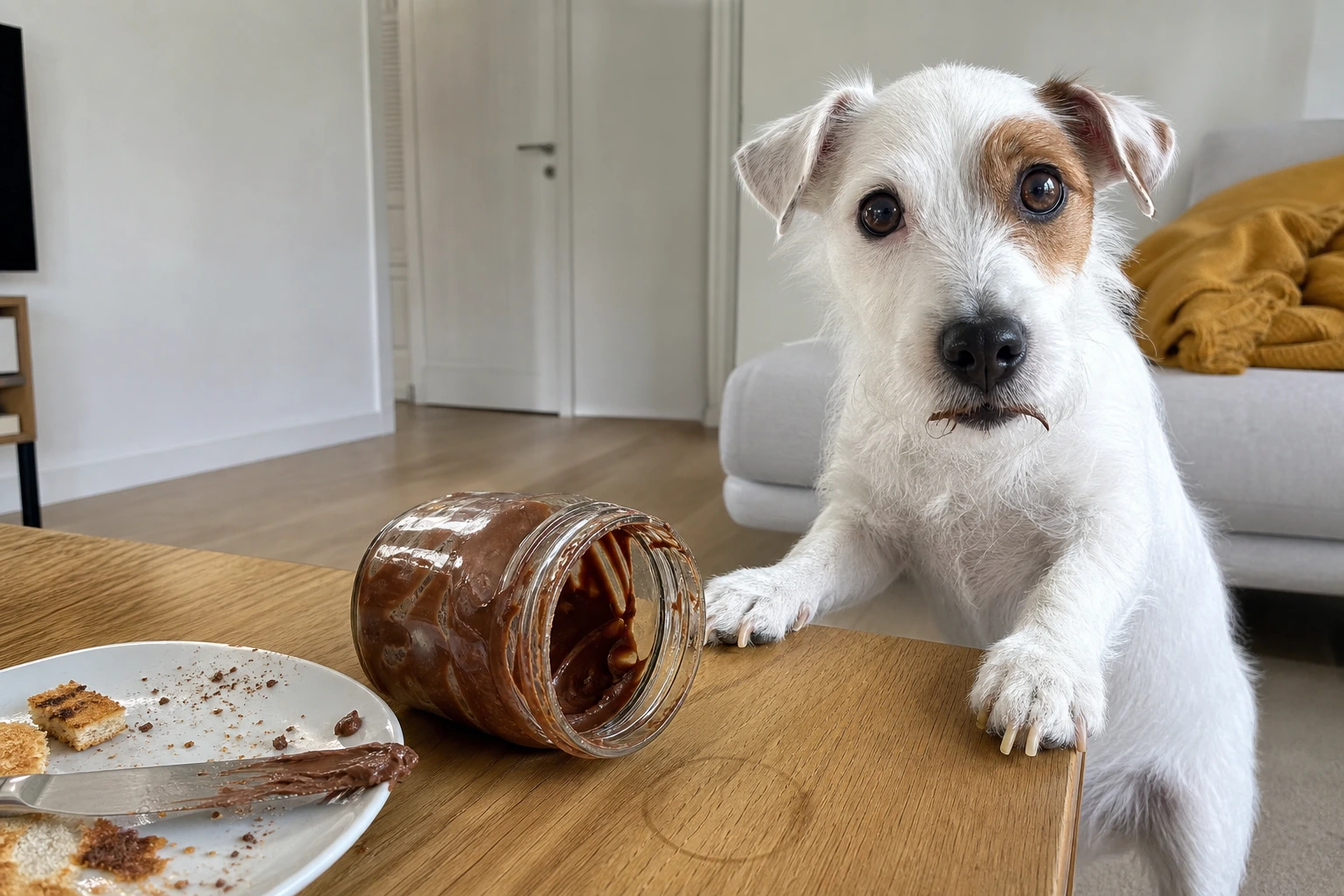
The chocolate panic arrives fast. Your dog’s snout is brown, the Nutella jar is on the floor, and everything you’ve ever read about dogs and chocolate starts flashing. Here’s the thing that will actually help you in that moment: Nutella emergencies are math problems. Dose, dog size, and ingredients decide everything, and once you run the numbers, most Nutella incidents turn out to be a stomachache, not a poisoning.
That is not a defense of Nutella. It’s a terrible food for dogs, and we’ll get to why. But “terrible for dogs” and “toxic emergency” are different categories, and knowing which one you’re in determines whether your next call is to the vet or just a night of supervision.
Start with what’s actually in the jar
Nutella’s ingredient list is short: sugar, palm oil, hazelnuts (13 percent), skimmed milk powder (8.7 percent), and fat-reduced cocoa (7.4 percent). Rank those by risk to a dog and the order surprises people.
Sugar and palm oil, the bulk of the jar. Together they make up more than half of Nutella, and they’re the ingredients most likely to make your dog sick today. Dogs’ systems aren’t built to process sugar loads the way ours are, so digestive upset, vomiting, diarrhea, and stomach pain are the standard outcome. Palm oil gives Nutella its spreadable texture and adds a high-fat insult on top; in large amounts, fatty foods like this can trigger pancreatitis, a genuinely dangerous inflammation of the pancreas. And every empty calorie contributes to weight gain if this becomes a habit.
Hazelnuts. Not toxic, which surprises some people. Their sin is the same as the palm oil: high fat, plus a choking hazard in whole form. In a spread, they’re just more richness.
Skimmed milk powder. Mostly a non-issue. Many adult dogs are lactose intolerant, but the amount here rarely causes trouble unless your dog has a genuine dairy allergy, in which case digestive or skin flare-ups are possible.
Cocoa, the famous one. Here’s where the math matters. Chocolate’s danger comes from theobromine and caffeine, and the dose makes the poison. Veterinary references put mild signs, vomiting, diarrhea, excessive thirst, at ingestions around 20 milligrams of methylxanthines per kilogram of body weight, heart effects at 40 to 50, and seizures at 60 and up. Nutella is only 7.4 percent cocoa, and it’s fat-reduced cocoa at that. Compare that to a dark chocolate bar at 65 percent cocoa and you see why a lick of Nutella is a different event than a lick’s worth of baking chocolate.
The size math, in practice
The same spoonful lands very differently on a 10-pound terrier than on a 60-pound shepherd. As a rough guide, a 10-pound dog could probably eat a teaspoon of Nutella without serious consequences, and a large dog could likely handle a tablespoon. The cocoa concentration is low enough that true chocolate toxicity from Nutella usually requires a determined, jar-scale binge, and the smaller the dog, the smaller the binge needs to be.
“With Nutella calls, my first two questions are always the dog’s weight and how much is actually missing from the jar,” says Dr. Ravi Mehta. “A big dog who licked a knife is a very different phone call from a little dog who emptied half a jar. One gets monitoring at home, the other gets seen.”
So here’s your decision tree when you find the evidence:
A lick or two, or a bite of Nutella toast. Monitor. Watch for vomiting, diarrhea, and stomach discomfort over the next day or two. These usually resolve on their own.
More than a couple of teaspoons for a small dog, or a couple of tablespoons for a large one. Call your veterinarian. Depending on your dog’s size and the amount, they’ll either have you monitor at home or bring the dog in.
Any amount, plus worrying symptoms. Call immediately if digestive signs are severe enough that your dog won’t eat or drink, or last beyond a day or two. Go in urgently if you see the neurological tier: heavy drinking, unusual excitability or agitation, wobbliness, muscle stiffness, or seizures.
Chocolate poisoning follows a known timeline: digestive signs within a couple of hours, restlessness and increased thirst within about 12, and, in severe cases, stiffness and seizures after that. If you know a significant amount went down, call at the start of that timeline, not the end.
The everyday verdict is easier than the emergency one
Should you ever share Nutella on purpose? No. This one’s not close. Even below any toxicity threshold, Nutella is sugar and fat with zero nutritional payoff for a dog, and regular small indulgences add up to weight gain, digestive trouble, and pancreatitis risk. Dogs also don’t experience “just a taste” the way we hope; they experience a new favorite thing they’ll beg for forever. If you want a spreadable treat for stuffing toys, plain xylitol-free peanut butter is the standard for a reason.
What newer research adds
Two useful updates for the modern Nutella household. First, veterinary toxicologists have made dose-based triage much more accessible: chocolate toxicity calculators, built on the same methylxanthine thresholds vets use, are now widely available online and can give you a fast read on whether an ingestion is trivial or urgent. They’re a supplement to calling your vet, not a replacement, but they’ve taken a lot of guesswork out of chocolate math.
Second, the hazelnut-spread aisle has changed. Nutella now sits alongside a crowd of imitators and “healthier” alternatives, including versions sweetened with sugar substitutes. That matters because some sugar-free products use xylitol, a sweetener that is dramatically more dangerous to dogs than Nutella’s cocoa content, capable of causing life-threatening low blood sugar and liver failure at small doses. If your dog raids any chocolate-hazelnut spread, check the label for xylitol (sometimes listed as birch sugar) before you relax, because that single ingredient changes the entire equation.