


Your Cat Has Diarrhea. The Only Question That Matters Is: Wait or Vet?
Most cat diarrhea is a passing upset you can ride out. Some of it isn't. A vet's clear rule for when to watch at home and when to stop waiting and go in.

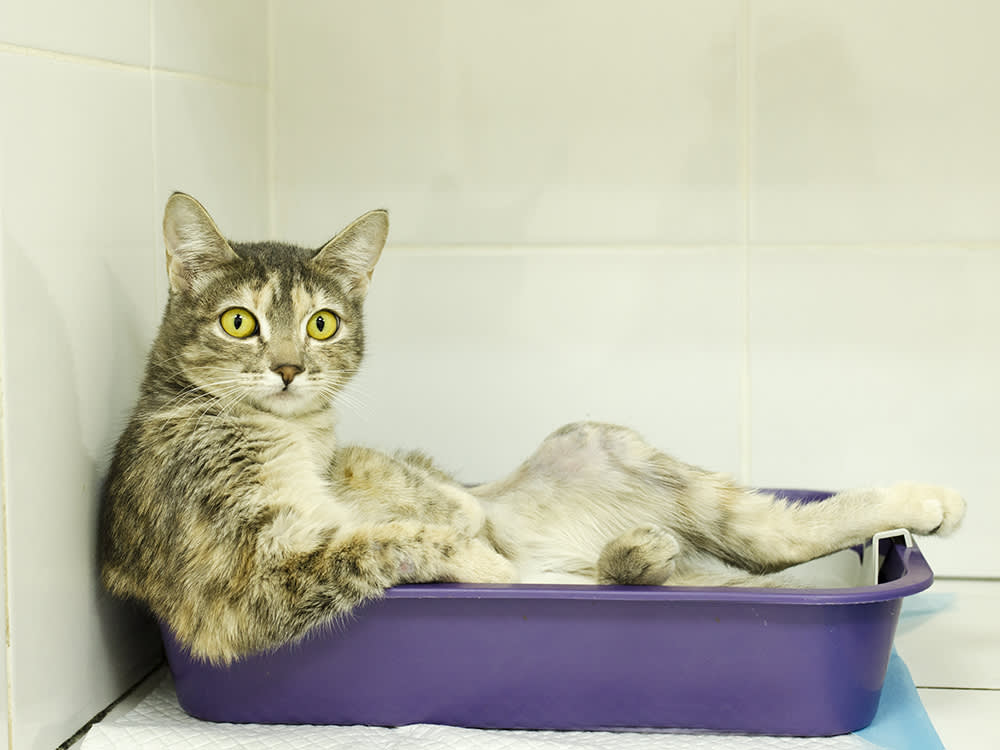
When your cat has diarrhea, you do not actually need a lecture on gut physiology. You need to answer one question: do I watch this at home, or do I stop waiting and get to the vet? Everything else is in service of that call. Most feline diarrhea is a short-lived digestive upset that clears on its own. A smaller slice is the early sign of something that needs treatment. Knowing which is which, and having a clear threshold for acting, is the whole job.
So this is built as a decision, not an encyclopedia. First, what diarrhea actually is and why it happens. Then the part that matters most: the wait-or-go rule.
First, is it even diarrhea?
Diarrhea is not a disease. It is a non-specific sign that the gastrointestinal tract is not working the way it should. Sometimes the problem is in the gut itself; sometimes it is a signal from elsewhere, like the pancreas or thyroid, and stress and anxiety can cause it too.
How loose is loose enough to count? A normal stool is fairly firm and easy to scoop. The practical test: if a stool can be squished between your fingers or leaves a streak on the scooper, it is abnormal. Genuinely watery stool is diarrhea, full stop.
Why cats get diarrhea
The causes sort roughly by how common and how worrying they are.
The usual suspect: diet. Did you switch foods without a transition? Abruptly swapping brands or formulas can irritate a cat’s system and produce diarrhea. So can dietary indiscretion, the polite term for eating something that did not agree with them, which is one of the most common triggers of all.
Infectious causes. These hit younger cats and cats in shelters hardest and can spread fast among groups. Parasites like roundworms and coccidia are easy to diagnose and treat. More serious contagious diseases, like feline infectious peritonitis, are tougher.
Less common but more serious. Chronic enteropathy is ongoing GI inflammation with no clear cause; management can involve limited-antigen or hydrolyzed-protein diets, and sometimes antibiotics or steroids. In a senior cat, persistent diarrhea can point to small cell lymphoma, a low-grade cancer of the bowel. These are the minority, and a simple dietary trigger remains the single most likely explanation for a given bout.
The wait-or-go rule
Here is the decision, as cleanly as I can put it.
You can reasonably watch at home when your cat is otherwise well: eating normally, drinking, acting like themselves, no vomiting, no blood, no lethargy. In that case, a run of soft stool is very often a transient upset. Waiting two to three days before heading to the clinic is sensible; it will frequently resolve on its own.
You stop waiting and go when any of these show up:
Your cat seems sick beyond the diarrhea, meaning lethargic, hiding, or clearly uncomfortable. Your cat is not eating. Your cat is very young (an adolescent or kitten) or very old. There is blood in the stool, or black tarry stool. There is vomiting on top of the diarrhea, which raises the risk of dehydration fast. The diarrhea drags past a few days, or keeps returning. Or you simply feel that something is off; you know your cat’s baseline better than anyone.
The combination that makes me want to see a cat today is diarrhea plus not eating, especially in a kitten or a senior. A healthy adult with loose stool and a normal appetite can usually be watched. But a small cat losing fluid at both ends and refusing food can go downhill quickly, and that is not the time to wait it out.
One more practical note for multi-cat homes: if you cannot tell whose diarrhea it is, you may need to observe litter box traffic or briefly separate cats into different rooms to identify the culprit. A cat that is also losing weight or eating less is usually the one with the problem.
What not to do
Do not raid your own medicine cabinet. There really are not useful over-the-counter options for feline diarrhea, and some human anti-diarrheal medications are outright harmful to cats. This is a genuine safety issue, not caution for its own sake.
And do not assume that because the mess is only at one end, the other end is fine. A cat can have serious GI disease that shows up mainly as vomiting, appetite loss, and weight loss rather than diarrhea. Read the whole cat, not just the litter box.
Preventing the next bout
You cannot prevent every episode, but you can lower the odds. Deworm kittens on schedule and keep up any long-term preventives your vet recommends. Feed a high-quality, protein-rich diet consistently, and when you do change foods, transition gradually over several days by mixing old with new. And keeping your cat indoors reduces the chance of picking up an infection or eating something they should not.
What newer research adds
Two developments are worth knowing about. First, probiotics have moved from fringe to fairly mainstream in feline GI care. Specific strains studied in cats, notably Enterococcus faecium SF68 (the one in the widely used FortiFlora) and the yeast Saccharomyces boulardii, have some evidence for shortening bouts of diarrhea and supporting the gut during stress or a diet change. They are not a cure-all and they are not a reason to skip a vet visit for a sick cat, but for a mild, otherwise-healthy case, a vet-recommended feline probiotic is a reasonable, low-risk tool. Use a cat-specific product rather than a human one.
Second, diagnostics have gotten faster and less invasive. Modern fecal PCR and antigen panels can screen for a range of parasites and pathogens from a single stool sample, which helps vets pin down infectious causes sooner, especially in kittens and multi-cat households where spread is a concern. If your vet asks for a fresh fecal sample, that panel is often why, and bringing one to the appointment can save a step.
Bottom line
Most cat diarrhea is a passing upset in an otherwise-fine cat, and watching for two to three days is reasonable. The moment the picture includes not eating, blood, vomiting, lethargy, or a very young or very old cat, the answer flips from wait to go. Skip the human medicine cabinet entirely, and prevent repeats with steady feeding, gradual food transitions, routine deworming, and indoor living.
References
- Cook, A.K. “Diarrhea in Cats: Diagnostic Approach.” Texas A&M College of Veterinary Medicine.
- Marks, S.L., et al. “Enteropathogenic bacteria in dogs and cats: diagnosis, epidemiology, treatment.” Journal of Veterinary Internal Medicine.
- Bybee, S.N., Scorza, A.V., Lappin, M.R. “Effect of the probiotic Enterococcus faecium SF68 on presence of diarrhea in cats and dogs housed in an animal shelter.” Journal of Veterinary Internal Medicine, vol. 25, 2011.
- American Association of Feline Practitioners. “Feline Chronic Enteropathy.” catvets.com.
Common questions
Can I give my cat an over-the-counter diarrhea remedy?
No. There aren't useful OTC options for cats, and some human anti-diarrheal medicines are actively dangerous to them. Don't reach for the medicine cabinet; call your vet instead.
How long can I wait before seeing the vet?
If your cat is otherwise well, eating normally, and acting themselves, waiting two to three days is reasonable. If they seem sick, aren't eating, are very young or old, or you see blood or vomiting, don't wait.
Not a substitute for your vet. Our guidance is educational. For urgent symptoms, contact a vet or emergency clinic right away. Editorial standards
Dr. Chen is a small-animal veterinarian who leads health and safety coverage at The Pet Times. She writes and reviews the bulk of our illness, condition, and safety content, translating clinical guidance into clear, practical advice owners can act on at home.
Meet our experts ↗Keep reading
 Health & WellnessCats Get Their Own 'Parvo.' The Cat Version Is Often Deadlier.Dr. Mara Chen · 6 min
 TrainingYour Cat Screams at 3am Because You Never Let It Finish the HuntDr. Mara Chen · 8 min
 Health & WellnessIf You Can Smell Your Cat's Fart, Your Cat Is Telling You SomethingDr. Amara Solis · 6 min
 First DaysBlanket Sucking Is Adorable. The Day They Swallow It Isn't.Dr. Lena Park · 8 min
 Health & WellnessYour Cat Just Burped. That Tiny 'Urp' Is Worth Paying Attention ToDr. Ravi Mehta · 6 min
 Health & WellnessYour Cat's Tears Are a Symptom, Not a MoodDr. Lena Park · 7 min