


Your Cat's Tears Are a Symptom, Not a Mood
Wet eyes on a cat are never sadness, they are medicine. Here's how to read a watering eye like a vet, tell a harmless irritant from an emergency, and find your cat's real grief somewhere else entirely.

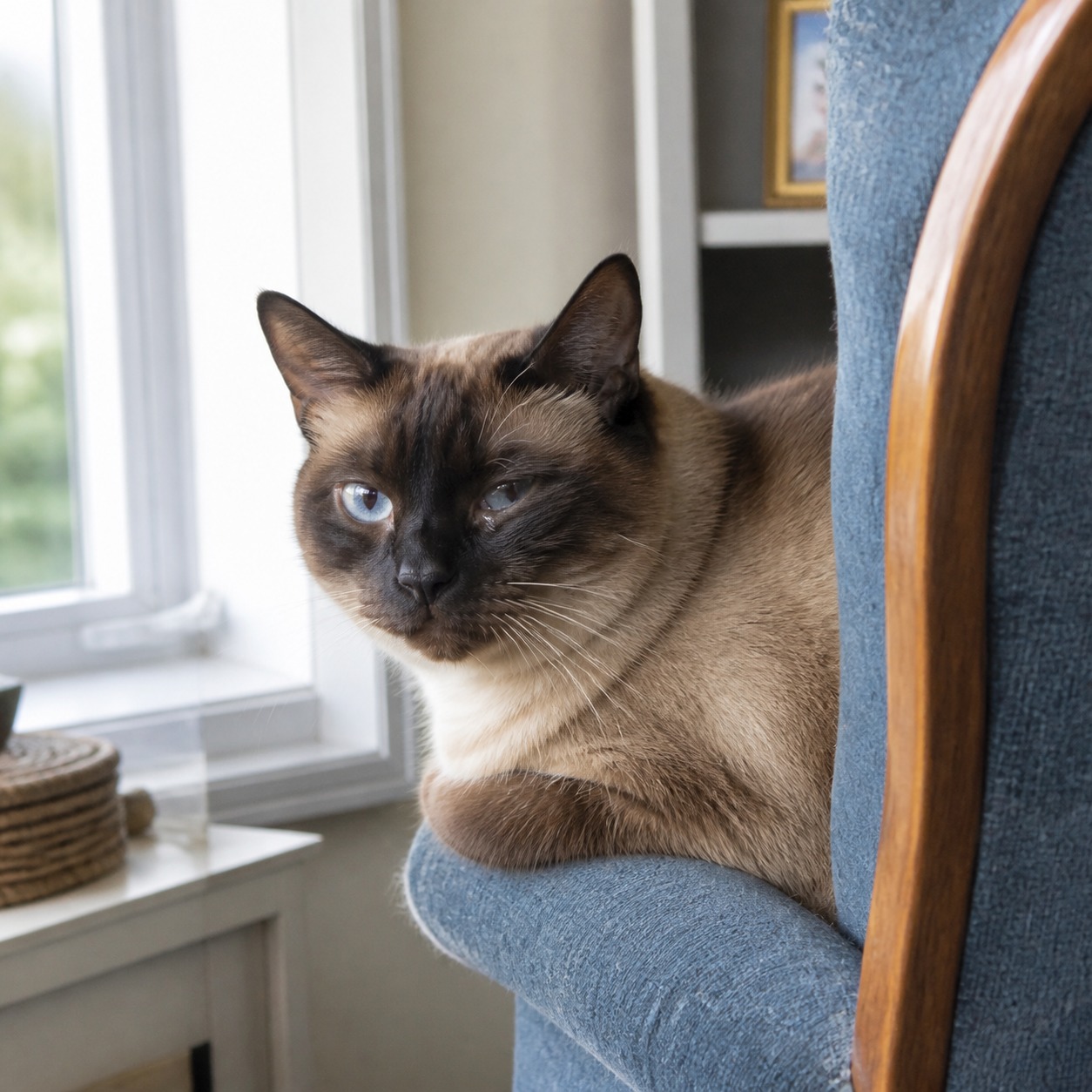
Somewhere along the way, a tear became shorthand for sadness, and we quietly extended that to our cats. A cat with a wet streak under one eye looks like it is crying, and the instinct is to wonder what is wrong emotionally. Here is the reframe worth holding onto: in a cat, a tear is never a feeling. It is a symptom. Humans are essentially the only animals that weep from emotion. For your cat, water coming out of an eye is the body flagging a physical problem, and learning to read it as a clinical clue, rather than a sad face, is what actually helps your cat. The emotions are real. They just live somewhere other than the tear ducts.
The plumbing, in one minute
To read a watery eye, it helps to know what tears are for. A healthy eye is coated by a tear film, a thin blend of watery, oily, and mucus-like layers that keeps the surface moist and clear. Glands around the eye make it; tiny ducts at the inner corner drain it down into the nose. (That is why a hard cry leaves a human with a runny nose: the overflow has nowhere else to go.)
Two things can make that system spill over onto the face. Either the eye makes too much fluid (usually a response to irritation), or the drain is blocked and normal fluid backs up. The medical name for the overflow itself is epiphora. Knowing which of those two is happening points straight at the cause.
Reading the weepy eye: a quick field guide
Instead of a long list of conditions, think in terms of what you can actually observe.
Clear and brief, both eyes, after an obvious trigger. A dusty closet, smoke, or onions on the cutting board can prompt a protective flush of tears. This is the eye doing its job. It should settle within a few hours once the irritant is gone.
One eye, with squinting or pawing. This pattern raises concern for a foreign object, a scratch, or a corneal ulcer. The cornea is exquisitely sensitive, and a one-sided, painful, weepy eye is a same-day call to the vet, because ulcers can worsen fast.
Watering plus sneezing, congestion, or a poor appetite. This combination points toward an upper-respiratory infection, very often feline herpesvirus (rhinotracheitis), which is common in cats with any shelter or colony history. The eye is one symptom of a whole-body bug.
Thick, colored, or crusty discharge, or an eye held shut. Yellow or green discharge, swelling, or a sealed eye suggests infection that needs treatment, not time.
Constant gentle overflow with no other signs, especially in a flat-faced breed. Persians and other brachycephalic cats have crowded, kinked tear ducts, so their tears overflow onto the face by anatomy rather than by illness. Chronic tear staining in these cats is often a plumbing quirk worth mentioning to your vet but not an emergency.
There is also a counterintuitive one: dry eye (keratoconjunctivitis sicca) can look like watering. When the tear film loses its oily component, the watery part no longer clings to the eye and just runs off. So “wet” does not always mean “well-lubricated,” which is exactly why a persistently weepy eye deserves a real diagnosis rather than a guess.
What about pain? Tears are a poor lie detector
People often ask whether a cat’s tears reveal that it hurts. Mostly, no. The signs that a cat is in pain are behavioral and easy to miss: hiding, going quiet or unusually vocal, eating less, grooming less, and snapping or flinching when a sore spot is touched. The exception is a painful eye specifically. A scratched or ulcerated cornea will trigger reflex tearing, but that is the eye protecting itself, not the cat emoting. So tears can flag an eye injury; they cannot tell you about a sore hip or an aching belly.
Owners want the tears to mean something emotional, and I understand the pull, but in a cat a wet eye is a medical readout. My advice is to treat it like a check-engine light. Note which eye, whether it’s painful, and what else is going on, then bring me that information.
Where the real feelings show up
None of this means your cat is unfeeling. Cats grieve, get anxious, and react to upheaval; they simply do not cry about it. After a move, a new pet, a lost companion, or noisy construction, watch for the genuine distress signals: more hiding, less eating, changes in grooming, or sudden clinginess. The support that helps is environmental, not emotional theater: a quiet, safe room with food, water, and a litter box; familiar resting spots; and calming aids like pheromone diffusers, catnip, or favorite toys to coax a withdrawn cat back into the open. And if the behavior changes come with a weepy eye or other physical signs, see your vet first, because distress and illness can look alike and you want to rule out the body before you read the mood.
The vet test: when watering crosses the line
Use a simple threshold. Brief, clear watering in both eyes that resolves on its own can be watched. Anything that lasts beyond a few hours, affects one eye, comes with redness, swelling, discharge, a sealed lid, or pawing, or shows up alongside sneezing or appetite loss, gets a vet visit, promptly. Eyes are delicate and unforgiving; a problem caught early is usually a quick fix, while a wait-and-see approach risks lasting damage to your cat’s vision.
The bottom line
Your cat’s tears are honest, just not in the way the word “crying” implies. They report on dust and drainage and infection and injury, never on heartbreak. Read them like the diagnostic signal they are, learn the few patterns that mean “go now,” and look for your cat’s true emotions in how they hide, eat, groom, and play. Do that, and you will help the eye and the cat behind it.
References
- Merck Veterinary Manual: Disorders of the Eyelids and Lacrimal Apparatus in Cats
- Cornell Feline Health Center: Feline Herpesvirus Infection (Feline Viral Rhinotracheitis)
- American College of Veterinary Ophthalmologists: Corneal Ulcers
- Gomes, F.E., et al. “Anatomy of the Nasolacrimal Duct in Brachycephalic Cats.” Veterinary Ophthalmology (2020).
Common questions
When is a watery cat eye an emergency versus a wait-and-watch?
Get to a vet promptly if the eye is held shut, red or swollen, producing colored or thick discharge, or your cat is pawing at it, since these can signal a corneal ulcer or serious infection. A brief, clear watering after a dusty room can be watched for a few hours.
How do cats actually show grief or distress?
Through behavior, not tears. Hiding, eating less, grooming less or over-grooming, becoming clingy, and losing interest in play are the real signals. If those appear, support your cat and rule out illness with your vet.
Why do flat-faced cats like Persians have weepy eyes so often?
Their facial structure crowds and kinks the tear-drainage ducts, so normal tears overflow onto the face instead of draining into the nose. It is an anatomical plumbing issue, not an emotional one.
Not a substitute for your vet. Our guidance is educational. For urgent symptoms, contact a vet or emergency clinic right away. Editorial standards
Dr. Park is a board-certified emergency and critical care specialist. She reviews our health and safety content for clinical accuracy and contributes guides on recognising urgent conditions. Her focus is helping owners act quickly and correctly when it matters most.
Meet our experts ↗Keep reading
 Health & WellnessThe Cat Loaf Has a Dark Version. It's in the Face, Not the Paws.Dr. Mara Chen · 8 min
 TrainingThat Exposed Belly Is Not an Invitation. It's a Chemical Weapon.Dr. Amara Solis · 8 min
 TrainingYour Cat Screams at 3am Because You Never Let It Finish the HuntDr. Mara Chen · 8 min
 TrainingYour Cat Isn't Being Naughty. The Chewing Is a MessageDr. Nina Kohl · 9 min
 TrainingThat Belly Is Not an Invitation. It's a Sentence.Dr. Nina Kohl · 6 min
 Health & WellnessYour Cat Pooping on the Floor Isn't Spite. It's a Symptom.Dr. Lena Park · 8 min