


The Cat Loaf Has a Dark Version. It's in the Face, Not the Paws.
Every loaf looks the same from across the room. A comfortable cat and a cat in real pain sit in almost identical shapes, and the thing that separates them is a five-point checklist vets now use for exactly this.

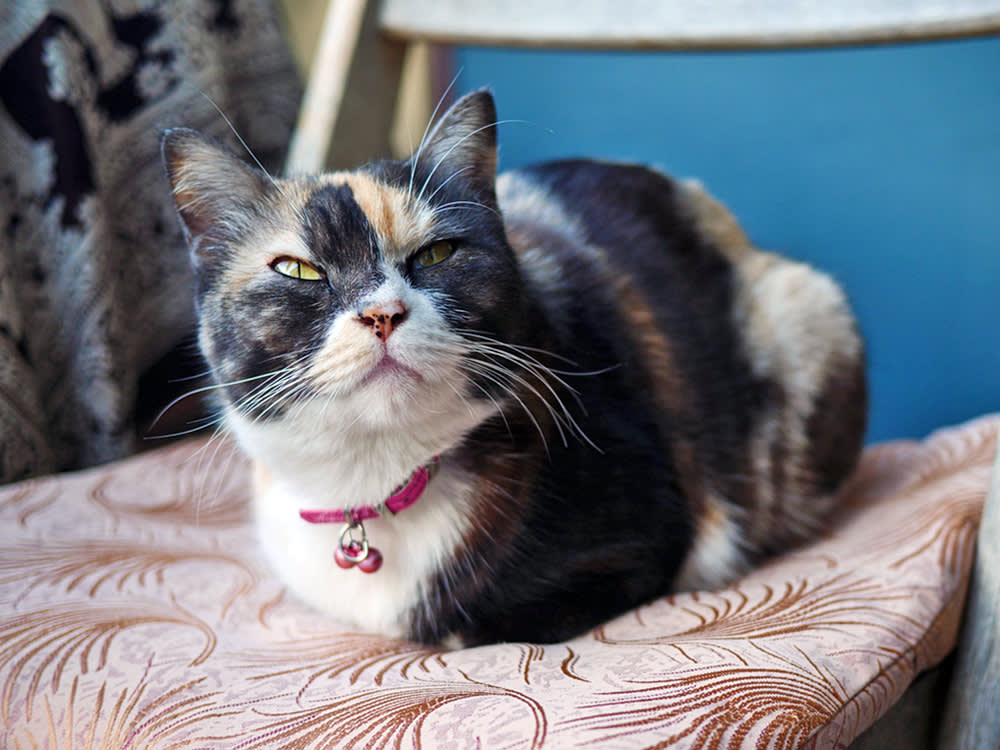
Your cat is on the windowsill, front paws folded under, tail wrapped around, no limbs visible, shaped like something that just came out of an oven. The internet has decided this is called a loaf, and it is one of the great pleasures of living with a cat.
It also happens to be one of the most dangerous postures to misread, and the reason is simple and unsettling: a relaxed cat and a cat in serious pain sit in almost exactly the same shape.
Cats evolved as both predator and prey, and prey animals do not advertise weakness. A cat who feels awful will not limp theatrically or whimper. They will get small, get still, tuck everything in, and wait. From the doorway, that reads as cozy.
So the useful version of this article is not “why do cats tuck their paws.” It is: how do you tell a good loaf from a bad one? And the answer, which is genuinely new and genuinely usable, is that you stop looking at the body and start looking at the face.
First, what a loaf actually is
The full, canonical loaf:
- Both front paws folded away out of sight beneath the chest
- Hind legs drawn in tight against the flanks
- The tail curled around one side, or stowed underneath
- Not a single limb showing, from any angle
There are variants. The partial loaf, with one paw sticking out lazily, sometimes called a failed loaf. The tight loaf, where everything is precisely compressed. Some cats never loaf at all, preferring the full belly-up sprawl or being too twitchy to settle into anything for long. A non-loafing cat is not a cat with a problem; they are a cat with a different resting preference.
Kittens do it. Adults do it. Big cats in the wild have been observed in versions of it. It is a deeply built-in resting shape.
Why a comfortable cat loafs
Four reasons, all benign, all simultaneously true.
They feel safe. With the paws stowed, a cat cannot spring instantly. Putting your weapons away is a statement about your assessment of the room. A loafing cat is not deeply asleep, though. This is standby mode: resting, but tracking, and able to be up and gone in under a second if they need to be.
They are conserving heat. The tuck reduces exposed surface area, which reduces heat loss. Cats prefer a warmer ambient temperature than we do, so you will see more loafing in cold months, near a drafty window, or on a chilly floor. The loaf is thermal engineering.
They are covering the soft parts. Tucked limbs and a covered belly reduce what an attacker could reach. Even a cat who has never met a predator in their life is running hardware that expects one, and the loaf is a low-cost hedge.
They are on watch. Ears up and swivelling, eyes half-open, tracking the room. Comfortable, but not off duty.
And why an unwell cat loafs, which looks the same
Now the other version.
A cat who hurts will often adopt a hunched, tucked posture and hold it for long stretches, because moving costs something. They may loaf in an unusual place, under the bed, at the back of a closet, somewhere they can be still and unbothered. They may be reluctant to be touched, or to have their paws handled. They may not shift position for hours.
From ten feet away, that is a loaf. The body has told you almost nothing.
Read the face: the five things vets look at
In 2019, researchers published and validated a tool called the Feline Grimace Scale, built specifically to solve this problem: cats hide pain, so how do you detect it from the outside?
The answer they landed on was the face. The scale scores five action units, each from 0 to 2, and it is validated against other pain measures with strong reliability. Painful cats score higher; give them analgesia and the score comes down. Here is what it looks at, and what you should be looking at:
- Ear position. Comfortable: ears forward and upright. Painful: ears rotating outward and flattening, pulled apart from each other.
- Orbital tightening. Comfortable: eyes open, relaxed. Painful: squinting, eyes partially or fully closed with tension around them. This one is the single most striking change in most cats.
- Muzzle tension. Comfortable: a rounded, relaxed muzzle. Painful: the muzzle tightens and flattens into a more elliptical shape.
- Whisker change. Comfortable: whiskers relaxed and gently curved. Painful: whiskers straightened and pushed forward, away from the face.
- Head position. Comfortable: head held above the shoulder line. Painful: head held low, at or below the shoulders, sometimes tilted down.
The scale is free and public, at felinegrimacescale.com, and it exists as a tool for owners as well as clinicians. Learn the five. They take about a minute to internalize and you will not un-see them.
Everyone in the house can describe their cat’s loaf. Almost nobody can describe their cat’s ears. That is the gap the grimace scale closes, and it is the gap a hurting cat hides in.
The rest of the bad-loaf picture
Beyond the face, the other tells:
- Hunched shoulders, a rounded back, the body held rigid rather than settled.
- Sunken or dull eyes.
- Labored or fast breathing, or breathing that involves visible abdominal effort. This one is an emergency.
- A tense loaf held for unusually long periods in a cat who normally moves around.
- Guarding the paws or resisting being touched.
- A loaf that is new, or relocated to a hiding place.
The rule of thumb that veterinary behaviorists use comes down to muscle tone: a real loaf is soft. The body has given up its tension. If the outline is right but the animal inside it is rigid, believe the rigidity, not the outline.
The context test
The single most useful habit is to ask two questions about every loaf.
Where is it? A loaf in a sunbeam on the windowsill, in the middle of the room, in full view, is a cat who feels great. A loaf under the bed for six hours, avoiding contact, is not the same event wearing the same shape.
Is it different? You know your cat’s baseline better than any scale. New, prolonged, hidden, tense, or accompanied by any other change, in eating, drinking, litter box use, grooming, play, is worth a call.
Loafing is not just a cat thing
Worth knowing, because it tells you the posture is about physics rather than personality. Rabbits tuck their legs under to rest and feel secure. Birds settle onto both feet with feathers fluffed to conserve warmth. Dogs do a rougher, droolier version of the same fold. Across species, the tucked rest posture is doing the same three jobs: comfort, protection, and heat conservation.
What newer research adds
The genuinely important development here is the shift from “cats hide pain, so we cannot tell” to “cats hide pain in the body, so look at the face.”
The Feline Grimace Scale is validated, quick, reliable between different observers, and, crucially, usable by owners. That last part is the change. For decades, feline pain was under-recognized and under-treated, partly because the profession genuinely lacked a good bedside tool, and partly because the cats were so good at concealing it. A cat who stops jumping onto the counter gets described as “slowing down with age” rather than “in pain from arthritis,” which is one of the most common and most under-treated conditions in older cats.
Now there is a checklist. So the next time you catch your cat in a perfect loaf and reach for your phone, take the photo. And then look at the ears, the eyes, the muzzle, and the whiskers before you put the phone down.
References
- Evangelista, M. C., Watanabe, R., Leung, V. S. Y., et al. (2019). Facial expressions of pain in cats: the development and validation of a Feline Grimace Scale. Scientific Reports.
- Evangelista, M. C., et al. (2020). Clinical applicability of the Feline Grimace Scale: real-time versus image scoring and the influence of sedation and surgery. PeerJ.
- Feline Grimace Scale — Université de Montréal.
- Merola, I., & Mills, D. S. (2016). Behavioural signs of pain in cats: an expert consensus. PLOS ONE.
Common questions
Does loafing mean my cat is happy?
Usually it means your cat is comfortable and feels safe enough to put their paws away. But the same shape is also how a cat in pain holds themselves, which is why the posture alone is not enough to go on.
Do all cats loaf?
Most cats loaf at least sometimes, but not every cat is a dedicated loafer. Some prefer the full sprawl, some are too busy. A cat who does not loaf is not a cat with a problem.
How do I know if my cat is loafing in pain?
Look at the face, not the body. Ears rotated outward or flattened, squinting eyes, a tense muzzle, whiskers pushed forward and straight, and a head held low are the five signals veterinarians use to score pain in cats.
Not a substitute for your vet. Our guidance is educational. For urgent symptoms, contact a vet or emergency clinic right away. Editorial standards
Dr. Chen is a small-animal veterinarian who leads health and safety coverage at The Pet Times. She writes and reviews the bulk of our illness, condition, and safety content, translating clinical guidance into clear, practical advice owners can act on at home.
Meet our experts ↗Keep reading
 Health & WellnessYour Cat Isn't Being Weird. Plastic Bags Smell Like Food.Dr. Mara Chen · 7 min
 Health & WellnessYes, Female Cats Spray. Spaying Doesn't Always Stop It.Dr. Lena Park · 7 min
 TrainingYour Cat Isn't Attacking You. You Live on a Hunting Route.Dr. Amara Solis · 9 min
 TrainingYour Cat Screams at 3am Because You Never Let It Finish the HuntDr. Mara Chen · 8 min
 Health & WellnessYour Cat Eating Your Shoelaces Isn't a Quirk. It Might Be Pica.Dr. Mara Chen · 7 min
 TrainingThat Sound Isn't a Meow. And It Isn't Good News.Dr. Lena Park · 8 min