


Your Cat Pooping on the Floor Isn't Spite. It's a Symptom.
House-soiling wrecks relationships between people and cats, and it shouldn't. A cat going outside the box is telling you something is wrong, medically, emotionally, or with the box itself. Here's how to run the diagnosis in the right order.

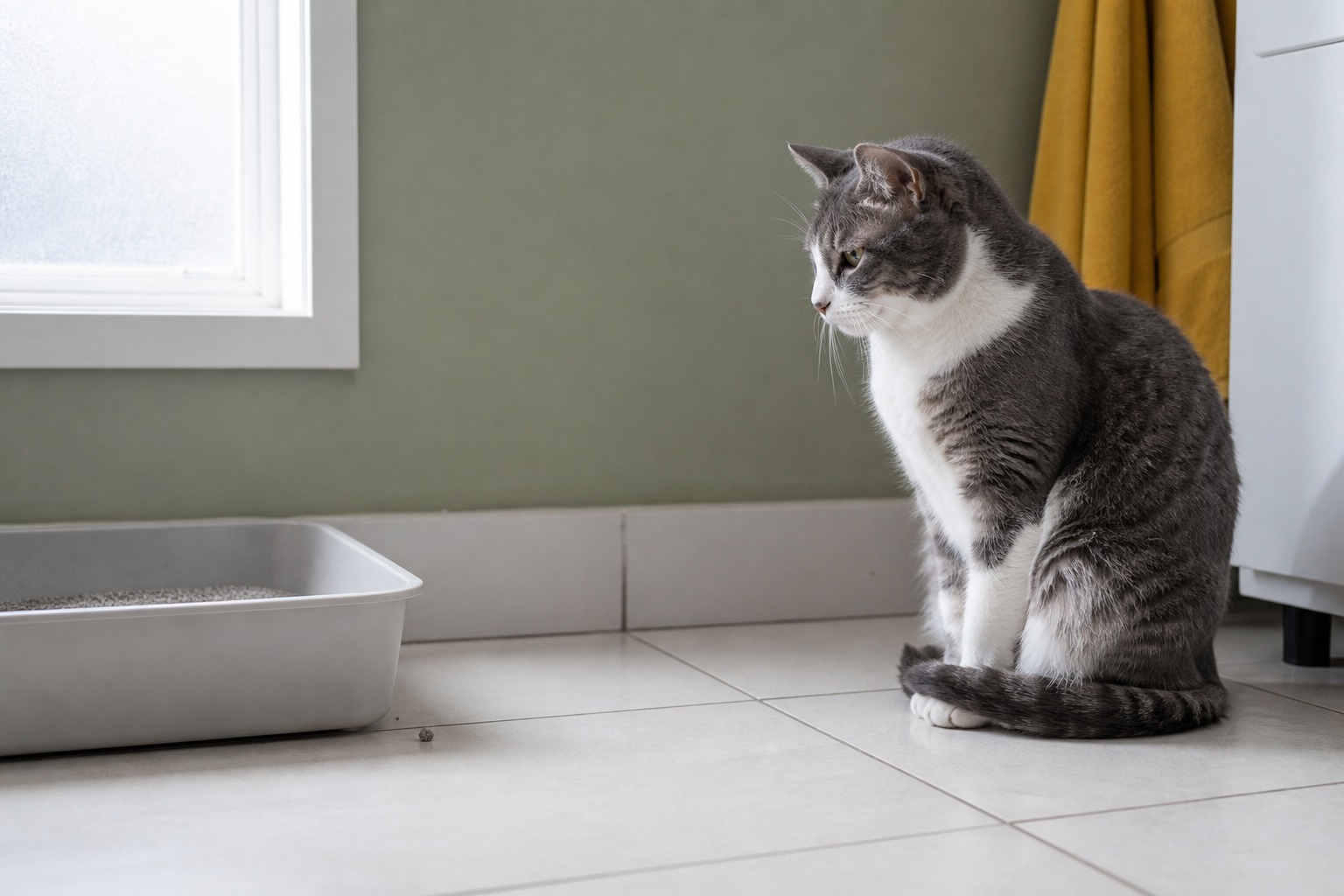
Few things sour the bond between a person and their cat faster than finding poop on the floor for the third time this week. It feels personal. It is not. A cat who stops using the litter box is not staging a protest or punishing you for leaving town. Cats don’t have that in them. What they have is a limited toolkit for saying “something is wrong,” and going outside the box is one of the loudest tools in it. So the frame for this entire problem is: your cat needs help, not discipline. Your job is to figure out which of three things broke, and cats make you rule them out in a specific order.
Start where the odds are: medical
Here’s the fact that surprises most people. Pooping outside the box nearly always has a medical component, either a current problem causing pain or discomfort, or a past one that taught your cat to associate the box with hurting. Cats are experts at hiding illness, and house-soiling is often the very first clue we get that something’s off. That’s why a thorough vet exam comes before you rearrange a single thing at home. And it isn’t only the gut, pain anywhere in the body can trigger soiling.
The usual medical suspects:
Digestive trouble. Constipation, loose stool, or general belly upset can all push a cat to go somewhere other than the box. If the accidents come and go, that pattern often mirrors discomfort that also comes and goes.
Inflammatory bowel disease. A more serious gut condition that brings chronic vomiting and diarrhea and real discomfort, any of which can drive a cat out of the box.
Urinary issues. Crystals, inflammation, and infections are common in cats, partly because their desert-ancestor bodies keep them from drinking much, concentrating their urine, especially on a dry-food diet. The pain that follows lands them outside the box.
Arthritis and mobility. Extremely common in senior cats, more have it than don’t. A sore, stiff cat may find squatting painful, struggle to climb into a tall box, or fail to get stable footing in deep or chunky litter.
Cognitive decline. Older cats’ brains change like ours do. Confusion, rising anxiety, and fading vision or hearing can all interfere with reliable box use.
Then look at stress
If the vet clears your cat medically, shift to emotional triggers. Cats carry more daily stress than we credit them for, boredom, friction with another pet, loud noises inside or out, and stress can express itself as soiling. Household changes are a frequent culprit: something as small as rearranged furniture, or as big as a new baby, a new pet, or a move, can tip a sensitive cat over. There’s also middening, depositing poop in the open as a territorial scent-marking statement, the number-two cousin of spraying.
And check the box itself
Litter box setup is one of the top reasons cats go elsewhere, and it’s the part people most often get wrong without realizing it. Cats have specific, instinctive standards, and it’s worth a fresh audit even if the same box worked for years before the trouble started.
What newer research adds
Modern feline medicine has gotten specific about what cats actually want from a bathroom, and it lines up with the fixes below. Veterinary guidelines now push the “n+1” rule: keep one more box than you have cats (two cats, three boxes), spread across the home so no single dirty or guarded box leaves your cat stuck. Studies of litter preference point the same way cats vote with their paws: bigger boxes, uncovered rather than hooded, and fine unscented clumping litter tend to win. The theme running through all of it is that a cat wants to eliminate somewhere it feels it can see trouble coming and won’t be ambushed. Give them that, and a surprising number of “behavior problems” simply evaporate.
How to fix it, step by step
Treat this like detective work across the three categories. Here’s the order that works.
See your vet first. Ask for a thorough exam that looks beyond the urinary and digestive systems for anything painful. Bring notes on other changes, eating or drinking more or less, less activity, jumping less, more aggression, sleeping more, because those are clues that help your vet.
Clean soiled spots properly. Poop is easier than urine, but scent still matters. Use an unscented, pet-safe disinfectant. Strong smells, even “natural” ones like vinegar, can prompt a cat to go over the spot again to cover the odor. Urine spots specifically need an enzymatic cleaner.
Fix the box setup. This is where the biggest wins hide:
- Go uncovered. Hooded boxes cut your cat’s sightline, and a cat that can’t watch for threats while vulnerable often opts out. That instinct doesn’t care whether real predators exist in your home.
- Go bigger. Most store-bought boxes are too small. Aim for at least one and a half times your cat’s body length, tail excluded. An under-bed storage tub, or a large clear bin with the lid off and a doorway cut in the side, beats most commercial boxes.
- Use fine-grain, unscented clumping litter. It mimics the dirt and sand a cat would choose in the wild. Pellets are big, hard on paws, and tough to balance on, rough on seniors, and scented litter overwhelms a cat’s nose and is a common cause of soiling.
- Spread boxes around the house instead of clustering them in one room, so an inaccessible box always has a backup.
- Put a box exactly where your cat keeps going. They may be telling you that’s where they need one.
Lower the stress. If you can name the trigger, remove it or help your cat feel better about it, and dial up enrichment either way: hunting-style play sessions, food puzzles, and short training games that keep the brain busy.
Get expert help if you’re stuck. A certified feline training and behavior consultant, many work virtually, can help you find triggers, address the emotional side, and dial in the box.
The saddest cases I see are the ones where someone waited months, convinced the cat was being vindictive, when the cat had a bladder screaming at them the whole time. Poop on the floor is a check-engine light, not an insult. We start with a real exam, then we make the box something a cautious little predator actually wants to use. Nine times out of ten, the answer is in one of those two places.
The bottom line
A cat pooping outside the box is asking for help in the only language available to them. Rule out pain first, then stress, then the box, and resist the urge to take it personally. Somewhere in those three categories is a fixable problem, and your cat is trying to point you at it.
References
- Vitale Shreve, Kristyn R., and Monique A. R. Udell. “What’s Inside Your Cat’s Head? A Review of Cat Cognition Research.” Animal Cognition, vol. 18, 2015, pp. 1195–1206. https://doi.org/10.1007/s10071-015-0897-6
- American Association of Feline Practitioners and International Society of Feline Medicine. “Feline Environmental Needs Guidelines.” Journal of Feline Medicine and Surgery, 2013. catvets.com/environmental-needs
- Cornell Feline Health Center. “Feline House-Soiling.” Cornell University College of Veterinary Medicine. vet.cornell.edu
- Neilson, Jacqueline. “Feline House-Soiling: Elimination and Marking Behaviors.” Clinical Techniques in Small Animal Practice, 2004.
Common questions
Is my female cat more likely to poop outside the box than a male?
No. House-soiling isn't about sex. Female and male cats are equally likely to do it, and the causes are the same: something medical, emotional, or environmental has changed for your cat.
Why is my kitten pooping outside the litter box?
Look at the same medical, emotional, and setup causes you would for an adult. Most kittens learn to use a box quickly on their own as long as it meets their instincts, so persistent misses are worth investigating rather than chalking up to training.
Not a substitute for your vet. Our guidance is educational. For urgent symptoms, contact a vet or emergency clinic right away. Editorial standards
Dr. Park is a board-certified emergency and critical care specialist. She reviews our health and safety content for clinical accuracy and contributes guides on recognising urgent conditions. Her focus is helping owners act quickly and correctly when it matters most.
Meet our experts ↗Keep reading
 TrainingThat Belly Is Not an Invitation. It's a Sentence.Dr. Nina Kohl · 6 min
 TrainingThat Exposed Belly Is Not an Invitation. It's a Chemical Weapon.Dr. Amara Solis · 8 min
 Health & WellnessYour Cat Isn't Being Spiteful. Almost Every 'Bad Cat' Behavior Is Anxiety.Dr. Priya Nair · 9 min
 Health & WellnessYour Cat's Tears Are a Symptom, Not a MoodDr. Lena Park · 7 min
 TrainingYour Cat Screams at 3am Because You Never Let It Finish the HuntDr. Mara Chen · 8 min
 TrainingYour Cat Is Trying to Bury Something. The Question Is What.Dr. Lena Park · 8 min