


Your Cat Isn't Being Naughty. The Chewing Is a Message
Cats chew shoelaces, cords, and houseplants for real reasons: instinct, boredom, pain, or pica. Here's how to tell a harmless habit from an emergency, and how to redirect it.

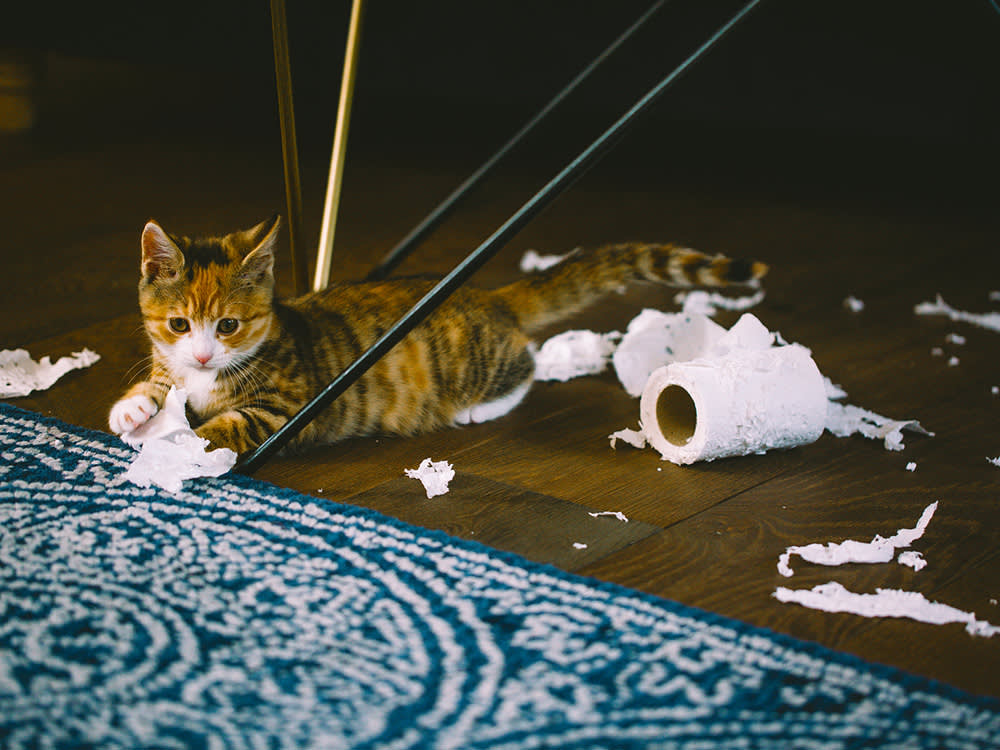
Here is the thing most people get backwards about a chewing cat: the behavior itself is rarely the problem. Chewing is a symptom. It is your cat telling you something, and the whole job is figuring out what. Sometimes the message is boring (“I am a bored kitten with a new mouth”). Sometimes it is urgent (“my teeth hurt” or “I just swallowed a hair tie”). The habit that looks identical from the couch can be perfectly normal or a genuine emergency, and the difference is worth learning.
So instead of asking “how do I make my cat stop chewing,” ask a better question: what is this chewing telling me, and is it dangerous? That reframe organizes everything below.
Chewing is normal, up to a point
Cats are obligate carnivores. Their mouths and instincts are built to grip, tear, and gnaw through prey, and even a well-fed housecat keeps that wiring. Kittens especially explore the world mouth-first, the same way human babies do, and they gnaw to soothe sore gums while they teethe. A little gnawing on a toy or a cardboard box is a cat being a cat.
Texture and diet play in too. Cats are famously particular, and some will chew more when they like the mouthfeel of a certain food or treat. None of that is cause for worry on its own.
The line gets crossed when the chewing becomes frequent, destructive, aimed at dangerous objects, or paired with other signs that something is off. That is when the message changes from “I’m exploring” to “something is wrong.”
The dangerous stuff comes first
Before we talk about why cats chew, we need to talk about what they chew, because a couple of items turn a quirky habit into a vet visit fast.
The worst offenders are long, stringy things: thread, dental floss, tinsel, hair ties, and rubber bands. Swallow one and it can snag in the intestines and saw through the gut wall, a condition called a linear foreign body that often needs emergency surgery. Small toys and bits of plastic can cause blockages the same way. Some plants and household chemicals are outright toxic. And electrical cords are their own category of nightmare, because a cat biting through insulation can get a burn, an electric shock, or fluid buildup in the lungs that shows up hours later.
The cord chewer is the one that keeps me up at night, because the damage can be invisible at first. A cat can bite a live wire, seem fine, and then struggle to breathe that evening as the lungs fill. If you ever see a mouth burn or a shocked, dazed cat near a cord, that is a same-day emergency, not a wait-and-see.
So the first move with any chewer is not behavioral. It is cat-proofing. Route cords through covers or conduit, unplug what you can, and stash string-like objects where paws cannot reach. You are not being paranoid; you are removing the items most likely to hurt your cat.
Why cats chew: reading the message
Once the hazards are handled, the causes sort into a few buckets. Some are benign. Some point to a health issue you will want addressed.
Boredom and under-stimulation
An indoor cat with nothing to do will make its own entertainment, and your headphone cable is right there. Young, playful cats are the most prone to this, which tracks with how much energy they have to burn. More play, more vertical space, and more puzzle toys usually take a real bite out of boredom chewing.
Pica
Pica is the repeated chewing, sucking, or eating of non-food items like fabric, plastic, or wool. Researchers have floated several drivers, including boredom, early weaning, stress, lingering hunting instinct, and genetics, and it is probably not one single cause. Some breeds, notably Siamese and other Asian breeds, show up more often. Pica matters because it raises the odds of the exact blockages and toxicities above, so it is worth a real conversation with your vet rather than a shrug.
Dental pain and periodontal disease
A cat with aching gums may gnaw for relief. Periodontal disease is a common, painful bacterial infection that causes swelling, bad breath, drooling, difficulty eating, and sometimes tooth loss. If chewing comes with any of those signs, the mouth is the first place to look. Dental disease is manageable, but it does not fix itself, and cats are experts at hiding oral pain until it is advanced.
Compulsive behavior
Excessive, repetitive chewing that seems driven rather than playful can signal a compulsive disorder, often triggered by stress or anxiety. The behavior can become self-reinforcing, because the brain releases soothing chemicals that make the loop hard to break. Compulsive chewing is a case for professional help, whether that means enrichment changes, behavior therapy, or medication.
When the chewing means “call the vet”
You know your cat. Trust the shift. Reach out to a vet or a veterinary behavior specialist when you see any of these:
The chewing is destructive or aimed at cords and swallowable objects. Your cat is actually ingesting non-food items. The behavior looks obsessive or comes bundled with other repetitive habits. It appeared suddenly in a cat who never used to chew. Or it comes with pain signals like drooling, pawing at the mouth, a distressed meow, or persistent bad breath.
A “harmless” habit can turn serious in the time it takes to swallow one ribbon. When in doubt, make the call.
How to redirect a chewer
For the everyday, non-emergency chewer, the fix is two-sided: close off the tempting stuff and open up something better.
Give appropriate outlets. Rubbery and dental chew toys, lick mats, and puzzle feeders let your cat gnaw legally. Rotate a small set so they stay novel, which does more than sheer quantity.
Look at the food. Sometimes a nutritional gap or a texture preference feeds the habit. A high-fiber or dental diet can help, but change foods gradually over several days to avoid an upset stomach.
Add dental treats. The chewable, teeth-scraping kind pull double duty on dental health and the urge to gnaw.
Turn up the enrichment. Interactive toys, climbing structures, window perches, and two short daily play sessions give a busy brain somewhere to go besides your belongings.
Keep up with checkups. Routine vet visits catch the dental and medical issues that quietly drive chewing, and your vet can tune the plan to your specific cat.
If your own efforts stall, that is not a failure, it is a signal to bring in a professional who can build a targeted plan.
What newer research adds
The science on cat pica and chewing is still thin, but the last few years have sharpened one practical point: dental disease in cats is both extremely common and badly underdiagnosed. Feline tooth resorption, a painful erosion of the tooth that often hides below the gumline, affects a large share of adult cats and frequently needs a dental X-ray to catch, because the mouth can look fine on the surface. If your cat’s chewing shows up alongside any oral discomfort, ask specifically about dental radiographs rather than settling for a visual once-over.
The broader takeaway from recent behavior work is also reassuring: most chewing responds to enrichment and environmental changes rather than punishment. Scolding a cat tends to add stress, and stress is itself a chewing trigger, so the calm route of “remove the hazard, add a better option” is not just gentler, it works better.
Bottom line
Chewing is a message, not mischief. Read it. Secure the genuinely dangerous items first, rule out dental pain and other illness when the habit is new or intense, and give your cat legal, satisfying outlets for a mouth that was built to gnaw. Handle it in that order and most chewing settles down, and the cases that do not are exactly the ones a vet should see.
References
- Demontigny-Bédard, I., et al. “Characterization of Pica and Chewing Behaviors in Privately Owned Cats: A Case-Control Study.” Journal of Feline Medicine and Surgery, 2016.
- Bradshaw, J.W.S., et al. “Medical and Behavioral Evaluation of Cats Presenting With Fabric Ingestion.” Journal of Feline Medicine and Surgery.
- American Veterinary Dental College. “Feline Tooth Resorption.” avdc.org.
- Cornell Feline Health Center. “Feline Dental Disease.” Cornell University College of Veterinary Medicine.
Common questions
Can dental pain make a cat chew more?
It can. Sore gums, resorptive lesions, and periodontal disease all hurt, and some cats gnaw to relieve the ache. Bad breath, drooling, pawing at the mouth, or dropping food are your cues to book a dental exam.
How do I stop destructive chewing?
Work both ends at once. Make the tempting object unavailable or unpleasant (cord covers, bitter sprays, tucking things away), and give an appealing legal alternative (chew toys, enrichment, more play). Sudden or obsessive chewing gets a vet visit first.
Dr. Kohl is a board-certified veterinary dentist with a particular interest in preventive oral care. She reviews all dental health content at The Pet Times and contributes practical guides on home dental routines, professional cleaning, and oral disease prevention.
Meet our experts ↗Keep reading
 Health & WellnessYes, Female Cats Spray. Spaying Doesn't Always Stop It.Dr. Lena Park · 7 min
 TrainingYour Cat Is Trying to Bury Something. The Question Is What.Dr. Lena Park · 8 min
 Health & WellnessYour Cat Eating Your Shoelaces Isn't a Quirk. It Might Be Pica.Dr. Mara Chen · 7 min
 Health & WellnessThe Cat Loaf Has a Dark Version. It's in the Face, Not the Paws.Dr. Mara Chen · 8 min
 Health & WellnessYour Cat Isn't Being Weird. Plastic Bags Smell Like Food.Dr. Mara Chen · 7 min
 Health & WellnessYour Male Cat Isn't Being Spiteful. He's Leaving You a Note.Dr. Mara Chen · 7 min