


Do Cats Know When You're Sad? Inside Your Cat's Emotional Radar
Cats get a bad rap as aloof, but research shows they read our emotions more than we give them credit for. Here's how your cat senses sadness, and why they react the way they do.

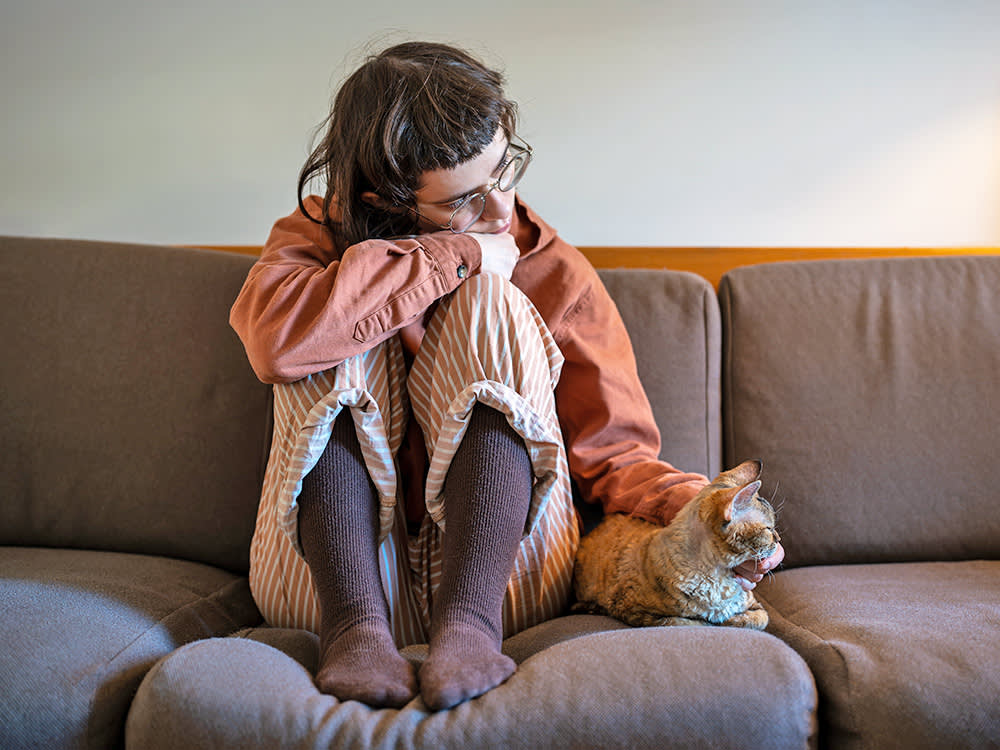
Cats have a reputation problem. Dogs get cast as the empathy champions, the ones who rush over when you cry, while cats are written off as indifferent roommates who tolerate us for the kibble. But that picture is unfair — and increasingly, the science disagrees with it. Cats absolutely register what you’re feeling. Their response just doesn’t always look the way you’d expect.
Here’s how your cat perceives an emotional rough patch, why they react the ways they do, and why their presence might help more than you realize.
Can cats tell when you’re sad?
You’ve probably watched your cat respond to your moods without thinking much about it. Sometimes they get extra affectionate, almost like they’re checking in. Other times they retreat to another room. A few cats even react with fear or irritability to certain human emotional states. None of this is random — let’s unpack what’s behind it.
Cats are constantly taking the temperature of a room. What looks like indifference is often just a cat gathering information and deciding whether now is a good moment to engage.
How cats read human emotion
First, an important caveat: cats don’t experience emotions the way we do. They likely don’t have our tangled layers — frustration curdling into spite, grief that lingers for years. Cats live far more in the present moment. They aren’t replaying yesterday’s mistakes or dreading next week.
That said, they clearly feel things. We’ve all seen a cat frightened at the vet, subdued after losing a companion, or seemingly jealous of another pet. So how do they pick up on our feelings? Mostly through experience and observation. Cats register your facial expressions, the shift in your voice, what you’re doing, and how open you seem to interaction. If they’ve encountered a similar state before, they recall what happened last time and respond accordingly — either “this is a good moment to curl up with my human” or “this seems like a cue to give them space.”
Facial expressions
Studies have shown that cats can recognize human facial cues, even matching emotional faces with the matching tone of voice. Context matters too — what’s happening in the environment, your tone — but it makes sense that cats notice our faces, since that’s where humans are most expressive.
Voice and sound
Just as kids learn the difference between a parent’s cheerful voice and the dreaded “you’re in trouble” voice, cats tune into changes in tone and volume. Even your specific words become cues. If you only use their full name when you’re exasperated, or let an expletive fly every time they knock something over, they file that away. All of it feeds their read on whether and how to approach you.
Body language
Cats are body-language virtuosos — it’s central to how they communicate — so of course they’re watching ours. When we’re sad, we carry ourselves differently: quieter, smaller, curling up, more receptive to gentle contact. To a cat, that’s an open invitation, and a far less intimidating one than you bustling around the house or yelping after stubbing a toe.
Scent, the sense we forget
Here’s the channel most people leave out, because we don’t experience the world through it. A 2023 study in Scientific Reports found that cats sniff human odor samples differently depending on the emotional state the sample came from, and they investigate the scent of human fear most intently, often using the right nostril, which is linked to processing threatening or novel stimuli. In plain terms, your cat may be picking up the chemistry of your mood before you’ve said a word or changed your face. Sadness produces its own physiological signature too, so it’s reasonable to think a cat reads distress partly through its nose, not only its eyes and ears.
There’s no denying how deeply we love cats. More than 40 million American households include at least one. Cats essentially invited themselves into human life over 10,000 years ago, drawn to the rodents around early farming settlements, and we’ve been falling for them ever since. That’s a long time to forge a connection.
The bond serves us in real ways. Cats give us something to care for, and they care for us in return. That sense of connection is sometimes exactly what gets a person off the couch for a play session on a hard day, or out of their own head when everything feels like too much. They offer companionship and accept us at our least impressive — and you can’t put a price on that.
What might your cat do when they sense you’re down?
Here’s where it gets a little speculative. We don’t have a machine for climbing inside a cat’s head, so our best answers combine what science tells us about cat emotions (not much, honestly — it’s rarely a research priority), what we know about cats as animals, and what we experience living with them. Torres says she sees a few common patterns.
Comfort you
We all want to picture our cat hearing the sniffles and rushing over to help. Some cats genuinely do seem to offer support, and there’s nothing better than that. “I’ve seen cats who reliably appear the moment their person starts crying,” Torres says. “Whether it’s deliberate comfort or learned association, the cat clearly connects your distress with a reason to come close.”
Settle in beside you
It’s also possible your sad-day posture — cocooned under a blanket, unlikely to move for hours — simply reads as an excellent napping opportunity. Cats feed off the energy in a room. If you’re up and moving, they’re more active; if you’re parked on the couch, they’re often happy to match you.
Keep their distance
This one stings less than it sounds. Cats are animals acting on instinct. If your behavior is unsettling or makes them uneasy, they’ll step back. If interacting hasn’t paid off in the past — maybe you nudged them away while dealing with your own feelings — they may not have a reason to engage. It’s not a rejection; it’s just their read on an unfamiliar or unrewarding moment.
Does it actually help?
Is a snuggle during a cry an act of support, or just an invitation to nap accepted? Honestly — who cares? A warm, purring cat is a warm, purring cat regardless of the motive behind it. And the broader research is encouraging: studies consistently find that living with pets supports mental health. Even on the days your cat decides to gently bite your hand mid-sob, they’re still pretty wonderful to have around when you’re feeling low.
What’s new since this was written
The case that cats read our emotions keeps getting stronger, and the evidence increasingly runs in both directions. Beyond the scent findings above, researchers in 2025 published a study in Frontiers in Ethology showing that a short training video measurably improved people’s ability to recognize cat emotions during play. The takeaway cuts both ways: cats are reading us through sight, sound, and smell, and we can get better at reading them right back — which only deepens the two-way bond.
References
- Quaranta, Angelo, et al. “Emotion Recognition in Cats.” Animals, vol. 10, no. 7, 28 June 2020, p. 1107. https://doi.org/10.3390/ani10071107
- Brooks, Helen Louise, et al. “The Power of Support from Companion Animals for People Living with Mental Health Problems: A Systematic Review and Narrative Synthesis of the Evidence.” BMC Psychiatry, vol. 18, no. 1, 5 Feb. 2018. https://doi.org/10.1186/s12888-018-1613-2
- d’Ingeo, Serenella, et al. “Relationship between asymmetric nostril use and human emotional odours in cats.” Scientific Reports, 2023. https://www.nature.com/articles/s41598-023-38167-w
- Zax, David. “A Brief History of House Cats.” Smithsonian Magazine, 30 June 2007. https://www.smithsonianmag.com/history/a-brief-history-of-house-cats-158390681
Common questions
Can cats actually sense when you're sad?
Yes. Cats pick up on facial expressions, tone of voice, body language, and the energy in a room, then draw on past experience to decide how to respond. They may offer comfort, settle in beside you, or keep their distance.
Does a cat help when you're sad?
Research consistently links pet companionship to better mental health. Whether your cat is intentionally comforting you or simply joining you for a nap, the effect on your mood tends to be a positive one.
Why does my cat ignore me when I'm upset?
It's not as cold as it feels. If your behavior seems unsettling, or if a past attempt to interact didn't go well, a cat may simply choose distance. It's a natural reaction to an unfamiliar or non-rewarding situation, not a judgment of you.
Leila Torres leads our Living coverage, from home life and travel to the products and rescue stories that come with sharing a life with animals. She edits and writes across the section, with a soft spot for pieces about the bond between people and their pets.
Meet our experts ↗Keep reading
 LivingHer Cat Has a Meow for Everything. It Rewired How She Makes Music.Jordan Ellis · 4 min
 LivingThe Cat Burglar of Mairangi Bay Has 150 Victims and Zero RemorseSasha Ford · 4 min
 LivingCan Cats Sense When Death Is Near? Inside the Mystery of Oscar the CatTom Hadley · 7 min
 LivingAnimal Communicators Aren't Reading Your Cat. They're Reading You.Leila Torres · 8 min
 LivingA Video Game Studied Cats Harder Than Most Cat Owners DoSasha Ford · 6 min
 LivingYour Cat Picks the Foot of the Bed on Purpose. Here's the LogicClaire Sutton · 6 min