


The One Question That Sorts a Good Cattery From a Bad One
Most boarding checklists hand you a dozen things to ask. Almost all of them are really one question in disguise: how much will my cat actually be left alone? Here is how to answer it.

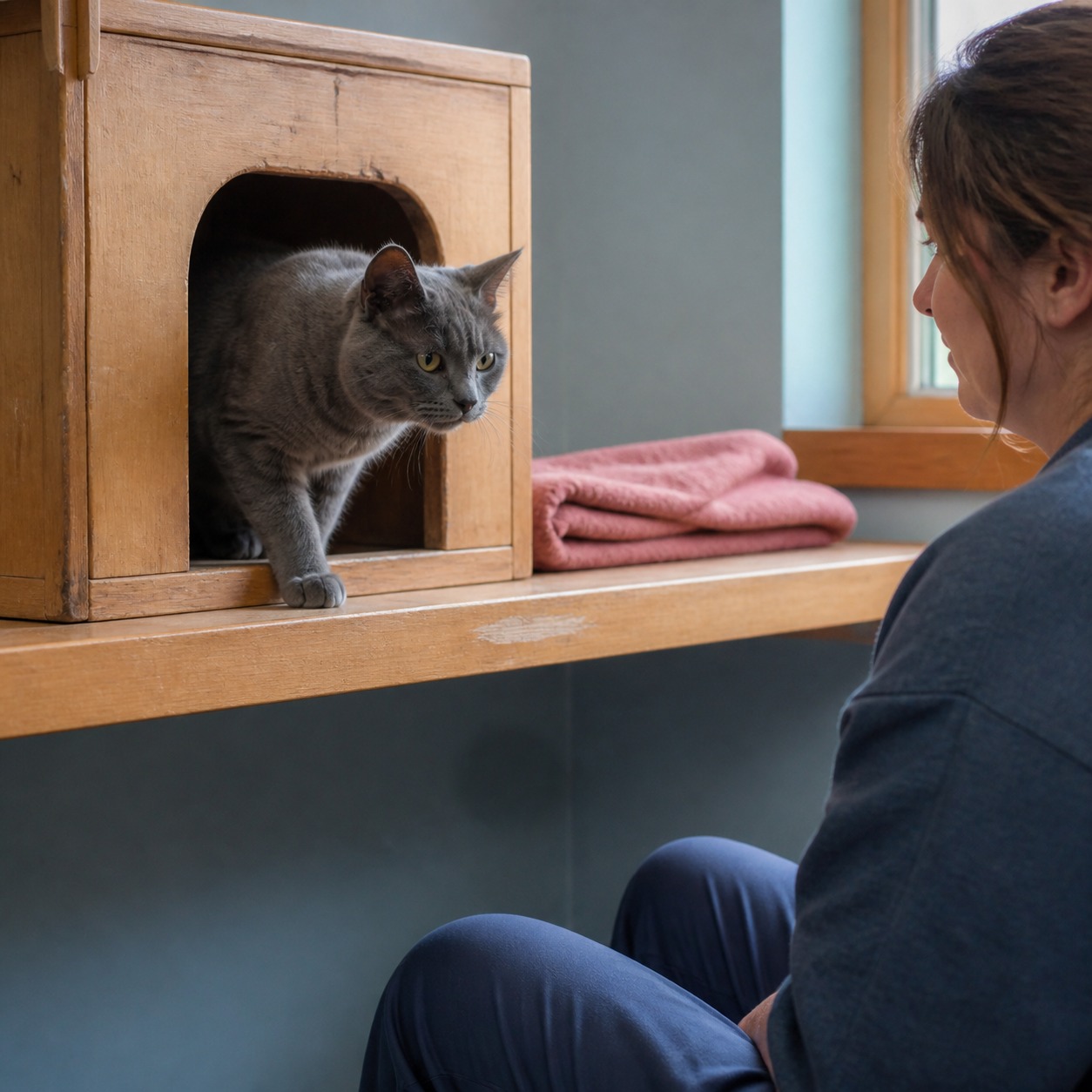
Every boarding checklist you will find hands you the same dozen things to ask: check the vaccinations, tour the space, ask about cost, get references, pack a bag. Useful, all of it. But it buries the one question that actually predicts whether your cat has a decent week or a miserable one, and it is this: how much real human contact will my cat get while I am gone?
Almost every other question on the list is that question wearing a different outfit. Cost matters because the price gap between two facilities is often the difference between fifteen minutes of daily attention and two. The tour matters because you are checking whether a stressed cat has anywhere to hide. Even the vaccination policy is a signal of how seriously a place takes the animals in its care. So instead of a checklist to memorize, here is how to answer the one question that counts.
First, decide whether to board at all
Boarding is not automatically the right call, and the honest first step is deciding between three options: bring the cat along, leave them home with help, or board them.
Bringing them is rarely realistic. Cats take a long time to settle into unfamiliar places, so unless you can spend a real chunk of the trip helping them acclimate, dragging a cat along on a long weekend usually just relocates their stress.
Leaving them home alone has a ceiling. Cats are more social than their reputation admits, and most need daily interaction with a person or another pet. Some confident cats are genuinely fine on their own for 24 to 48 hours. Others find even that stressful, and that stress spills out as shredded furniture, chewed houseplants, litter-box avoidance, or self-injury. A bonded sibling helps, but no cat should be left for an extended stretch.
That leaves two good options for a real trip, and this is where the human-contact question first bites:
- A drop-in sitter or an in-home sitter keeps your cat in their own territory, which for an anxiety-prone cat is a huge advantage. The catch is coverage: a sitter who swings by once a day for fifteen minutes leaves a lonely cat lonely for the other twenty-three hours. For trips longer than a couple of days, look for a sitter who does longer visits or overnights, and use one of the major booking platforms that run background checks and provide insurance and photo updates.
- A boarding facility, including the one at your own vet, makes sense for stays longer than about a week, for senior cats, and for any cat who needs daily medication. Boarding at your vet has a real edge here: they already hold your cat’s records, know their quirks, can handle daily injections, and can add on services like a dental cleaning or nail trim while your cat is already there. Few of us enjoy trimming a cat’s nails at home, so letting the pros do it during the stay is tidy multitasking.
Then screen the facility through the contact question
Once you are touring catteries, keep bending every question back toward how much attention and calm your cat will actually get.
Pin down the contact, not just the price. Ask directly: how many minutes of hands-on human interaction and play does my cat get per day, and who provides it? Then use the price to compare like for like. A pricier facility may buy real one-on-one time; a cheaper one may offer only a few minutes. You are not comparing nightly rates, you are comparing attention per dollar.
Tour the space and look for room to hide. Ask to see exactly where your cat will stay. Check there is enough room to sleep, eat, play, hide, and move around, which matters more the longer the stay. The single most important thing to look for is separation from dogs. A new place is already sensory overload for a cat, and the sound and smell of nearby dogs cranks the stress higher. This is not a nicety; it is now a recognized standard of feline care.
The clearest shorthand for a facility that takes cat stress seriously is whether it follows the kind of principles laid out in the AAFP and ISFM Cat Friendly guidelines: cats housed away from dogs, quiet boarding areas, hiding spots, and vertical space to climb and perch. You can ask a facility outright whether they follow cat-friendly handling practices. A blank look is an answer; a specific one is a good sign.
When I help someone vet a cattery, I tell them to watch what the resident cats are doing, not what the brochure says. Are the boarded cats up on a shelf, relaxed and observing, or are they flattened at the back of a cage? A cat’s body language will tell you more about how the place actually feels than any tour script.
Ask for references and read reviews with a grain of salt. If you are not immediately sold, ask to speak with other cat parents who have used the place. Online reviews on Google or Yelp help too, but they cluster at the extremes, so do not let one furious review scare you off before you have looked yourself.
Sort out the paperwork early. Ask about vaccination requirements up front. Many facilities require proof of certain vaccines, such as rabies, which is legally mandated in some states, and getting the records from your vet takes lead time. And if you are traveling during a busy season, start looking a month or more ahead, because good facilities book up and being forced into your backup choice for your cat is a bad feeling.
Finally, pack for continuity
The overnight bag is another way of protecting your cat’s sense of normal. Bring their own bed and toys, plus their regular food, treats, and litter, so that as little as possible changes at once. For extra credit, tuck in a worn t-shirt of yours; your scent is a genuine comfort while you are away.
That is the whole method. Skip the memorized checklist and keep asking the one question underneath all of them, and you will leave your cat somewhere that actually earns the word good, and spend your trip relaxing instead of refreshing the front desk’s photo updates.
References
- “2022 ISFM/AAFP Cat Friendly Veterinary Environment Guidelines.” Feline Veterinary Medical Association (AAFP) and International Society of Feline Medicine. https://catvets.com/resource/isfm-aafp-cat-friendly-veterinary-environment-guidelines/
- “Cat Friendly Practice Program.” American Veterinary Medical Association. https://www.avma.org/news/aafp-celebrates-10-years-cat-friendly-practice-program-releases-new-guidelines
Common questions
Is boarding or a pet sitter better for a cat?
It depends on the cat. A cat who finds new environments deeply stressful often does better staying home with a vetted in-home sitter. A cat who needs daily medication, close monitoring, or is a senior may be safer at a vet-run boarding facility. The deciding factor is which setup gives your specific cat the most calm, consistent human contact.
How far ahead should I book cat boarding?
For ordinary weeks, a couple of weeks is usually fine. For busy stretches like the winter holidays or summer, book a month or more in advance, because good facilities fill up fast and you do not want to be forced into your second choice.
How long can a cat be left alone?
Some confident cats are fine on their own for 24 to 48 hours with enough food, water, and clean litter. Beyond that, most cats need daily human contact, and anything past about a week calls for a sitter or a boarding facility rather than drop-in visits alone.
Nina Vasquez writes about life at home with pets and the relationships at the heart of it. Her work covers day-to-day living, people-and-pet stories, and the products that fit into a real household, with a warm, grounded take on everyday pet ownership.
Meet our experts ↗Keep reading
 LivingHis Cat Vanished in Yellowstone. Two Months Later, a Chip Pinged 900 Miles Away.Dr. Lena Park · 5 min
 LivingThe Cat Lover's New York Is Really a Map of Cats Who Need HomesJordan Ellis · 7 min
 TrainingYour Cat Isn't Trying to Come With You. It's the Best Box in the House.Dr. Lena Park · 7 min
 LivingOne Cat, Three Flights, Zero Consent: How Mittens Became a Frequent FlyerJordan Ellis · 4 min
 LivingA Cat Roamed a Plane for Hours. The Funny Part Hides a Real Travel MistakeJordan Ellis · 5 min
 LivingTikTok Makes Flying With a Cat Look Easy. Here's the Part It Skips.Leila Torres · 10 min