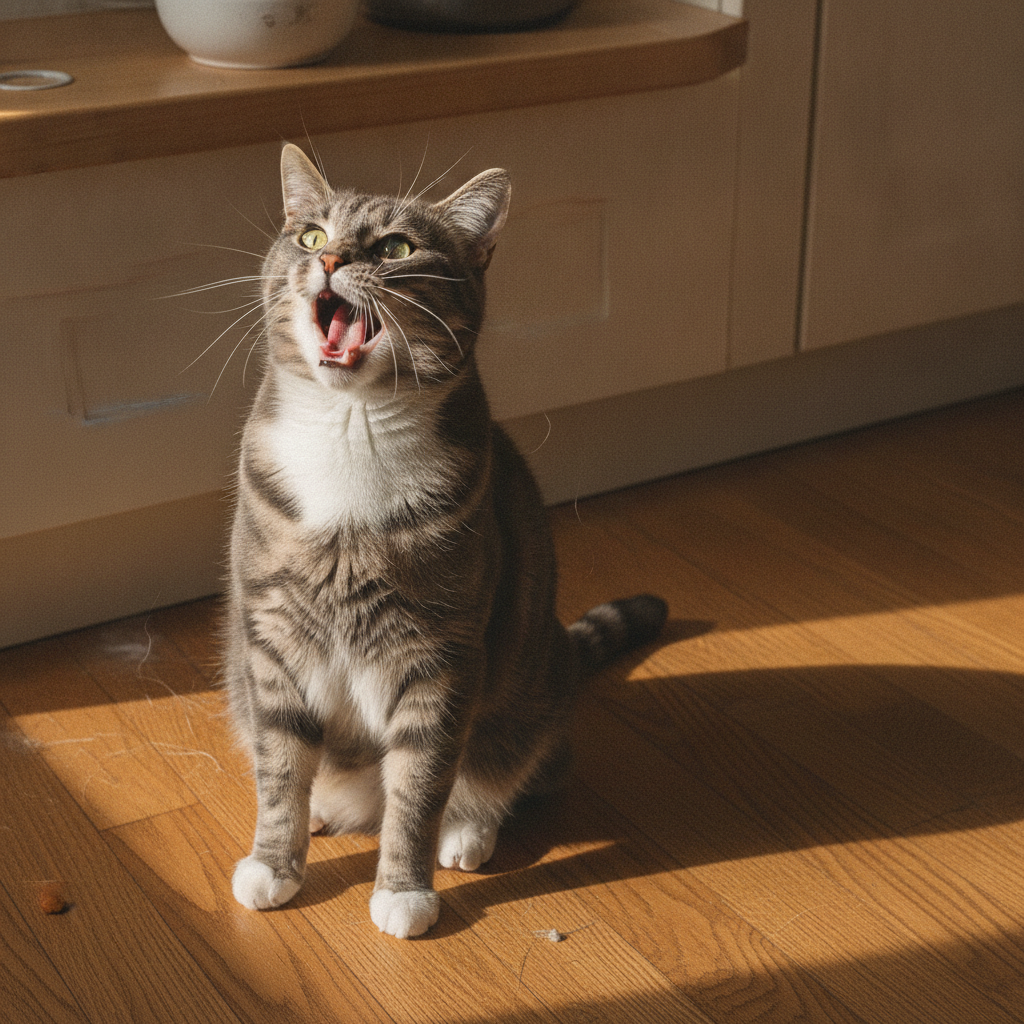

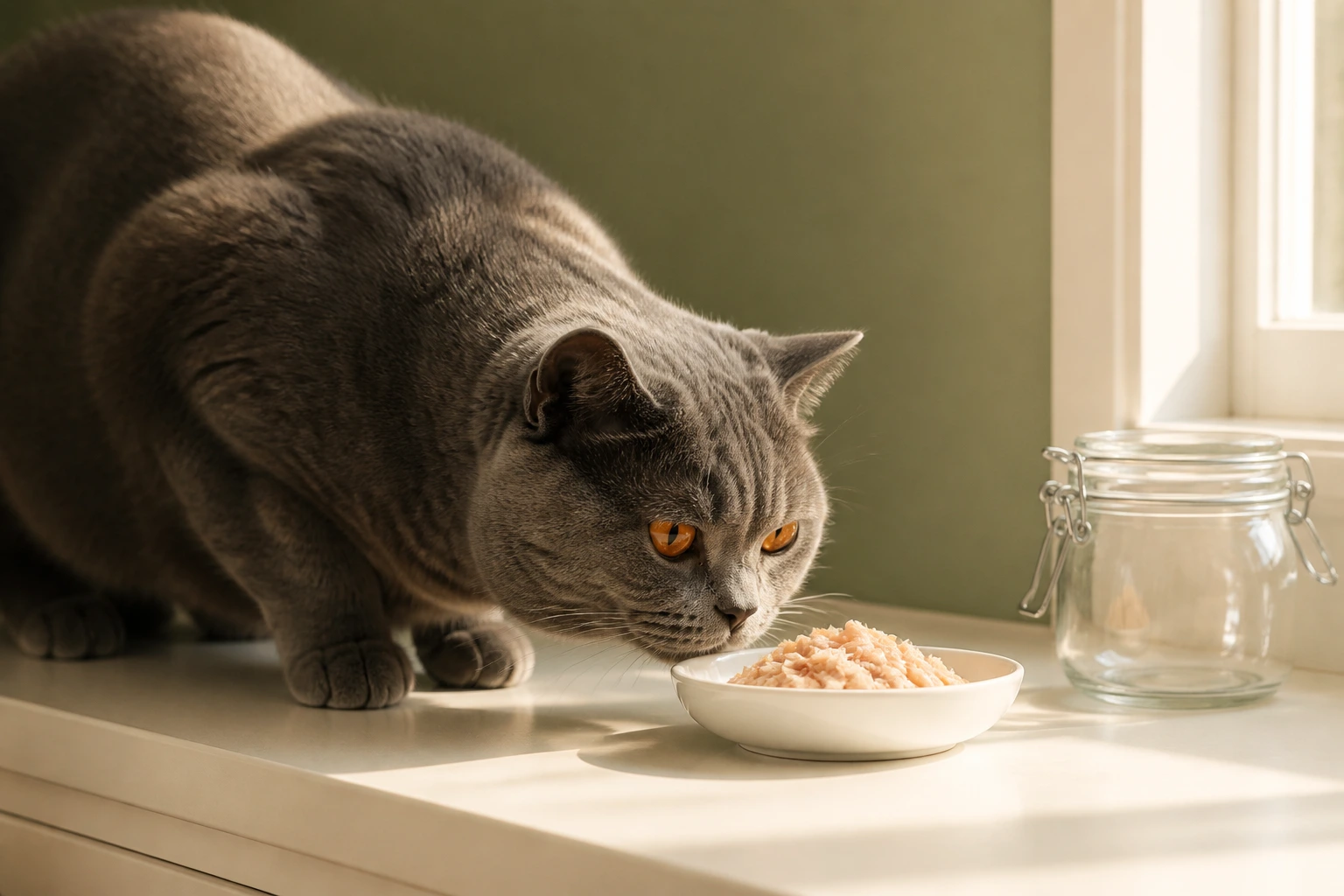
Pop a can of tuna and watch what happens. A cat who ignored dinner appears from nowhere, materializes at your ankles, and stares at the can with an intensity reserved for very few things in life. It is one of the most reliable parlor tricks in cat ownership, and it is also a clue. That craving is not a quirk. It is wired in, and understanding why is the key to feeding tuna responsibly, because the same biology that makes cats adore tuna is what makes it worth limiting.
The short version: yes, cats can eat tuna in small amounts, and it offers some real nutrients. But tuna is a treat that comes with an unusually strong pull, and a couple of specific risks. Let’s start with the craving itself.
The science of the craving
For years, “cats like fish” was just folklore, charming but unexplained, especially since the desert-dwelling wildcats our house cats descend from almost certainly never saw a fish. Recent work has filled in the mechanism. Cats are obligate carnivores with a famously narrow palate. They cannot taste sweetness at all, because the gene for the sweet receptor, Tas1r2, is a broken pseudogene in cats and their wild relatives, switched off tens of millions of years ago when the cat lineage committed fully to meat. What cats can taste, vividly, is umami, the savory, meaty flavor.
In 2023, researchers analyzing the cat umami receptor found it is tuned to detect particular compounds, inosine monophosphate and the amino acid free histidine, and that these compounds happen to occur at high levels in tuna. In other words, tuna lands almost perfectly on a flavor target cats are biologically designed to hit. Add the powerful aroma, which a cat’s keen nose picks up across a room, and you have a food cats are practically engineered to find irresistible. This is why a cat will steal sushi off your chopsticks or dip a paw into the fish tank. It is not greed; it is receptor chemistry.
That is genuinely useful to know, because it reframes everything that follows. The problem with tuna is not that cats dislike it. It is that they like it too much.
The nutrients tuna does deliver
When you do share a little, tuna is not empty calories. As a treat, it provides:
- Lean protein: Cats have high protein needs that must come partly from animal sources, and tuna supplies complete protein with the essential amino acids they require.
- Omega-3 fatty acids: Tuna is rich in EPA and DHA, which support brain development in kittens, heart and blood-vessel function, and act as anti-inflammatories.
- Vitamin D: Unlike us, cats cannot make vitamin D from sunlight and must get it from food. They use vitamin D3 best, and it comes largely from animal sources such as fatty fish.
None of this makes tuna a meal. Fish alone is not a complete and balanced diet, and a cat fed only tuna will develop serious, even life-threatening deficiencies. The nutrients are a bonus on top of a proper diet, not a substitute for one.
The two risks that actually matter
Most “can cats eat” lists bury the real concerns under generic warnings. For tuna, two stand out, and both scale with how much and how often, not whether a cat ever has a bite.
Mercury, by the numbers
Tuna sits near the top of the ocean food chain, so it accumulates mercury from the smaller fish it eats, and not all tuna is equal. According to FDA monitoring data, canned albacore (“white”) tuna averages about 0.35 parts per million of mercury, while canned light tuna, usually made from smaller skipjack, averages about 0.12 ppm, roughly a third as much. Fresh ahi and yellowfin run higher still. For scale, the FDA’s action level for mercury in commercial fish is 1.0 ppm.
What this means for a cat: a small occasional treat poses minimal risk, but a cat eating tuna every day, especially albacore, could accumulate enough mercury over time to risk neurological problems. The practical takeaway is to favor canned light tuna over albacore, and to keep it occasional. The dose makes the poison, and with mercury the dose is cumulative.
Thiamine, and why raw is off the table
Raw tuna contains thiaminase, an enzyme that destroys thiamine (vitamin B1), a nutrient cats critically need. Cats who eat large amounts of raw fish can develop thiamine deficiency, which can cause weight loss, weakness, and even heart failure. Cooking deactivates the enzyme, and a small occasional amount is not a concern, but it is one more reason to skip raw fish and stick to plain cooked or canned tuna.
How to serve it, and what kind
If you are going to share tuna, a few simple rules keep it safe:
- Offer only plain tuna, no garlic, onion, heavy salt, or oil, all of which range from unhealthy to outright toxic for cats.
- Choose canned light tuna packed in water, or plain cooked tuna with no skin or bones. Skip oil-packed and brine-packed versions.
- Keep pieces small and boneless. Large chunks, tough skin, and bones are choking and digestive hazards.
- Hold it to roughly a teaspoon or two, no more than 10 percent of daily calories, and make it occasional rather than a daily ritual.
The “tuna junkie” trap
Here is the risk that gets the least attention and may matter the most day to day. Because tuna hits that receptor sweet spot so hard, some cats become fixated, what vets informally call tuna junkies, and start turning up their noses at balanced cat food. That is more than a preference problem. If a cat later develops diabetes, urinary disease, or kidney disease and needs a prescription diet, a tuna-addicted cat can make the transition miserable or impossible.
“I’ve watched a perfectly healthy cat refuse a medically necessary diet for days because they’d been raised to expect tuna, and that standoff is genuinely dangerous,” says Dr. Ravi Mehta. “The fix is upstream: keep a cat’s palate broad while they’re young, and treat strong flavors like tuna as the rare exception, not the baseline.”
The same logic applies to fish-flavored cat foods, which are safe and healthy in themselves but can hook a cat just as effectively. A smarter move is to rotate flavors and textures from the start, and to keep an irresistible food like tuna in reserve, a tool for tempting a sick cat to eat or hiding a pill, rather than an everyday expectation.
The bottom line on cats and human food
Cats can enjoy plenty of human foods in small amounts, and sharing a bite can be a genuine source of bonding and enrichment. The cardinal rules are the same across the board: do your research so you are not sharing something toxic, introduce any new food in a tiny amount while watching for gagging, vomiting, diarrhea, or facial swelling, and keep all treats and table foods under about 10 percent of total calories so your cat fills up on the balanced diet that actually meets their needs. A few other cat-safe nibbles in moderation: banana, low-sodium ham, and small amounts of corn. A few to always avoid: garlic and onion (which can cause life-threatening anemia), and chocolate (toxic to cats). When in doubt about a food, ask your vet or a pet-poison hotline before offering it.
Frequently asked questions
Why do cats love tuna so much?
Recent research found cats carry umami taste receptors finely tuned to detect the specific compounds, inosine monophosphate and free histidine, that happen to be concentrated in tuna. Combined with the strong aroma, tuna hits a flavor sweet spot cats are biologically built to chase.
How much tuna can a cat have?
Treat tuna like any snack: no more than about 10 percent of daily calories, given occasionally rather than daily. A teaspoon or two of plain canned light tuna in water is plenty for most cats.
Is canned tuna safe for cats?
Small amounts of plain canned light tuna packed in water are the safest choice, because light tuna is lower in mercury than albacore. Avoid tuna in oil, brine, or with added seasonings.
Can cats eat tuna skin?
It is best to skip it. Tuna skin is tough to chew and digest, raising the risk of choking and stomach upset.
Can tuna give a cat mercury poisoning?
An occasional small treat will not. The risk comes from cats eating tuna daily, because mercury accumulates over time. Albacore averages about three times the mercury of light tuna.
References
- Bian et al. “The cat umami taste receptor and its response to nucleotides and amino acids.” Chemical Senses / PLOS One, 2023.
- Li et al. “Pseudogenization of a Sweet-Receptor Gene Accounts for Cats’ Indifference toward Sugar.” PLOS Genetics, 2005.
- U.S. FDA: Mercury Levels in Commercial Fish and Shellfish (1990-2012).
- U.S. FDA: Advice About Eating Fish (Best Choices / Good Choices tables).
- Cornell College of Agriculture and Life Sciences: Thiaminases and thiamine deficiency.