
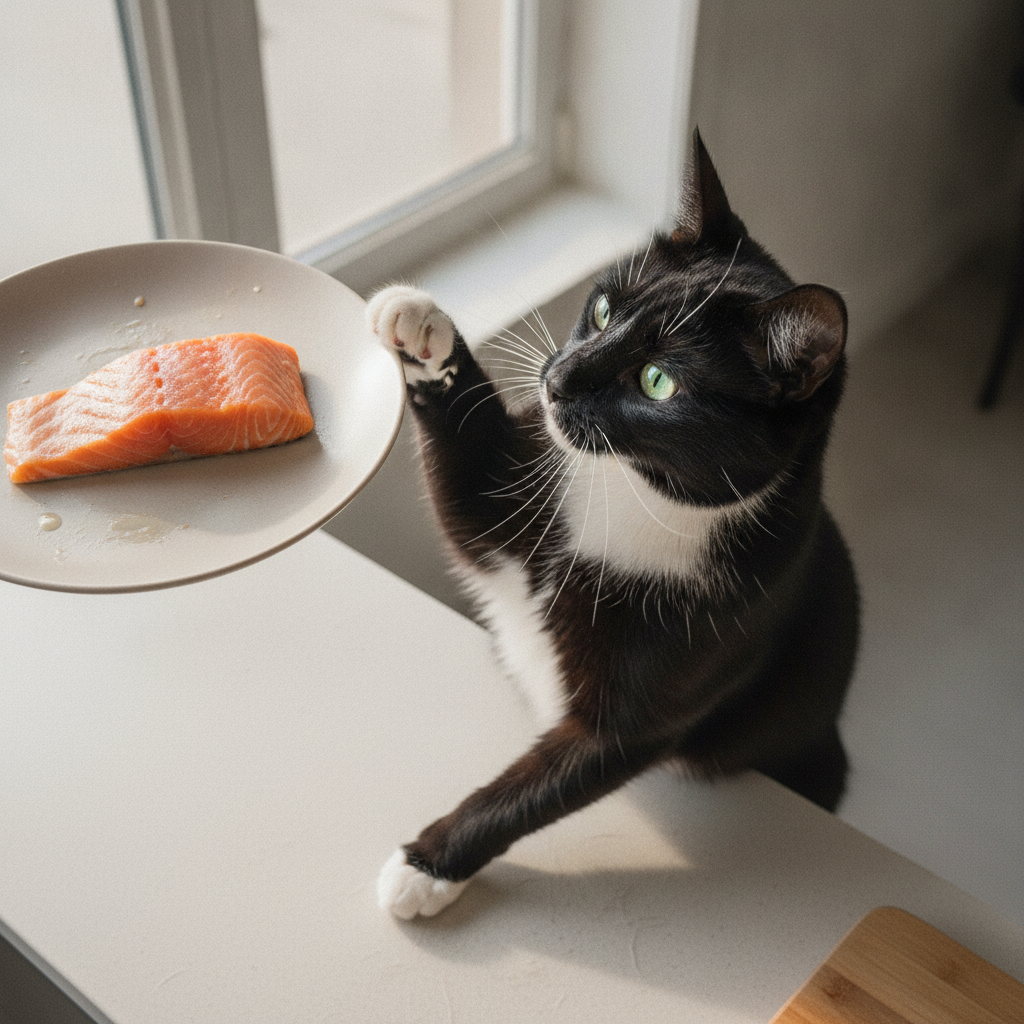
A cat will react to salmon the same way they react to most fish: with total, undivided attention. And salmon happens to be one of the better fish to give in to, nutritionally speaking. But here is the trap that catches well-meaning owners. The salmon in most kitchens is not plain cooked salmon. It is lox on a bagel, smoked salmon from a deli counter, a seasoned fillet glazed with garlic butter, or a raw piece waiting to be cooked. Every one of those is the wrong salmon to share, for a specific reason. So the useful question is not “can cats eat salmon,” which has an easy yes, but “which salmon, prepared how,” which is where cats actually get into trouble.
This guide sorts it out form by form. First, though, it is worth knowing what makes plain salmon worth the bother at all.
What plain salmon genuinely offers a cat
Salmon is not just palatable to cats; it carries real nutritional value, which is why it shows up as a primary ingredient in many commercial cat foods. The highlights:
- Omega-3 fatty acids (EPA and DHA): Salmon is rich in these, and they do more than the protein here. They support healthy skin and a glossy coat, supply energy, and act as potent anti-inflammatories, useful for older cats with joint stiffness.
- Astaxanthin: This is salmon’s quiet headliner. The carotenoid that tints salmon flesh pink is a powerful antioxidant that protects cells from oxidative damage and may help curb inflammation and slow aspects of aging. It is not something cats easily get elsewhere.
- Complete protein: As obligate carnivores, cats need animal-derived protein for energy and for the essential amino acids that build new proteins. Salmon delivers it.
- Vitamins and minerals: B6, B12, selenium, niacin, and thiamine among them, supporting DNA repair, growth, and proper heart, brain, and nerve function.
Worth a quick note on sourcing: “salmon” covers several species, Atlantic, Chinook, Coho, Sockeye, cold-water fish that live mostly in the ocean and spawn in fresh water. Most salmon sold today is farmed, since wild stocks are protected in many regions. For a cat treat, the species and source matter far less than the preparation.
The form-by-form guide
This is the part that actually keeps a cat safe. Same fish, very different verdicts depending on how it reaches the plate.
Plain cooked salmon, baked or steamed, no seasoning: yes. This is the only form to share. Skinless, boneless, unseasoned, cooked through. Cut into small bite-sized pieces.
Raw salmon: no. Two problems. Raw fish can carry pathogens such as Salmonella and Listeria, which can sicken your cat and spread to other pets and people in the home. And raw salmon contains thiaminase, an enzyme that breaks down thiamine, a vitamin cats critically need; cats eating a lot of raw fish can develop a thiamine deficiency. Cooking deactivates the enzyme and kills the pathogens, which is the whole case for cooking.
Smoked salmon and lox: no. This is the sneaky one, because it feels like a generous treat. Smoked salmon and lox are loaded with salt, far more than a cat should have, and cold-smoked versions are often processed at temperatures too low to kill bacteria. Cured and brined salmon fall in the same bucket. Skip all of it.
Seasoned or restaurant salmon: no. The salmon itself may be fine, but what it was cooked with often is not. Onions, garlic, and chives are toxic to cats; cream, butter, and heavy oils are unhealthy. If your dinner’s salmon touched any of those, it is not shareable. Set aside a plain unseasoned piece before you cook with the good stuff if you want to give your cat a taste.
Salmon skin and bones: no. Even on otherwise plain cooked salmon, remove skin and bones first. They are choking hazards, and sharp bones can injure the mouth or digestive tract.
The 90/10 rule, and the fish-flavor trap
Even the right salmon stays a treat. Cats have unique nutritional needs, and the bulk of their diet, roughly 90 percent, has to come from a complete and balanced cat food, with the remaining 10 percent left for treats and table foods. Fill a cat up on fish and they may skip the balanced diet that actually meets their needs, which over time risks real deficiencies. Sticking to the 10 percent ceiling also guards against accidental overfeeding, a genuine concern for sedentary indoor cats.
There is a subtler reason to keep salmon, and fish flavors generally, in check. Fish-flavored foods are so appealing that some cats grow fixated and refuse everything else. That becomes a real problem if a health issue, diabetes, urinary disease, kidney disease, later forces a diet change. Rotating flavors and textures while a cat is young keeps their palate flexible for the day it matters.
“The cats who give us the most trouble switching diets are almost always the ones raised on a single irresistible flavor, and fish is the usual culprit,” says Dr. Nina Kohl. “Treat salmon as a now-and-then bonus, not a habit, and you keep your options open later.”
The bottom line on cats and human food
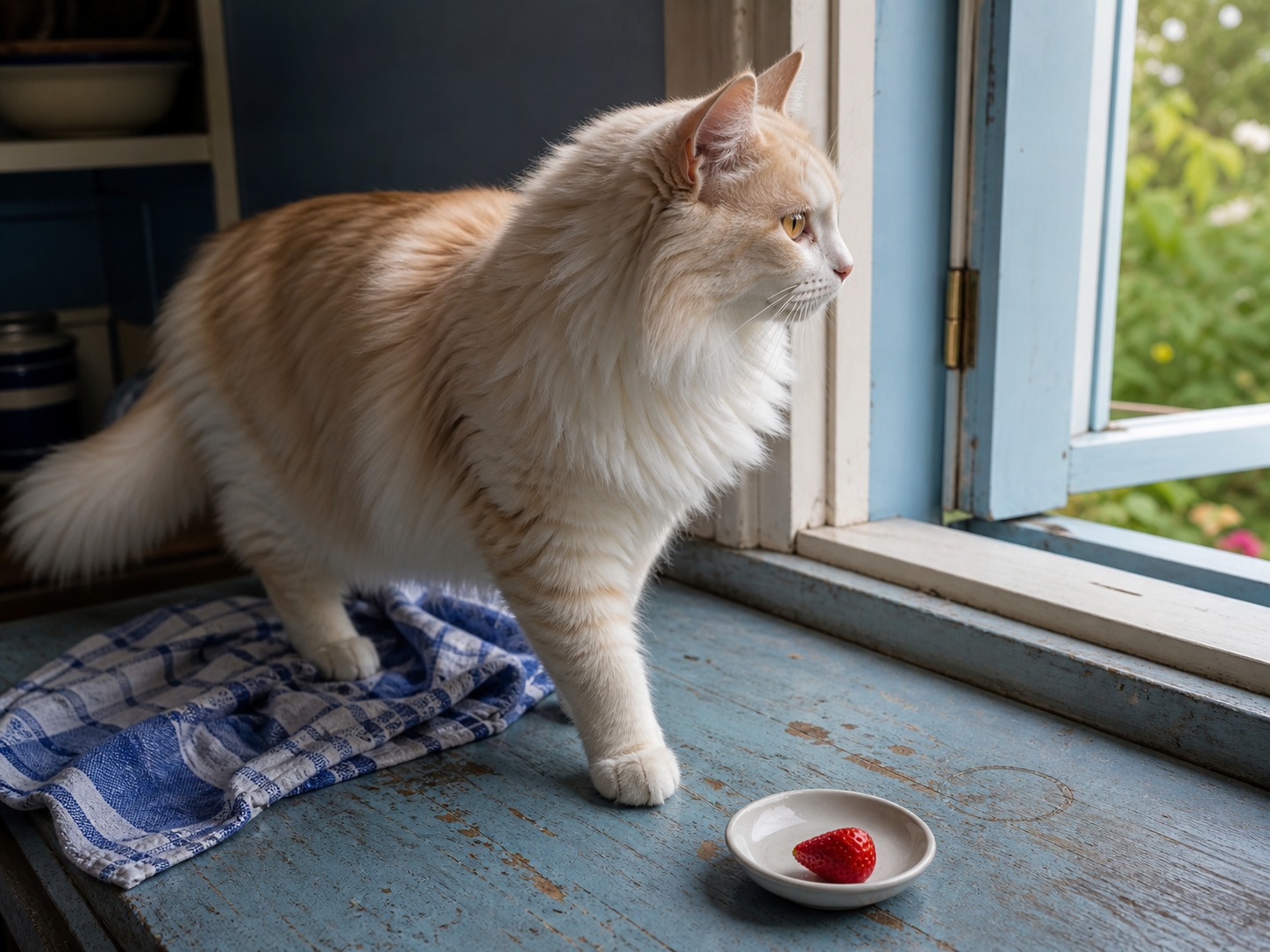
Plenty of human foods are safe for cats and can offer real benefits, but cats are not small people. As obligate carnivores they need an animal-based diet, with high demands for fat and protein and a limited ability to handle carbohydrates. Share the occasional bite as long as it is safe, plain, nontoxic, and within that 10 percent. A few other cat-safe nibbles in moderation: plain cooked shrimp, a strawberry or two, and a little peanut butter (watch the added ingredients). And a few to always avoid: citrus, chocolate, and high-fat dairy like butter. Pair a sensible diet with plenty of play and enrichment, and the occasional bit of plain salmon becomes exactly what it should be, a small, genuinely good treat.
Frequently asked questions
Can cats eat salmon?
Yes, plain cooked salmon, baked or steamed with no seasoning, oil, skin, or bones, is safe and nutritious for cats as an occasional treat. It must be the plain cooked form, not smoked, cured, or raw.
Why can’t cats have smoked salmon or lox?
Smoked salmon and lox are very high in salt, and some are cold-smoked at temperatures too low to kill bacteria. Cured and brined salmon carry the same problems.
Can cats eat raw salmon?
No. Raw salmon can carry pathogens like Salmonella and Listeria, and contains thiaminase, an enzyme that destroys the thiamine cats need. Cooking solves both problems.
How much salmon can a cat eat?
Keep it to no more than about 10 percent of daily calories, given occasionally. A small bite-sized portion of plain cooked salmon is plenty.
References
- Merck Veterinary Manual: Essential Fatty Acids for Integumentary Disease in Animals
- Higuera-Ciapara et al. “Astaxanthin: A Review of its Chemical and Biological Properties.” Critical Reviews in Food Science and Nutrition.
- NOAA Fisheries: Salmon
- Cornell College of Agriculture and Life Sciences: Thiaminases and thiamine deficiency in cats and dogs
- U.S. FDA: Selecting and Serving Fresh and Frozen Seafood Safely (raw fish pathogens)