


Plain Bread Is Boring for Cats. Raw Dough Is an Emergency
The answer to 'can cats eat bread' is yes and also irrelevant. The real story is the gap between a harmless crumb and raw yeasted dough, which is a genuine 911. Here's the line.

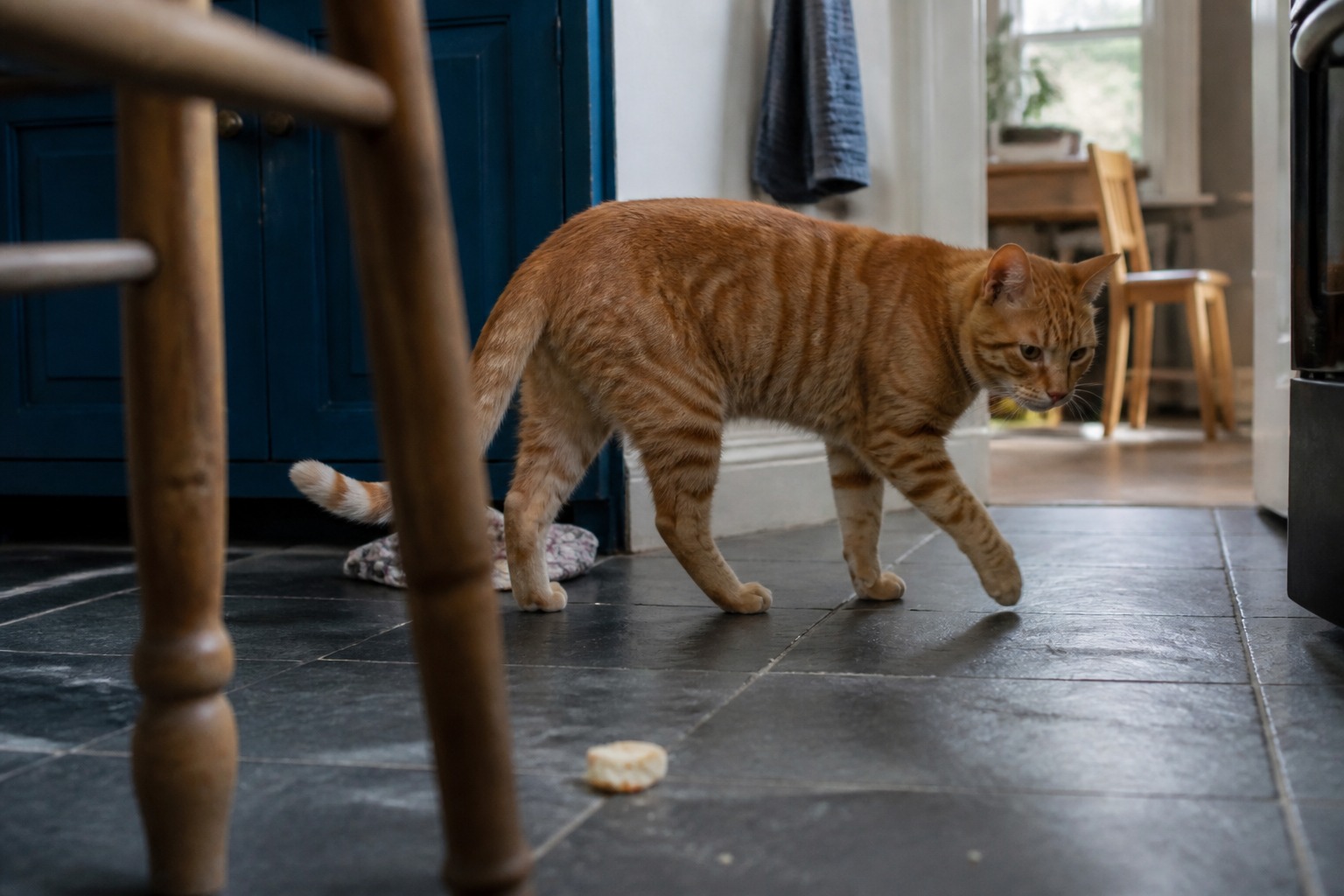
The question “can cats eat bread” has a one-word answer, and it is not very interesting: yes, a plain crumb is fine. The interesting part is that the answer barely matters. Plain bread is a nutritional non-event for a cat, neither helpful nor harmful in small amounts. What actually matters is the distance between that harmless crumb and two situations that are genuinely worth knowing about: what gets baked into the bread, and what happens when the dough is still raw. One of those is an inconvenience. The other is an emergency.
Plain baked bread: technically yes, basically pointless
If your cat snags a corner of your toast, relax.
A little plain bread won’t hurt a cat, but it isn’t doing anything good either. Cats are built to run on protein and fat, not starch, so bread is mostly empty filler for them. I’d rather see a treat that earns its calories.
Bread is high in carbohydrates, which cats digest less efficiently than protein. The realistic downside of regular bread snacking is not poisoning, it is weight gain. Carbs turn into sugars during digestion, and extra padding over time raises a cat’s risk of problems like diabetes and arthritis. That is also why bread is a particularly bad idea for a cat who already has diabetes. None of this makes a single bite dangerous; it just means bread does not belong on the regular menu.
The toppings are the real hazard
The much bigger issue with bread is rarely the dough. It is everything bakers add to make bread interesting.
- Garlic, onion, and chive breads. These Allium ingredients are toxic to cats and can damage red blood cells, leading to anemia. Garlic bread and onion focaccia are firmly off-limits.
- Raisin bread. Raisins are toxic to cats, so a slice of raisin loaf is a no regardless of how good it smells to your cat.
- Heavily salted or sweetened loaves. Salt and added sugar pile on problems a cat does not need.
In other words, a plain dinner roll is a shrug; a garlic knot or a slice of cinnamon-raisin is a real risk. Read the bread, not just the label “bread.”
Raw dough is a genuine emergency
This is the part that justifies the whole article, and it is the part most “can cats eat bread” pieces bury. Raw, yeasted dough is the one true bread emergency for a cat: keep it out of reach absolutely, and treat any theft as urgent.
Two things go wrong at once. First, the cat’s warm stomach is the ideal proofing environment, so the dough keeps expanding inside them. That can cause painful bloating and, in a small animal, a dangerous obstruction. Second, the yeast keeps fermenting, producing carbon dioxide and ethanol. The cat effectively absorbs alcohol.
“A cat that’s eaten raw dough can look drunk, wobbly, disoriented, and depressed, and that’s not a metaphor, it’s alcohol toxicity,” Dr. Solis says. “That’s a same-day vet visit, not a wait-and-see.”
A cat in this situation needs professional care fast. Your vet may need to induce vomiting or empty the stomach to remove the dough before it does more harm.
The quick decision guide
- Plain baked bread, small piece: fine, but skip the habit.
- Bread with garlic, onion, chives, or raisins: no.
- Raw yeasted dough: call your vet or a pet poison hotline immediately.
After a bit of plain baked bread, just watch for short-lived stomach upset like vomiting or loose stool. After raw dough or an Allium or raisin loaf, do not wait for symptoms; get help.
The bottom line
Whether a cat can eat bread is the wrong question. Plain bread is harmless and useless in equal measure. The things worth remembering are the ones with stakes: keep garlic, onion, and raisin breads away entirely, and treat raw dough as the emergency it is. Get those right and the rest of the bread question takes care of itself.
References
Common questions
Why is raw bread dough dangerous for cats?
Two reasons. The warm stomach lets the dough keep rising, which can cause painful bloat or a blockage, and the yeast ferments into alcohol, which a cat can absorb. The result can be a true emergency, so a cat that eats raw dough needs a vet right away.
Which breads should cats never have?
Anything with garlic, onion, or chives baked in (these damage red blood cells), raisin bread (raisins are toxic to cats), and any heavily salted or sweetened specialty loaf. The add-ins are the problem, not the bread itself.
Not a substitute for your vet. Our guidance is educational. For urgent symptoms, contact a vet or emergency clinic right away. Editorial standards
Dr. Solis is a board-certified veterinary dermatologist with over twelve years of clinical experience. She advises on skin conditions, allergies, and grooming practices that affect coat and skin health. All dermatology and allergy content at The Pet Times is reviewed by her team before publication.
Meet our experts ↗Keep reading
 FoodShrimp Is the Rare Cat Treat That's Actually Lean, If You Lose the ShellDr. Priya Nair · 6 min
 FoodYour Cat Already Hates Lemons. The Part That Can Actually Poison Them Isn't the Sour FleshDr. Priya Nair · 5 min
 FoodCan Cats Eat Ice Cream? They Can't Even Taste Why You'd ShareDr. Lena Park · 6 min
 FoodPeanuts Won't Poison Your Cat. They're Also Close to Pointless, and Come With Four Real RisksDr. Ravi Mehta · 5 min
 FoodYour Cat's Plate-Begging Isn't Always Wrong. 8 Foods You Can Share.Dr. Mara Chen · 8 min
 FoodPeas Off Your Plate Are Fine for Cats. Peas in the Bag Are the Ones to Read AboutDr. Amara Solis · 6 min