


Your Cat Isn't Attacking You. You Became the Best Toy in the House.
Ambushed ankles and bunny-kicked forearms aren't a mean streak, they're a targeting error. Here's how to redirect a rough player onto something that isn't your skin.

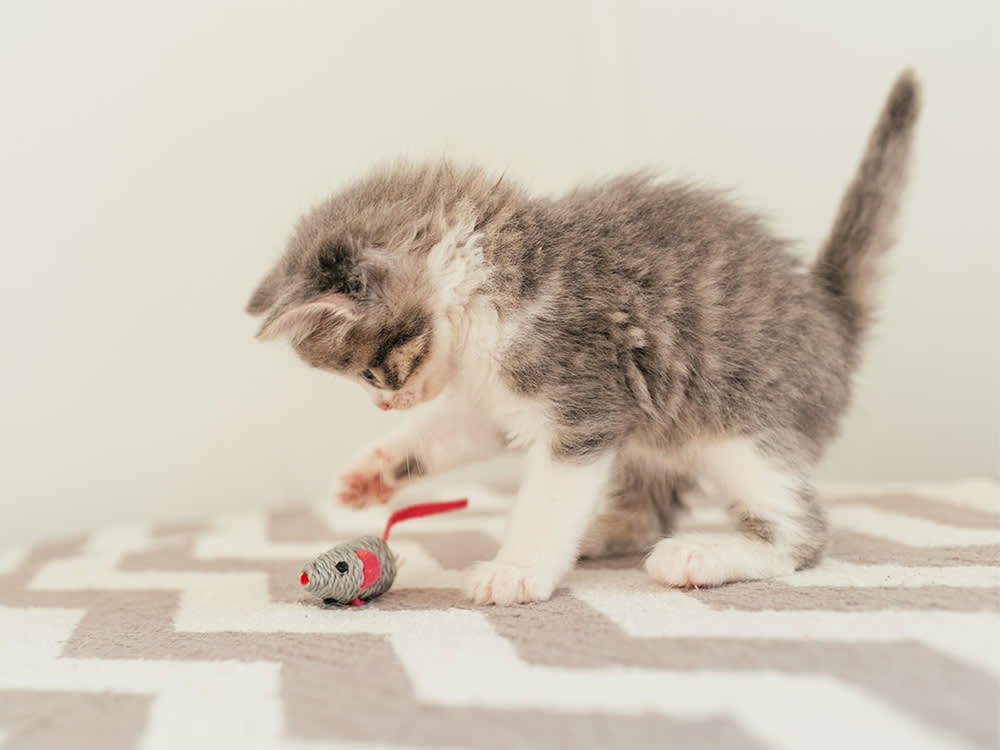
Playing with a cat is a delight right up until you become the thing being hunted. The pounce lands on your ankle, the claws find your forearm, the teeth close on the side of your hand, and suddenly the fun is a small mammal trying to take you down. It stings, and worse, it hardens into a habit your cat will carry into every interaction, including with guests who did not sign up for it.
The instinct is to decide you have a mean cat. You do not. You have a cat with excellent predatory software pointed at the wrong target. Fix what they are aiming at, and the biting problem largely solves itself.
When a cat is ‘attacking’ hands and feet, I never treat it as aggression, I treat it as bad aim. The drive to stalk and pounce is completely normal and completely necessary. All we’re doing is giving that drive a legal target so your body stops being the most interesting moving thing in the room.
Start from the truth: your cat is a predator
Biting, stalking, chasing, and pouncing are not misbehavior. They are the core of what a cat is, and no amount of scolding will delete them. A cat who never gets to hunt does not become calm, they become a coiled spring looking for the nearest release, which is usually you walking past the couch.
So the goal is never to shut the hunting down. It is to satisfy it so thoroughly, and aim it so clearly, that your skin never enters the equation.
The one rule that fixes most of it: hands and feet are never toys
Almost every ankle ambush traces back to a single origin story. Somewhere along the line, wiggling fingers or nudging feet got used as a game, usually when the cat was a tiny, harmless kitten. It was adorable then. It is not adorable with an adult cat and a set of grown-up claws, and your cat cannot tell the difference between the two eras. To them, hands were always fair game.
This one has to be a whole-household commitment. If everyone stops using body parts as playthings and nobody teases with fingers or toes, your cat gets a consistent message: humans are not part of the toy collection. If even one person keeps roughhousing with their hands, the lesson never sticks.
Give the hunt a target that moves
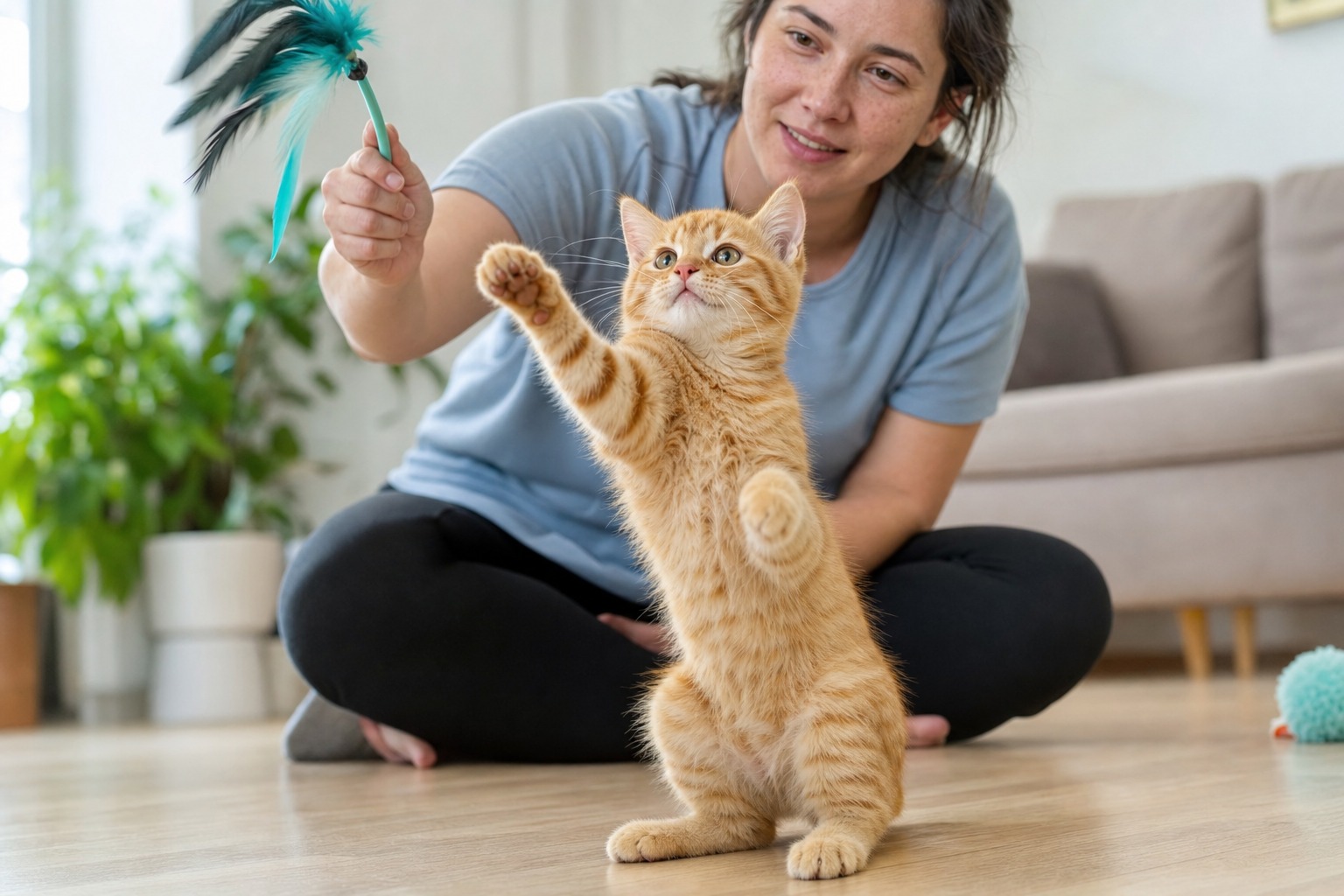
Cats are wired to chase things that move, so if the only reliably moving thing in the house is you, that is what they will chase. Beat yourself to it. Use wand toys, fishing-pole style teasers, crinkly toys, and small kickable stuffed toys, and make them come alive. Drag a toy along the floor, skitter it around a corner, sweep it just over your cat’s head like escaping prey.
And let your cat win. A hunt that never ends in a capture is pure frustration, and a frustrated cat goes looking for an easier target. Let them catch the toy, sink in the teeth and the bunny-kicks, and feel the payoff of a successful hunt. That success is the whole point, and it belongs to the toy, not your arm.
Play often, and treat every session as a lesson
A couple of real play sessions a day is not a luxury for a cat, it is a basic need, on par with food and a clean box. Even when you are not trying to train anything, your cat is learning, so use that. The lesson you want to reinforce, every single time, is which things count as toys and which are strictly off-limits.
If your cat drifts toward your hand mid-play, do not pull back and squeal, because a fleeing, squeaking hand is thrilling prey. Instead, substitute a toy and immediately make it more interesting than you are with a burst of movement. You are teaching “bite this, not that,” which is far easier than trying to teach a cat not to bite at all.
When teeth or claws hit skin, the fun ends
Cats are quick studies on cause and effect, so let the consequence do the teaching. If your cat gets rough and cannot be redirected to a toy, go still, go boring, and end the session. Stand up, walk away, and let the game be over.
Do not yell, swat, or use a spray bottle. Startling your cat teaches fear, not gentleness, and often makes the rough play worse because now there is anxiety mixed in. The clean version is simple: gentle play keeps going, rough play stops the fun cold. Do that consistently and your cat learns the rule on their own. They can play with the whole toy box. They just cannot play with you.
FAQs
Why does my cat only attack my hands and feet?
Because at some point those became targets, usually through finger-wiggling or foot-nudging games. Cats generalize, so hands that were once toys stay toys. Switch entirely to wand and thrown toys and stop the body-part games household-wide.
Is it too late to fix an adult cat?
No. Adult cats redirect just fine, it can simply take more consistency than with a kitten. The rules are identical: satisfy the hunt with toys, never with skin, and end play the instant it turns rough.
Dr. Nair is a veterinarian focused on diet and feeding. She covers everyday nutrition, treats, and the many "can they eat this?" questions owners ask, grounding each answer in what is actually safe and sensible for dogs and cats.
Meet our experts ↗Keep reading
 First DaysYour Older Cat Doesn't Hate the Kitten. It Hates the Energy.Dr. Priya Nair · 7 min
 TrainingYour Kitten Isn't Kissing You. It's Filing You Under 'Family.'Dr. Amara Solis · 7 min
 Training'My Cat Doesn't Like to Play' Is Almost Always a You ProblemDr. Lena Park · 8 min
 First DaysKittens Litter-Train Themselves. Here's How Not to Ruin It.Dr. Amara Solis · 5 min
 TrainingThe Cat Your Kitten Becomes Is Mostly Decided by Week SevenDr. Nina Kohl · 7 min
 TrainingLittermates Don't Replace a Mother Cat. The Study Is Blunt About It.Dr. Amara Solis · 6 min