


Your Cat Isn't Cuddling Your Laundry. Your House Is Freezing.
Cats are comfortable in a range most homes never reach. A warm pile of clothes that smells like you is not sentiment. It is climate control.

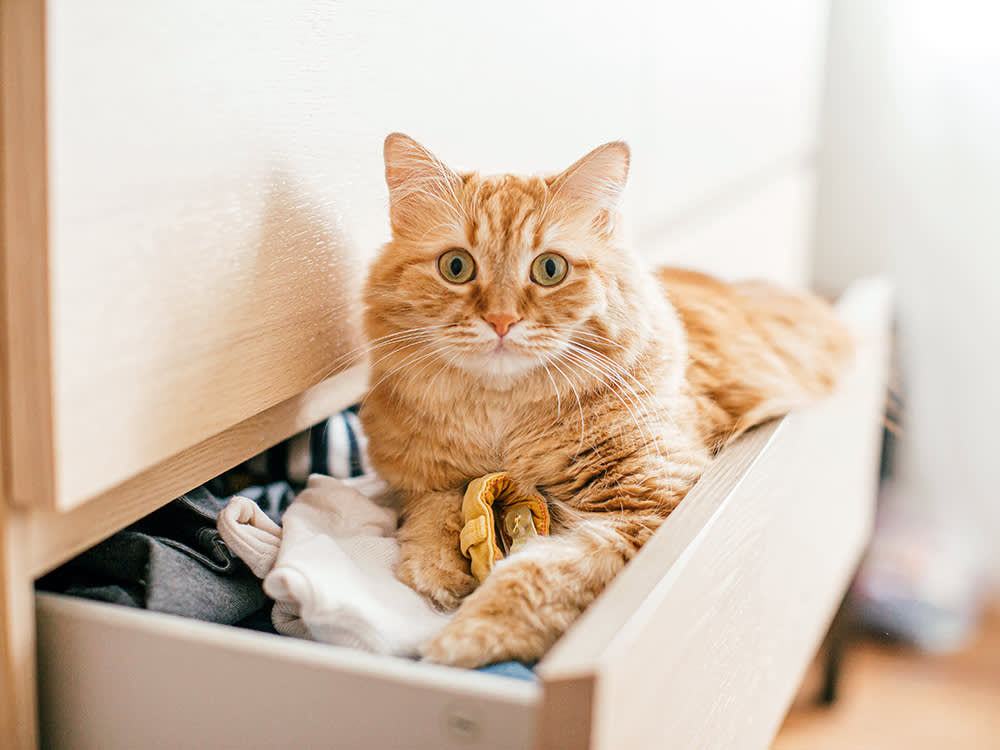
The romantic reading of a cat asleep on your sweater is that they miss you. There is truth in it. But the first and largest reason is far less flattering to us, and far more useful to know: your living room is cold.
A cat’s thermoneutral zone, the temperature band where they can hold their body temperature without spending extra energy on it, runs roughly 86 to 100°F (30 to 38°C). Humans are comfortable working and living somewhere around 64 to 77°F (18 to 25°C). We keep our homes at our number. Your cat lives in a building that is, by their standards, permanently a bit cold.
So when a cat finds a soft, insulating, body-shaped nest of fabric, they are making a thermal decision before they are making an emotional one. Then the scent makes it better.
The three things a laundry pile actually offers
Heat retention. Fabric traps warm air. A pile of clothes holds a cat’s own body heat around them, which is why a cat will pick the folded stack over the bare floor next to it every single time, and why they will pick the dryer-warm stack over the cold one.
Your scent, which is a safety signal. Cats are scent-driven animals to a degree we do not fully appreciate. Your clothes are saturated with you, clean or dirty. Lying on them is a scent exchange in both directions: your smell surrounds them, and their smell gets deposited onto your things, which is how cats mark what belongs to their group. It is not ownership in a possessive sense. It is a cat blending their smell with yours because that is what a family smells like.
Enclosure. Cats feel safest in defined, contained spaces, which is the whole explanation for boxes, tunnels, paper bags, and open drawers. A pile of clothes with sides to it, a laundry basket, an open dresser drawer, a heap on the end of the bed, is a container.
Stack those three, warmth, familiar scent, and containment, and a laundry pile is close to the best sleeping surface your cat has access to. They are not confused. You are.
When a cat picks the same soft, warm, human-smelling spot every day, they are usually telling you that spot beats everything else you have offered them. That is not really a laundry problem. It is a bedding problem.
The other reasons, in order of how much they matter
Texture. Cats have exceptionally sensitive paws, and they have opinions. Loose weaves, velvet, chenille, anything with a little grab to it, get chosen more often than smooth, slippery fabric. If your cat consistently picks one specific garment, look at what it is made of.
Curiosity and novelty. A new pile appearing in a familiar room is an event. Cats investigate change.
Attention. If every time your cat lies on your clothes you cross the room to speak to them, lift them, or fuss over them, you have taught them that clothes summon you. Cats learn this quickly and without shame.
Stress relief. This one is worth taking seriously. Cats under stress seek out secure, enclosed, scent-rich spaces to settle their nervous system. If a cat suddenly starts burrowing into your clothes when they never used to, look for what changed: a new pet, a new person, building work, a move, a cat outside the window. Do not evict them from the pile. Find the stressor.
That principle has a practical use. If you are leaving for a few days, or taking your cat to the vet, put a worn T-shirt in their space or in the carrier. A familiar-smelling piece of you is a genuine calming tool, and it is free.
The senior cat exception, which is the one to watch
Here is the turn most articles on this subject miss.
A cat’s need for warmth is not fixed. Older cats, and especially arthritic cats, feel the cold more and hurt more in it. A senior cat living in a home well below their comfort zone is not just chilly, they may be carrying a higher pain load because of it. Arthritis is extremely common in older cats and dramatically under-diagnosed, largely because cats hide it so well.
So a cat who has always liked the laundry is a cat being a cat. A cat who is suddenly, urgently seeking heat, who wants the radiator, the sunbeam, and the sweater in a way they never did before, who is stiffer getting up, who has stopped jumping to a favorite perch, deserves a vet visit. The behavior is a clue, not a quirk.
Should you actually stop it?
Mostly, the honest answer is: you will lose.
As long as clothes are left out, they are a temptation, and no amount of correction competes with a warm, safe, good-smelling bed. Which leaves three real options.
Put the clothes away. Unromantic, effective, and the only true fix. Your mother was right.
Give them a better pile. This is the version that works. Put a soft, high-sided bed with a blanket, ideally a garment of yours that you have stopped caring about, in a warm spot the cat already likes: near a heat source, in a sunbeam, up high, somewhere they feel unexposed. Cats are pragmatists. Offer a better bed and most of them take it.
Sacrifice the bottom layer. Keep your good sweaters in a drawer, put the shirt you never wear on top of the folded stack, and call it a truce.
Two cautions worth keeping. Some cats chew fabric rather than just sleeping on it, which is a form of pica, and swallowed cloth can cause a genuine intestinal blockage. If your cat is eating your clothes rather than napping on them, that is a vet conversation, not a laundry one. And the pile you leave out will accumulate everything the cat brings to it, hair certainly, and occasionally worse.
What newer research adds
The temperature point is the piece of this that has changed most, and it is the one to hold onto. Veterinary work on the feline thermoneutral zone puts the comfortable range at about 30 to 38°C, far above the 18 to 25°C most of us set our homes to. One way to feel the size of that gap: for a temperature-sensitive cat, a normal indoor temperature has been compared to how a person would feel sitting around all day at 8°C.
That is a low-cost thing to fix. Warm, enclosed, elevated resting places in more than one room, a bed near a heat source, a covered nest for a cat who likes to burrow. Cats who are given genuinely good options tend to take them, and your sweaters get a reprieve.
Which leaves the affectionate reading intact, just downgraded from first place to second. Yes, they lie on your clothes because the clothes smell like you, and yes, that is a real bond. They also lie on them because your house is cold and the clothes are not.
References
- “The Heat Is On: The Feline TNZ.” Veterinary Ireland Journal. https://www.veterinaryirelandjournal.com/small-animal/333-the-heat-is-on-the-feline-tnz
- Ellis, S. L. H., et al. “AAFP and ISFM Feline Environmental Needs Guidelines.” Journal of Feline Medicine and Surgery, vol. 15, no. 3, 2013, pp. 219–230. https://doi.org/10.1177/1098612X13477537
- Lascelles, B. D. X., et al. “Degenerative Joint Disease in Cats: Prevalence and Clinical Signs.” Journal of Veterinary Internal Medicine. https://doi.org/10.1111/j.1939-1676.2010.0495.x
- Merck Veterinary Manual. “Behavioral Problems of Cats.” https://www.merckvetmanual.com/behavior/normal-social-behavior-and-behavioral-problems-of-domestic-animals/behavioral-problems-of-cats
Dr. Chen is a small-animal veterinarian who leads health and safety coverage at The Pet Times. She writes and reviews the bulk of our illness, condition, and safety content, translating clinical guidance into clear, practical advice owners can act on at home.
Meet our experts ↗Keep reading
 TrainingYour Cat Doesn't Care About the Bathroom. They Care That You Finally Sat Down.Dr. Priya Nair · 8 min
 TrainingYour Cat Isn't Seeing Ghosts. They're Finishing a Hunt That Never Started.Dr. Lena Park · 6 min
 LivingYour Cat Isn't Trying to Cuddle. They're Doing Math.Dr. Nina Kohl · 6 min
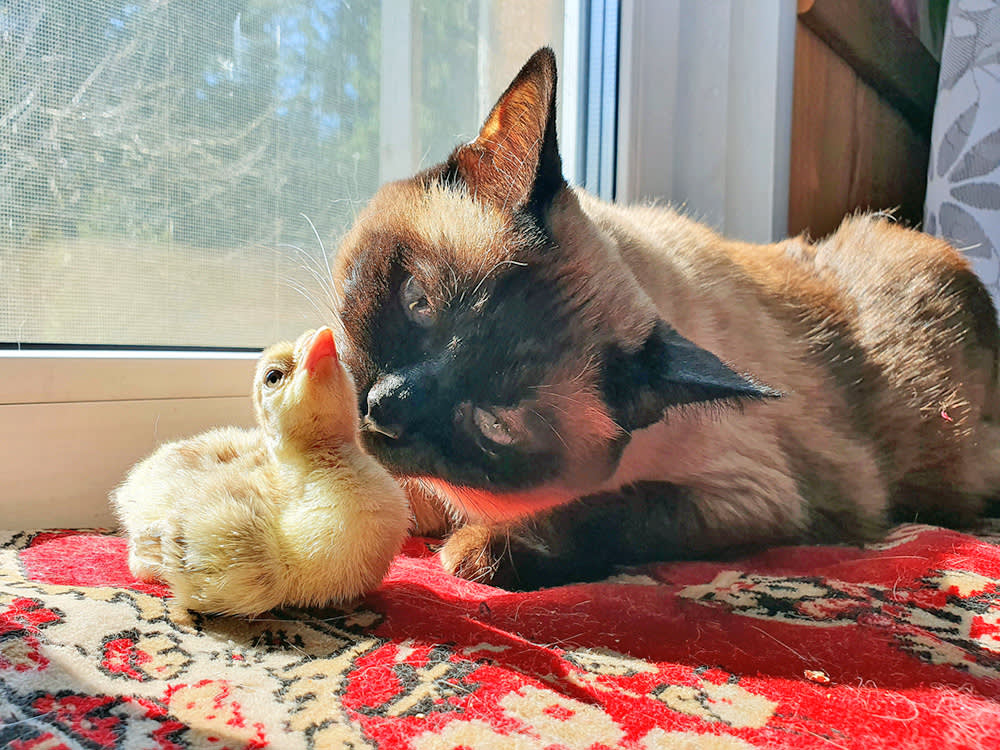 TrainingWhy a Cat Will Nurse a Duckling, and Why You Should Still Watch CloselyDr. Amara Solis · 6 min
 LivingYour Cat Has Been Asking for the Same 7 Things. You Keep Hearing 'More Cuddles.'Dr. Priya Nair · 8 min
 TrainingScience Gave Your 'Unknowable' Cat Five Personality Traits. Here's How to Read Yours.Dr. Mara Chen · 6 min