


Cat Peeing in the Bathtub? Reach for the Vet, Not the Bleach.
A cat that pees in the tub is picking that spot for a reason. Read the clues in the porcelain before you try to scrub the problem away.

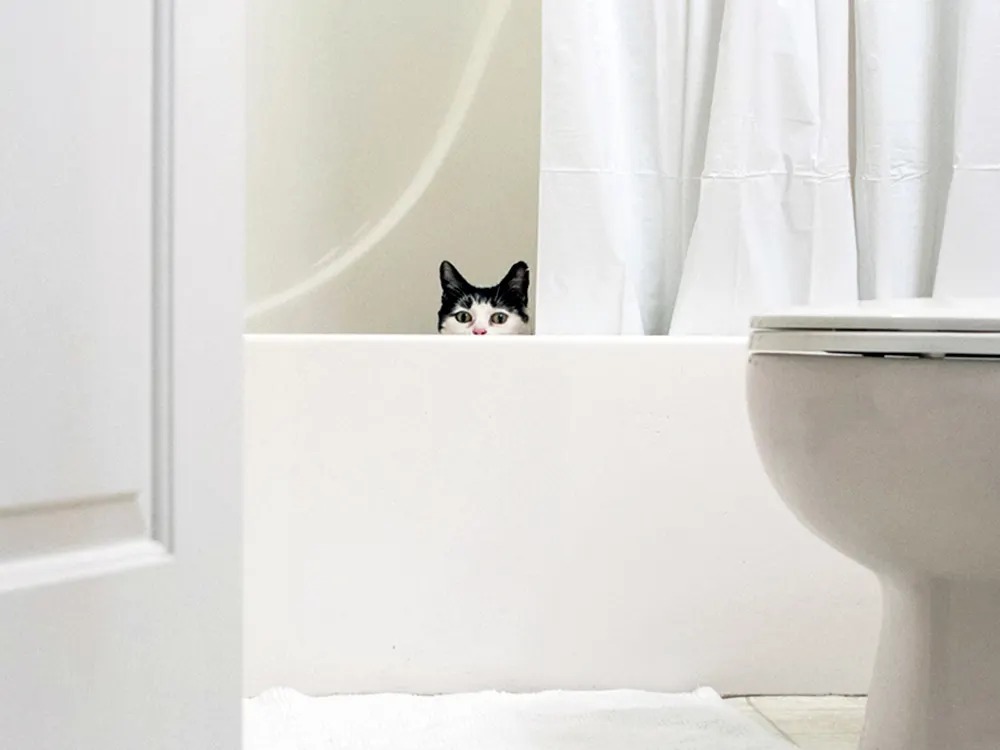
Finding cat pee in the bathtub is a genuinely strange discovery, and your first instinct is usually to clean it and hope it was a one-off. Resist that instinct for a moment. Before you scrub, it helps to understand that your cat did not choose the tub at random. Of all the surfaces in your home, they picked the one that is cool, smooth, private, and free of litter. That is not spite and it is not a bathroom preference. It is a message, and the porcelain is telling you what kind of message it is.
The single most important thing to know is this: a cat urinating anywhere other than the litter box should be treated as a health question first and a behavior question second. Get that order right and you will solve the problem far faster.
Start with the vet, every time
It is tempting to assume a cat peeing in the tub is being difficult. In reality, medical issues are the first and most important thing to rule out, because several of them are common, painful, and invisible until you look. A vet will check for problems in the urinary tract, including:
- Urinary tract infection (UTI)
- Urinary crystals or stones
- Kidney disease
- Incontinence, often related to age or a neurological issue
There is a second, easy-to-miss category: pain from anywhere. A cat does not have to have a bladder problem to abandon the box. Paw pain from cracked pads, a claw infection, or a history of declawing, joint pain from arthritis, an ear infection, dental pain, even a healing fracture, can all make the act of stepping into a box and balancing on litter genuinely unpleasant. Cats hide pain expertly, so a thorough exam is worth far more than any guess you can make at home.
When a cat picks the bathtub, the first question I ask isn’t ‘what’s stressing them out,’ it’s ‘what hurts.’ Peeing outside the box is one of the earliest, loudest ways a cat tells us their body isn’t right. Skipping the vet and going straight to behavior fixes is how a treatable infection turns into weeks of frustration for everyone.
Read the tub as a clue
Once medical causes are on the table with your vet, the specific choice of the tub starts to make sense. Each of these reasons points to something you can actually change.
The cool surface itself
Cats will sometimes seek out cold, smooth surfaces like tubs, sinks, and counters to urinate on. One explanation is that a cool surface feels better to squat on when urinating hurts, such as during a UTI. If your cat has newly discovered the tub, take that as one more reason to have the urinary system checked.
No litter to stand on
Some medical issues make standing or digging in litter uncomfortable. A cat with paw pain or mobility trouble may struggle to balance on litter, especially coarse pellet or grain litters with sharp edges. The tub offers the same enclosed, “inside” feeling as a box but without any of the litter that hurts to stand on. If your cat is choosing the tub over a full box a few feet away, the litter may be the problem, not the box.
The box does not feel right
A tub can simply be more appealing than a litter box that is not meeting your cat’s instincts. Ask yourself honestly: Is the box big enough? Has the location or the litter type changed recently? Are you scooping every single day? Does your cat have physical discomfort that makes the current box hard to use? Small mismatches your cat tolerated for months can suddenly tip over into avoidance.
Not enough privacy or quiet
You do not want the box tucked in a far corner your cat never visits, but you also do not want it in the busiest hallway of the house. If the box sits by a loud speaker, a kid’s play area, or the dog’s crate, your cat may feel too exposed to use it and go looking for somewhere calmer, like the tub. Make sure other pets are not stalking or ambushing your cat at the box either. If one spot does not feel safe, a cat will find one that does.
Stress and anxiety
Stress is one of the biggest drivers of house soiling, whether it shows up as urinating or pooping in the tub, the sink, or on the bed. Triggers include a new pet, a new baby or roommate, tension with another animal in the home, underlying pain, or fear of a specific thing. Cats do not always show stress the way we expect, and the litter box is one of the first places it surfaces.
Territorial marking
Some cats pee or spray to lay down their scent. It can be communication, territory-marking, or self-soothing. A cat may feel the need to put their scent in the bathroom if they scuffled with another pet there, spotted a strange cat through the window, or met some other stressor in that room.
A bad memory of the box
If something frightening or painful happened while your cat was in the litter box, a loud noise, an ambush by another pet, or pain during urination, they may decide the box is a bad place and switch to the tub. The association can form fast and stick.
How to stop it, step by step
Once your vet has ruled out or treated the medical side, work through these. Many are simply good cat care regardless.
Clean the tub thoroughly, without scent. Use a pet-safe, unscented disinfectant. Strongly scented cleaners can backfire, because some cats will pee over an unpleasant chemical smell to cover it.
Give other ways to leave scent. If your cat is marking that room, cleaning the tub erases their scent and their instinct is to replace it. Offer alternatives: add a scratcher or a litter box in the bathroom, or rub a soft cloth on your cat’s cheeks and then wipe it around the tub and bathroom daily for a couple of weeks to see if the marking eases.
Fix the litter box setup. Just because a box worked for years does not mean it still fits your cat’s needs. Cats can turn on a less-than-ideal box suddenly. Adjust size, litter type, depth, and cleanliness even if things seemed fine last week.
Add a box, possibly in the tub. If your cat has decided the tub is the spot, meet them there. Put a box right in the tub as a temporary bridge (tape over the faucet handle so no one accidentally fills your new “litter boat”). If they use it reliably, gradually move it toward a better location. If they bolt back to the bare tub, you have learned that something about that spot matters and is worth digging into.
Lower the stress. Every house-soiling plan includes reducing stress. Remove or minimize known triggers where you can. For triggers you cannot remove, build positive associations by pairing them with treats and things your cat loves. A certified feline training and behavior consultant is genuinely useful when the trigger is hard to pin down.
How to prevent it from coming back
Stopping the behavior and preventing it are the same project. Beyond everything above, two litter box habits do the heavy lifting.
Keep boxes clean. Nobody wants to use an overflowing port-a-potty, and your cat feels exactly that way about a dirty box. Scoop every day. Dump and wash the whole box about once a month, more often depending on your litter, and replace old plastic boxes whose claw-scratched surfaces trap odor and bacteria.
Give more and better-placed options. Aim for one more box than the number of cats, so a dirty or occupied box never leaves your cat stranded. And spread the boxes around the home. Four boxes lined up side by side in the basement read as one location to a cat, not four. Distance between them is what makes them feel like real alternatives.
What newer research adds
If your vet lands on a diagnosis of feline idiopathic cystitis (FIC), which is bladder inflammation with no infection or stones behind it, the science of the last few years is genuinely encouraging and worth understanding. Researchers now describe many of these cats as having what is sometimes called Pandora syndrome: the bladder signs are one visible piece of a whole-body stress response, they tend to flare with stressful events, and, crucially, they tend to settle when the cat’s environment improves.
That last point has become the centerpiece of treatment. The current first-line approach for recurrent FIC is not a lifelong prescription but long-term “multimodal environmental modification,” sometimes shortened to MEMO. In plain terms, that means enriching your cat’s daily life: more and better litter boxes, reliable routines, safe hiding and climbing spots, play, and control over their own space. In studies, this kind of enrichment reduced urinary flare-ups and also normalized stress-related measures in the body, not just the bladder. A 2022 review update and a 2025 systematic review both continue to point to environmental management as the backbone of care, with anti-anxiety medication and supplements reserved for chronic, stubborn cases. The takeaway for you: fixing the litter box and lowering stress is not just damage control, it is treatment.
This is a good moment for a gentle note. A cat repeatedly urinating outside the box, straining, or producing bloody urine can be a medical emergency, especially in male cats who can become dangerously blocked. When in doubt, call your vet the same day rather than waiting it out.
References
- Buffington, C. A. Tony. “Idiopathic Cystitis in Domestic Cats—Beyond the Lower Urinary Tract.” Journal of Veterinary Internal Medicine, 2011. pmc.ncbi.nlm.nih.gov/articles/PMC3760680
- Kim, Yeon, et al. “Prevalence, Risk Factors, Pathophysiology, Potential Biomarkers and Management of Feline Idiopathic Cystitis: An Update Review.” Frontiers in Veterinary Science, 2022. pmc.ncbi.nlm.nih.gov/articles/PMC9257190
- Ramos, Daniela, et al. “Understanding the Current Evidence Base for the Commonly Recommended Management Strategies for Recurrent Feline Idiopathic Cystitis: A Systematic Review.” 2025. pubmed.ncbi.nlm.nih.gov/40147044
- Guy, Norma C., et al. “Litterbox Size Preference in Domestic Cats (Felis Catus).” Journal of Veterinary Behavior, vol. 9, no. 2, 2014, pp. 78–82. doi.org/10.1016/j.jveb.2013.11.001
- Carney, Hazel C., et al. “AAFP and ISFM Guidelines for Diagnosing and Solving House-Soiling Behavior in Cats.” Journal of Feline Medicine and Surgery, vol. 16, 2014, pp. 579–598. journals.sagepub.com/doi/10.1177/1098612X14539092
Common questions
Should I see a vet or fix the litter box first?
See the vet first. Urinating outside the box is one of the most common early signs of a urinary or pain problem, and no amount of box tweaking will fix a medical cause. Once your vet has ruled out disease and pain, then work on the litter box setup and stress.
How do I get my cat to stop peeing in the tub?
After a vet visit, clean the tub with a pet-safe unscented cleaner, give your cat other ways to mark that room, improve and add litter boxes, spread boxes around the home, and lower stress. If there is no obvious trigger, a certified feline behavior consultant can help you find one.
Is peeing on a cool surface a sign of pain?
It can be. Some cats seek out cool, smooth surfaces like tubs and sinks when urinating is painful, for example with a urinary tract infection or crystals. Pain anywhere in the body, including the paws and joints, can also drive a cat out of the litter box, so a thorough exam matters.
Not a substitute for your vet. Our guidance is educational. For urgent symptoms, contact a vet or emergency clinic right away. Editorial standards
Dr. Park is a board-certified emergency and critical care specialist. She reviews our health and safety content for clinical accuracy and contributes guides on recognising urgent conditions. Her focus is helping owners act quickly and correctly when it matters most.
Meet our experts ↗Keep reading
 TrainingYour Cat Isn't Attacking You. You Live on a Hunting Route.Dr. Amara Solis · 9 min
 TrainingThe N+1 Litter Box Rule Isn't About Sharing. It's About ChoiceDr. Mara Chen · 7 min
 TrainingThe Paw on Your Mouth at 4 A.M.? You Trained That.Dr. Amara Solis · 6 min
 Health & WellnessYour Cat vs. the Christmas Tree: The Climbing Isn't the Real DangerDr. Ravi Mehta · 6 min
 TrainingToilet-Training Your Cat Means Throwing Away Their Health ChartDr. Ravi Mehta · 8 min
 Health & WellnessYour Cat Peed on Your Clothes. The Fabric Is the Clue.Dr. Lena Park · 8 min