
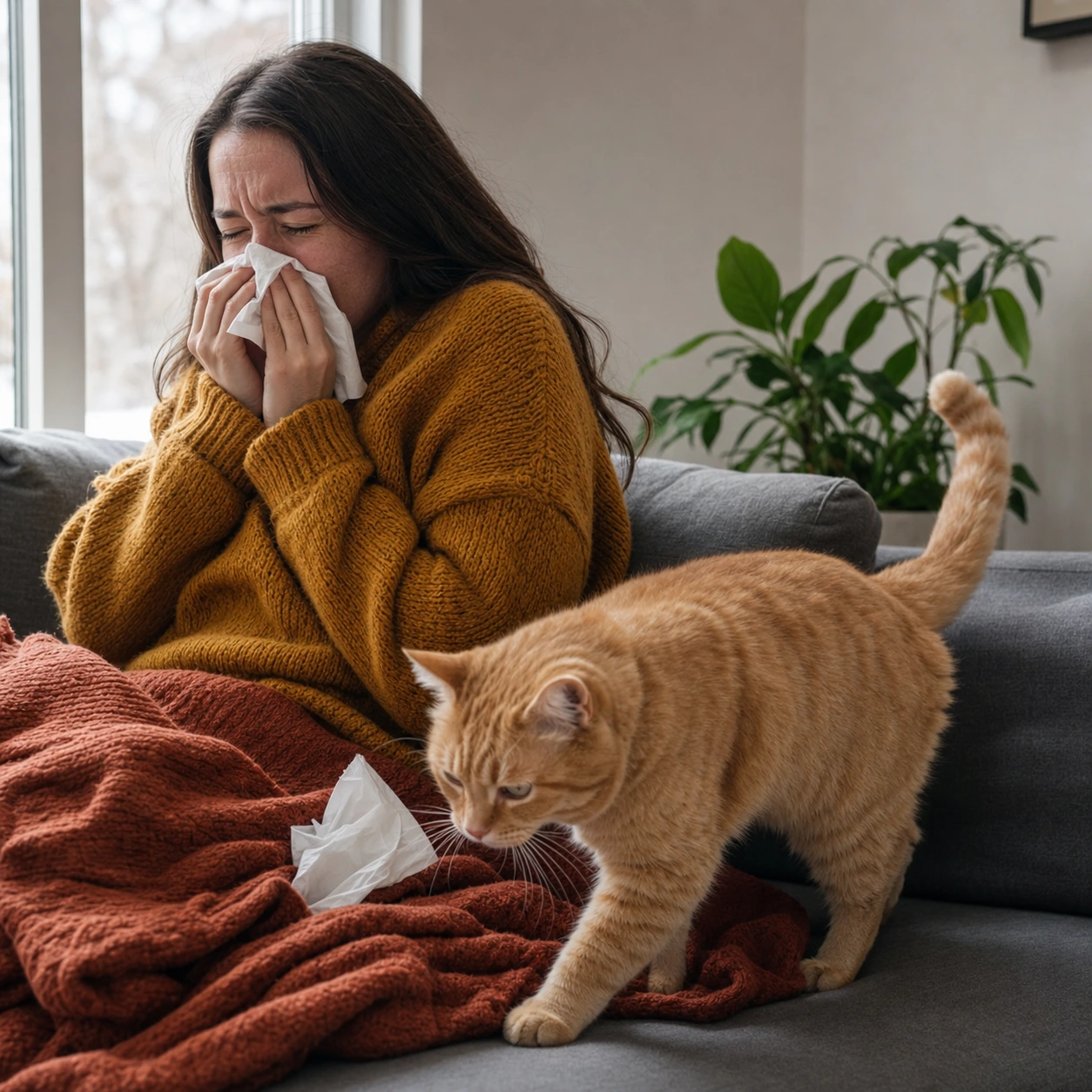
Ask most people whether they can make their cat sick and you’ll get a shrug. The honest answer used to be a comfortable “almost never.” A handful of human bugs can technically reach a cat, but they rarely take hold, and when they do the cat usually shrugs it off. That reassurance is still mostly true. But there’s now a glaring exception that has changed how veterinarians talk about this entirely, and it isn’t a cough you’d pass across the couch. It’s what’s in your cat’s bowl.
This piece is a two-way map: what you can pass to your cat, what your cat can pass to you, and where the genuinely serious risks sit today. The short version is that the everyday stuff is low-stakes and the one thing worth taking seriously has nothing to do with your last cold.
Why your germs mostly bounce off your cat
Start with the reassuring biology. Germs that spread easily among humans are, by and large, adapted to human bodies. Drop one into a cat and it often can’t gain a foothold, or it does so weakly, producing no symptoms or only mild ones. Sometimes a cat becomes an asymptomatic carrier: test them and they’re positive, but they aren’t actually sick.
That’s also why the “did my cat catch this from me?” question is so slippery. In a shared household it’s frequently impossible to tell whether the cat picked up a germ from you, from the environment, or was the original source. For most everyday illnesses, none of it spreads between you and your cat at all. The practical takeaway hasn’t changed: keep everyone healthy with good basic hygiene and get your cat seen by a vet whenever something seems off.
What you can actually pass to your cat
The list is short, and for most of it the cat stays fine.
Influenza. Human flu is usually driven by influenza A strains like H1N1 and H3N2. Cats have tested positive for these, but they rarely get seriously ill. This is the ordinary flu, and it’s a minor player here. The dangerous influenza is a different animal, and it gets its own section below.
MRSA. Methicillin-resistant Staphylococcus aureus is a bacterium resistant to many common antibiotics. Some healthcare workers carry it from workplace exposure, and there are documented households where both people and their cats tested positive. Carrying the bacteria isn’t the same as being sick from it. The concern is that a cat carrying MRSA who later has a wound, needs surgery, or is immunocompromised could develop a resistant infection. Many healthy pets clear it on their own over time.
Ringworm. Despite the name, ringworm is a fungal infection of the skin, not a worm. The spores are highly contagious and move in every direction, person to cat, cat to person, animal to animal, through direct contact. In people it makes the classic ring-shaped rash; in cats it tends to cause scaly, scabbed, hairless patches.
COVID-19. Cats can catch SARS-CoV-2 from infected people. Some show signs, fever, breathing trouble, vomiting, diarrhea, low appetite, lethargy, while others carry it with no symptoms at all.
Notice the pattern: technically possible, usually mild, rarely a crisis. Now the exception.
What newer research adds: bird flu changed the calculus
For years, the sentence “you probably can’t make your cat sick” was safe to say without an asterisk. H5N1 avian influenza put an asterisk on it in the most sobering way.
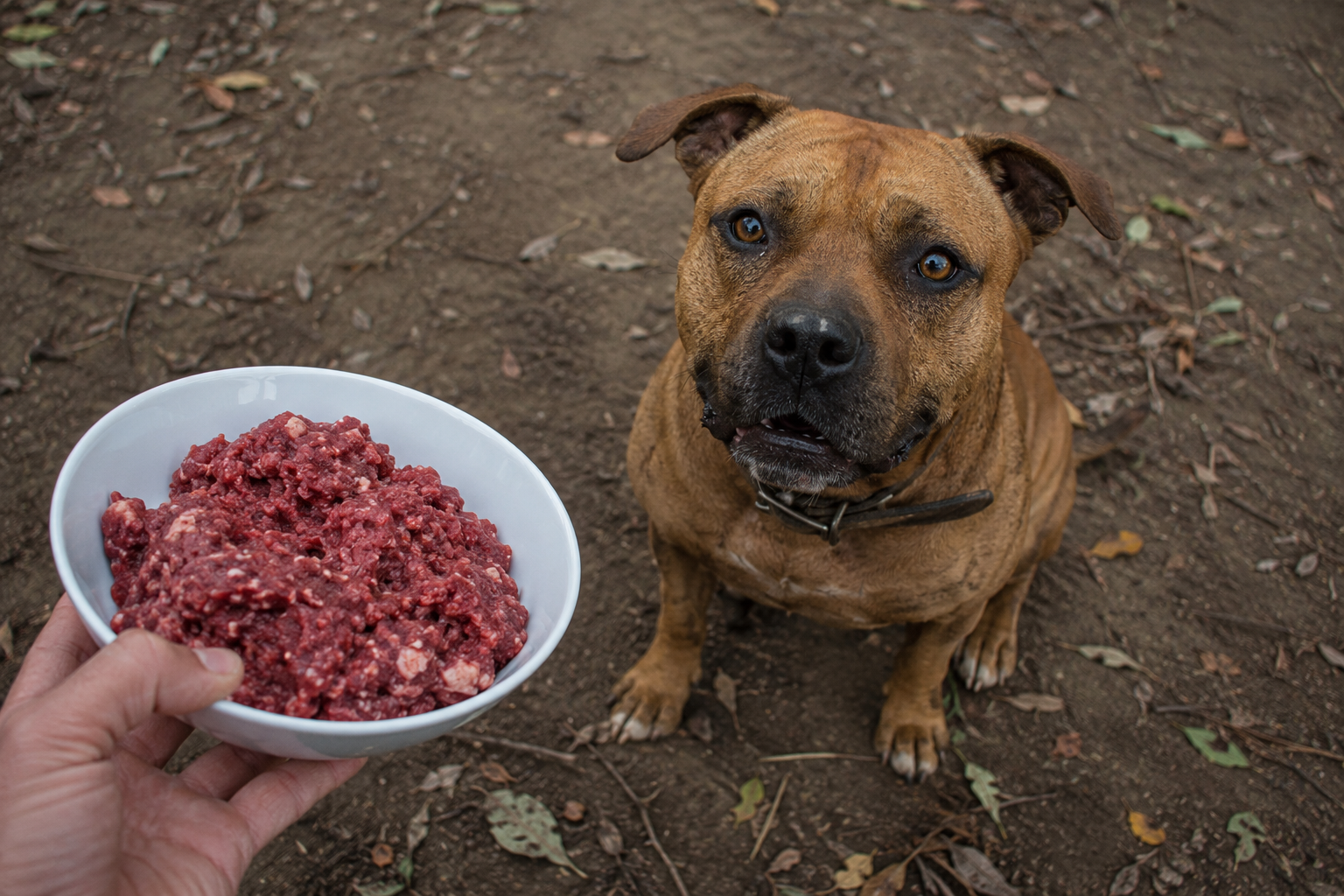
Since late 2024, the U.S. has seen a string of cases of domestic cats, including strictly indoor cats, becoming infected with H5N1 and dying. The common thread has been raw food. Contaminated raw or freeze-dried pet food and raw milk have repeatedly been the source, triggering voluntary recalls from brands including Northwest Naturals, Monarch Raw Pet Food, and RAWR, after cats fell ill or died. In infected cats the disease is severe and fast: high fever, heavy eye and nose discharge, breathing distress, and neurological signs, often progressing to death.
Then the risk closed the loop back to people. In May 2026, the CDC published the first documented case of cat-to-human H5N1 transmission. Investigators in Los Angeles County found that an asymptomatic veterinary professional had blood-test evidence of H5N1 infection after being exposed to sick pet cats, and had not been wearing eye or mouth protection at the time. The cats had gotten sick after eating raw milk, raw meat, or raw pet food, and testing confirmed the same H5N1 strain, clade 2.3.4.4b, that has driven most human cases.
“For years I told clients they basically couldn’t make their cat sick, and I meant it,” says Dr. Lena Park. “Bird flu forced me to add a sentence. The danger now isn’t your cold, it’s the bowl. Raw meat, raw milk, raw pet food, that’s the pipeline putting a lethal virus in front of cats, and now we’ve seen it move from a cat to a person. Cooking the food closes that door.”
The everyday reassurance holds for colds and ordinary flu. But the single most important thing you can do to keep this specific, deadly virus away from your cat, and away from yourself, is to skip raw meat, raw milk, and raw pet food, and feed cooked or commercially heat-treated food instead.
Now the other direction: what your cat can pass to you
Cats can transmit a number of diseases to humans, though most are uncommon and low-risk for the average owner. Many of them trace back to a cat eating live prey or raw meat, or to infections that routine veterinary care would have prevented, which is why outdoor and stray cats carry more of this risk than a well-cared-for indoor cat. Handle strays carefully and practice good hygiene, but don’t let this list scare you off nursing a sneezing kitten back to health. Just take precautions and get them checked by a vet first.
Rabies. A viral infection spread through the bite of an infected animal, fatal once symptoms appear. In the U.S. it’s mostly a wildlife disease, raccoons, foxes, bats, skunks, but cats can catch it in rare cases. The rabies vaccine is extremely effective, and a routinely vaccinated cat is protected and can’t pass it to you.
Toxoplasmosis. Toxoplasma is a parasite cats can acquire from prey or raw meat. Most infected cats show no signs but can shed the parasite’s eggs in their stool. Crucially, those eggs take up to five days to become infectious, so daily litter-box scooping with good hygiene makes human infection unlikely. The real concern is for pregnant women, since it can seriously harm a fetus, and for immunocompromised people.
Salmonella. Cats can pick up Salmonella from live prey or undercooked meat, often without symptoms, and pass it to people through saliva or stool.
Ringworm. The same fungus from earlier, moving the other way. In practice it’s far more common for cats to give people ringworm than the reverse, and stray kittens with weak immune systems are frequent sources. The upside: it’s usually mild and easily treated in both species.
Intestinal parasites. Outdoor and hunting cats often carry roundworms and hookworms. Some of these can infect people who come into contact with an infected cat’s feces, which is one more argument for prompt litter cleaning and hand-washing.
Plague. Not a relic of history. Yersinia pestis still exists, mostly spread by fleas that bite rodents, and a cat who eats an infected rodent can get sick and pass it to people.
Tularemia. A highly infectious bacterial disease carried by ticks and deer flies. Infected animals, cats among them, have been documented causing human infections.
Cat-scratch fever. Caused by Bartonella henselae, found in the saliva of some cats and in fleas. Many carrier cats seem perfectly healthy, but a bite or scratch can leave a person with a swollen, painful wound plus fever, joint pain, and fatigue.
The playbook that covers almost all of it
Whether your goal is protecting your cat from you, protecting yourself from your cat, or just keeping your cat healthy, the same habits do most of the work.
Wash your hands, and be especially diligent when you’re sick or after handling litter, prey, or a stray.
Keep your germs away from your cat’s mucous membranes. The mouth, nose, and eyes are the main entry points. If you’re ill, avoid touching your cat there and discourage face-licking.
Consider a mask if you’re worried about an airborne illness you could pass to your cat. It feels silly, but it cuts transmission.
Give sick-day space. With a clingy cat this is a negotiation, but during the most contagious stretch of an illness, skipping the face-to-face snuggles, and maybe the shared bed, lowers the odds. Weigh the real (usually small) risk against the very real struggle of convincing a cat to keep their distance.
Stay current on preventive care. Routine vaccinations, dewormings, and flea-and-tick prevention head off a long list of these diseases before they start. Every cat should have a vet checkup at least once a year.
Keep cats indoors where practical. Indoor cats avoid the wildlife encounters, fights, and prey that transmit most of the cat-to-human diseases above, and they’re safer from cars and injuries too.
Skip raw meat and raw diets. This is the one that has moved from “generally wise” to “genuinely urgent.” Raw feeding exposes cats to salmonella, toxoplasma, and, most alarmingly now, H5N1, and each of those can then reach the humans in the home.
When to call the vet
Cats hide illness well, but the tells include reduced appetite, lethargy, hiding, vomiting, diarrhea, sneezing, coughing, or labored breathing. Any serious sign, or a cat who is simply “off,” warrants a call. It’s always better to play it safe, and the cats who need help most are the ones who make the least fuss about it.
References
- Centers for Disease Control and Prevention. “Healthy Pets, Healthy People.” cdc.gov
- Cornell Feline Health Center. “Zoonotic Disease: What Can I Catch from My Cat?” vet.cornell.edu
- U.S. Food and Drug Administration. “FDA Notifies Pet Owners That Tests Show H5N1 Contamination in Certain Lots of RAWR Raw Cat Food.” fda.gov
- Centers for Disease Control and Prevention. “Serologic Evidence of Highly Pathogenic Avian Influenza A(H5N1) Virus Infection in a Veterinary Professional Exposed to an Infected Domestic Cat — Los Angeles County, California, December 2024–January 2025.” MMWR, May 7, 2026.
- American Veterinary Medical Association. “Cat deaths linked to bird flu-contaminated raw pet food, sparking voluntary recall.” avma.org
- Ramsay, S., et al. “Characterisation and prevalence of community-associated MRSA among horses, dogs, cats and their human handlers.” Transactions of the Royal Society of Tropical Medicine and Hygiene, 2023.
- Journal of Feline Medicine and Surgery. “Leptospirosis in Cats: Current Literature Review to Guide Diagnosis and Management.”