


Pecans and Dogs: The Real Risk Isn't the One You've Read About
Most warnings blame juglone, but that's not why pecans belong off your dog's plate. The genuine dangers are mold toxins, fat, and choking, and knowing the difference tells you when to relax and when to call the vet.

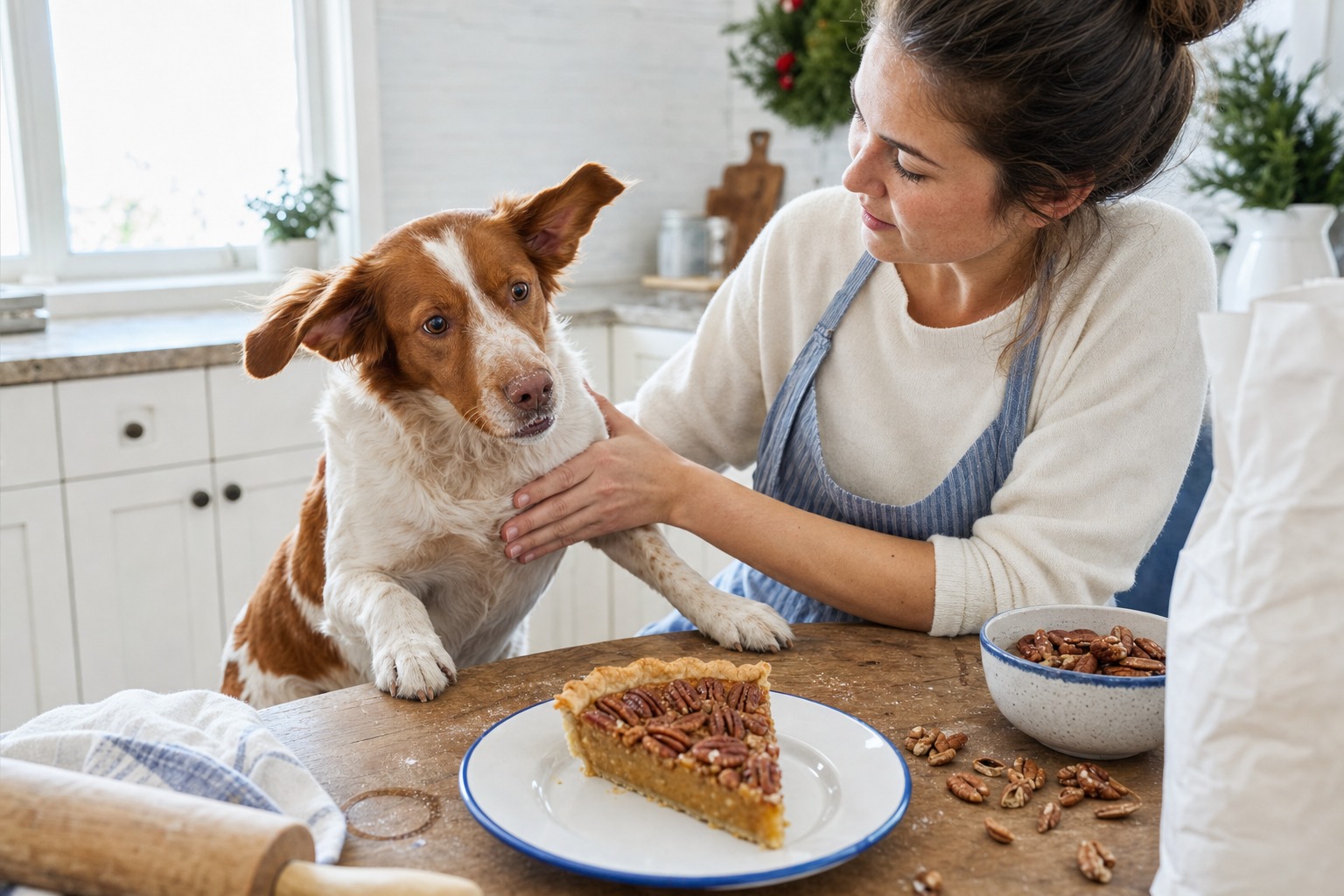
Search “can dogs eat pecans” and you will get a wall of the same sentence: pecans are toxic to dogs because of a compound called juglone. It is repeated so often it sounds settled. It mostly is not, and getting the reason right actually matters, because it tells you when to shrug off a stolen nut and when to reach for the phone.
Here is the honest version. Pecans should stay off your dog’s menu, but not because they are a classic poison. The ASPCA does not even list pecan kernels as toxic. The trouble is more mundane and, in some ways, more useful to understand: mold, fat, and size. Let’s take the myth apart and put the real risks in its place.
The juglone myth, and what’s actually going on
Juglone is a genuine plant compound, and it is genuinely troublesome, for horses and for some garden plants. But it lives in the green and growing parts of walnut and pecan trees, the leaves, bark, roots, and the unripe hulls around the nut. In the kernel you actually eat, the part that ends up in a pie, juglone is very low or absent. The claim that the nut poisons dogs with juglone has been copied from site to site without evidence behind it.
So why keep pecans away? Three real reasons, in order of how much they should worry you:
Mold toxins. This is the one that deserves respect. Pecans, like other tree nuts, are prone to molds that produce aflatoxins and tremorgenic mycotoxins. Aflatoxin can damage the liver; tremorgenic mycotoxins are what cause the seizures and full-body tremors that get mentioned in toxicity warnings. The risk climbs sharply with old, damp, or fallen-from-the-tree nuts, which is exactly where mold takes hold.
Fat. Pecans are among the fattiest nuts. A dog that eats a handful is getting a rich fat load that can cause vomiting and diarrhea, and in susceptible dogs can tip into pancreatitis, a painful and sometimes serious inflammation of the pancreas.
Choking and blockage. A whole pecan is the wrong size and shape for many dogs, a choking hazard going down and a potential obstruction if a small dog swallows several.
The takeaway isn’t ‘this nut is poison,’ it’s ‘this nut is a bad idea for boring, real reasons.’ That distinction changes how you react. One fresh pecan off the kitchen floor is a shrug. A bowl of them, or anything with visible mold, is a phone call. Panic and complacency are both the wrong setting.
A dose-aware guide, not a blanket scare
Because the danger is about quantity and quality rather than a switch that flips at the first bite, it helps to think in thresholds instead of absolutes.
A practical monitor-at-home line is one pecan per 10 pounds of body weight. A 60-pound Labrador that snags one pecan is almost certainly fine; a five-pound Chihuahua that does the same is closer to the edge and worth watching. Above that rough line, or in these situations, treat it as a vet call:
- The pecans were moldy, old, or gathered off the ground under a tree.
- They came baked into pecan pie or any sweet, fatty dish.
- Your dog is very small, very young, or has a history of pancreatitis.
- You see symptoms: vomiting, diarrhea, lethargy, or, most urgently, tremors or muscle twitching, which point toward mycotoxins and need prompt care.
If you are ever unsure, your vet or the ASPCA Animal Poison Control Center (888-426-4435) can size up the risk in a few minutes.
Keeping pecans out of reach
Prevention is easy once you know where the real hazard sits. During baking season, keep bags of nuts and finished pies away from counter edges and off low tables, and shut a curious dog out of the kitchen while you work. If you have a pecan tree in the yard, the fallen nuts are the ones to clear, since those are the likeliest to have molded. And tell holiday guests, kindly but firmly, not to slip the dog anything from the dessert table.
What about other nuts?
The nut aisle is a mixed bag, so it is worth knowing the real standouts:
- Macadamia nuts are the genuine emergency. They are truly toxic to dogs and can cause weakness, tremors, and a fever-like reaction from even small amounts. This is the nut to fear, far more than pecans.
- Walnuts carry the same mold concerns as pecans, plus black walnuts specifically can cause problems, so keep them off the list too.
- Peanuts and cashews are not toxic and are the safer choice for a treat, but they are still fatty. Keep any of them small, plain, and unsalted.
Better things to hand your dog at the table
If you want to share a snack during a gathering, reach for these instead of the dessert:
- Plain carrots. Crunchy, low-calorie, and genuinely good for dogs. Set one aside before you salt the rest.
- Plain cooked sweet potato. Nutritious and easy on the stomach in modest amounts. Serve it unseasoned.
- Apple slices, with the core and seeds removed. Sweet and safe, though the pie is not, thanks to its sugar and fat.
And keep the usual holiday hazards well away: onions and garlic, grapes and raisins, and anything rich with butter, salt, or drippings.
The bottom line
Pecans are not the cartoon poison the internet makes them out to be, but they still do not belong in your dog’s bowl. The reasons that matter are mold, fat, and choking, not juglone. Keep them out of reach, judge a slip-up by how much and how moldy, and save the worry for the nut that truly earns it, the macadamia. For a real treat, a plain carrot or a slice of apple does the job with none of the risk.
References
Common questions
How many pecans are a problem?
A useful rule of thumb is one pecan per 10 pounds of body weight as the monitor-at-home line. Below that, watch and wait. Above it, or any moldy or fallen-tree pecans, or anything baked into pecan pie, warrants a call to your vet or animal poison control.
What about pecan pie?
Skip it. The pie is a bigger problem than the nuts, loaded with sugar and fat that can trigger real digestive upset and, in the wrong dog, pancreatitis.
What should I do if my dog eats pecans?
Estimate the amount against the one-per-10-pounds guideline, check whether they were fresh or moldy, and watch for vomiting, diarrhea, tremors, or lethargy. When in doubt, call your vet or the ASPCA Animal Poison Control Center at 888-426-4435.
Not a substitute for your vet. Our guidance is educational. For urgent symptoms, contact a vet or emergency clinic right away. Editorial standards
Dr. Chen is a small-animal veterinarian who leads health and safety coverage at The Pet Times. She writes and reviews the bulk of our illness, condition, and safety content, translating clinical guidance into clear, practical advice owners can act on at home.
Meet our experts ↗Keep reading
 Health & WellnessThe Carrot in Your Dog's Bowl Was on a Recall List. Here's the Real LessonDr. Ravi Mehta · 5 min
 Health & WellnessThe Onion Danger to Your Dog Is the Wait, Not the BiteDr. Mara Chen · 6 min
 FoodThe Danger Isn't Exotic. It's on Your Counter Right NowDr. Lena Park · 10 min
 FoodGingerbread's Real Danger to Dogs Isn't the SugarDr. Nina Kohl · 6 min
 Health & WellnessYour Dog Ate Chocolate. The Word 'Toxic' Won't Tell You What to Do. The Math Will.Dr. Ravi Mehta · 8 min
 Health & WellnessWhite Chocolate Skips the Poison. It Keeps the Trap.Dr. Mara Chen · 6 min