


Calico 'Cattitude' Is Half Myth. Science Found the Other Half.
The idea that calico and tortoiseshell cats are spicier than other cats sounds like pure internet folklore. Then a survey of more than a thousand owners found a small, real signal buried underneath it.

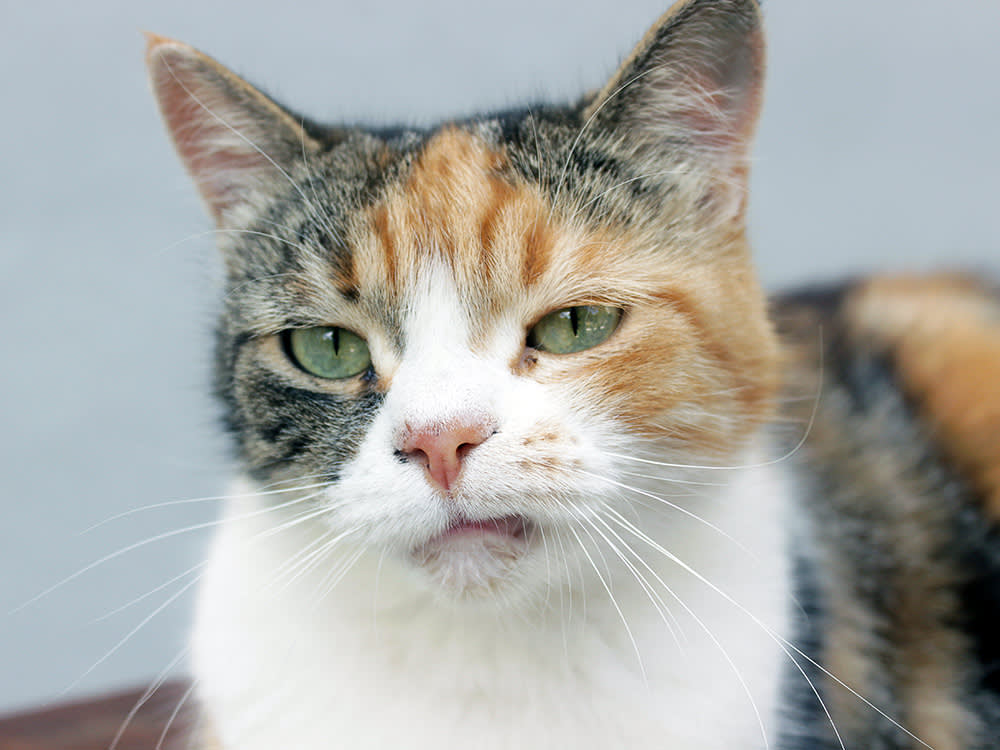
Here is the honest version of the calico question, the one that neither the “it’s all a myth” crowd nor the “torties are demons” crowd tells you straight: the stereotype is mostly wrong, and there is a small kernel inside it that actual research picked up. Both things are true at once, and the interesting part is figuring out which is which.
You have probably heard of “tortitude,” the belief that tortoiseshell cats run spicier than other cats, and its cousin, calico “cattitude.” The reflex among people who know cats is to wave this away as color-based nonsense, the same way we roll our eyes at “orange cats are dumb” or “tuxedos are geniuses.” Most of those color-personality claims are exactly that: cherry-picked anecdotes hardening into fake fact. But the calico case has one thing the others do not.
What “cattitude” even means
Before you can ask whether calicos have more of it, you have to define it, and that is slippery, because it is a new, casual term. Loosely, it means a cat who knows what she wants and pushes back to get it: quick to swat a hand when she is done being petted, quick to throw side-eye when dinner is late. Expressive, particular, and often very entertaining.
The word ‘cattitude’ isn’t a diagnosis, it’s a vibe, and that’s the first thing to hold onto. A cat who advocates loudly for herself isn’t broken or bad. She’s just a cat with strong opinions and a limited way to express them, and plenty of people specifically want that cat.
None of that is inherently good or bad. Some people adore a cat who talks back. Others want a lap noodle who tolerates nail trims without complaint. The label only becomes a problem when it starts steering how cats get adopted and treated.
The kernel of truth
For years the standard line was that no science backed any coat-color-to-temperament link, and that people simply noticed striking calicos more when they acted out. That is still largely correct. But there is a real study worth knowing about.
Researchers at UC Davis, led by veterinary behaviorist Dr. Elizabeth Stelow, surveyed more than 1,200 cat owners and found that cats with calico and tortoiseshell coats were rated modestly more likely to swat, chase, bite, hiss, or scratch during everyday handling and vet-style interactions than cats of some other colors, while solid black, gray, and white cats were rated a bit more mellow. So the stereotype was not conjured from nothing.
Two enormous caveats keep this honest. First, the effect was small. The researchers were clear that a cat’s individual personality did far more talking than its color, and Dr. Stelow, who owns a tortie herself, said the results should not discourage anyone from adopting one. Second, this was an owner survey, which measures how people perceive behavior as much as the behavior itself, and calicos are visually memorable, so their swats stick in the mind more than a tabby’s.
Why perception inflates the myth
Calicos are relatively rare and genetically almost always female, and their bold patchwork coats catch the eye. When a striking, unusual-looking cat scratches, it registers and gets retold. A gray tabby doing the exact same thing barely lands. Layer on the old, unfounded belief that female cats are less affectionate, and you have a stereotype that feeds itself: people expect spice, they notice spice, they remember spice.
The likely reality is a faint genuine signal, possibly tied to the same X-linked genetics that produce the coloring, wrapped in a thick layer of human bias that makes it look far bigger than it is.
What newer research adds
The takeaway from the last decade of feline behavior work is that color is close to the bottom of the list of things that shape a cat’s temperament. What actually predicts how a cat behaves is early socialization, how she is handled, whether she is in pain, how enriched her environment is, and her own individual wiring. A calico raised gently in a calm home and a calico raised in chaos will not act alike, and the difference will dwarf anything her coat could contribute.
So if you meet a calico with a firecracker streak, do not assume the coat caused it. Assume, first, that she might be overstimulated, understimulated, hungry, or sore, because those are the fixable, common explanations, and behavior almost always has a reason underneath it.
The bottom line: do not judge a cat by her coloring, spicy reputation or not. Look past the coat and let her show you who she is. She might turn out to be the affectionate lap cat the stereotype swore she couldn’t be.
Common questions
Are calico cats really more aggressive?
A large owner survey found calico and tortoiseshell cats were rated slightly more likely to swat, hiss, or scratch during handling than cats of some other colors. The effect was small, and individual personality and how a cat is treated matter far more than coat color.
Why are almost all calicos female?
The genes for the orange and black coloring both sit on the X chromosome. A cat needs two X chromosomes to show both colors, so nearly all calicos and torties are female. The rare male calico is usually born with an extra chromosome and is typically sterile.
Does coat color determine a cat's personality?
No. There is no proven biological link strong enough to predict a specific cat's temperament from its color. Socialization, early handling, health, and individual wiring shape personality far more than fur.
Dr. Kohl is a board-certified veterinary dentist with a particular interest in preventive oral care. She reviews all dental health content at The Pet Times and contributes practical guides on home dental routines, professional cleaning, and oral disease prevention.
Meet our experts ↗Keep reading
 TrainingYour Cat Isn't Getting 'Brain Rot' From That Video. It Thinks It's HuntingDr. Ravi Mehta · 5 min
 TrainingYour Cat Keeps a Separate Setting for Every Person. Men Get the Loud OneDr. Mara Chen · 4 min
 TrainingThe Cat on Your Lap Isn't the One Who Loves You MostDr. Amara Solis · 9 min
 TrainingYou Can Tell When Your Cat Is Happy. That's the Problem.Dr. Priya Nair · 7 min
 TrainingLittermates Don't Replace a Mother Cat. The Study Is Blunt About It.Dr. Amara Solis · 6 min
 TrainingIt Was Never the Baby Voice. Your Cat Is Listening for YouDr. Priya Nair · 5 min