


You Can Tell When Your Cat Is Happy. That's the Problem.
In a study of 630 people, humans nailed feline contentment 90 percent of the time and missed discontentment nearly a third of the time. We are fluent in our cats' good news and functionally deaf to the bad, and the gap is where most 'sudden' cat problems live.

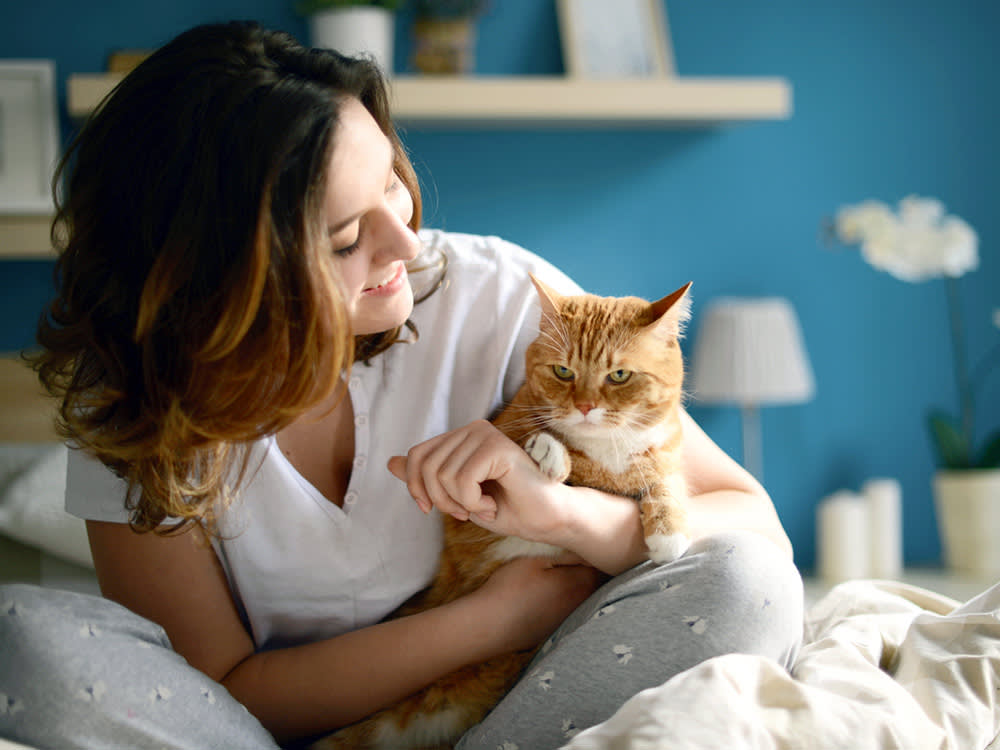
Cats are supposed to be the inscrutable ones. The species you cannot read. The animal that lashes out for no reason.
The research says something less flattering and much more useful. We read cats fine. We read one half of the message fine, anyway, and we are startlingly bad at the other half, and it is not a random half. It is the half where the cat is telling you to stop.
The numbers
A team of French researchers led by Charlotte de Mouzon recruited 630 participants and showed each of them 24 video clips of cats. The clips covered contentment, discontentment, solicitation, meaning asking for food or attention, and predatory behavior. Crucially, they showed the clips three ways: visual only, vocal only, and bimodal, meaning both at once.
The results, published in Applied Animal Behaviour Science, break cleanly along a line nobody expected to be so sharp.
By modality, seeing beats hearing, and both beats either. Bimodal clips were read correctly 91.8 percent of the time. Visual-only clips scored 87.3 percent. Vocal-only came last, and it came last badly, at 72.2 percent.
By emotion, good news is easy and bad news is not. Contentment was identified correctly 90.1 percent of the time. Discontentment was the hardest thing on the list, at 71.6 percent.
Sit with the second one. Roughly three in ten times that a cat is actively unhappy, the human watching does not register it.
Even the lead author was caught off guard. As a cat behaviorist, she is used to seeing negative states, and they leap out at her. That other people were missing them was the surprise.
Why the bad news gets lost
Two explanations, and both are probably true at once.
The first is that we simply do not know the vocabulary. Most people have never been taught what an uncomfortable cat looks like, and the signals are not intuitive, because several of them look exactly like the opposite of what they are.
A cat licking your hand while you pet her is one. It looks like affection returned. It is frequently a request that you stop. A purring cat is another, and this one is the great mistranslation of cat ownership. Purring is not a synonym for happy. Cats purr when they are content, and cats also purr when they are stressed, anxious, in pain, and dying. The purr tells you the cat is self-soothing. It does not tell you why.
The second explanation is less comfortable. We love our cats and we would prefer to believe they are happy, so we take the reading that flatters us. It is the same bias that makes people misread strange dogs as friendly.
Nobody comes to me and says they think their cat has been miserable for two years. They come to me because the cat did something sudden. And then we look back and the cat had been saying it for two years, in a language nobody in the house had bothered to learn.
The cost is not hurt feelings
There is a temptation to file this under manners. It is not a manners problem.
If your cat does not want to be petted and you pet her every day, that is a daily, unavoidable pressure on an animal who cannot leave the building. She is not sulking. She is living under a stressor, and stress in cats does not vent politely. It comes out as marking, hiding, biting, hissing, over-grooming, cystitis, and appetite change, which means the welfare problem and the “behavior problem” you eventually complain about are the same event, six months apart.
And here is the part that ends badly. Those symptoms get read as spite. The cat is being vindictive. The cat is punishing me.
One behavior consultant describes a client who traveled for work three days a month, and every time he came home, his cat had defecated on his pillow. He read it as retaliation and was on the verge of rehoming her. She was not retaliating. She was mixing her scent with his, in the place that smelled most like him, because she was distressed by his absence and that is what a distressed cat does to feel safe.
He was ready to get rid of a cat for missing him.
The reframe: get analytical, not emotional
The most useful posture toward a cat doing something you hate is curiosity, not anger. Every behavior is information. Your job is to work out what it is information about.
Take urination outside the box, which is the single most common reason cats get surrendered, and notice how much the location tells you.
On you, or on your bed: that is often marking and often fear-driven, not spite. Directly beside the litter box: something about the box is the problem. Wrong litter, wrong depth, wrong location, too dirty, too enclosed, or she has come to associate it with pain, which points straight at a urinary tract issue. Along an exterior wall: she may be smelling cats outside and responding to a territorial threat you cannot perceive. Suddenly, in a cat who never did it: a vet visit, today, before any behavior theory at all.
One behavior, many meanings. The behavior is the question, not the answer.
What to actually watch for
The study’s practical headline is almost too simple: look at your cat while you listen to her. People hear the meow and the purr and never lift their eyes to the body, and the body is carrying more of the message than the sound is.
Content looks like: a loose, open, relaxed body. Slow blinking. Ears forward and neutral. A still or gently swaying tail. Soft eyes.
Discontent looks like: a stiff, flattened, compacted body. Rapid blinking. A tail swishing hard side to side, or tucked tight. Ears flattened back against the head. A skin twitch along the back. And, critically, any of these arriving while she is purring, which is the combination people miss most.
Hissing is fear, not malice. A hissing cat is a frightened cat, and getting angry at her for it makes about as much sense as shouting at a child who says she is scared. Snarling, spitting, and yowling mean the same thing at higher volume, with one added instruction: she is now too aroused to be touched, and whatever you were trying to do, stop doing it and back away.
Know your specific cat. Some signals are universal, the way a fever is universal in a person. Others are individual, the way “unusually cranky” only means something if you know the person’s baseline. A cat who always hides is fine. A cat who never hides and is suddenly hiding is telling you something. Listen to her purr and ask whether it is her normal purr, or louder, or a strange pitch.
The three-second habit
If you take one thing from all of this, take this: before you touch your cat, look at her for three seconds first.
Not while you are reaching. Before. Check the ears, the tail, the eyes, the tension in the body. Then decide whether the answer to the question you are about to ask her is already visible.
Most of the biting, most of the “she turned on me,” most of the sudden-onset aggression in ordinary house cats begins as a request that was made politely and ignored several times before it was made rudely.
What newer research adds
The obvious follow-up question, whether this is fixable, is now being tested, and early answers are encouraging.
Researchers have started evaluating whether a short training intervention, essentially a video that teaches people what to look at, measurably improves human recognition of cat emotions. Work published in 2025 in Frontiers in Ethology on people’s ability to read cats during play suggests this kind of targeted teaching does move the needle, which is exactly what you would predict if the underlying problem is ignorance rather than some deep species barrier.
Related work has also found that how well someone reads feline stress depends heavily on the observer, their experience, their profession, how much time they have actually spent watching cats, rather than on some innate cat-person gift.
Both of those point the same way, and it is a hopeful direction. This is not a mystery. It is a skill, most of us were never taught it, and the evidence says it can be taught in an afternoon. Which means the three in ten misses are not a fact about cats. They are a fact about us, and that is the kind of fact you can do something about.
References
- de Mouzon, C., Di-Stasi, R., Leboucher, G. “Human perception of cats’ communicative cues: human–cat communication goes multimodal.” Applied Animal Behaviour Science, vol. 268, 2023/2024, 106011.
- “Do you speak cat? Assessing the impact of a training video on human recognition of cat emotions and behaviours during play interactions.” Frontiers in Ethology, 2025.
- “Human recognition of feline stress-related behavioral states from visual cues depends on observer characteristics.” Scientific Reports, 2026.
- Ellis, S.L.H., Rodan, I., Carney, H.C., et al. “AAFP and ISFM Feline Environmental Needs Guidelines.” Journal of Feline Medicine and Surgery, vol. 15, no. 3, 2013, pp. 219–230.
- American Association of Feline Practitioners. “AAFP Feline Behavior Guidelines.” AAFP, 2022.
Dr. Nair is a veterinarian focused on diet and feeding. She covers everyday nutrition, treats, and the many "can they eat this?" questions owners ask, grounding each answer in what is actually safe and sensible for dogs and cats.
Meet our experts ↗Keep reading
 TrainingYour Cat Can't Smile. Here's Where Their Happiness Actually ShowsDr. Nina Kohl · 7 min
 TrainingYour Shoes Are the Most Interesting Thing You Own. Just Ask Your CatSasha Ford · 6 min
 TrainingThat Adorable Chirping Is the Sound of a Cat FailingDr. Nina Kohl · 7 min
 Health & WellnessYour Cat Isn't Being Weird. Plastic Bags Smell Like Food.Dr. Mara Chen · 7 min
 TrainingIntroducing Two Cats? Go Slower Than You ThinkDr. Nina Kohl · 7 min
 TrainingBreed Barely Predicts Your Cat's Personality. Here's the ProofDr. Ravi Mehta · 6 min