


Your Cat Can't Smile. Here's Where Their Happiness Actually Shows
Cats do not grin or wag, so contentment hides in the ears, tail, eyes, and posture instead. Here is how to read a genuinely happy cat, why the same signal can flip into a warning, and what the science says about the slow blink.

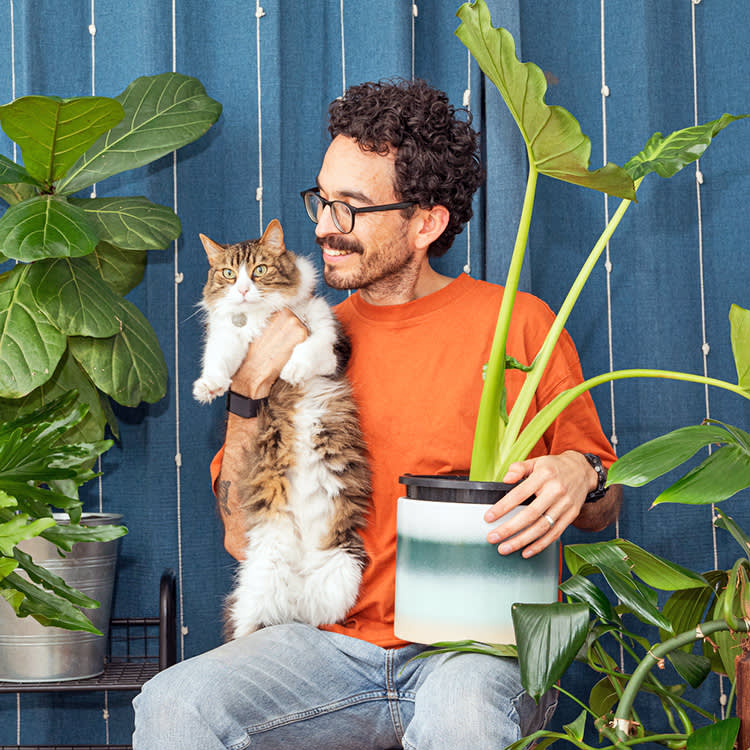
Dogs make it easy. They wag, they wiggle, they do the whole-body happy dance at the door. Cats do none of that, and yet people keep scanning a cat’s face for a smile that is never coming. Cats have an enormous range of facial expressions, but “grinning” is not one of them, which is exactly why so many pet parents end up quietly anxious about whether their cat is actually content.
Here is the reframe that makes the whole thing readable: feline happiness is mostly the absence of vigilance. A cat who feels safe stops bracing to flee, stops guarding their soft parts, and lets their body go loose. Once you learn to spot “off duty,” you can read a happy cat from across the room. The signals cluster in three places, the body, the face, and their behavior, and almost every one of them is a version of “I am not on guard right now.”
The body: loose is the tell
A content cat is a relaxed cat, and relaxation shows up as softness. Their posture goes slack rather than tight and compact. You will find them melted onto their side in a sun patch, or doing the full flop onto their back with the belly exposed, which is the ultimate vote of confidence, since it leaves every vital organ undefended and makes a fast getaway impossible. (Take the belly display as the compliment it is, and resist the urge to rub it. Most cats do not actually enjoy a belly rub, and you will get told off.)
Watch the tail, too. Held high and carried with a soft, easy curve or a gentle wave, sometimes with a little question-mark hook at the tip, it is the feline equivalent of an open, unbothered stride. A tail clamped low or lashing hard is the opposite.
One caveat worth keeping in mind: a happy cat is not a limp cat all day long. A kitty mid-zoomies reads completely differently from one who is dozing off, and both can be perfectly content. The skill is not memorizing one “happy pose,” it is learning the whole vocabulary.
The face: forward ears and a soft gaze
Ears are one of the fastest mood readouts a cat has. Pointed loosely forward, they signal a cat who is not scanning the room for threats. Ears that swivel out to the sides (“airplane ears”) mean caution, and ears flattened back mean fear. So a cat whose ears sit calmly forward is telling you they feel no need to track danger.
The eyes finish the picture. A content cat gives you a soft, half-lidded gaze rather than a hard, wide stare, with pupils at a normal size rather than blown wide. (Play is the exception, since a hunting cat’s pupils dilate even when they are having the time of their life.) And then there is the slow blink, that unhurried, drowsy eye-close cats offer when they feel safe near you. Blink slowly back and you are, as far as we can tell, returning the sentiment.
The behavior: they seek you, eat, play, and groom
Beyond posture, a happy cat does happy-cat things. They come to you. A cat who winds around your ankles, headbutts your hand, or rubs their cheeks on you is depositing scent from the glands on their face, essentially filing you under “mine.” From a cat, that is high praise. The bonded ones follow it up with real cuddling, sprawling across your lap or chest and trusting you enough to fall asleep on you.
They also keep up the ordinary business of being a well cat: eating with a healthy appetite, drinking normally, playing with genuine interest, and grooming themselves into a smooth, clean coat. And they act like they own the place, strolling through the house tail-up as if they hold the lease, claiming counters and windowsills and, frankly, you.
When a “happy” sign is actually a warning
This is the part most listicles skip, and it is the most useful. Several contentment signals invert when something is wrong, so the same behavior can mean two opposite things.
Purring is the classic example: it usually reads as bliss, but cats also purr to self-soothe when injured or sick, so a purring cat who is otherwise hunched or hiding is not necessarily happy. Sleep is another. Cats sleep a lot normally, but a cat who is sleeping more and more, with fewer waking periods of play and window-watching, may be depressed or unwell. Appetite and grooming cut the same way: a cat who stops eating, stops drinking enough, or lets their coat go greasy and unkempt is often signaling trouble, not calm.
And true anxiety has its own dialect that is easy to mistake for something else. Hiding constantly, hissing, dilated eyes, creeping low to the ground, a raised hackle, or licking the lips for no obvious reason are stress signals, not play. The rule of thumb from behavior specialists is to watch for change: an affectionate cat who suddenly clings, or a social one who tucks away, has told you to pay attention.
Cats evolved to hide weakness, so by the time a change is obvious to us, it has often been going on a while. If your cat’s usual happy signals switch off, or an old habit flips into its opposite, treat that as information and call your vet before you talk yourself out of it.
What newer research adds
For years, the slow blink was folklore, a thing cat people swore worked. In 2020, researchers at the University of Sussex put it to the test and published the first experimental evidence in the journal Scientific Reports. In one experiment, cats returned their owners’ slow blinks with eye-narrowing of their own far more often than when the owner sat with a neutral face. In a second, cats were more likely to approach a total stranger who had slow-blinked at them first.
The takeaway for everyday life is small but lovely: narrowing the eyes seems to be a genuine positive signal across species, and you can use it on purpose. Catch your cat’s eye, relax your face, and blink slowly. Plenty of cats blink right back. It is one of the few pieces of cat body language that runs in both directions, and it costs you nothing to try.
References
Common questions
Does purring always mean my cat is happy?
No. Purring is usually a contentment signal, but cats also purr to soothe themselves when they are frightened, in pain, or unwell. Read it in context. A purring cat with a loose body, forward ears, and soft eyes is content. A purring cat who is hunched, hiding, or off their food may be self-comforting through something wrong, and that is worth a vet call.
What does a slow blink from my cat mean?
It is one of the clearest friendly signals a cat gives. A 2020 study at the University of Sussex found that cats slow-blink back at people who slow-blink at them, and are more willing to approach a stranger who blinks slowly first. Narrowing the eyes appears to signal positive, non-threatening intent, so blinking slowly at your cat is a real way to say you come in peace.
My cat suddenly seems less happy. What should I do first?
Book a vet visit before you assume it is behavioral. Cats instinctively mask illness, so a social cat who withdraws, or an aloof one who suddenly clings, is often telling you something physical is wrong. Once medical causes are ruled out, look at what changed in the home, a new pet, person, schedule, or move, and give your cat extra quiet, routine, and gentle attention while they adjust.
Dr. Kohl is a board-certified veterinary dentist with a particular interest in preventive oral care. She reviews all dental health content at The Pet Times and contributes practical guides on home dental routines, professional cleaning, and oral disease prevention.
Meet our experts ↗Keep reading
 Health & WellnessThe Cat Loaf Has a Dark Version. It's in the Face, Not the Paws.Dr. Mara Chen · 8 min
 TrainingYour Cat Isn't Losing It in the Mirror. Here's What's Really Going OnDr. Mara Chen · 5 min
 TrainingYour Cat's Creepy Stare Is a Sentence. Read the Pupils First.Dr. Nina Kohl · 6 min
 TrainingYour Cat Says 'I Love You' Constantly. You Keep Missing It.Dr. Amara Solis · 6 min
 TrainingThe Sideways Cat Crab-Walk Looks Alarming. It's Almost Always a BluffDr. Nina Kohl · 6 min
 TrainingYour Cat Rubbing Your Legs Isn't a Hug. It's a Deposit.Dr. Priya Nair · 7 min