


The Bewitching History of Black Cats and Halloween
How witches, the original cat ladies, and their feline familiars became forever entangled with All Hallows' Eve.

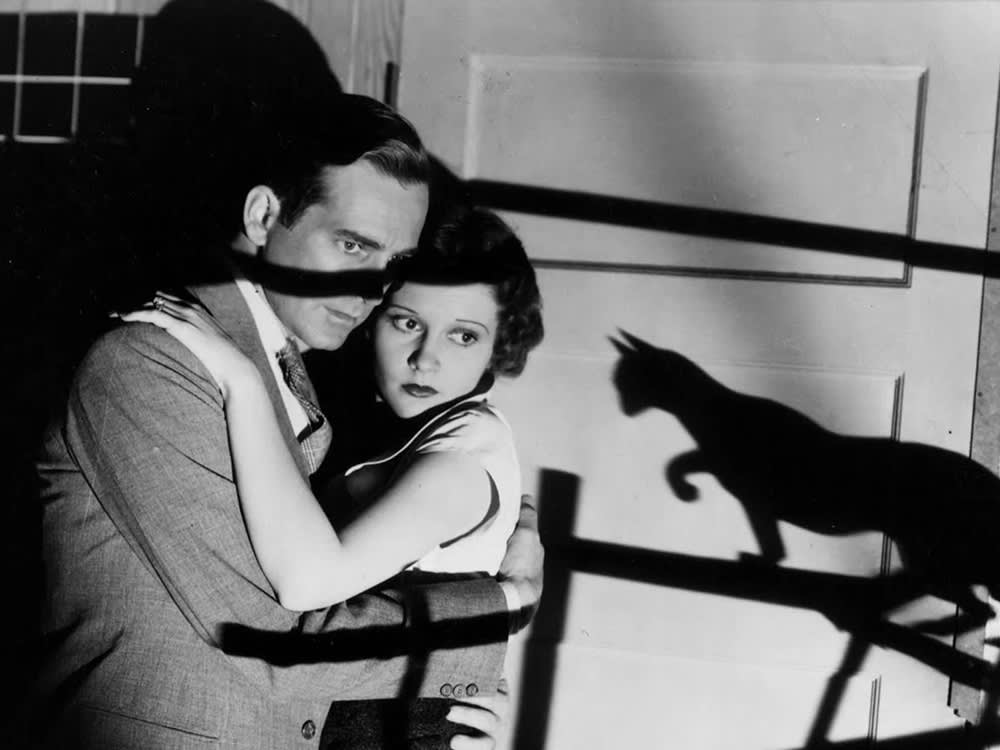
“Thackery Binx, thou mangy feline!” Give the cat a break. By the time Bette Midler hexed a human boy into spending eternity as a black cat in Hocus Pocus, the breed had already weathered centuries of curses. Carrying a long history of superstition and scorn that runs all the way back to history’s first cat ladies, it is little wonder that Binx, like his pop-culture peers, faced the world with a smarmy disdain. Whether they are battling to the death, as in Hocus Pocus, or glued to a witch’s side, like Sabrina and her familiar Salem, what makes black cats and witches so intimately linked, and so equally maligned? And how did the pair become so woven into the fabric of Halloween?
Witches and cats in the shadows
Although black cats were revered in Ancient Egypt and have mythological roots all over the world, their direct connection to Halloween took shape around 2,000 years ago, among the Celtic tribes around Ireland. Druidic culture was pagan and often matrilineal, with a pantheon of gods and animalistic spirits, plus witches, or “wise ones,” who served as healers, tribal leaders, and sages. Many festivals and ceremonies took place at night, lending a certain mystique to the nocturnal animals who thrived in the dark, the black cat above all, ever elusive in the shadows.
Some Celtic traditions held that those who dabbled in dark magic would be turned into cats, placing cats and witches on opposite sides of a moral line. On Samhain, the autumn celebration when the veils between this world and the next were said to open, revelers wore costumes of animal skins and heads, invoking their gods and warding off dark forces. That tradition would carry forward into modern times. But before long, women would come to be seen as dangerous as the feline shadow totems, and both would be tossed onto the same pyre of superstition.
The all-new, all-male Holy Trinity left no room for a woman, let alone a powerful, capable, and often single tribal leader. The Church found it easy to recast medicine women as hags and harpies, and to tie any tradition outside papal canon to devil worship. Witches inherited black cats, and now the belief was that witches could shift into feline form, or that the cats were their familiars, demon guides handed to them by the devil.
By the Middle Ages, the Church had absorbed Samhain, shifting its key practices onto All Saints’ Day on November 1. As the bubonic plague tore through Europe, carried by infected rats, the women once revered as healers, along with the cats who hunted such vermin, were blamed as the cause. Such staggering death could only be the work of the devil, his harlot priestesses, and their pitch-black feline companions. Even after Samhain was officially cut, its practices never died out, and the night before All Saints’ Day, with its enduring bonfires, costumes, and parties, became All Hallows’ Eve, or Halloween.
The New World and spooky season
The dour Puritans did not believe in saints, so All Saints’ Day stayed behind in the old country when they reached the New World. And the pattern continued: who better to blame for a poor harvest or a streak of bad luck in the colonies than a certain kind of woman? Witches made easy targets. Women had no legal rights and could not own property, which put those without a husband or father to “claim” them squarely at the top of the suspect list. The stigma soon extended to Black women, imagined to practice some exotic form of fortune-telling. As ever, the vexing, unknowable black cat came to symbolize everything that could not be controlled or contained in these noncompliant women.
Black cats kept their dark majesty alive in folktales and spooky stories swapped at autumn festivals. Ghost stories and “play parties” were everywhere at these colonial harvest gatherings. Then the arrival of Irish immigrants in the 19th century revived All Saints’ traditions, including “souling,” in which poor townspeople would knock on the doors of the wealthy and accept money to pray for their departed, a custom that would later feed into trick-or-treating. Freed from Puritan constraints, more post-pagan traditions flourished, and by the turn of the century Halloween had been secularized into a community celebration. By the ’60s, the old traditions had turned kitsch, camp, and broadly accessible, and the returning spirits, scary witches, and devil-sent black cats were revived and repopularized.
Black cats in culture
Beyond the Halloween industrial complex, black cats have turned up in union halls and even on spacecraft. At the dawn of the 20th century, labor organizers used the image of a screeching black cat, known as “sabo-tabby,” as a symbol of strikes and sabotage. Black has long been linked with anarchy, and the watchful cat perfectly captured the outsider ideals of many revolutionary workers. In the ’80s, NASA’s 11th space shuttle mission was set to be called STS-13. Wary of the number’s bad luck, especially after the trouble Apollo 13 faced in the ’70s, NASA changed the mission’s sequence number, but the crew, tempting fate, made patches featuring a black cat and the number 13, and ultimately brought the craft to a safe landing on Friday the 13th.
In terms of popular lore, folktales about black cats spread up from the American South from the 19th century onward, including the well-known Wait Until Emmett Comes. But black cat cultural awareness changed forever in 1843, with the publication of Edgar Allan Poe’s The Black Cat. Although Poe was genuinely fond of cats, like his beloved Catterina, he made Pluto, the focus of this grisly short story, a figure of menace. The narrator at the heart of The Black Cat takes a love of animals to violent, sadistic extremes. While Poe used the black cat to explore guilt, isolation, insanity, and alcoholism, the horrifying imagery did its work, cementing the breed’s place in the shadows for more than a century.
Poe’s story spawned dozens of screen adaptations, including a 1962 entry in Tales of Terror, 1965’s The Tomb of Ligeia, and a very loose 1981 adaptation involving a professor with psychic powers. But the black cat’s genre appeal reached well beyond Poe, with 1934’s hit The Black Cat, no relation to Poe, featuring Béla Lugosi, Boris Karloff, and satanic cults. Perhaps the contrast of black-and-white film served the cat’s dark mystique best of all. The breed generally played omen of doom for much of the 20th century, as in 1973’s The Legend of Hell House.
Then leave it to Hayao Miyazaki to change the game, with 1989’s Kiki’s Delivery Service. This time the witch, Kiki, was a charming 13-year-old, and her cat, Jiji, could not scare a fly. Voiced by comedian Phil Hartman in the American adaptation, Jiji delivered a bitter, know-it-all attitude that would inform his animated successors. With the VHS boom of the ’90s, when stars like the Olsen twins churned out Halloween content for kids, the black cat found new life.
They returned to the role of guide, drawing on a history of hard knocks to help otherwise naive protagonists. Why be typecast as a portent of doom when you can play the salty sidekick? Suddenly they were everywhere: Melissa Joan Hart traded barbs with Salem (Nicholas Bakay) on Sabrina the Teenage Witch; Coraline got reluctant help from the unbothered Cat, voiced by Keith David in the 2009 adaptation; and Thackery Binx came to love Thora Birch in Hocus Pocus.
With parallel revivals of witch and cat lady culture in the ’90s and 2010s, powerful single witch women came to rely on their black cats for companionship and protection rather than dry one-liners: the free-spirited Gillian (Nicole Kidman) clings to her companion, who rightly hisses at her undead ex, in Practical Magic; Sabrina’s Salem was reimagined as a demonic powerhouse in 2018’s reboot Chilling Adventures of Sabrina; and the witch cop Rowan Black stays close to her cat Hawthorne in the mature comic series Black Magick.
Black cats swing from abject omens to truth-telling feminist avatars depending on the forces at work in popular storytelling. But perhaps the breed’s most complete portrayal comes in The Matrix, when one slips just past Neo’s sightline, signaling a déjà vu, a glitch in the false reality. Ever since the Druid rites, the black cat has stood for the indelible, the unknown, the unconquerable. They are a portal to a new reality, a silent crawl into the unknown night. Good luck trying to pin them down.
References
- The Truth About Black Cats — Circulating Now, U.S. National Library of Medicine
- History of Trick-or-Treating and Halloween — History.com
- The Sabo-Tabby: The Black Cat as a Symbol of Sabotage — Industrial Workers of the World archive
- STS-41-C (STS-13) Mission Patch and the Black Cat — spacepatches.nl
- Poe, Edgar Allan. The Black Cat. The Saturday Evening Post, 1843.
Leila Torres leads our Living coverage, from home life and travel to the products and rescue stories that come with sharing a life with animals. She edits and writes across the section, with a soft spot for pieces about the bond between people and their pets.
Meet our experts ↗Keep reading
 TrainingYour Cat Doesn't Care About the Bathroom. They Care That You Finally Sat Down.Dr. Priya Nair · 8 min
 LivingShe Built Her Cat a Sparkly Palace. The Cat Wanted the Cardboard.Nina Vasquez · 5 min
 LivingThe Cat Burglar of Mairangi Bay Has 150 Victims and Zero RemorseSasha Ford · 4 min
 LivingShe's Cut Her Cat Into 37 Surreal Portraits. He Couldn't Care Less.Claire Sutton · 5 min
 LivingAnimal Communicators Aren't Reading Your Cat. They're Reading You.Leila Torres · 8 min
 LivingYour Cat Picks the Foot of the Bed on Purpose. Here's the LogicClaire Sutton · 6 min