


The Best Dog Food Container Isn't the Prettiest. It's the One That's Actually Airtight.
A food bin's real job is not to look good on your floor. It is to keep the fat in your dog's kibble from going rancid and the mice out. Here's the one seal that matters, the pro trick most owners miss, and the containers that get it right.

Affiliate disclosure. This article contains affiliate links. We may earn a small commission if you buy through a link, at no extra cost to you. How we handle recommendations.
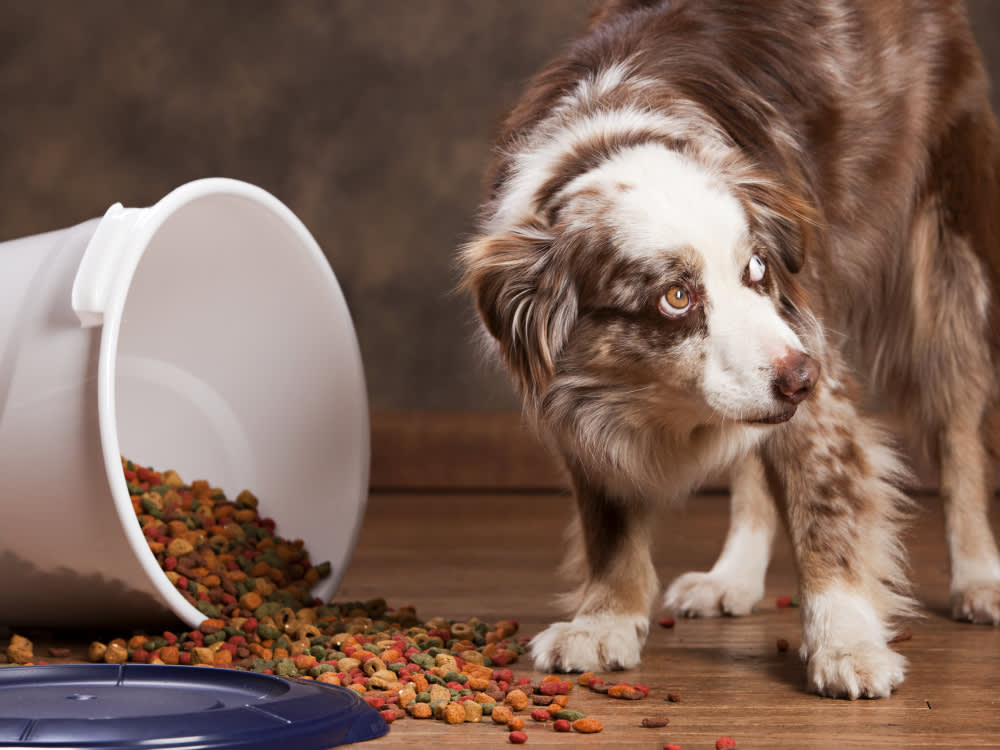
There is a familiar scene: an open bag of dog food tipped on the floor, a pool of loose kibble around it, and a fresh set of anxieties about whether it was your dog or a mouse, and what comes next. A better container ends that scene. But most people shop for the wrong thing when they go looking for one.
They shop for looks. And a food bin can absolutely look good on your floor. Its actual job, though, is invisible: keep air out. Dog kibble is coated in fats, and fats go rancid when they meet oxygen, light, and warm air. A container that is not truly airtight lets that happen slowly, turning fresh food stale and, over weeks, degrading the fats and fat-soluble vitamins your dog is eating for. So before we get to specific picks, here is the buying framework that actually matters.
What actually makes a good food container
An airtight seal, first and always. This is the whole point. Look for a real gasket or a locking, sealing lid, not just a snap-on top. If the container is not sealing out air, it is a decorative bin, not a food-storage one.
Food-safe material. The container is in constant contact with what your dog eats every day, so you want food-grade plastic or stainless steel, not a mystery bin from the garage.
Sized to your bag. Buy for the bag you actually feed. A container that holds one full bag with a little headroom is ideal; too small and you are stuck, too huge and the food rattles around in a lot of trapped air.
And the pro move most owners miss: keep the food in its original bag, inside the container. The bag is specifically designed to preserve the food, and it carries the batch number and expiration date you will want if there is ever a recall. Dumping loose kibble straight into a bin means the fats can coat the plastic and go rancid faster, and it throws away your recall paperwork. Slide the whole bag into the airtight bin and you get the best of both.
With that lens, here are the containers worth your money.
The picks
Gamma2 Vittles Vault Outback Airtight Container
If you buy for the seal, this is the honest answer. It uses a screw-on airtight lid that genuinely locks out air, pests, and humidity, which is exactly the feature that keeps fat from oxidizing and mice from moving in. It is built to hold a full bag, it stacks, and it is about function over fashion. For most dogs and most kitchens, this is the one.
Simplehuman Storage Container
The premium option, and it earns the price if you want a bin you are happy to leave out. It is genuinely airtight, and it adds a built-in exhaust that releases trapped air as you close the lid to help keep food fresh. It is the rare container that is both handsome and actually good at the sealing part.
Gamma2 Travel-tainer
For the dog who travels, hikes, and road-trips with you. It is a compact, sealed kit for carrying food on the go, so your dog’s diet does not have to depend on whatever you can find at a gas station. A smart, cheap add-on to a good home bin rather than a replacement for one.
Heads up. (not currently on Amazon under our program)
A counter canister for treats. If what you actually want is something small and attractive for treats or a few days of food on the counter, a sealed ceramic or steel canister in the HuBee mold does the job and looks the part. Just hold it to the same standard: if it does not seal, it is for treats and short-term use, not for storing the fatty main food long-term.
The bottom line
Pick the airtight seal over the aesthetic every time, size the bin to your bag, keep the original bag inside it, and store the whole thing somewhere cool and dark rather than in a sunny corner or next to the oven. Do that and your dog’s food stays as fresh on week three as it was on day one, which is the entire reason to own one of these in the first place.
References
- U.S. Food and Drug Administration. “Tips for Safe Handling of Pet Food and Treats.” https://www.fda.gov/animal-veterinary/animal-health-literacy/tips-safe-handling-pet-food-and-treats
- Association of American Feed Control Officials (AAFCO). “Best By and Expiration Dates on Pet Food.” https://www.aafco.org/consumers/
Marcus Webb writes about the gear, gadgets, and everyday choices that make life with a pet easier. His coverage runs from product picks to training and the causes worth paying attention to, always with an eye on what actually earns a place in your home.
Meet our experts ↗Keep reading
 Product PicksEveryone Knows Maxbone for the Feathered Dog Jumper. Its Biggest Seller Is Food.Leila Torres · 6 min
 FoodAn MIT Engineer Fed Her Seizing Dog Raw Meat. Then She Engineered the Safety Problem Out of It.Dr. Ravi Mehta · 6 min
 Product PicksSlow-Feeder Bowls: The 7 Worth Buying, Matched to Why Your Dog Inhales DinnerNina Vasquez · 10 min
 Product PicksFresh Dog Food Is a Budget Decision, Not a Quality Verdict: Pick Your Tier (9 Services)Sara Lim · 10 min
 Product PicksYour Dog Is Bored, Not Bad. 5 Enrichment Toys That Fix It.Marcus Webb · 4 min
 Product PicksYour Dog Isn't Bored. They're Underemployed. 8 Puzzles That Fix It.Tom Hadley · 11 min