


Fresh Dog Food Is a Budget Decision, Not a Quality Verdict: Pick Your Tier (9 Services)
Before you compare recipes, decide your tier: full fresh, fresh topper, or fresh-dry. Here's what 'human-grade' and 'complete and balanced' actually mean, the real cost per day, and nine delivery services matched to how much fresh food your dog (and your budget) needs.

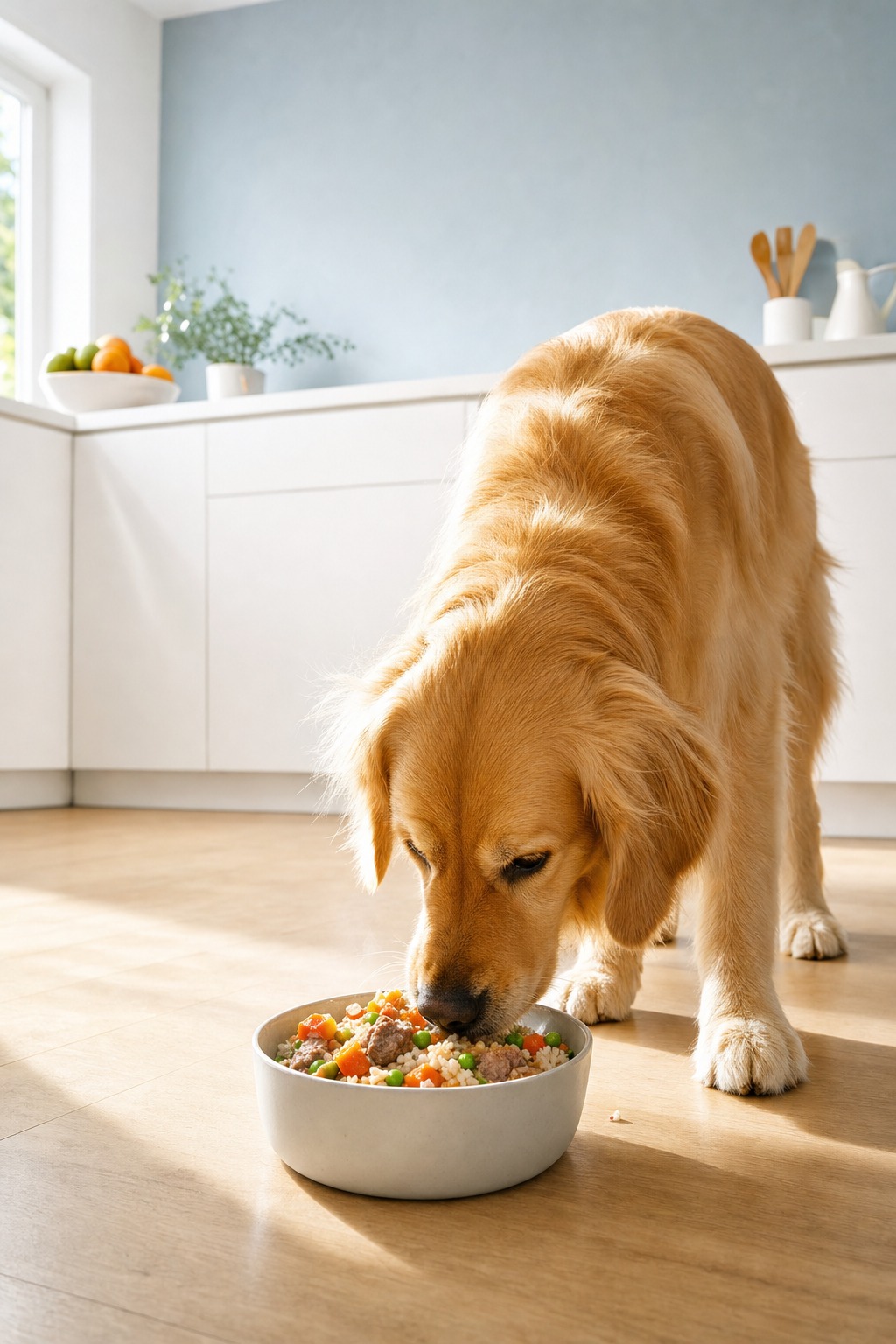
A neighbor once credited his Pit Bull’s show-dog coat to “only fresh food,” then described the hours of weekly meal-prep behind it. Most of us are not going to become our dog’s personal chef, which is exactly why fresh delivery services exist. But before you compare recipes and founder stories, there is a more useful question than “which one is best”: which tier of fresh food does your dog actually need, and what can your budget sustain for years, not just for the trial box?
Because here is the thing the glossy roundups skip. “Fresh” is not a quality verdict that makes kibble bad. It is a spectrum and a budget decision. Get the tier right first, confirm the food is genuinely complete and balanced, and the choice among services gets much simpler.
First, decode two labels that actually matter
“Human-grade” is the strictest claim on the shelf, and since 2019 it has a specific AAFCO definition: every ingredient and the entire production facility must meet the FDA and USDA standards used for human food, not the looser “feed-grade” standard. It is a real distinction. But it describes the quality of the inputs, not whether the finished recipe meets your dog’s nutritional needs.
“Complete and balanced” is the claim that covers nutrition. AAFCO sets the minimum nutrient profiles for each life stage and defines what those words mean, though it does not approve or certify individual foods. When a brand says it is AAFCO-compliant, it means the recipe meets the baseline for the life stage listed. You want both labels: human-grade for ingredient quality, complete and balanced for nutrition. One without the other is half the story.
And the honest headline: human-grade fresh food is not automatically healthier than a good kibble. Both can be healthy when they are complete, balanced, and correctly portioned. Fresh food’s genuine edges are digestibility and gentle cooking (sous-vide, low-heat, dehydration) that spares heat-sensitive nutrients, which is why vets most often recommend it for dogs with diet-responsive conditions like kidney, liver, or GI disease, or for post-surgical recovery.
Then pick your tier, because tier sets the price
This is the decision that determines your yearly cost far more than which brand you choose.
Full fresh replaces 100 percent of your dog’s diet with cooked, fresh meals. Best palatability and digestibility, highest cost, roughly $5 to $7-plus a day for a 30-pound dog.
Fresh topper uses fresh food for about 25 percent of calories on top of a quality kibble base. This is the smart-money tier: it captures much of the appeal and digestibility benefit at a fraction of the cost, and it is the easiest way to test whether your dog even likes fresh before committing.
Fresh-dry (the “fresh kibble” category) uses fresh, whole ingredients in a shelf-stable, scoopable form. Cheapest of the three, around $2 a day, no freezer space required, and a real middle path.
Across a year, the gap between premium kibble and full-fresh delivery can run $700 to $1,800 for a single medium dog. Choosing topper or fresh-dry instead of full fresh is the lever that keeps the habit affordable.
The question I ask owners isn’t ‘fresh or kibble,’ it’s ‘why fresh, and how much.’ A dog with a sensitive gut and a clear vet reason is a great candidate for full fresh. A healthy dog whose owner just wants to upgrade the bowl is often happiest, and far better off financially, with a fresh topper. Same benefit story, sustainable price.
Nine services, matched to your tier
We expanded this guide to nine to add the service vets most often name for medical diets. Each entry keeps the founder story and mission that make these brands distinct.
Best calorie-precise full fresh: Nom Nom
Nom Nom keeps two board-certified veterinary nutritionists on staff and pre-portions every meal down to the calorie, so you unpack a recyclable pack and serve, no scooping. After a quiz you pick among four recipes (beef mash, chicken cuisine, pork potluck, turkey fare). It runs around $34 a week for a small dog, offers cat kits too, and sells a $90 gut-health kit that profiles your pet’s microbiome. The brand emphasizes responsible sourcing and a zero-food-waste goal in its facilities.
Best value full fresh: The Farmer’s Dog
Founded in 2014 after co-founder Brett Podolsky’s dog Jada developed digestive issues that cleared up on home-cooked food, The Farmer’s Dog (built with Jonathan Regev and veterinary nutritionists to become the kind of company they’d been wishing for) cooks human-grade food at low temperatures. Plans start at $2 a day with free shipping and scale with your dog’s size and needs, landing around $28 a week for a small dog, among the gentler full-fresh prices here. Four recipes ship in biodegradable packaging.
Best starter pack: Ollie
Ollie cooks hormone-free meat in small low-temperature batches in New Jersey, with five recipes (beef and sweet potato, chicken and carrot, lamb and cranberry, turkey and blueberry, pork and apple). Plans start at $1.57 a meal, roughly $37 a week for a small dog, and the starter pack includes personalized packs, a feeding guide, a portion scoop, and a storage “puptainer.” Meals keep six months frozen, four days thawed.
Best chef-made small-batch: Evermore
Run by a professional chef and a dog-care professional who watched their own pets thrive on home cooking, Evermore makes gentle, immune-supportive food from free-range chicken, grass-fed beef, pasture-raised eggs, and organic produce. Plans are highly customizable, with mix-and-match meals and delivery from one-time to every eight weeks, starting at $104 for eight meals. A true premium, small-batch pick.
Best recipe variety and topper option: PetPlate
PetPlate makes vet-developed, human-grade meals it says are on par with what you’d put on your own family’s dinner table, with one of the widest recipe ranges here, eight options spanning beef, chicken, turkey, lamb, pork, and venison. Crucially for tier shoppers, it offers both a Full Plan (100 percent of calories) and a cheaper Topper Plan (25 percent), about $34 versus $21 a week for a small dog, making it an easy on-ramp to fresh.
Best for skipping the freezer: Spot & Tango
Spot & Tango offers personalized fresh meals (turkey and red quinoa, beef and millet, lamb and brown rice) and its signature UnKibble, billed as the only “Fresh Dry” food, made from fresh whole ingredients but shelf-stable and pantry-friendly. For a small dog the full fresh plan ran about $36 a week, the fresh topper $21, and UnKibble just $18, a clean illustration of how tier drives price within one brand.
Best from a meal-kit pedigree: The Pets Table
From the makers of HelloFresh, The Pets Table matches you to a plan by quiz, with USA-made, high-fiber, superfood-packed meals that include postbiotics for gut health. The preservative-free fresh plan ships frozen (chicken casserole with green beans, beef stew with carrots, turkey casserole with broccoli), runs about $2.89 a meal, and a trial box includes two weeks with a money-back guarantee.
Best traceability and sustainability: A Pup Above
Founded by Ruth and Javier Marriott, A Pup Above slow-cooks human-grade food sous-vide to retain more nutrients, with dry, fresh, or combination plans across beef, pork, turkey, and chicken. A four-bag fresh sampler runs about $152. Packaging is fully recyclable, you can trace every ingredient back to its farm by lot number, and the brand donates one percent of revenue to a regenerative-agriculture land trust in California.
Best for medical and prescription diets: JustFoodForDogs
The addition the old list lacked, and the one vets name most. JustFoodForDogs is the number-one vet-recommended fresh food, with recipes formulated by veterinary nutritionists from 100 percent human-grade, USDA-inspected ingredients. Beyond its everyday Daily Diet and resealable JustFresh lines, it offers veterinary therapeutic recipes for renal, hepatic, and critical-care needs, and lets you build a custom plan with one of its nutritionists. If your dog needs fresh food for a medical reason, this is the first call.
The takeaway
Decide your tier before you fall for a recipe. If a vet has flagged a diet-responsive condition, go full fresh and look hard at JustFoodForDogs. If you are a healthy-dog owner wanting an upgrade, a fresh topper from PetPlate or Spot & Tango gives you most of the benefit at a price you can keep paying. And whatever you choose, confirm it says both human-grade and complete and balanced, and loop in your vet before you switch. Fresh is wonderful. It is also a years-long bill, so buy the tier you can sustain.
References
- Association of American Feed Control Officials. “What is in Pet Food: Human-Grade and Complete and Balanced.” aafco.org.
- U.S. Food and Drug Administration. “Pet Food Labels.” fda.gov.
- PetMD. “What Is AAFCO and What Does It Do?” petmd.com.
- Forbes Vetted. “Best Fresh Dog Food: Vet-Recommended Brands.” forbes.com.
Common questions
What does 'human-grade' really mean?
It is the strictest labeling claim and has had a specific AAFCO definition since 2019: every ingredient and the entire facility must meet the FDA and USDA standards used for human food, not the lower 'feed-grade' bar. It is a meaningful claim, but it describes ingredient and facility quality, not whether the recipe is nutritionally complete, so check for both.
How much does fresh dog food delivery cost?
For a roughly 30-pound dog, expect about $2 a day at the shelf-stable or fresh-dry end and $5 to $7-plus a day for premium frozen full-fresh plans. That difference adds up to roughly $700 to $1,800 a year over premium kibble. The single biggest cost lever is your tier: a fresh topper covering 25 percent of calories captures much of the benefit at a fraction of the price.
Do I need a vet's okay before switching to fresh food?
It is wise, especially if your dog has any health condition or is very young, old, pregnant, or nursing. A vet can confirm the food is appropriate and complete and balanced for your dog's life stage, and for medical diets it is essential. Transition gradually over about a week to avoid digestive upset.
Sara Lim leads our Product Picks coverage, testing and comparing the things pets and their owners actually use. From everyday essentials to home-and-style finds, she focuses on honest, useful recommendations rather than hype.
Meet our experts ↗Keep reading
 FoodHome-Cooked Dog Food Can Run $3 a Day. The Real Price Is Your Sundays.Dr. Amara Solis · 9 min
 Product PicksThe Best Dog Food Container Isn't the Prettiest. It's the One That's Actually Airtight.Marcus Webb · 5 min
 Product PicksSlow-Feeder Bowls: The 7 Worth Buying, Matched to Why Your Dog Inhales DinnerNina Vasquez · 10 min
 Product Picks7 Pieces of Dog Gear That Won't Wreck Your Living RoomSara Lim · 6 min
 Product PicksYour Dog Is Bored, Not Bad. 5 Enrichment Toys That Fix It.Marcus Webb · 4 min
 Product PicksYour Dog Isn't Bored. They're Underemployed. 8 Puzzles That Fix It.Tom Hadley · 11 min