


Slow-Feeder Bowls: The 7 Worth Buying, Matched to Why Your Dog Inhales Dinner
A slow feeder fixes the speed, not the reason behind it. Here's how to match the right bowl to your dog's eating style, plus seven we'd actually buy and the two problems a slow feeder can't solve.

Affiliate disclosure. This article contains affiliate links. We may earn a small commission if you buy through a link, at no extra cost to you. How we handle recommendations.
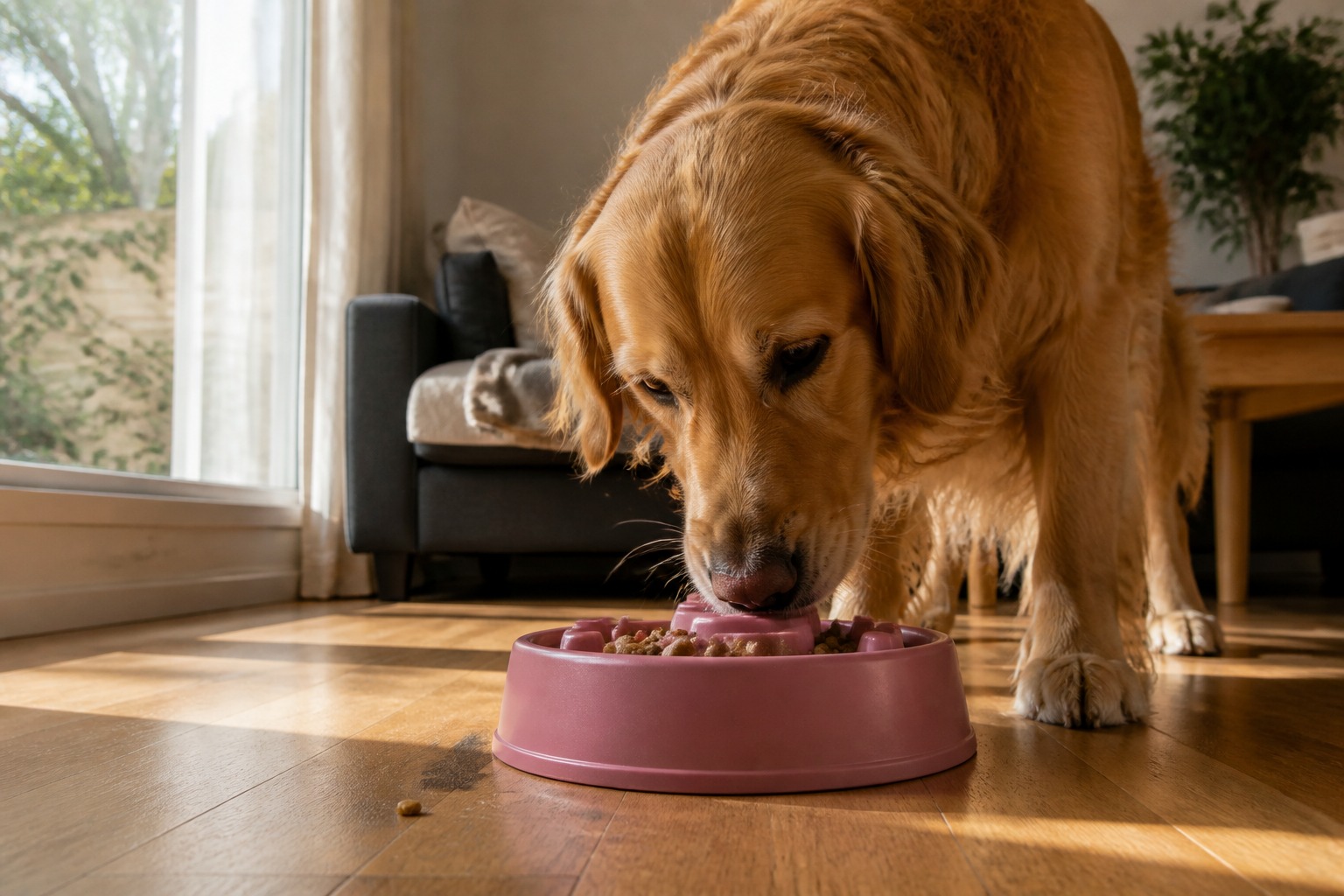
If your dog treats a bowl of kibble like a countdown timer, you already know the routine: the food hits the floor, there is a frantic ten seconds of vacuuming, and then a hopeful stare that says was that it? The standard advice is to buy a slow-feeder bowl, and most of the time that advice is right. But “buy a slow feeder” skips the more useful question, which is why your dog eats like the food might be repossessed. Get that answer first, and the bowl you buy almost picks itself.
The speed itself is rarely the real problem. Fast eating is usually a symptom of something underneath it: competition with another pet, plain food excitement, a dog who was once underfed, or boredom that turns mealtime into the highlight of the day. A slow feeder is a genuinely good tool for the first two. For the others, the bowl is only part of the fix, and for one specific problem, owners reach for it most, it can actually make things worse. We will get to that. First, here is how a slow feeder works and how to match one to your particular speed-eater.
What a slow feeder actually does (and the two things it can’t)
A slow feeder is a regular bowl with terrain. Ridges, mazes, and posts turn a thirty-second meal into a five-minute hunt, because the dog has to nose food out of the grooves instead of scooping it in mouthfuls. That pacing has real, well-supported benefits: better digestion, less gulped air, and a meal that doubles as light mental enrichment. Dr. Mara Chen, a veterinarian who consults for The Pet Times, puts it simply.
“The grooves don’t just slow the mouth down, they make the dog think. For a bored gulper, that mental work is doing as much good as the pacing itself.”
Now the two claims you will see everywhere that deserve an asterisk.
It is not a bloat-proofing device. The most common reason owners buy slow feeders is fear of gastric dilatation-volvulus, the life-threatening stomach twist known as bloat. Here the science is far softer than the marketing. A veterinary knowledge summary reviewing the available studies found the evidence on eating speed and GDV genuinely mixed: one study suggested fast eating raised risk, others found no effect, and none has been firmly replicated. The reasonable conclusion is that slowing your dog down will not increase bloat risk and might modestly lower it, but a slow feeder is not insurance. If you have a large, deep-chested breed, the positioning choice with the most consistent evidence is feeding at floor level rather than from a raised stand.
It is not a cure for food aggression. This is the one that can backfire. True resource guarding, a dog who stiffens, freezes, gulps faster, or snaps when you approach the bowl, is a behavior problem, and a slow feeder does not treat it. Worse, making the food harder to reach can raise frustration and intensify guarding in some dogs. Slow feeders can help the mild, excited gulping that comes from competition between pets, because they take the race out of the meal. But if your dog shows real guarding signals, the bowl is the wrong first move. Work with a certified trainer or a veterinary behaviorist before you change anything about how you feed.
Match the bowl to your eater
Skip the “best overall” reflex and start with your dog.
The bored gulper eats fast because dinner is the most interesting thing that happens all day. Give this dog a puzzle-style feeder that rewards working for food. The enrichment is the point.
The competitive gulper speeds up because another pet is in the room. A standard maze feeder slows the meal enough to defuse the urgency. Feed in separate rooms too.
The flat-faced eater (Pugs, Bulldogs, Boxers, Persian-faced anyone) physically cannot reach into deep grooves. This dog needs wide, shallow channels, roughly 1 to 1.5 inches, or they will give up and either eat too little or shove the bowl around the kitchen.
The big, deep-chested dog needs a heavy, planted bowl at floor level with deep grooves their long snout can navigate. Stability matters as much as the maze.
The graduating eater has learned to slow down and is ready to transition back toward a normal bowl. A convertible feeder with a removable insert lets you wean them off without buying a second bowl.
A quick word on price: most slow feeders run $8 to $25, so cost is rarely the deciding factor. The two places it climbs are ceramic (premium feel, more fragile) and automatic feeders, which start around $80 because you are paying for the scheduler and hardware, not the maze.
The seven we’d buy
We worked through dozens of feeders and owner reviews and kept the ones that earn their spot for a specific kind of dog. We cut a popular stainless-steel maze bowl that even its fans admit barely slows determined eaters, because a slow feeder that doesn’t slow the dog is just an awkward bowl.
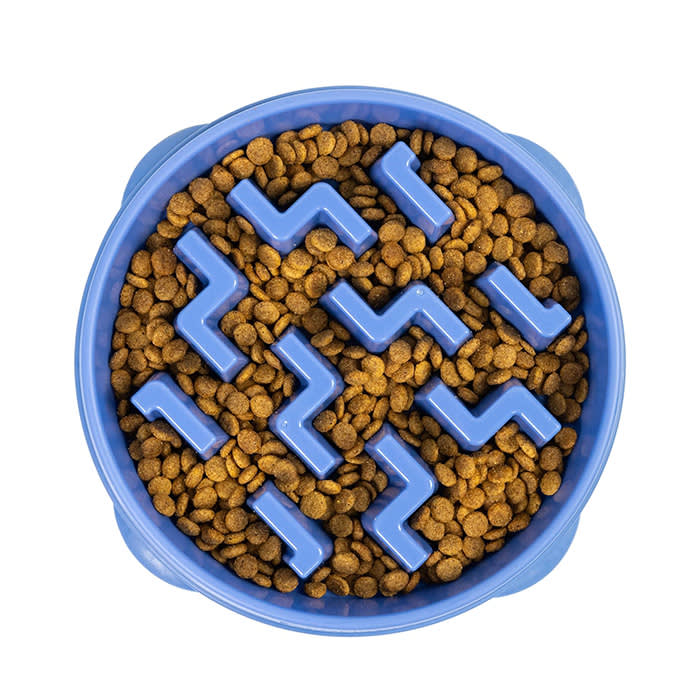
Outward Hound Fun Feeder
The Outward Hound Fun Feeder earns the top slot on range and value. It holds up to four cups wet or dry, comes in several maze patterns rated by difficulty, and starts under $10. Grooves run roughly 2 to 2.75 inches deep, which suits medium to large, long-nosed dogs best. A non-slip base keeps it from sliding, and it is dishwasher-safe and BPA-free.
The honest caveat is the one buyers raise most: it is sized for medium-to-large dogs, and the plastic, while sturdy, won’t survive a dedicated chewer. But for a typical gulper, it does exactly what it should. One owner reported her puppy went from a three-minute meal to a twenty-minute one. Best for the competitive or moderately fast eater on a budget.
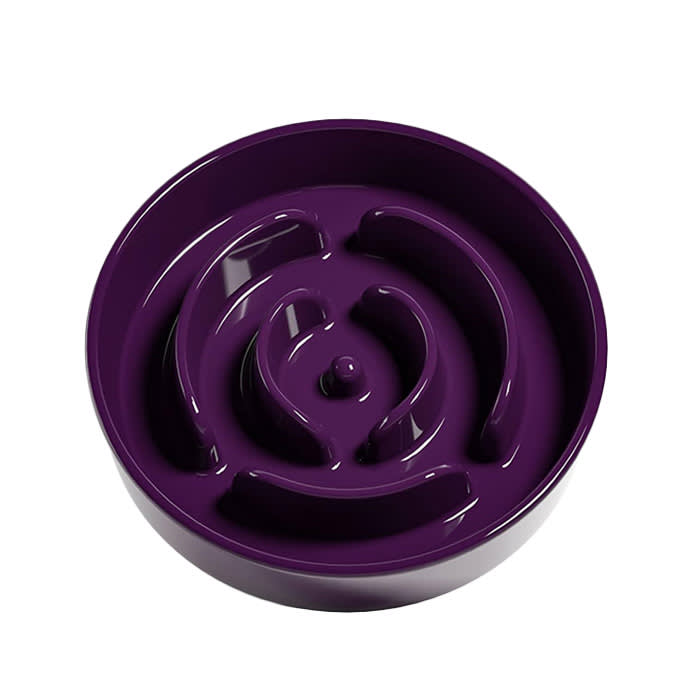
La Tauci Slow-Feeder Ceramic Bowl
If you hate stains and want something that looks like it belongs in your kitchen, the La Tauci ceramic feeder is the pick. Glazed ceramic resists discoloration and the odor that plastic can hold onto, and it is both dishwasher- and microwave-safe if you warm up toppers. It comes in three sizes with groove depths from 1.4 inches (small) to 2.1 inches (large), and its weight keeps it planted.
The trade-off is obvious: ceramic chips or cracks if dropped, so it is not for a rough player or a household where bowls get knocked around. One reviewer clocked their dog’s meal going from thirty seconds to three minutes. Best for the calm-but-fast eater whose owner wants hygiene and good looks.
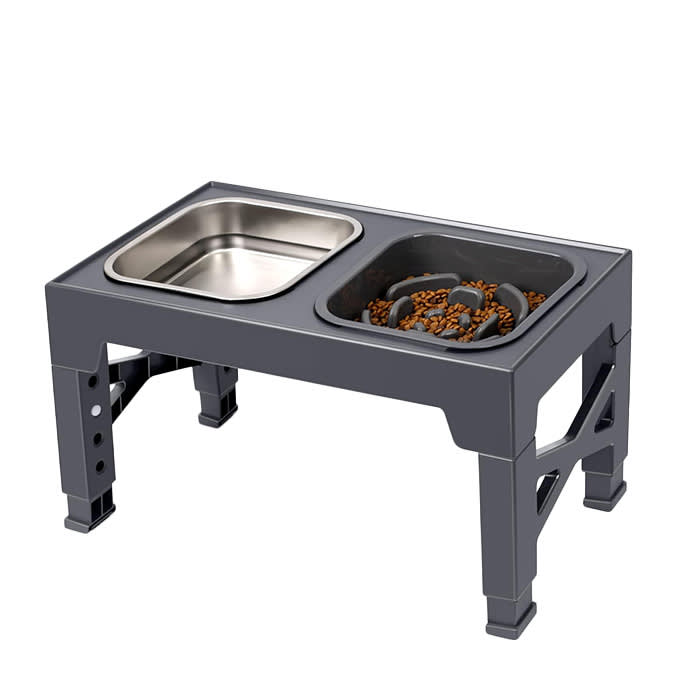
Niubya Elevated Adjustable Feeder
Brachycephalic dogs get left out of most slow-feeder roundups because deep mazes don’t work for short muzzles. The Niubya elevated feeder solves two problems at once: one of its two stainless-steel bowls has a shallow maze a flat face can actually reach, and the stand adjusts to five heights (3.15 to 12.2 inches) to ease neck strain. The bowls pop out and are dishwasher-safe.
Because only one side has a maze, it also doubles as a training setup, slow side for now, plain side for later. Reviews are mixed on whether it suits very small or very large dogs, but for a Pug or Bulldog who can’t navigate a standard maze, it is one of the few real options. Best for short-snouted dogs and any dog who eats more comfortably elevated.
Potaroma Dog Puzzle Slow-Feeder
For the bored gulper, a true puzzle beats a maze. The Potaroma puzzle feeder makes the dog problem-solve for each bite, which burns the mental energy that fast eating often signals. It is nontoxic plastic, has four non-slip rubber feet, works across breed sizes, and is affordable.
The downsides: it is too big for most dishwashers, so it is a hand-wash job, and not every dog cracks the puzzle right away (some need a few coached meals). Owners consistently praise its durability over similar models. Best for the smart, under-stimulated dog who eats fast out of boredom.
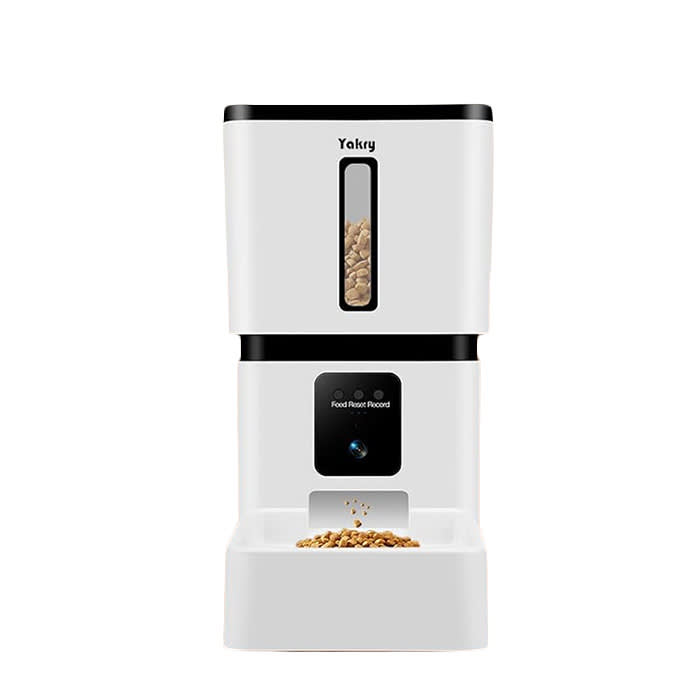
Yakry Automatic Dog Feeder
If your speed problem is really a schedule problem, an overfaced dog who bolts because meals are irregular, portion control can matter more than grooves. The Yakry automatic feeder schedules and measures meals through an app and includes a camera to check in. It comes in 8-liter and 12-liter capacities and runs under $100.
There is no maze, so it controls how much and when rather than how fast, pair it with a maze bowl if speed is your main issue. Owners find the app intuitive and the camera surprisingly clear. Best for busy households where erratic feeding times are fueling the frenzy.
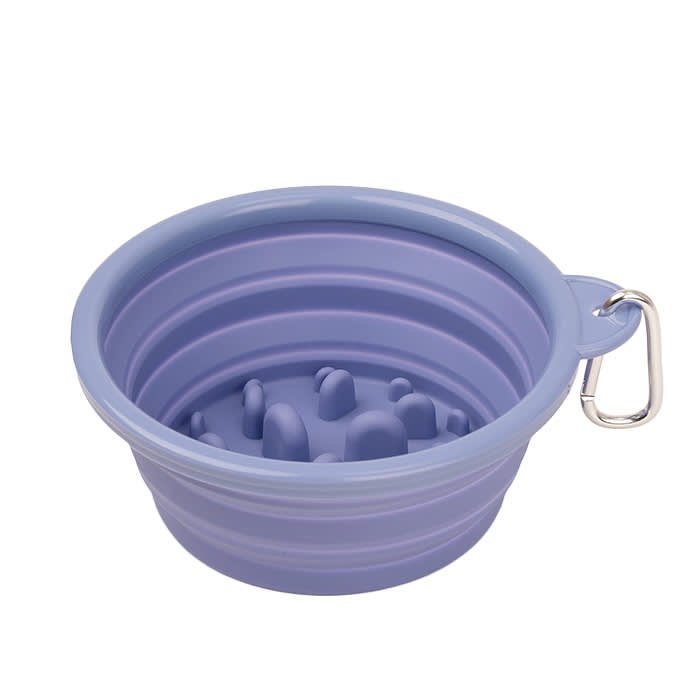
Bonza Collapsible Slow-Feeder
For walks, road trips, and park days, the Bonza collapsible feeder packs flat and clips to a bag. It is BPA-free silicone, dishwasher-safe, holds up to four cups, and keeps your dog from inhaling a travel meal. It is sized for large dogs.
The silicone is its weakness: owners report determined chewers tearing through it, and there is no non-slip grip underneath, so it can skate on smooth floors. Skip it for aggressive chewers. Best for the on-the-go dog who needs pacing away from home.
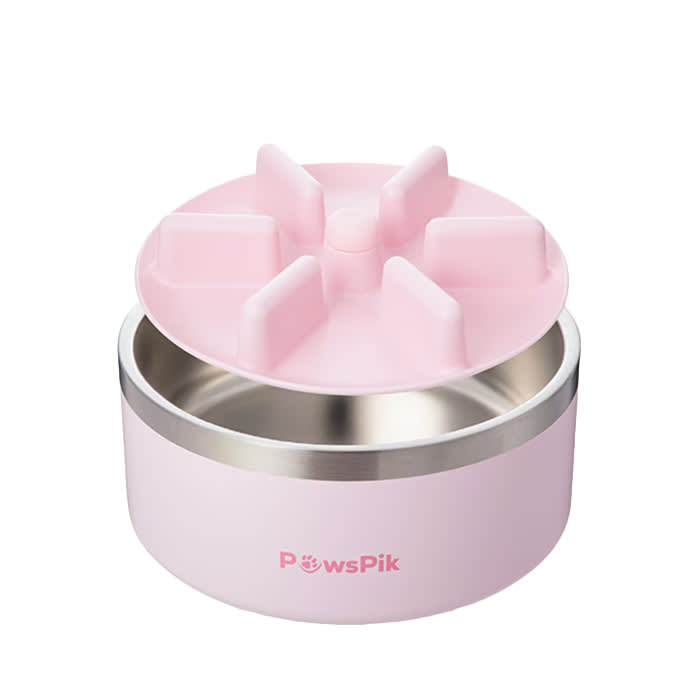
PawsPik Convertible Slow-Feed Bowl
Once your dog has learned to pace themselves, you will want to test that progress. The PawsPik convertible bowl makes the transition painless: a removable silicone insert with 3.7-inch grooves sits inside a durable stainless-steel bowl with non-slip suction cups. Pull the insert and it is an ordinary bowl. It holds up to eight cups.
The deep grooves favor larger breeds, though one owner reported it dramatically slowed an extremely fast Shih-Tzu/Pug mix. Always remove the insert to clean, since food and liquid can seep underneath, dry food is the tidier choice here. Best for the dog who has learned the skill and is ready to keep it without a permanent maze.
When a slow feeder is the wrong call
A slow feeder is a tool, not a treatment. Set it aside and talk to your vet or a behavior professional if you see any of these:
- Stiffening, freezing, growling, or snapping near the bowl. That is resource guarding, and a harder-to-reach bowl can worsen it.
- A dog who quits eating or eats far too little with the feeder in. The puzzle may be too hard, or the grooves too deep for their snout. Drop to an easier pattern or a shallower bowl.
- Chewing the bowl itself. A dog gnawing silicone or plastic out of frustration can swallow pieces. Switch to stainless steel or step down the difficulty.
- Any deep-chested dog showing a swollen, hard belly, unproductive retching, restlessness, or drooling. That is a bloat emergency, not a feeding tweak. Go to a vet immediately.
The goal was never a fancier bowl. It is a dog who eats at a healthy pace for a reason you understand, so the bowl you chose is the right one and not just the popular one.
References
- O’Dwyer, L. “Are Dogs That Eat Quickly More Likely to Develop a Gastric Dilatation (+/- Volvulus) Than Dogs That Eat Slowly?” Veterinary Evidence. veterinaryevidence.org
- Washington State University Veterinary Teaching Hospital. “Gastric Dilatation and Volvulus (GDV) and Bloat in Dogs.” hospital.vetmed.wsu.edu
- VCA Animal Hospitals. “Food Bowl Aggression in Dogs.” vcahospitals.com
- Preventive Vet. “How to Safely Slow Down Your Dog’s Eating.” preventivevet.com
Common questions
Do slow-feeder bowls actually prevent bloat?
Not reliably. The veterinary evidence linking fast eating to gastric dilatation-volvulus (GDV, or bloat) is mixed and inconclusive: one study found a possible association, others found none. The honest takeaway is that slowing a dog down won't increase bloat risk and may modestly lower it, but no slow feeder is a guarantee. Floor-level feeding (not a raised bowl) is the positioning choice most consistently linked to lower risk in large, deep-chested breeds.
Can a slow feeder fix food aggression or resource guarding?
No, and treating it like one can backfire. Genuine resource guarding is a behavior problem that needs a certified trainer or veterinary behaviorist, not a bowl. A slow feeder can ease mild gulping that comes from competition or excitement, but for some dogs the harder-to-reach food increases frustration and guarding. If your dog stiffens, freezes, or snaps near the bowl, work with a professional before changing the feeder.
What slow-feeder material holds up best?
Stainless steel is the most hygienic and chew-resistant, which is why it's the safest default. Glazed ceramic resists stains and odor but chips if dropped. Silicone and plastic are lighter and cheaper but tear or scratch over time, especially with determined chewers, so inspect them for damage and replace them when the grooves wear smooth.
How deep should the grooves be for my dog?
Match groove depth to snout length, not just body size. Long-nosed breeds need deeper channels (roughly 2 to 2.75 inches) to slow them meaningfully, while flat-faced (brachycephalic) dogs like Pugs and Bulldogs do better with wide, shallow grooves around 1 to 1.5 inches that their short muzzles can actually reach. Too-deep grooves on a flat-faced dog cause frustration, not slower eating.
Nina Vasquez writes about life at home with pets and the relationships at the heart of it. Her work covers day-to-day living, people-and-pet stories, and the products that fit into a real household, with a warm, grounded take on everyday pet ownership.
Meet our experts ↗Keep reading
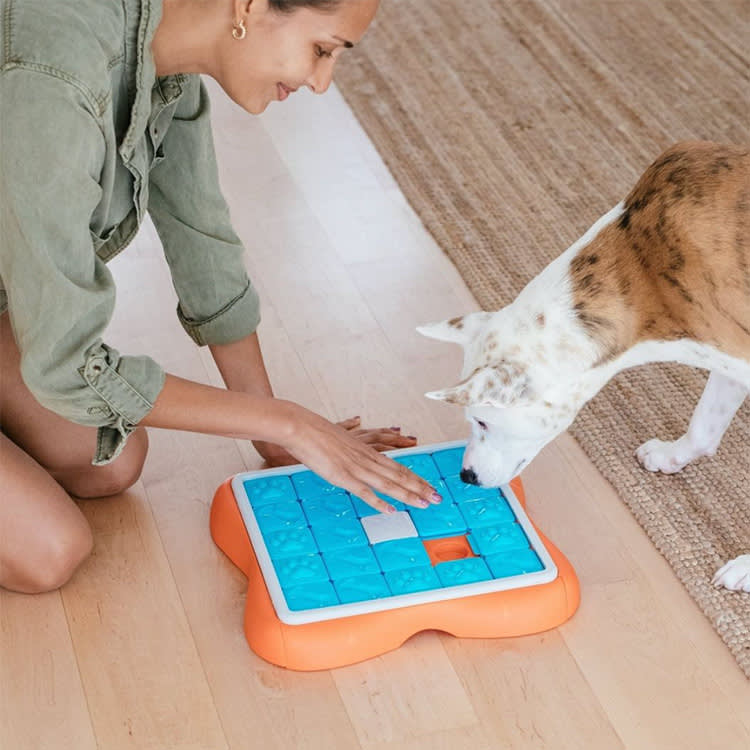 Product PicksYour Dog Isn't Bored. They're Underemployed. 8 Puzzles That Fix It.Tom Hadley · 11 min
 FoodAn MIT Engineer Fed Her Seizing Dog Raw Meat. Then She Engineered the Safety Problem Out of It.Dr. Ravi Mehta · 6 min
 Product PicksThe Best Dog Food Container Isn't the Prettiest. It's the One That's Actually Airtight.Marcus Webb · 5 min
 FoodHome-Cooked Dog Food Can Run $3 a Day. The Real Price Is Your Sundays.Dr. Amara Solis · 9 min
 Product PicksFresh Dog Food Is a Budget Decision, Not a Quality Verdict: Pick Your Tier (9 Services)Sara Lim · 10 min
 Product PicksThe Dog Bowl Decision: Why Material Beats Looks (Plus 12 We'd Buy)Dr. Lena Park · 8 min