


An MIT Engineer Fed Her Seizing Dog Raw Meat. Then She Engineered the Safety Problem Out of It.
Raw feeding's biggest flaw is pathogens. Maev founder Katie Spies, an ex-MIT engineer, built her whole company around the fix, and it started with a rescue greyhound named George.

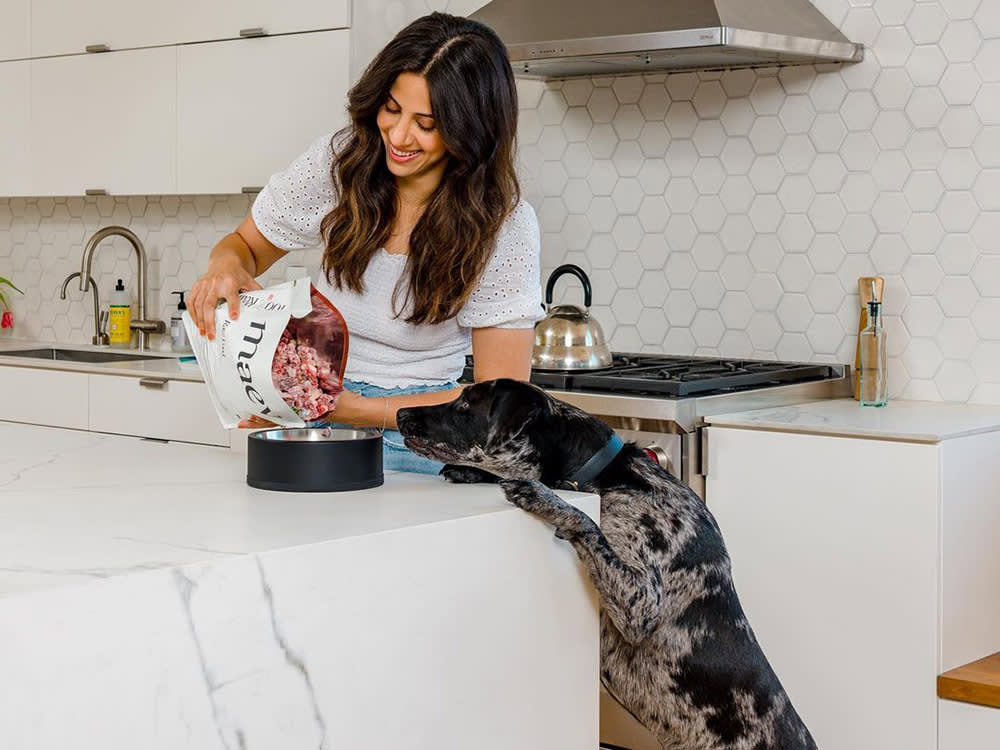
Most raw dog food origin stories start with a sick dog and a desperate owner. Maev’s does too, but the person doing the desperate part happened to be an MIT-trained engineer, and that changes the ending. Instead of just becoming a raw-food believer, Katie Spies went looking for the one thing that makes veterinarians nervous about raw diets, and built her company around solving it.
It started with George
In 2015, Spies rescued an Italian Greyhound named George. Soon after, George started having seizures, and her vet couldn’t pin down a cause. They worked through the usual playbook, medications, changes to his environment, one thing after another, without much luck. Eventually the suggestion was to change his diet. Once George was eating raw food, Spies watched his seizures stop and a stack of other issues clear up within about a month. His digestion steadied and his energy stopped whipsawing, and his behavior calmed down too: less reactivity, less anxiety, and far more predictable trips outside.
That kind of turnaround tends to make a person a convert, and it did. But when Spies went shopping for a food that matched what had helped George, clean proteins, no fillers, moderate fat, she couldn’t find it, so she started making it in her own kitchen on the weekends. Within a few months she’d met a dozen other pet parents who wanted in, so she froze portions individually to skip the thaw-and-microwave hassle and began working with holistic vets to fold in supplements. She eventually left her engineering job, spent a stretch as a dog walker while she figured out her next move, and landed on building Maev. Today the company is based in Austin, Texas.
The part of “raw” that should give you pause
Here is the context the glowing testimonials usually skip. A raw diet generally means muscle meat, organs, and some fruits and vegetables served with little or no cooking, and fans credit it with better energy, digestion, coat, and joint health. The catch is that raw meat is raw meat. The safety standards for meat at the grocery store assume you are going to cook it before anyone eats it, which is why you can’t simply scoop raw chicken from the butcher counter into a dog bowl and call it dinner, and it is why the FDA has repeatedly flagged raw pet diets for their risk of Salmonella and other pathogens, both to the animal and to the humans handling the bowl.
There is a second, quieter problem: getting the nutrition right. Dogs need a specific balance of macro- and micronutrients, and hitting that balance on a raw diet takes real planning and expertise. Assembling it yourself can be a rewarding project, but if you are serious about feeding raw, it is genuinely a job for people who do it professionally.
The engineering answer
This is where Spies’s background shows up in the product. Maev’s raw food is designed to behave like kibble in the ways that matter for safety and convenience: it is stored and served frozen and pours straight from the bag, with whole-food ingredients you can actually recognize by eye, on the theory that quality control is easier when the beef still looks like beef. It is protein-rich, with no fillers, additives, or heat processing.
The load-bearing detail, though, is how it handles pathogens. Rather than cooking the food (which would defeat the point of raw) Maev uses High Pressure Processing, a cold-pasteurization method that subjects the sealed food to enormous water pressure, up to around 87,000 pounds per square inch, to destroy Salmonella, E. coli, and Listeria without heat and without degrading the nutrients that make raw appealing in the first place. The brand sources USDA-certified proteins from USDA-inspected facilities, the same standard used for human food, and as of 2026 it has never issued a recall, with a product line that meets AAFCO nutrient profiles for all life stages, including puppies.
Raw diets sit in a tricky spot for me as a vet, because the pathogen risk is real and it’s not just the dog who’s exposed, it’s everyone in the kitchen. What I want to see from any raw brand is exactly this: a validated kill step like high-pressure processing, human-grade sourcing, and a clean recall history. That doesn’t make raw the right call for every household, especially homes with infants or anyone immunocompromised, but it’s the difference between an engineered product and a gamble.
The honest bottom line
Maev is not magic, and no food is. A raw diet is a real decision with real tradeoffs, and the right move is always a conversation with your own vet about your specific dog, your household, and your budget. What makes Maev worth knowing about is not the testimonials, it is the approach: a founder who treated raw feeding’s most serious weakness, safety, as an engineering problem to be solved rather than a risk to wave away.
Maev sells directly through its website on a subscription model; it is not available on Amazon.
References
Not a substitute for your vet. Our guidance is educational. For urgent symptoms, contact a vet or emergency clinic right away. Editorial standards
Dr. Mehta is a board-certified veterinary nutritionist who evaluates pet food formulations, ingredient quality, and the science behind dietary trends. He writes and reviews all nutrition content at The Pet Times, including our food rankings and feeding guides.
Meet our experts ↗Keep reading
 Product PicksTikTok's Favorite Dog Feeder Is a Bamboo Speed Bag. The Science Backs It Up.Dr. Nina Kohl · 6 min
 Product PicksFresh Dog Food Is a Budget Decision, Not a Quality Verdict: Pick Your Tier (9 Services)Sara Lim · 10 min
 Product PicksSlow-Feeder Bowls: The 7 Worth Buying, Matched to Why Your Dog Inhales DinnerNina Vasquez · 10 min
 Product PicksYour Dog Isn't Bored. They're Underemployed. 8 Puzzles That Fix It.Tom Hadley · 11 min
 Product PicksI Tried Three Puzzle Feeders to Stop the Kibble-on-the-Floor Circus. Only One Survived.Marcus Webb · 5 min
 Product PicksEveryone Knows Maxbone for the Feathered Dog Jumper. Its Biggest Seller Is Food.Leila Torres · 6 min