


Four Rescues, One Month, 300 Dogs: What the ASPCA's Busy May Reveals
In 30 days the ASPCA ran four major dog rescues across four states. The striking part isn't the number, it's what four simultaneous cases say about a problem no one is counting.

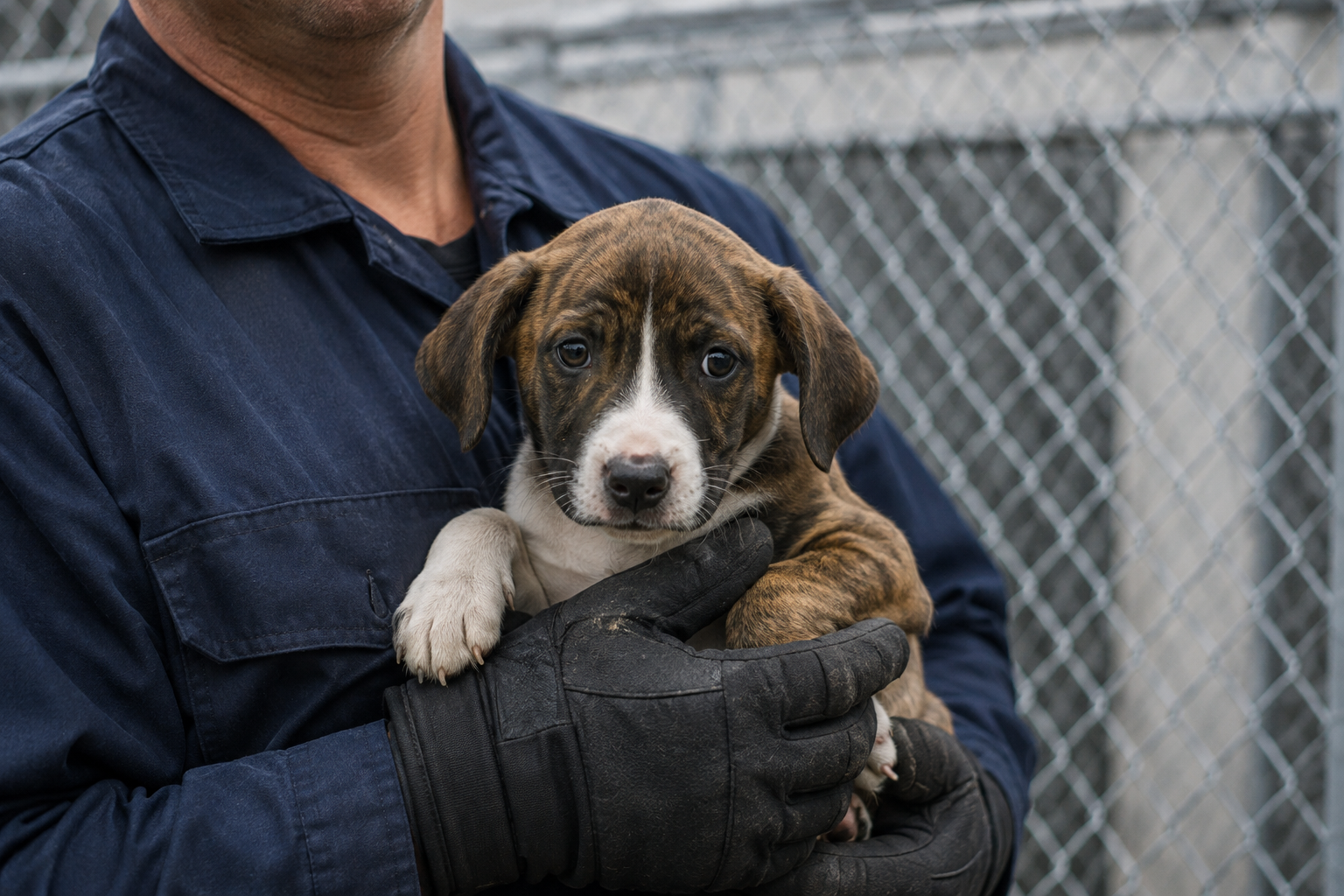
The number is the easy headline: in a single month, the ASPCA helped save nearly 300 dogs across four separate operations in New Jersey, Mississippi, Florida, and New York. Four states, four cases, one calendar month. But the number is not the interesting part. The interesting part is what it takes for four large-scale cruelty cases to land at one organization’s door in thirty days, and what that pace says about how much of this is going uncounted. The honest read of this month is not “the ASPCA had a busy May.” It is “this is roughly the steady-state volume of a problem with no national odometer.”
To understand why, it helps to see how these cases actually reach the ASPCA, and why one of them, a backyard-breeding operation, points at a much larger pipeline than four rescues can fix.
How a case becomes an ASPCA operation
None of these rescues started with the ASPCA. Each began with a request from a local law enforcement agency that had hit the limits of what it could handle alone.
“The ASPCA works across the country to provide all sorts of resources to animals,” says Elizabeth Brandler, senior counsel for legal advocacy at the ASPCA. “But one of the major things we do is anti-cruelty work.”
Take the Florida case, which Brandler walked through as a representative example. The ASPCA already had a working relationship with that sheriff’s office from past cruelty cases. The office flagged a situation it had been trying and failing to improve, wanted to pursue criminal charges, and asked for help.
From there the ASPCA runs a standard playbook. First, it reviews the case to confirm there is sufficient probable cause; when the evidence is thin or there are open questions, it can send investigators to work alongside law enforcement instead. In Florida, the probable cause was clear.
“We were comfortable with the proof that there was long-term neglect going on, and that it needed to be addressed,” Brandler says. “The animals were suffering.”
On rescue day, the scale becomes obvious. The ASPCA flies in a team from around the country, investigators, crime-scene analysts, attorneys, veterinarians, forensic veterinarians, animal-behavior specialists, and transport staff, along with supplies, and moves in after the sheriff executes the warrant to document the scene, count the animals, and triage their care.
“It’s a huge effort,” Brandler says. “And pretty resource-intensive.”
That resource intensity is the hidden constraint behind the whole month: each of these operations is a logistical undertaking, and running four of them in thirty days is not routine throughput. It is an organization absorbing surge after surge.
The biggest obstacle is usually a building
A detail from the Florida case captures the practical bottleneck better than any statistic. The single hardest problem was not the investigation or the medical care. It was square footage.
“One of the biggest obstacles was finding a place to actually house all of these animals,” Brandler says, noting that the team rescued roughly 120 Great Danes and Bulldogs from the site. “We had to find a temporary shelter where we could bring them all and provide care.”
That is the quiet logistics of rescue at scale: before a single dog can be treated, someone has to conjure an emergency shelter big enough for 120 large-breed dogs, staff it, and equip it for medical work and forensic exams that will later become evidence. The animals there received the medical care they urgently needed, plus forensic evaluations handed over to law enforcement.
The four operations
With that framework in mind, here is what the month actually looked like.
New Jersey. In Vernon Township this February, the ASPCA assisted the Sussex County Prosecutor’s Office and the Vernon Township Police Department in removing more than 90 dogs from a self-described “animal rescue” group, an organization that publicly billed itself as a no-kill rescue placing dogs in foster homes. What officers found instead were dogs and puppies living amid their own waste, exposed to high ammonia levels, some underweight, many matted and untreated, and several already dead. The property owners were charged with six counts of animal cruelty tied to both the dead animals and the neglect of the living. The dogs were transported to the ASPCA’s Cruelty Recovery Center in Ohio.
Mississippi. The ASPCA next answered a call from the Oktibbeha County Humane Society to help remove more than 50 dogs from a hoarding situation. The dogs were malnourished and competing for resources, many with untreated injuries and illnesses. Some stayed at the OCHS shelter for treatment; others went to shelter partners to be made available for adoption.
Florida. Still working Mississippi, the team was already staging resources for Union County, Florida, where it helped save approximately 120 dogs, primarily Great Danes and Bulldogs, from a breeding operation.
“Upon our arrival, we discovered some animals who appeared underweight, with untreated medical conditions, living in extremely unsanitary conditions,” ASPCA president and CEO Matt Bershadker said in a statement.
The dogs went to an emergency shelter for medical care, behavioral treatment, enrichment, and the forensic exams that would support a criminal case against the breeder.
New York City. Finally, the organization rescued dozens of animals in Queens, including 11 dogs and two cats, many underweight, dehydrated, and sick, living in filthy conditions.
Not every rescue is a “throw the book at them” case
One thing Brandler is careful to draw out: the criminal response is not uniform, because the situations aren’t.
“There are some cases, particularly animal-fighting cases and really egregious cruelty, where you do want to throw the book at them,” she says. “But in others, especially hoarding cases, you have an owner who’s just overwhelmed, and things got out of control.”
Even in those overwhelmed-owner cases, charges are often still necessary, but as a mechanism rather than a punishment, a legal lever to remove the animals when the person won’t surrender them voluntarily.
“It’s not like illegal drugs, where you can’t have it. They’re still the owner’s property,” she says. “So we work with prosecutors to bring a proceeding.”
It’s a useful corrective to the instinct to see every neglect case as villainy. Some are. Others are a person drowning, and the goal is the animals’ safety either way.
The number nobody has: backyard breeding
The Florida case is the one that points past this single month. Backyard breeding, the unregulated, profit-driven production of dogs in poor conditions, has helped fuel a surge of so-called “designer dogs” who later flood shelters when the market or the breeder gives out. And here is the structural blind spot: there is no cohesive national database or monitoring system tracking how often this happens.
“It’s hard to know whether there’s truly been a recent uptick,” Brandler says. “I think these cases have always been out there, and unfortunately always will be.”
That uncertainty is the real story behind “300 dogs in a month.” We cannot say whether May was a spike or a Tuesday, because no one is counting. What helps, Brandler says, is local capacity: when law enforcement agencies know the signs of animal cruelty and have prosecuted such cases before, they recognize what they’re seeing and know they can call for help instead of looking away.
“That way it’s not, ‘Oh my god, this is too much, we can’t deal with it, so we’ll just ignore it.’”
What you can actually do
The most common question after a story like this is whether an ordinary person can do anything that matters. Brandler’s answer is unglamorous and real.
First, awareness. The single most important thing, she says, is simply understanding that animal cruelty can happen anywhere, and that it isn’t only violence. It’s also neglect, and the overwhelmed-owner situation where someone can no longer meet an animal’s needs. Caught early, those cases can often be resolved with services for both the person and the animal, before charges are ever needed.
Second, report what you see. If you suspect neglect or cruelty, contact local law enforcement or animal control. Specifics help: how many animals, what condition, what you’ve observed over time. The Vernon Township case is instructive, neighbors had complained to animal control for months but had no idea of the scale; one told a local outlet they figured maybe 20 or 30 dogs, not 90-plus. Persistent, detailed reports are often what finally moves a case.
Third, support local capacity. Reach out to your local shelter and ask what it actually needs, whether that’s supplies, donations, fosters, or volunteers.
“That’s a good way the everyday person can get involved and really help the animals in their community,” Brandler says.
The bottom line
Four rescues in one month is a stark image, but the more durable takeaway is the system it exposes: a steady undercurrent of large-scale neglect, a backyard-breeding pipeline feeding it, and no national count telling anyone how big the current is. The 300 dogs from this May got out. The honest, slightly uncomfortable point Brandler leaves you with is that we don’t know how many didn’t, and that the fix starts with ordinary people noticing, reporting, and shoring up the shelters in their own zip codes.
References
- ASPCA. “ASPCA Assists in Rescue of More Than 90 Maltreated Dogs and Puppies from New Jersey Property.” Press release.
- ASPCA. “ASPCA Assists in Rescue of Approximately 120 Dogs from a Florida Breeding Operation.” Press release.
- Oktibbeha County Humane Society. Public statements on the May 2026 rescue.
- ASPCA. “Report Animal Cruelty.”
James Okafor covers rescue, adoption, and the causes shaping animal welfare. His work follows the people and organisations working to give more pets a home, and the issues owners and advocates care about most.
Meet our experts ↗Keep reading
 LivingShe Called the Sheriff to Approve Her Dog 'Rescue.' Over 100 Dogs Were Already Dead.James Okafor · 4 min
 LivingOne Sleepover Makes a Shelter Dog 14 Times More Likely to Get AdoptedLeila Torres · 5 min
 LivingYour Empty Kibble Bag Is a Recycling Dead End. Here's the Ladder OutLeila Torres · 5 min
 Living43 Arrests at a Texas Dogfight. Nearly All of Them Bonded Out.Dr. Amara Solis · 7 min
 Living190 Dogs, One Man: The Largest Federal Dogfighting Seizure Ever Ends in ConvictionNina Vasquez · 5 min
 LivingThe Dogs of the NYC Dyke March Were Making a Statement TooLeila Torres · 6 min